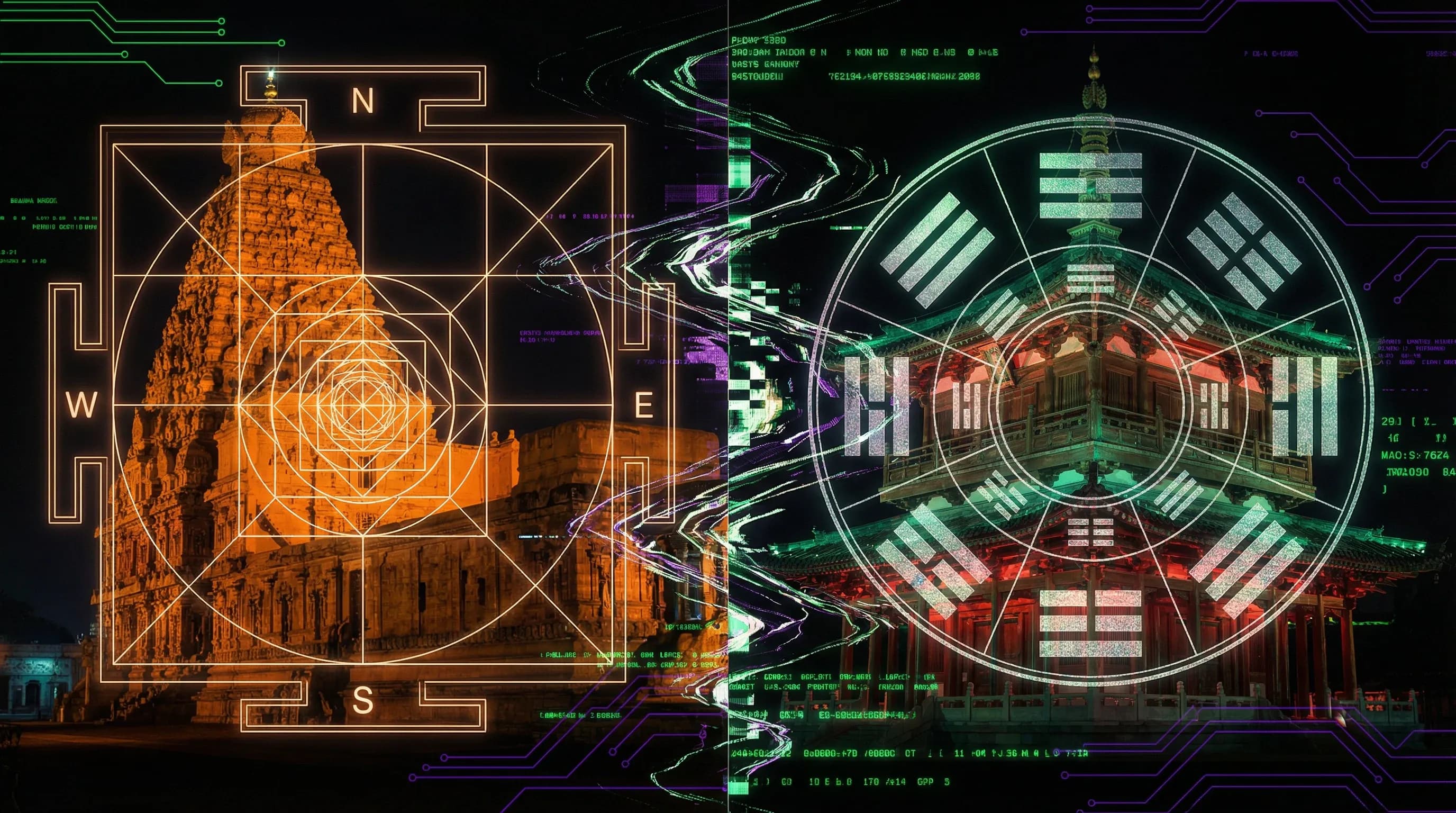
 🏠 Feng Shui and Vastu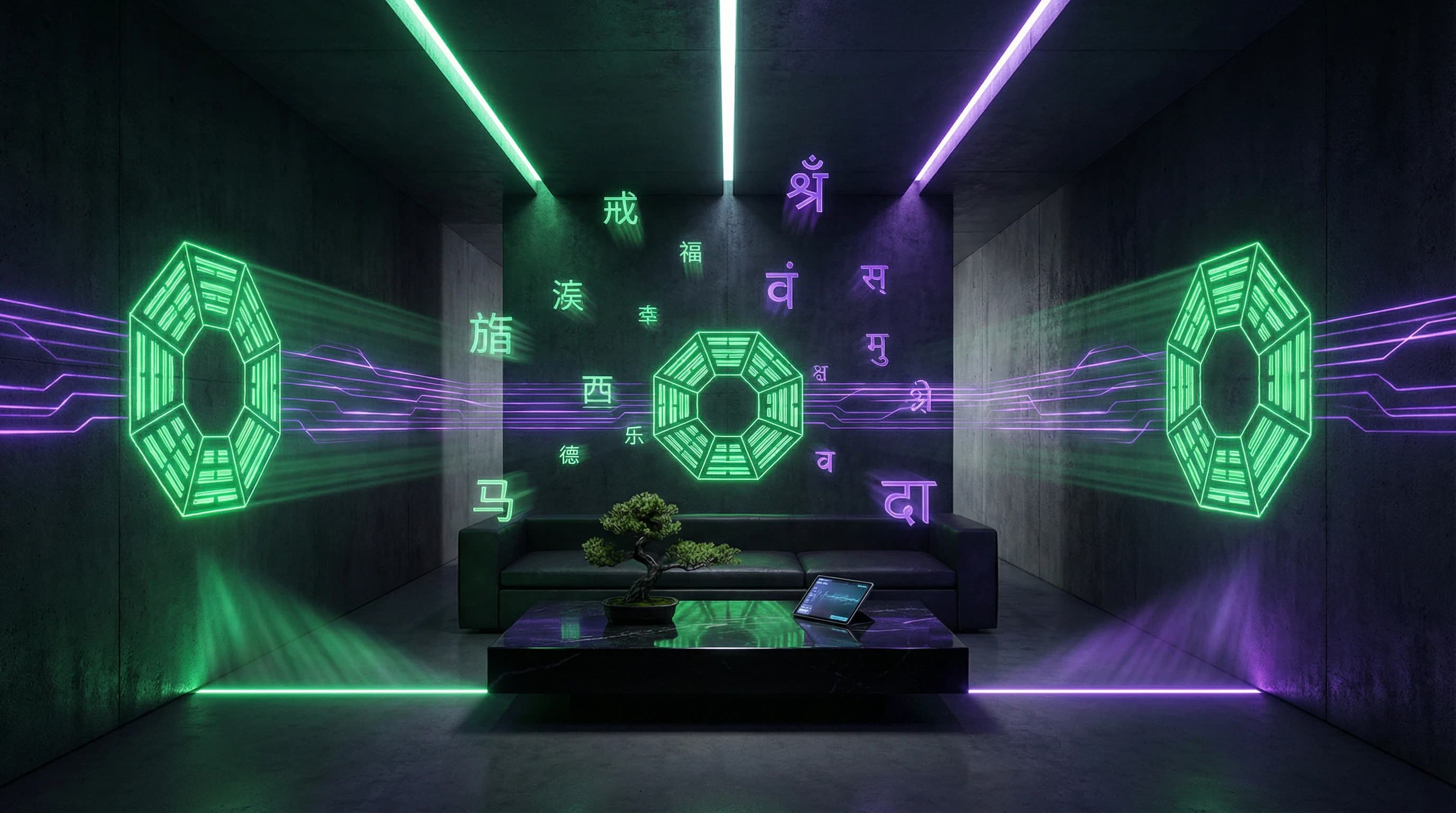
Feng Shui and Vastu: Ancient Systems of Space Harmonizationλ
Chinese and Indian traditions of space organization, based on principles of energy balance, Chi flow management, and harmony with cosmic forces.
Overview
Feng Shui and Vastu Shastra are systems of spatial organization through energy flow management: Chinese Qi (five elements, Luopan compass), Indian — cosmic forces and Vastu-purusha mandala. Both provide concrete rules 🧩 for object placement, building orientation, zoning — for harmony between person and environment. We'll examine the mechanisms: where the prescriptions come from, how they work psychologically, and why these traditions have survived millennia.
🛡️
Laplace Protocol: Despite differences in methodology, both systems recognize the existence of energy flows in space and their influence on health, well-being, and success of inhabitants. Scientific approach requires critical evaluation of these practices, however many principles resonate with laws of nature, psychology of spatial perception, and ergonomics. Application effectiveness depends on comprehensive analysis, not on use of individual symbols or figurines.
Reference Protocol
Scientific Foundation
Evidence-based framework for critical analysis
Protocol: Evaluation
Test Yourself
Quizzes on this topic coming soon
Sector L1
Articles
Research materials, essays, and deep dives into critical thinking mechanisms.
🏠 Feng Shui and Vastu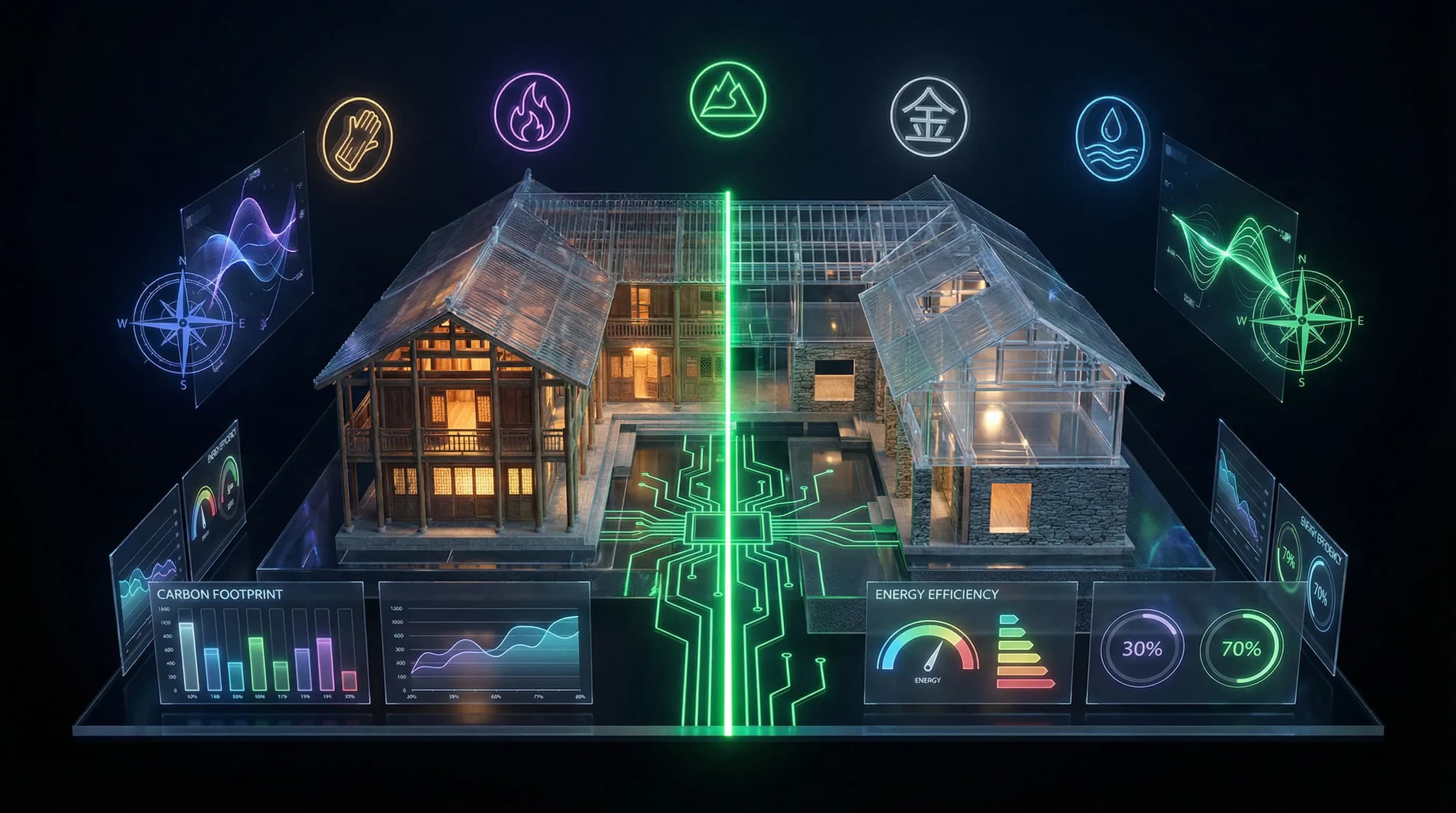 🏠 Feng Shui and Vastu
 🏠 Feng Shui and Vastu
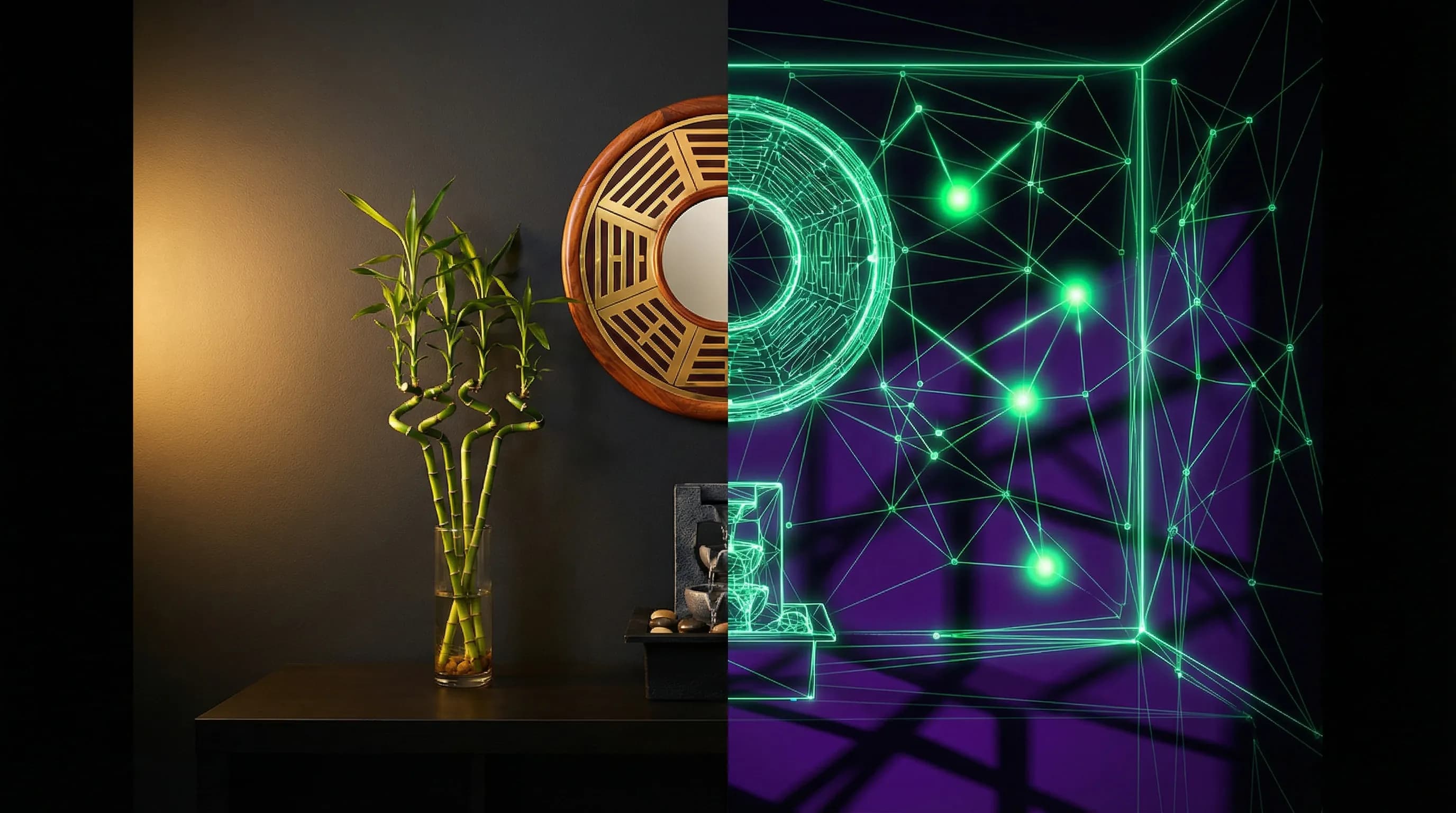 🏠 Feng Shui and Vastu
⚡
Deep Dive
Feng Shui Fundamentals: Chi Energy and Five Elements in Space Organization
Feng Shui (风水) — an ancient Chinese system of space organization based on managing the flow of life energy Chi. The practice views space as a living system where energy flows influence the health, well-being, and success of inhabitants.
Central idea: harmonious circulation of energy through proper object placement, color and shape selection, and consideration of cardinal directions.
Chi: life energy and its movement
Chi (气) — a fundamental concept in Chinese philosophy denoting life energy that permeates all existence. In Feng Shui context, Chi must circulate freely through spaces, neither stagnating in corners nor accelerating excessively in long corridors.
- Beneficial Chi (Sheng Chi)
- Brings prosperity and health; characterized by smooth, balanced energy movement.
- Stagnant or aggressive energy (Sha Chi)
- Can negatively affect inhabitants; arises when flows are blocked or excessively accelerated.
The entrance door — the primary channel for Chi entering the home. Its location and condition are critically important for the energetic balance of the entire space.
Five elements: interaction and balance
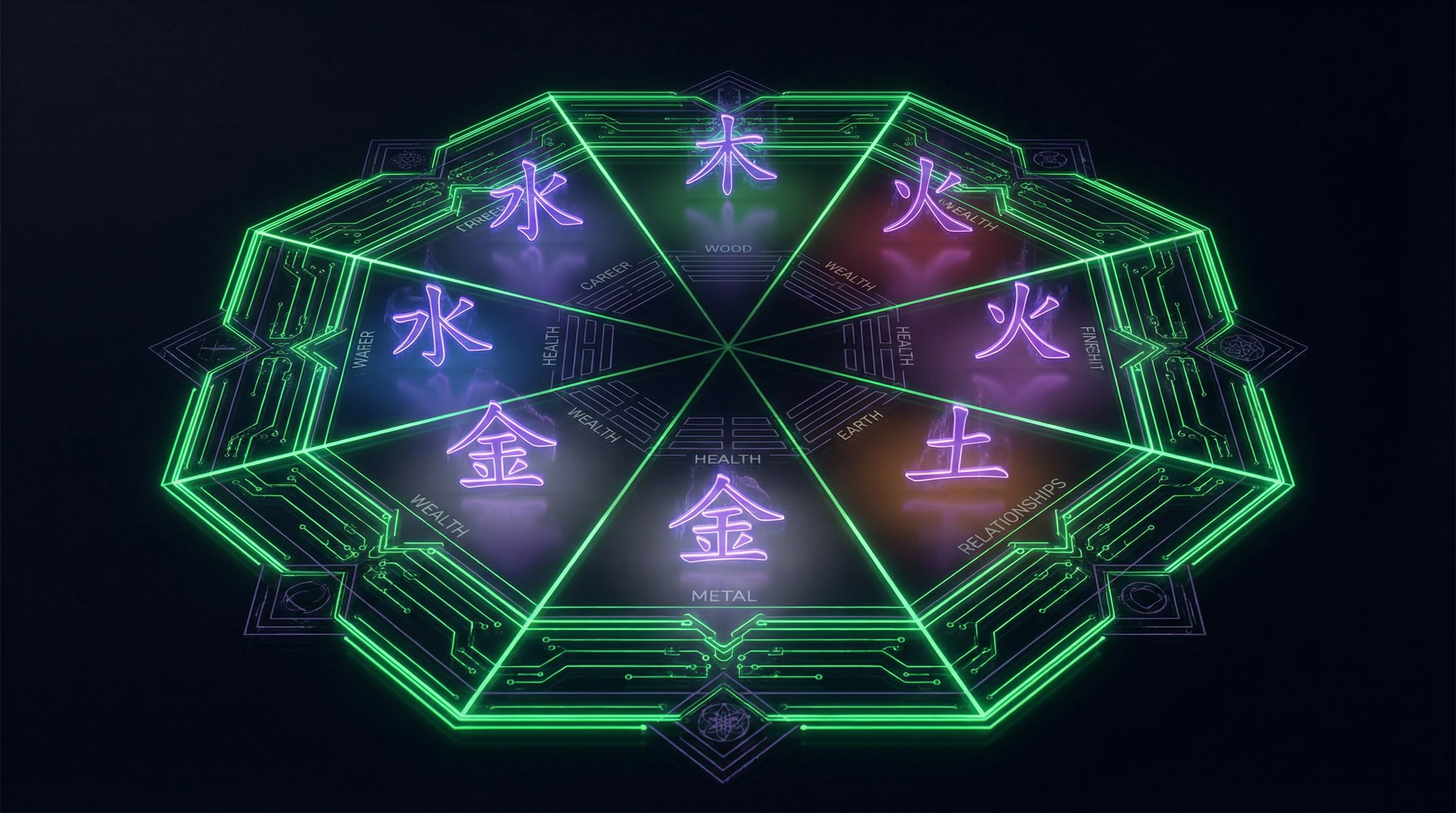
Feng Shui operates with a system of five elements: Water, Wood, Fire, Earth, and Metal. Each possesses unique qualities and influences different aspects of life.
| Element | Colors | Shapes | Qualities |
|---|---|---|---|
| Water | Black, blue | Wavy | Fluidity, adaptability |
| Wood | Green | Vertical lines | Growth, development |
| Fire | Red | Triangular | Energy, transformation |
| Earth | Yellow | Square | Stability, center |
| Metal | White | Round | Purity, contraction |
Elements interact through two cycles: generative (Water nourishes Wood → Wood feeds Fire → Fire creates Earth → Earth produces Metal → Metal condenses Water) and controlling (Water extinguishes Fire → Fire melts Metal → Metal cuts Wood → Wood depletes Earth → Earth absorbs Water).
Proper distribution of elements across space sectors creates a harmonious energetic environment supporting various life spheres of inhabitants.
Diagnostic tools: Bagua, Luopan, and Gua number
Bagua — an octagonal energy map overlaid on a space plan to identify zones corresponding to career, relationships, health, wealth, fame, children, knowledge, and helpful people. Each sector corresponds to a specific direction, element, and color.
- Luopan compass — a complex instrument with concentric rings containing information about directions, elements, stars, and temporal cycles; used by masters for precise analysis of space energetics.
- Gua number — a personal number calculated based on birth date and gender; determines favorable and unfavorable directions for a specific individual.
The Gua number allows personalization of space organization recommendations to each person's unique characteristics.
Vastu Shastra Principles: Cosmic Energies and Vastu Purusha in Vedic Architecture
Vastu Shastra is an ancient Indian science of space, rooted in Vedic tradition. It views architecture as a means of harmonizing humans with cosmic energies.
Unlike Feng Shui, Vastu includes a fifth element—ether (akasha), representing space and connection to higher dimensions. The system is based on the principle that properly organized space resonates with Earth's geomagnetic field, solar energy, and cosmic rhythms.
Vedic Concept of Space and the Five Elements with Ether
Vastu Shastra operates with a system of five mahabhutas (great elements): Prithvi (earth), Jala (water), Agni (fire), Vayu (air), and Akasha (ether). Each element is associated with a specific direction and influences different aspects of life.
| Element | Direction | Function |
|---|---|---|
| Earth (Prithvi) | Southwest | Stability and grounding |
| Water (Jala) | Northeast | Prosperity and purification |
| Fire (Agni) | Southeast | Energy and transformation |
| Air (Vayu) | Northwest | Movement and communication |
| Ether (Akasha) | Center | Spiritual dimension and cosmic connection |
Balance of elements is achieved through proper distribution of functional zones: heavy structures are placed in the southwest, water sources in the northeast, kitchen in the southeast, while the center of the building is kept maximally open for ether circulation.
Vastu Purusha Mandala and Its Application in Architecture
Vastu Purusha Mandala is a sacred geometric diagram representing the cosmic man lying face down with his head toward the northeast. The body symbolizes the energetic structure of any building or plot of land.
The mandala is divided into 64 or 81 squares (padas), each governed by a specific deity and possessing unique energetic qualities. This determines the optimal placement of functional zones within a building.
The central part of the mandala, called Brahmasthan, is considered sacred space that should remain open and free from heavy structures. Cosmic energy circulates through it, nourishing the entire building.
Application of the mandala in architecture allows creation of spaces that resonate with cosmic order: entrance doors are placed in auspicious padas of the northeast or north direction, bedrooms are located in the southwest for stability, and meditation zones in the northeast.
Significance of Directions and Geomagnetic Fields in Vastu
Vastu Shastra places special emphasis on building orientation relative to cardinal directions, based on the influence of Earth's geomagnetic field and solar energy on the human organism.
- Northeast: first rays of the rising sun, high concentration of positive energy. Recommended for entrances, water sources, meditation and prayer.
- South and West: denser energies, influence of the setting sun. Optimal for bedrooms, storage rooms and heavy structures.
- North: direction of geomagnetic flow. Favorable for work zones and active pursuits.
- East: energy of the rising sun. Suitable for study rooms and creative spaces.
Earth's geomagnetic field flows from north to south. Vastu recommends sleeping with head toward south or east to align the body with this field, promoting deep rest and energy restoration.
These principles reflect the integration of ancient wisdom with observations of natural phenomena, creating a system that accounts for both energetic and physical aspects of space.
Common Principles and Points of Agreement Between Two Ancient Systems of Space Organization
Despite their different cultural origins, Feng Shui and Vastu Shastra demonstrate remarkable similarity in fundamental principles of space organization. Both systems recognize the existence of invisible energy flows that influence human life, and offer practical methods for harmonizing space to improve health, well-being, and success.
These traditions complement each other, providing a more complete picture of spatial energetics and expanding possibilities for creating a harmonious living environment.
Spatial Energetics and Influence on Human Life
The central concept of both systems: space possesses its own energetics that directly affects the physical health, emotional state, and life circumstances of its inhabitants. Feng Shui describes this through Chi—life energy that should circulate freely throughout a space, neither stagnating nor accelerating excessively.
Vastu speaks of cosmic energies and the influence of five elements, including ether, on various aspects of life. Both traditions assert that proper space organization creates a supportive environment that amplifies positive tendencies and neutralizes negative influences.
- Space Organization and Environmental Psychology
- Lighting, colors, and shapes genuinely affect mood and productivity. Both systems offer practical tools for optimizing these factors, drawing on observations confirmed by research in environmental psychology.
Significance of the Entrance Door as the Primary Energy Channel
One of the most significant points of agreement is recognition of the entrance door as a critically important element of a home's energetic structure. In Feng Shui, the entrance door is called the "mouth of Chi" (Chi Kou), through which life energy enters the space, determining the quality and quantity of energy available to residents.
Vastu Shastra also assigns paramount importance to the main entrance location, recommending placement in auspicious padas of the northeast, north, or east directions to attract positive cosmic energy.
The entrance area should be well-lit, free of obstacles, and kept clean. Any blockages or contamination impede the free flow of energy and negatively affect all aspects of inhabitants' lives.
Role of Directions and Cardinal Points in Both Traditions
Feng Shui and Vastu agree unanimously: cardinal directions possess different energetic qualities that must be considered when organizing space and placing functional zones.
| Direction | Feng Shui | Vastu |
|---|---|---|
| North | Water element, career | Water element, career |
| East | New beginnings, health | New beginnings, health |
| South | Active energy, recognition | Active energy, recognition |
| West | Completion of cycles, creativity | Completion of cycles, creativity |
Head direction during sleep is considered an important factor in both traditions. Vastu recommends sleeping with the head toward the south or east to align with Earth's geomagnetic field, while Feng Shui uses the individual Gua number to determine personal auspicious directions.
- Integration of Two Systems
- The common foundation allows practitioners to combine Feng Shui and Vastu principles, creating a more flexible approach to space organization that accounts for both universal energetic laws and individual characteristics of residents.
Practical Application: Bedroom, Kitchen, and Functional Zones
Bedroom and Bed Placement and Orientation
The bedroom is a space for restoration and accumulation of vital energy. Vastu Shastra places the master bedroom in the southwest sector for stability and strengthening relationships, while Feng Shui analyzes favorable directions through individual Gua numbers.
Head direction during sleep is critically important: Vastu recommends south or east direction for alignment with the geomagnetic field, while Feng Shui determines optimal direction through calculation of personal energy characteristics.
The bed should have a solid headboard and be positioned so the entrance is visible from it, but not directly opposite the door. The "command position" principle is universal to both traditions and provides a psychological sense of security.
Kitchen Organization According to Feng Shui and Vastu Principles
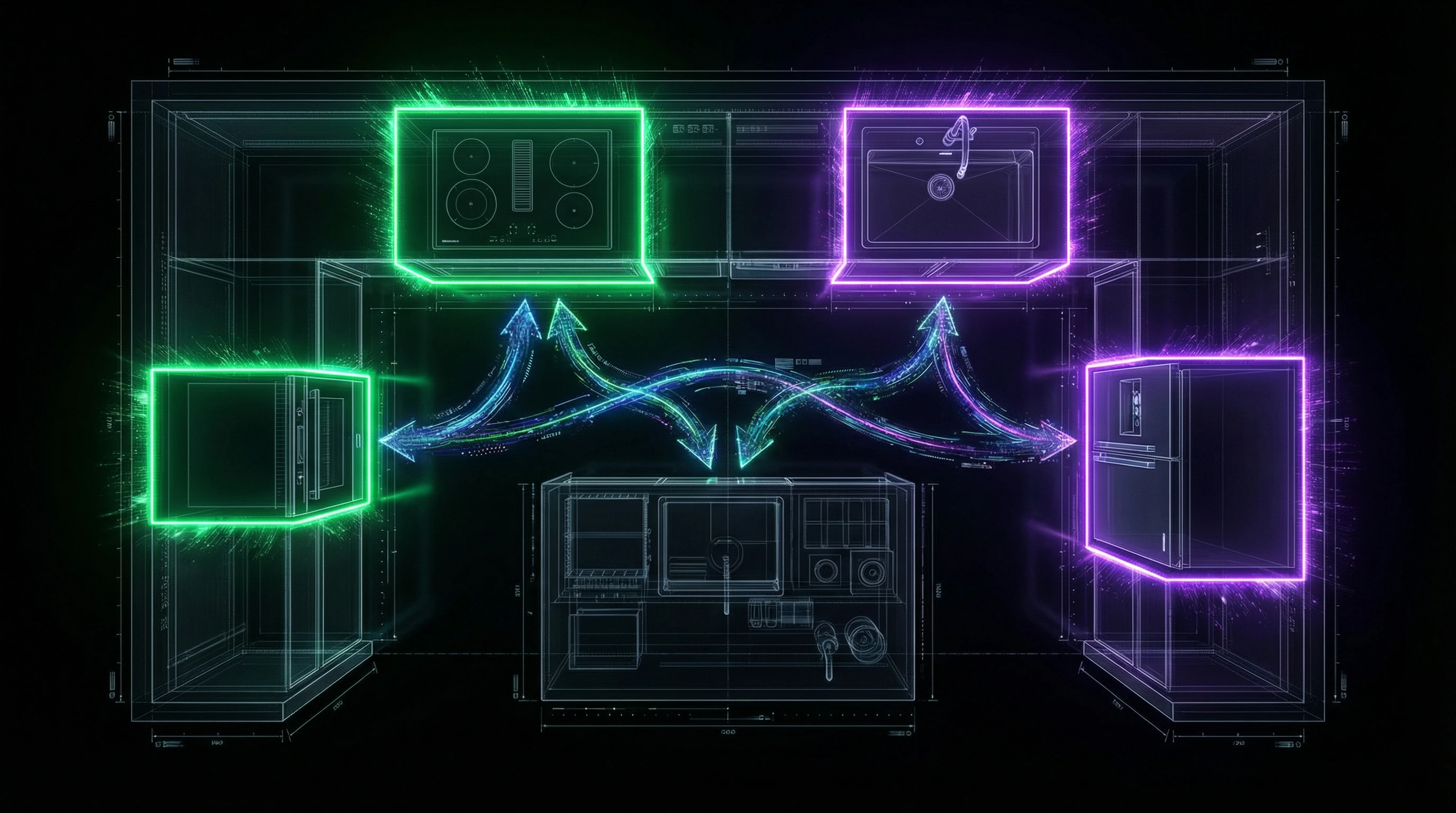
The kitchen is a zone of energy transformation through food preparation. It requires balance between fire and water elements.
| System | Placement | Orientation |
|---|---|---|
| Vastu Shastra | Southeast sector (governed by Agni) | Cook faces east |
| Feng Shui | Separation of fire and water zones | Stove and sink not adjacent |
Both systems agree: the kitchen should not be visible immediately from the front door—this symbolizes wealth leakage. Ideal cleanliness and order are linked to family health and prosperity.
Space Zoning and Bagua Sector Activation
The Bagua map in Feng Shui is an octagonal grid overlaid on the floor plan. Each sector corresponds to a life aspect: career, relationships, wealth, health, fame, children, knowledge, helpful people.
- North (career) — Water element. Activated with mirrors, fountains, black objects.
- East (health) — Wood element. Activated with plants, green and brown colors.
- South (fame) — Fire element. Activated with red objects, candles, triangular shapes.
Vastu Shastra uses a similar principle through the Vastu Purusha Mandala—dividing space into 81 squares with different energetic characteristics. Each zone is governed by a specific deity and planet.
Practical activation includes placing elements of the corresponding element: water and mirrors for the north sector, plants and wood for the east, red and fire elements for the south. This creates resonance between physical space and energy flows.
Space Energy Audit: Methodology and Tools
Preparing the floor plan and determining cardinal directions
An energy audit begins with a scaled floor plan: all walls, doors, windows, and functional zones. This is the foundation for applying both systems.
Determining cardinal directions requires an accurate compass. Feng Shui uses the Luo Pan with 24 directions, Vastu uses a standard compass for eight primary and intermediate directions. Measurements are taken from the center of the space, avoiding metal structures and electronics that distort the magnetic field.
Analyzing energy flows and identifying problem zones
Diagnostics track the movement of Chi (Feng Shui) or Prana (Vastu) from the entrance door through the space. The goal is to identify stagnation or excessively rapid energy movement.
- Long corridors — energy moves too quickly
- Corners and alcoves — energy stagnation
- Rooms with irregular geometry — balance disruption
- Missing Bagua sectors — breaks in the energy grid
Both systems work with the concept of "sha chi" (negative energy), created by sharp corners, overhead beams, mirrors opposite entrances, and bathrooms in unfavorable sectors.
Analysis includes physical parameters: natural lighting, ventilation, acoustics. These factors directly affect environmental quality and occupant well-being.
Space correction: colors, shapes, symbols and yantras
Color correction is based on five element theory. Each color strengthens specific energy in its corresponding direction.
| Element | Colors | Direction |
|---|---|---|
| Water | Blue, black | North |
| Wood | Green | East |
| Fire | Red, orange | South |
| Earth | Yellow, brown | Center, southwest |
| Metal | White, metallic tones | West, northwest |
Shapes carry energetic qualities: wavy lines — water, rectangles — wood, triangles — fire, squares — earth, circles — metal. Architectural elements and furniture balance space through these forms.
- Coins, toads, dragons, fountains (Feng Shui)
- Traditional objects placed to activate desired spatial qualities and attract favorable energy.
- Yantras, deity images, crystals (Vastu)
- Symbolic elements that work as psychological anchors, strengthening intention and focus on specific life aspects.
Debunking Myths and Scientific Approach to Eastern Practices
Critical analysis of common misconceptions about Feng Shui and Vastu
Feng Shui and Vastu are often perceived as identical systems, although they have different cultural roots, methodology, and tools. What they share is working with spatial energy, but their approaches differ significantly.
Myth one: placing a few symbolic objects is enough to change the energy. In reality, both systems require comprehensive analysis—layout, orientation, individual resident data, and many other factors.
Myth two: complete home renovation is required. This is refuted by the existence of correction methods through color, lighting, furniture, and symbolic objects without major architectural changes.
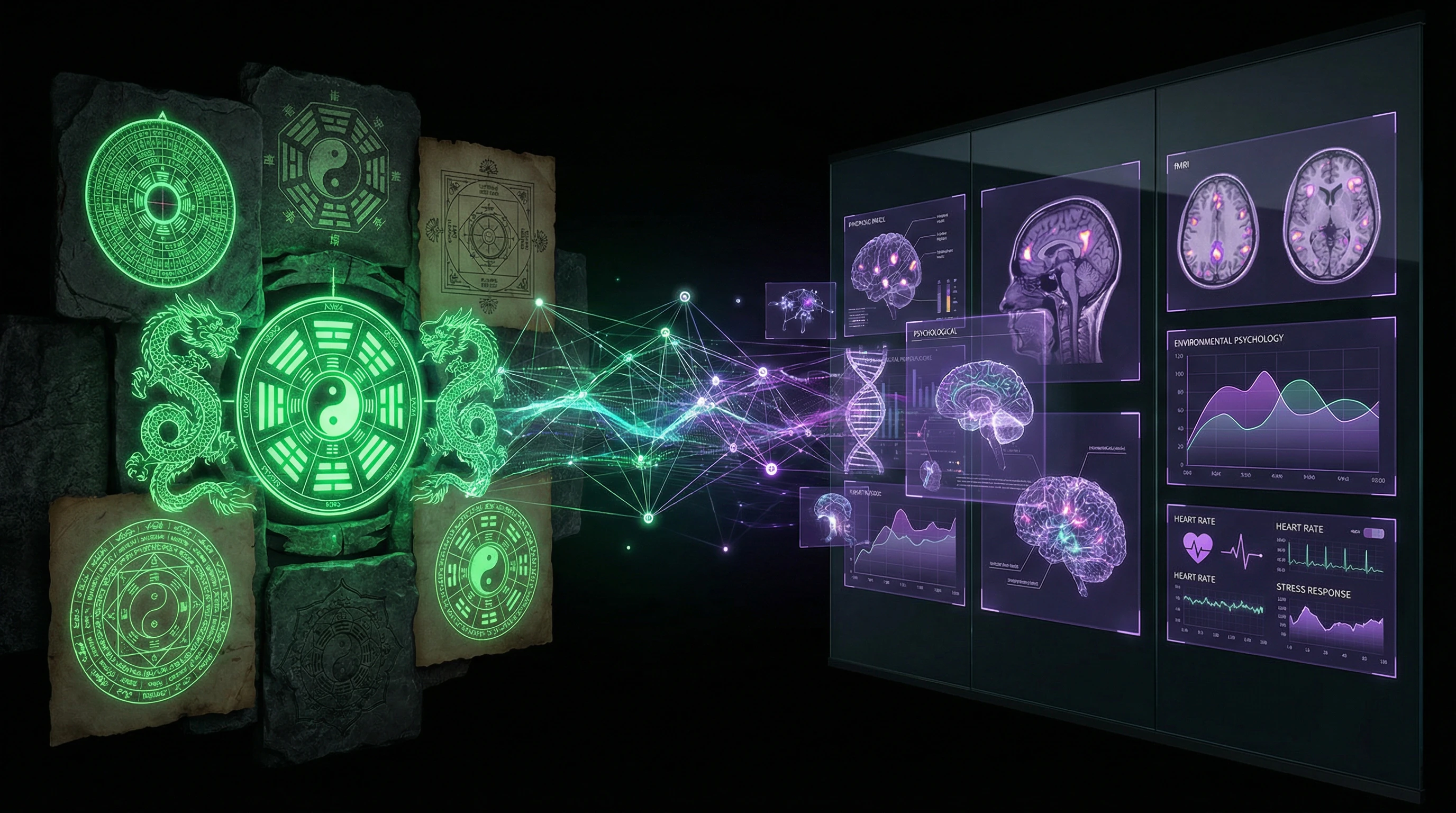
Both systems work not with magic, but with perception mechanisms: how environment affects the nervous system, circadian rhythms, attention, and behavior.
Scientific foundation of principles and psychology of spatial perception
Earth's geomagnetic field influences human biological rhythms—this is confirmed by modern research. Vastu recommendations about head direction during sleep and workspace orientation have a physiological basis.
Feng Shui principles about natural lighting, ventilation, and spatial organization align with findings from environmental psychology: environment affects cognitive functions, emotions, and productivity.
- Color therapy. Both systems use color as an intervention tool. Color psychology research confirms: different shades affect mood, energy levels, heart rate, and blood pressure.
- Natural lighting. Feng Shui and Vastu recommend maximizing daylight. Modern chronobiology confirms: lack of natural light disrupts circadian rhythms, reduces serotonin synthesis, and impairs cognitive functions.
- Air circulation. Both systems require free energy movement in space. This corresponds to findings about air quality's impact on concentration, CO₂ levels, and physiological comfort.
Integration of traditional knowledge with modern interior design
Contemporary designers adapt Feng Shui and Vastu principles to current aesthetic and functional requirements. This isn't about literal adherence to all traditional prescriptions, but about extracting universal principles.
Universal principles of both systems: natural light, free circulation in space, balance of elements, psychological comfort. They work regardless of cultural interpretation.
Professional energy audits combine traditional analysis methods with modern design tools. The result—individualized solutions that account for energetic principles, personal preferences, lifestyle, and budget.
The advantage of such integration: spaces that are aesthetically appealing, functional, and simultaneously promote physical health, emotional well-being, and achievement of life goals through conscious organization of living environment.
Knowledge Access Protocol
FAQ
Frequently Asked Questions
Feng Shui is a Chinese practice of managing Qi energy through spatial organization, while Vastu Shastra is an Indian Vedic system for harmonizing dwellings with cosmic energies. Both traditions use the concept of five primary elements and cardinal directions to create favorable environments. These systems can be applied separately or complement each other in modern interior design.
The primary difference lies in origin and methodology: Feng Shui operates with five elements (water, wood, fire, earth, metal), while Vastu includes ether as the fifth element instead of metal. The systems use different analytical tools: the Luo Pan compass and Bagua in Feng Shui, the Vastu Purusha Mandala in Vastu. However, both recognize the influence of energy flows on human well-being.
Yes, these systems complement each other beautifully and can be used together. Both traditions are based on similar principles of energetic balance and do not contradict each other in key aspects. A comprehensive approach allows for consideration of more factors and creates the most harmonious space for specific residents.
No, this is a common misconception—symbols are just one of many correction tools. Effective practice requires comprehensive analysis: room layout, cardinal orientation, residents' individual data, and energy circulation. Figurines and talismans enhance effects but do not replace proper spatial organization.
The bed should be positioned with the headboard toward a favorable direction: in Feng Shui this depends on a person's Gua number, while Vastu recommends south or east for most people. Avoid positioning feet toward the door or under ceiling beams. Both systems advise ensuring a solid headboard and free access from both sides.
The front door is considered the main channel for energy entering the home—the 'mouth of Qi' in Feng Shui and a key point in Vastu. Through it, all opportunities, prosperity, and external influences penetrate the space. Proper orientation, condition, and design of the entrance critically affect the energy of the entire dwelling and the fate of its occupants.
Start by creating an accurate floor plan with cardinal directions marked by compass. Overlay the Bagua grid (Feng Shui) or Vastu Purusha Mandala layout to analyze sectors. Assess the placement of functional zones, front door direction, sleeping areas, and problem spots, then apply corrective measures through color, elements, and symbols.
In Feng Shui, the wealth zone is located in the southeast sector and is activated by Wood and Water elements: living plants, fountains, wooden furniture, green and blue tones. Vastu recommends placing a safe or valuables in the north, associated with Kubera, the god of wealth. Avoid clutter, broken items, and symbols of decline in these zones.
No, major reconstruction is rarely required—there are numerous methods for correcting existing spaces. Use color schemes, mirrors, lighting, plants, crystals, and symbolic objects to harmonize energies. Even small changes in furniture arrangement and decor can significantly improve a space's energy without construction work.
Feng Shui calculates the Gua number based on birth date, determining favorable and unfavorable directions for a specific person. Vastu considers birth date, gender, and astrological data to personalize recommendations. Both systems recognize that universal solutions do not exist—optimal spatial organization depends on the energetic constitution of residents.
Both systems are based on centuries of empirical observations and account for real natural factors: Earth's geomagnetic fields, solar activity, psychology of spatial perception. Modern research confirms the influence of cardinal direction orientation on circadian rhythms and sleep quality. While Qi energy is not measurable by instruments, the practical results of applying these systems have been documented for millennia.
The main mistake is mindlessly copying others' solutions without considering individual factors and precise analysis of one's own space. Many incorrectly determine cardinal directions or overlay the Bagua, use incompatible elements, or overload spaces with symbols. It's important to study the fundamentals systematically or consult a qualified practitioner for personalized analysis.
Separate Fire zones (stove) and Water zones (sink, refrigerator)—these elements conflict in both traditions. Vastu recommends placing the stove in the southeast, while Feng Shui allows flexibility based on overall layout. Maintain cleanliness, avoid clutter, ensure good lighting and ventilation for free energy circulation.
Yes, both systems place great importance on this, and modern science partially confirms the influence of geomagnetic fields on sleep quality. Vastu does not recommend sleeping with your head to the north due to magnetic conflict, preferring south or east. Feng Shui determines the optimal direction individually based on Gua number, considering a person's personal energy map.
Yes, the principles of both systems work effectively in commercial spaces to increase productivity and attract success. Proper desk placement, activation of career and wealth zones, and harmonization of elements improve the work atmosphere. Many successful companies in Asia and the West use these practices when designing offices.
Prioritize recommendations from the system that resonates with your culture and beliefs, or find a compromise solution. Often apparent contradictions arise from incorrect interpretation—a qualified consultant can help find balance. Both systems are flexible enough and allow adaptation to specific conditions and individual needs of residents.