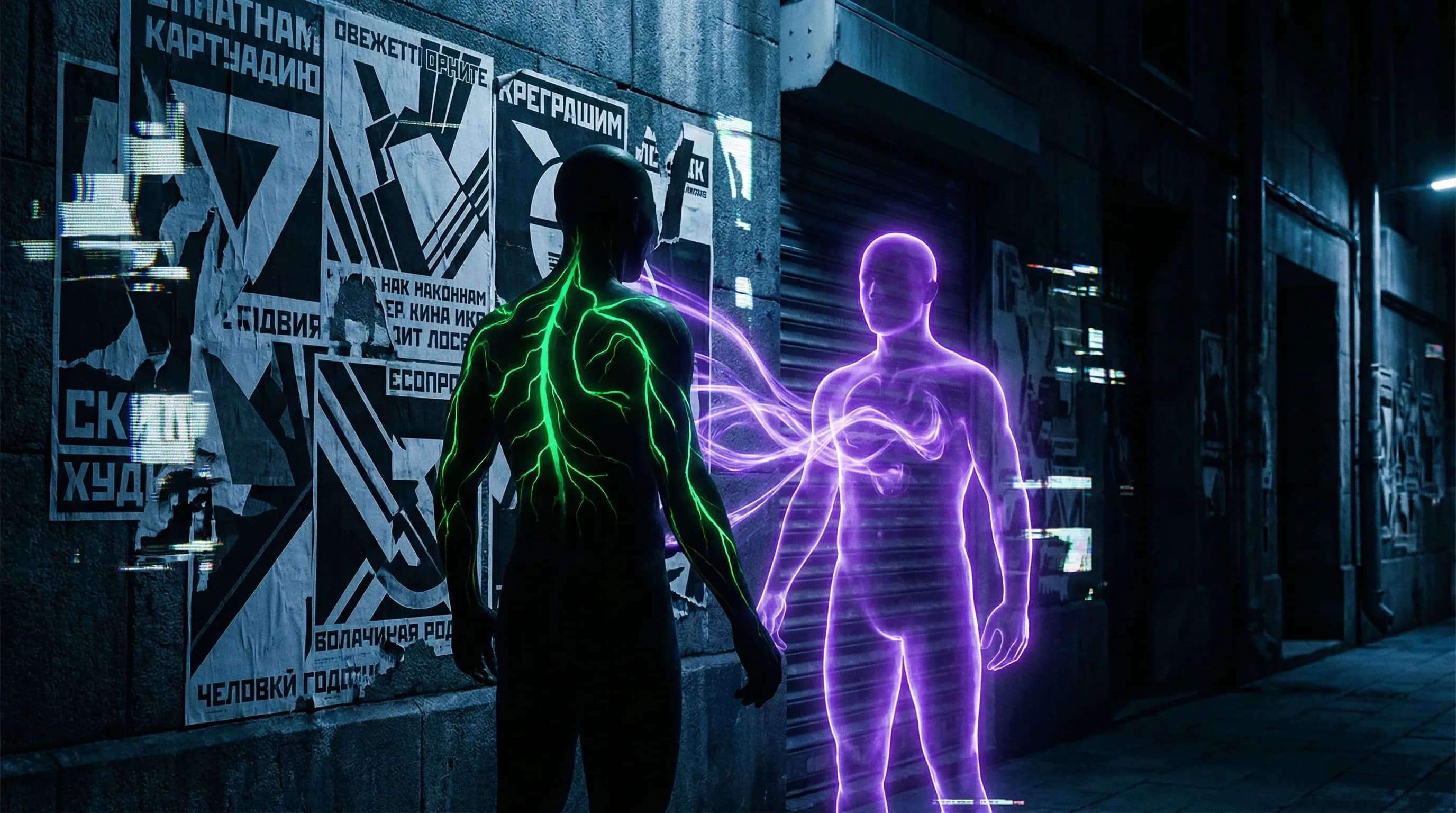
What "energy vampires" actually are—and why this is a cultural construct, not a medical term
The concept of "energy vampire" appears in neither the International Classification of Diseases (ICD-11), the DSM-5, nor any peer-reviewed medical databases. It's not a clinical diagnosis, not a psychological syndrome, and not a neurobiological phenomenon. More details in the Witchcraft section.
It's a metaphor—a cultural construct that combines three historical layers: Slavic demonology, Soviet political rhetoric, and the modern psychological services market.
🧩 Three definitions of one myth: folkloric, propagandistic, and commercial
In Slavic mythology, a vampire (upyr, vurdalak) is a corpse that drains life force from the living. In traditional beliefs, vampirism was linked to violations of burial rituals and considered a literal, physical phenomenon (S005).
The metaphorical transfer occurred much later. In the 1930s–1940s, Soviet propaganda actively used vampire and werewolf imagery to dehumanize political enemies. In official discourse, "enemies of the people" were systematically described through bloodsucker and parasite metaphors, creating moral justification for repression (S008).
This wasn't folklore—it was a deliberate rhetorical strategy, an instrument of political control disguised as tradition.
In contemporary context, the term migrated into pop psychology and coaching without any scientific validation. It describes people after whose company one feels tired, emotionally drained, or uncomfortable.
- Key distinction
- Describing subjective experience ≠ explaining mechanism. The metaphor names a phenomenon but doesn't reveal why it occurs.
🔎 Limits of applicability: when metaphor becomes dangerous
The metaphor works as a cognitive shortcut—it simplifies complex social interactions into a binary "victim-aggressor" schema. The problem arises when metaphor begins to replace analysis.
By labeling someone an "energy vampire," we make four errors simultaneously:
- We dehumanize them, denying the complexity of their motives and context
- We absolve ourselves of responsibility for setting boundaries in relationships
- We ignore possible mental disorders (depression, anxiety, personality disorders) that require professional help, not esoteric "protection"
- We create an illusion of explanation where diagnosis is needed
In post-Soviet culture, transformation metaphors (vampires, werewolves) became a way to make sense of fluid identity and social roles (S001). But artistic metaphor and psychological tool are different categories of language use.
When we apply a literary image to diagnosing human behavior, we risk substituting understanding with a label. And this substitution is the foundation for commercializing the concept.
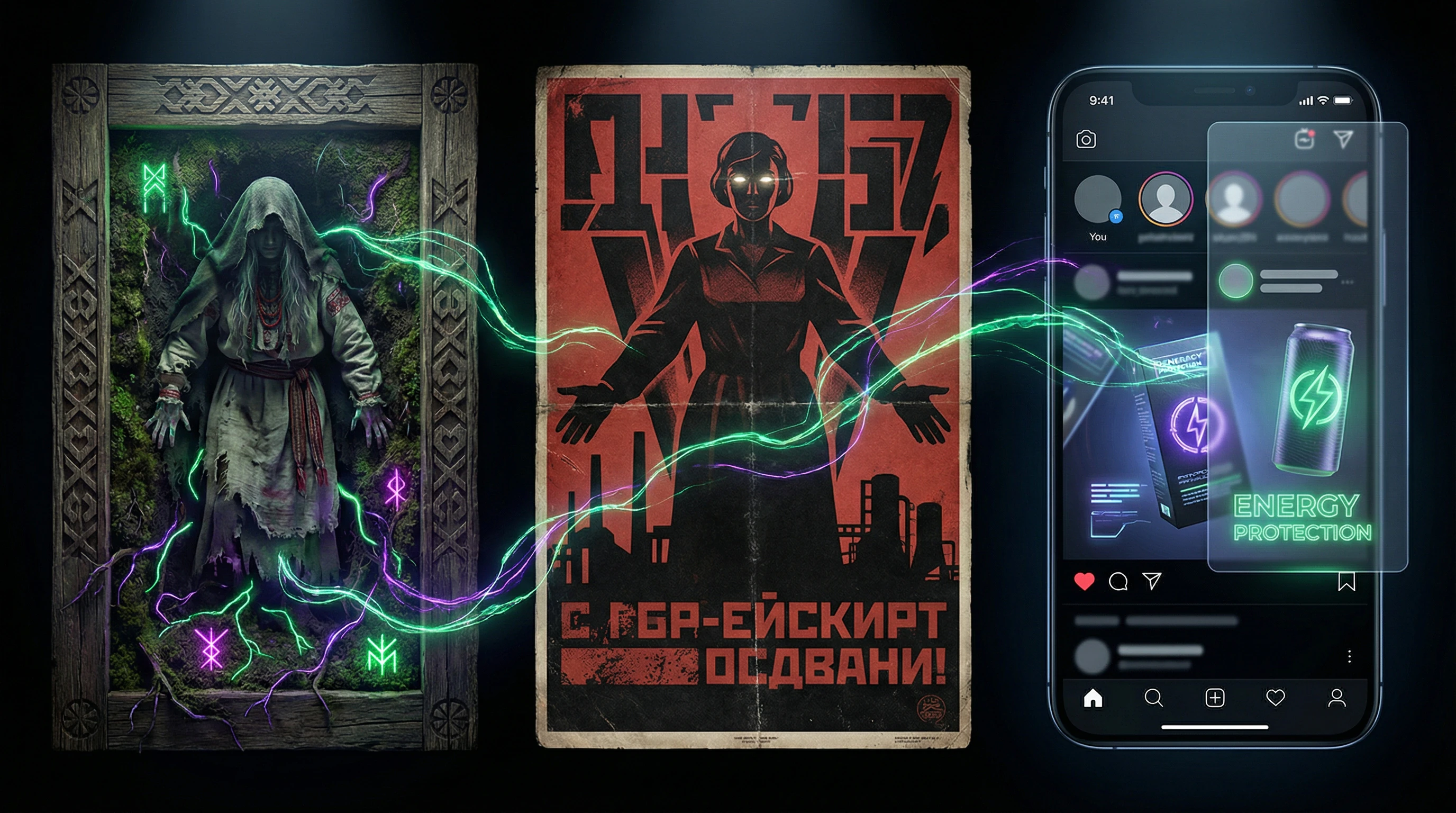
Steel Version of the Argument: Seven Reasons Why the "Energy Vampire" Concept Seems Convincing
Before dismantling the myth, we need to understand why it's so persistent. The steel version of the argument (steelman) requires presenting the strongest case for the existence of "energy vampires" — not in a literal sense, but in a functional one. More details in the Occultism and Hermeticism section.
🧠 Argument 1: The Phenomenological Reality of Emotional Exhaustion
The subjective sensation of having your "energy drained" after certain social interactions is a real, reproducible experience. People independently describe similar patterns: after conversations with certain individuals, fatigue sets in, motivation decreases, mood deteriorates.
The problem isn't that the experience is unreal, but that the "vampirism" metaphor offers a pseudo-explanation instead of a mechanism. It describes "what," but doesn't explain "how" or "why."
🔁 Argument 2: The Existence of Toxic Communication Patterns
Psychological research documents the existence of dysfunctional communication styles: constant complaining without requesting solutions, emotional blackmail, boundary violations, manipulative behavior, chronic criticism. These patterns genuinely deplete a conversation partner's resources — cognitive, emotional, temporal.
The quality of communication between people directly affects willingness to interact and the subjective sense of support. If medical communication can be either draining or supportive, the same holds true for any interpersonal interactions.
⚙️ Argument 3: The Neurobiology of Empathy and Emotional Contagion
Mirror neurons and emotional resonance systems create a physiological basis for "contagion" of emotional states. When we interact with someone experiencing anxiety, anger, or depression, our own nervous system partially reproduces these states.
Chronic interaction with people in distress can lead to secondary traumatization, emotional burnout, and exhaustion. This is especially characteristic of helping professions — healthcare workers, psychologists, social workers.
| Depletion Mechanism | Physiological Process | Where It Manifests |
|---|---|---|
| Emotional contagion | Mirror neuron activation, nervous system synchronization | Helping professions, close relationships |
| Cognitive load | Depletion of attention and working memory resources | Listening, solving others' problems |
| Conflict regulation | Parasympathetic system activation, suppression of own reactions | Asymmetric relationships |
🧩 Argument 4: Asymmetry of Emotional Labor in Relationships
In some relationships, one person systematically performs more emotional labor: listening, supporting, problem-solving, regulating conflicts — while the other predominantly consumes this support without reciprocating. This asymmetry creates an objective inequality in the distribution of psychological resources.
The "vampirism" metaphor in this context describes a real dynamic of emotional labor exploitation, albeit in dramatized form.
🕳️ Argument 5: Cultural Universality of the Parasitism Concept
Images of beings that feed on others' life force appear in mythologies across numerous cultures: succubi and incubi in European tradition, dementors in contemporary popular culture, various demons in Asian belief systems (S005). This universality may indicate that the metaphor reflects a universal human experience of exploitation and depletion in social relationships.
📊 Argument 6: The Predictive Power of the Concept in Practical Application
People who begin using the "energy vampire" frame to analyze their relationships often report practical benefits: they better recognize toxic patterns, establish boundaries, make decisions about distancing. If the concept helps people improve their quality of life, perhaps it captures something real, even if the explanatory model is imprecise.
The persuasiveness of a metaphor doesn't make it scientific. A useful tool can be built on an incorrect model of reality — and still work.
🧾 Argument 7: Economic Rationality of Attention and Energy as Resources
In the economics of attention and cognitive resources, time, focus, and emotional energy are treated as limited resources subject to allocation. From this perspective, people who systematically consume more of these resources than they contribute in exchange genuinely function as "parasites" in an economic sense — they extract value without equivalent compensation.
- Why These Arguments Are Convincing
- Each points to a real phenomenon: exhaustion, toxic patterns, neurobiological mechanisms, labor asymmetry. The problem isn't with the facts, but with their interpretation.
- Where the Error Begins
- When we move from describing the phenomenon to explaining it through a mystical "energy vampire" model instead of analyzing specific mechanisms.
- Practical Significance
- Recognizing toxic relationships is useful. But usefulness doesn't require belief in the literal existence of vampires — understanding the psychology of manipulation and exploitation is sufficient.
These seven arguments show why the "energy vampire" concept is intuitively convincing and functionally useful for many people. But the persuasiveness and utility of a metaphor don't make it a scientific explanation.
Evidence Base: What Sources Say About the Origin and Exploitation of the Concept
Systematic analysis of available sources reveals three key directions: the historical-cultural origin of the metaphor, its use in political rhetoric, and the modern commercialization of the concept. More details in the section Magic and Rituals.
📚 Slavic Roots: From Literal Vampirism to Social Metaphor
Research into vampiric mythology in Slavic cultures documents that traditional beliefs in the undead were connected to specific burial practices and explanations for unusual deaths (S005). The vampire in folklore is a literal creature, physically returning from the grave.
The metaphorical transfer to living people occurred significantly later and was linked to urbanization and secularization of society. In traditional culture, vampirism was not a psychological characteristic—it was a posthumous transformation associated with violation of rituals or "improper" death.
Modern use of the term to describe interpersonal dynamics is a radical reinterpretation of the original concept, severed from its cultural and burial context.
🚩 Soviet Propaganda: The Vampire as Enemy of the People
The Soviet propaganda machine systematically used images of vampires, werewolves, and other monsters to dehumanize political opponents (S008). This was a deliberate rhetorical strategy, not casual use of metaphor.
In official discourse of the 1930s, "enemies of the people," "Trotskyists," and "saboteurs" were regularly described as "bloodsuckers," "parasites," "vampires draining the lifeblood of the Soviet people" (S008). This rhetoric served multiple functions simultaneously.
| Rhetorical Function | Mechanism of Action | Result |
|---|---|---|
| Dehumanization | Enemy becomes monster, not human | Victims of repression lose subject status |
| Moral Justification | Violence against parasite is defense | Repression perceived as necessity |
| Mass Mobilization | Appeal to archetypal fears | Population becomes active participant |
The concept of "energy vampire" in its modern understanding carries this historical baggage. When we call someone a "vampire," we unconsciously reproduce the propaganda technique of dehumanization, transforming a complex person with their own problems and context into a one-dimensional monster-parasite.
💰 Commercialization of the Metaphor: From Folklore to Business Model
The modern coaching industry, psychological consulting, and esoteric services actively exploit the "energy vampire" concept. Searching for this term on social media yields thousands of posts offering "protection from energy vampires," "recognition techniques," and "energy cleansing methods."
The vampire metaphor has become a universal tool for describing asymmetric relationships in the most diverse contexts—from personal to geopolitical (S002). This demonstrates how flexible and adaptable the original metaphor has proven to be.
- The Problem of Commercialization
- Creates economic incentive to maintain the myth. The more people believe in "energy vampires," the greater the demand for "protection" services against them.
- Mechanism
- Classic example of creating a problem to sell a solution. The problem exists not in reality, but in a narrative that benefits the seller.
- Scale
- The self-help and esoteric industry is valued at billions of dollars, and the "energy vampire" concept is one of its key drivers.
🧬 Literary Reflection: Pelevin and Postmodern Reinterpretation
Contemporary Russian literature uses images of vampires, werewolves, and other transforming creatures to analyze the fluidity of identity in post-Soviet society (S003). In Pelevin's work, vampirism is not a literal phenomenon or psychological characteristic, but a metaphor for social and economic relations.
Educated cultural participants understand the metaphorical nature of the concept. The problem arises when the metaphor migrates from artistic discourse into pseudo-scientific discourse and begins to be perceived literally—as a diagnosis rather than an image.
Literature maintains critical distance from the metaphor, while popular psychology naturalizes it, transforming convention into fact.
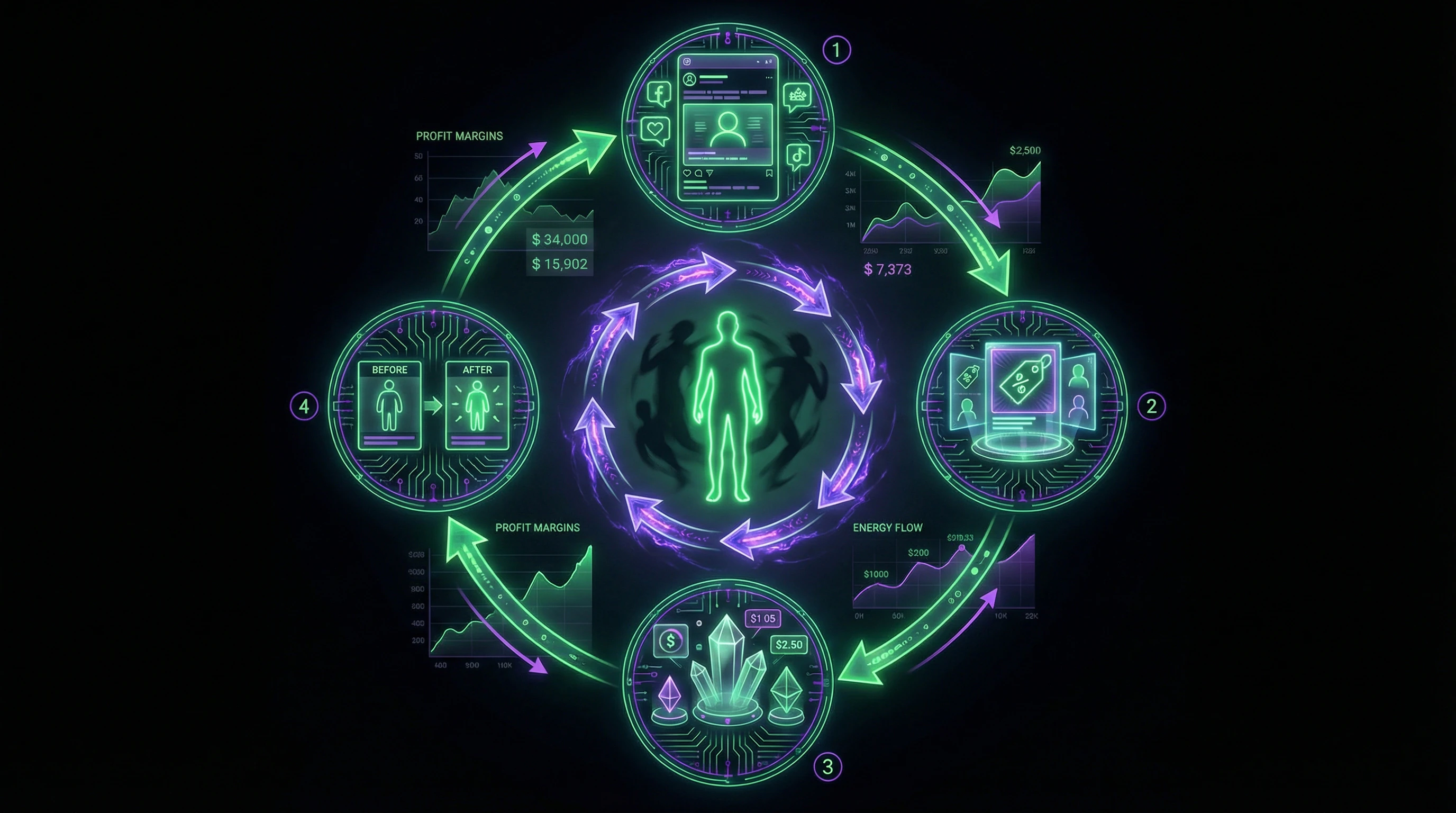
Mechanisms and Causality: What Actually Happens When We Feel "Drained"
The sensation of exhaustion after social interaction is a real phenomenon, but its mechanisms have nothing to do with mystical transfer of "energy." Let's examine scientifically grounded explanations. More details in the Sources and Evidence section.
🔁 Cognitive Load and Depletion of Self-Control Resources
The ego depletion model suggests that self-control and emotion regulation require limited cognitive resources. When we interact with someone who provokes negative emotions, violates boundaries, or demands constant emotional regulation, we deplete these resources faster.
This isn't "energy draining"—it's increased cognitive load. The difference is critical: in the first case, the problem lies with the other person (the vampire), in the second—with the characteristics of the interaction and our own regulation strategies.
🧬 Emotional Contagion and the Neurobiology of Empathy
Mirror neurons and emotional resonance systems cause us to partially experience the emotional states of people we interact with. If someone is in a state of chronic stress, anxiety, or depression, our nervous system reproduces these states.
This is an adaptive mechanism of social cognition, but it has costs. Chronic interaction with people in distress can lead to secondary traumatization—especially in people with high empathy and weak boundaries.
⚙️ Asymmetry of Emotional Labor and Non-Reciprocity
Social exchange assumes reciprocity: we give support and receive it in return. When this reciprocity is violated—one person systematically gives, the other only takes—a sense of injustice and exhaustion emerges.
This isn't vampirism, but a violation of reciprocity norms. The problem isn't that someone is "draining energy," but that the relationship is structurally imbalanced.
🧷 Violation of Personal Boundaries and Chronic Invalidation
Some people systematically violate personal boundaries: they ignore refusals, invalidate feelings, invade personal space, demand immediate attention. This creates a state of chronic defensiveness—we're forced to constantly defend our boundaries, which is exhausting.
Communication quality and respect for autonomy critically affect the therapeutic alliance. The same is true for any relationship: violation of autonomy depletes, respect for boundaries sustains.
🕳️ Projection and Attribution: When the "Vampire" Is Our Own Inability to Say "No"
Sometimes the feeling of "drained energy" is related not to the other person's behavior, but to our own inability to set boundaries. We agree to interactions we don't need, can't refuse requests, don't know how to end conversations—and then blame the other person for "vampirism."
| What we say | What's actually happening | Real solution |
|---|---|---|
| "He's a vampire, draining my energy" | I'm not setting boundaries and refusing requests | Learn to say "no" and end interactions |
| "She takes my energy" | I'm taking responsibility for her emotional state | Separate responsibility, establish boundaries for help |
| "Vampires surround me" | I'm choosing relationships that don't serve my interests | Reassess criteria for choosing people and relationships |
The vampire metaphor serves a defensive function: it allows us to avoid responsibility for our own boundaries by projecting the problem onto another. This is psychologically comfortable but counterproductive. When we acknowledge our own role in exhaustion, we gain a real tool for change—the cognitive bias becomes visible.
Conflicting Sources and Areas of Uncertainty: Where the Data Contradicts Itself
Analysis of sources reveals several areas where interpretations diverge or data is insufficient for definitive conclusions. More details in the Scientific Method section.
⚠️ Contradiction 1: Universality vs Cultural Specificity of the Concept
Images of creatures feeding on life force appear in many cultures (S005). This may indicate universality of experience. But the specific form of "energy vampire" as a psychological characteristic of a living person is a specifically post-Soviet phenomenon tied to historical context (S008).
It's unclear how applicable the concept is in cultures without Soviet propaganda baggage and Slavic demonology. This limits claims to universality.
| Position | Argument | Problem |
|---|---|---|
| Universality | Vampire myths exist everywhere | Doesn't explain why "energy vampire" as a diagnosis of living people is specifically a post-Soviet phenomenon |
| Cultural Specificity | Concept is tied to Soviet history | Doesn't account for the archetype existing in other cultures |
🔎 Contradiction 2: Usefulness of Metaphor vs Risks of Dehumanization
People report that the "energy vampire" concept helped them recognize toxic relationships and set boundaries. This is practical benefit. The same metaphor can be used to dehumanize people with mental health conditions who need help, not isolation (S008).
Sources don't provide a clear answer: does the practical benefit of the metaphor outweigh its ethical risks. This depends on context of application and user reflexivity.
The connection to cognitive biases is obvious here: the metaphor works because it simplifies complex reality, but simplification can lead to erroneous conclusions about people.
🧾 Contradiction 3: Commercialization as Problem vs as Legitimation
Commercialization of the concept creates economic incentive for its spread (S002). But the existence of a services market may indicate a real need for tools to analyze complex relationships.
- Hypothesis 1: Exploitation
- The "protection from energy vampires" industry creates and amplifies anxiety to sell solutions.
- Hypothesis 2: Legitimate Demand
- People genuinely seek ways to understand toxic relationships and need language for it.
- Reality
- Likely both mechanisms operate simultaneously. Commercialization doesn't negate the reality of need, but amplifies its pathologization.
This can be verified through fact-checking specific claims: which services actually help people set boundaries, and which only sell the illusion of control.
Cognitive Anatomy of the Myth: What Psychological Mechanisms Make the "Energy Vampire" Concept So Convincing
Understanding why the myth works is more important than simply debunking it. Let's examine the cognitive biases and heuristics that make the concept intuitively appealing. More details in the Christianity section.
🧩 Attribution Error: Overestimating Personal Factors, Underestimating Situational Ones
The fundamental attribution error causes us to explain others' behavior through their personal characteristics ("they're a vampire"), ignoring situational factors (stress, depression, life crisis). This is a cognitive shortcut that simplifies complex reality into a convenient schema.
When we label someone an "energy vampire," we essentialize their behavior—turning a temporary pattern into a permanent personality trait. It's convenient, but often inaccurate.
🕳️ Confirmation Bias: We See What We're Looking For
Once we accept the "vampirism" hypothesis, the brain begins filtering information. Every call, every question, every request for help—everything becomes proof of energy drain.
We notice coincidences and ignore non-coincidences. This isn't a perceptual error—it's cognitive resource conservation that works against us under conditions of uncertainty.
🎭 Narrative Coherence: Story Beats Chaos
The human brain is a narrator. It seeks causal connections even when they don't exist. The "energy vampire" concept offers a ready-made plot: there's an enemy, there's a victim, there's an explanation for fatigue and disappointment.
This story is more convincing than admitting: "I'm tired because I work a lot, sleep little, and need help from a therapist." The vampire is a metaphor that transforms personal responsibility into a diagnosis.
- The narrative creates an illusion of control: if the enemy is named, it can be avoided
- The story explains discomfort without self-criticism
- The myth offers a community of like-minded people (others who also "see vampires")
🔄 Social Reinforcement and Echo Chambers
The concept spreads not because it's true, but because it's socially advantageous. In groups of people who believe in energy vampires, each new story reinforces the myth.
This isn't a conspiracy—it's the natural result of how social networks and communities function. Fact-checking is powerless here because we're dealing not with facts, but with social identity.
| Mechanism | How It Works | Why It's Convincing |
|---|---|---|
| Attribution | Behavior → personality trait | Simplifies complexity |
| Confirmation | Seeking evidence for hypothesis | Creates illusion of pattern |
| Narrative | Chaos → story with enemy | Provides meaning and control |
| Social | Group confirms myth | Belonging trumps truth |
⚡ Why This Is Diagnosis, Not Criticism
These mechanisms work in everyone. They're not signs of stupidity or naivety—they're signs of how human thinking is structured. The energy vampire myth isn't an error of individual people, but a systemic vulnerability in our cognitive architecture.
Protection from the myth begins not with refutation, but with understanding: why this story is so attractive, and what real problems it masks.