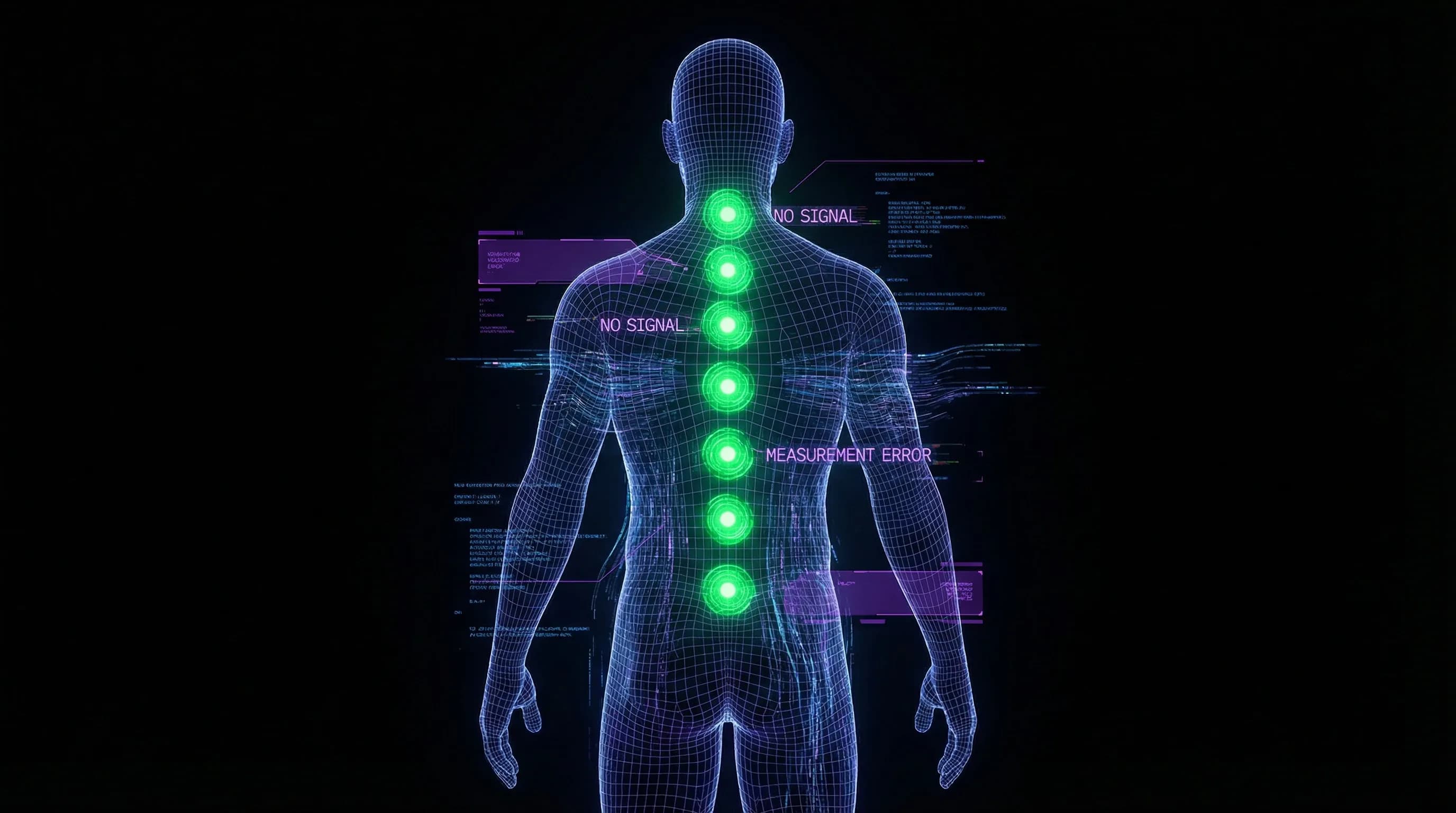
The chakra concept is an ancient "subtle body" model that modern science attempts to measure. Biofield research shows subjective experiences among practitioners but does not confirm the existence of energy centers as physical structures. Systematic reviews document therapeutic effects of meditation and energy practices, but the mechanism remains unclear—whether "prana" works or psychophysiological self-regulation. Evidence level: low for the anatomical chakra model, moderate for clinical effects of practices.
👁️ Seven energy centers along the spine, invisible flows of prana, a subtle body allegedly governing health and consciousness—the chakra concept has migrated from ancient yogic texts into modern wellness industries, integrative medicine clinics, and even scientific journals. But what happens when a millennia-old metaphysical model is subjected to 21st-century instrumentation? Do chakras exist as anatomical structures, or are they a cultural artifact operating exclusively through psychological mechanisms? 🖤 This material is not an attempt to "debunk" the tradition, but an analysis of the boundary between spiritual practice and scientific claims to objectivity.
What Are Chakras in the Traditional Model and Why Is Science Even Trying to Find Them
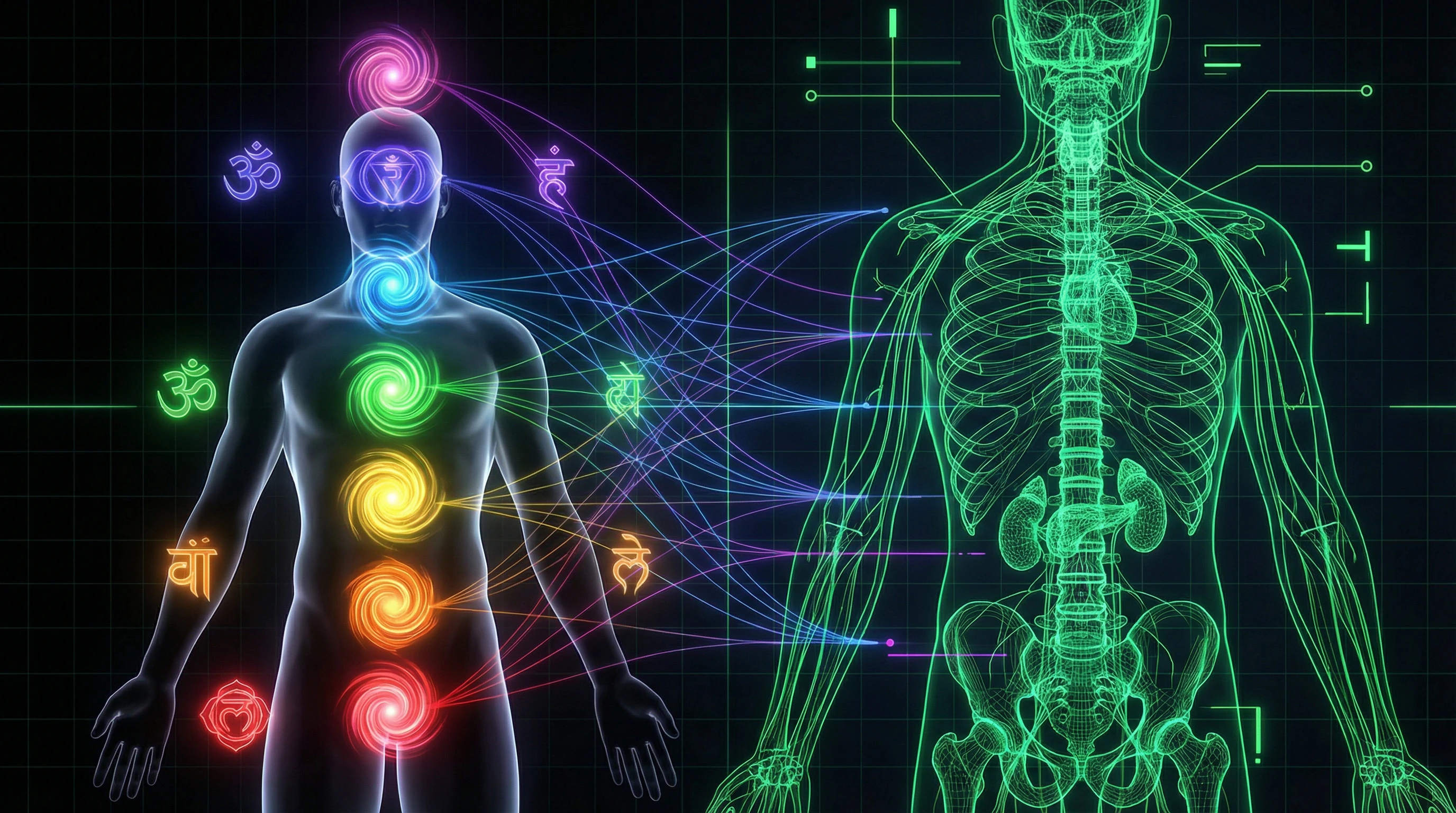
Chakras (Sanskrit चक्र, "wheel") — a concept from Indian tantric and yogic traditions, describing energy centers in the "subtle body" (sukshma-sharira), which permeates the physical body but does not correspond to it anatomically. The classical model identifies seven main chakras along the central energy channel (sushumna-nadi), from the base of the spine to the crown of the head. More details in the section Karma and Reincarnation.
Each chakra is associated with psychological qualities, organs, endocrine glands, and colors. This system never claimed the status of an anatomical description in the Western sense — it was a map for meditative practices, visualizations, and working with consciousness.
- Muladhara (root)
- Base of the spine, survival and physical security.
- Svadhisthana (sacral)
- Pelvic region, sexuality and creativity.
- Manipura (solar plexus)
- Will and personal power.
- Anahata (heart)
- Love and compassion.
- Vishuddha (throat)
- Communication and self-expression.
- Ajna (third eye)
- Intuition and perception.
- Sahasrara (crown)
- Spiritual unity and transcendence.
Why Science Became Interested in Energy Centers
Interest arose at the intersection of three trends: the popularization of yoga and meditation in the West since the 1960s, the development of integrative medicine, and the emergence of the "biofield" concept (S001) — a hypothetical field of subtle energy that supposedly surrounds and permeates living organisms. Biofield became a scientific euphemism for prana, chi, ki, and other cultural terms for "life force."
Researchers asked: can we detect objective correlates of chakras — changes in electromagnetic fields, skin temperature, nervous system activity, or biochemical markers in corresponding body regions?
The Boundary Between Metaphor and Claims of Physical Reality
Traditional texts described chakras as elements of the "subtle body," which by definition is not physical. But when energy therapy practitioners (reiki, pranic healing, therapeutic touch) claim they "work with patients' chakras" and achieve clinical effects, questions arise about the mechanism.
| Scenario | What This Means |
|---|---|
| Chakras have a physical correlate | There should be measurable biophysical markers in corresponding body regions. |
| Effect works through placebo or relaxation | Chakras are a useful metaphor, but not the cause of improvement. |
| Psychological suggestion works | Patient expectation and therapist attention create the result. |
Scientific research attempts to separate these hypotheses. If the effect is real, then either chakras have a physical correlate, or something else is at work. This distinction is critical for understanding what actually happens in practices related to archetypes and energy models.
Steelman: Five Strongest Arguments for the Reality of Chakras and Biofields
Before examining the evidence base, it's necessary to present the most convincing arguments from proponents of the chakra concept—not in caricatured form, but in their strongest version (the "steelman" principle). This allows us to avoid straw man fallacies and honestly assess where exactly the boundary lies between justified observations and unjustified conclusions. More details in the section Divination Systems.
🔬 Argument 1: Subjective Experiences of Practitioners Are Reproducible and Specific
Thousands of practitioners of meditation, yoga, and energy therapies report similar sensations in areas corresponding to chakras: warmth, tingling, pulsation, pressure, "energy flows." These sensations are localized in predictable zones (base of spine, solar plexus, center of chest, between eyebrows) and correlate with specific practices.
Qualitative research documents that practitioners from different cultures, unfamiliar with Indian tradition, describe similar phenomena (S001). If chakras were purely cultural constructs, such cross-cultural reproducibility would be unlikely.
- Sensations are localized at anatomically predictable points
- Descriptions match between independent groups of practitioners
- Intensity correlates with depth of practice and technique
- Phenomena are reproducible under controlled meditation conditions
🧬 Argument 2: Anatomical Correspondence with Nerve Plexuses and Endocrine Glands
Chakra locations roughly correspond with major nerve plexuses and endocrine glands: muladhara—sacral plexus and adrenal glands, svadhisthana—lumbar plexus and gonads, manipura—solar plexus and pancreas, anahata—cardiac plexus and thymus, vishuddha—cervical plexus and thyroid gland, ajna—pituitary gland, sahasrara—pineal gland (S002).
Proponents claim that ancient yogis intuitively "mapped" key nodes of neuroendocrine regulation using introspective methods. Modern anatomy allegedly confirms their insights.
📊 Argument 3: Clinical Effects of Energy Practices Are Documented in Systematic Reviews
Systematic reviews show that practices based on the biofield concept (Reiki, therapeutic touch, pranic healing) demonstrate statistically significant effects in reducing pain, anxiety, and improving quality of life for cancer patients (S005).
If these practices "work with chakras" and produce measurable results, then they must be affecting something real—even if the mechanism is unclear. Absence of explanation doesn't negate presence of effect.
🧠 Argument 4: Chakra Meditation Alters Autonomic Nervous System Activity
Research shows that meditative practices involving visualization and concentration on chakras affect heart rate variability (HRV), sympathetic and parasympathetic nervous system activity, and cortisol levels (S006). Buddhist meditative traditions working with energy centers demonstrate specific patterns of neurophysiological changes.
This indicates that "working with chakras" is not empty visualization, but a technique that triggers real physiological processes.
🔁 Argument 5: Phenomenology of "Kundalini Awakening" and Spontaneous Energetic Experiences
There are documented cases of spontaneous "energetic crises"—intense physical and psychological experiences that practitioners describe as "kundalini awakening" (energy rising through the chakras). These states include involuntary movements, heat, visions, altered states of consciousness, and can last for months.
They don't fit standard psychiatric diagnoses and require a specific approach (S007). If chakras were fiction, where would such specific and reproducible phenomenology come from?
Evidence Base: What Research Shows About Biofields, Prana, and Energy Practices
Let's move to a systematic analysis of scientific data. More details in the section Numerology.
Or are the observed effects explained by known psychophysiological mechanisms?
📊 Systematic Review of Prana and Biofield Perception: Subjective Sensations Without Objective Correlates
A meta-synthesis of qualitative research (S011) analyzed data on the perception of "subtle energy" (prana) by practitioners and patients receiving biofield therapies. The study synthesized results from three databases (PubMed, Web of Science, Scopus), including qualitative, exploratory, and mixed methods.
Practitioners report a wide range of physical sensations: warmth, tingling, vibration, pressure, "flows" or "waves" in the body. These sensations are localized in areas traditionally associated with chakras, but can also arise in other zones (S011).
Psychological experiences include deep relaxation, emotional release, a sense of "energetic connection" with the therapist. A third category—"awareness experience"—describes heightened attention to one's own mental processes (S011).
Critically important: all this data is based on self-reports. Not a single study in the review provided objective measurements (skin temperature, electromagnetic fields, biochemical markers) that correlated with subjective sensations of "prana."
"Putative energy fields are based on the belief that a subtle form of life energy permeates all living systems, which have no standardized, reproducible measurements" (S011).
🧾 Systematic Review of Meditation and Chakra Balance: Therapeutic Effects Without Proof of Mechanism
A systematic review following PRISMA 2020 protocol (S010) evaluated scientific evidence for the connection between meditation and "energetic chakra balance." The review included randomized controlled trials examining clinical effects of chakra-focused meditative practices.
| Parameter | Result | Interpretation |
|---|---|---|
| Anxiety, depression | Statistically significant reduction | Comparable to other forms of meditation without chakra concepts |
| Sleep quality | Improvement | General relaxation effect, not specific to chakras |
| Objective measurements of "chakra state" | Absent | No validated instruments for assessment |
| Self-assessment questionnaires | Measure practitioners' beliefs | Do not reflect physical parameters |
Not a single study in the review measured "chakra state" before and after practice. Self-assessment questionnaires exist (e.g., Chakra Assessment Questionnaire), but they measure practitioners' subjective beliefs, not physical parameters (S010).
🧬 Effects of Buddhist Meditation on the Autonomic Nervous System: Real Effects, But Not Through "Energy Centers"
Research on the effects of Buddhist meditative traditions on the autonomic nervous system and attention (S009) showed that practices involving concentration on energy centers (e.g., tantric visualizations) alter heart rate variability (HRV), sympathetic and parasympathetic system activity.
These changes are explained by known mechanisms: meditation activates the prefrontal cortex, reduces amygdala activity, modulates the vagus nerve. There is no need to postulate the existence of "energy channels" to explain the observed effects (S009).
Localizing attention on specific body areas (chest, abdomen, between eyebrows) can enhance interoceptive awareness and influence breathing, which in turn affects autonomic regulation.
The authors found no specific activity patterns that correlated with the traditional chakra model. Effects depended on the type of meditation (concentration vs. open monitoring), not on "working with specific chakras."
🧪 Biofield Therapies: Clinical Effects vs. Mechanism of Action
Systematic reviews of biofield therapies (reiki, therapeutic touch) (S011) show moderate evidence of effectiveness in reducing pain, anxiety, and improving quality of life, especially in palliative care and oncology.
- Effects do not exceed placebo in well-controlled studies.
- When therapists don't know whether they're working with a real patient or "empty space" (studies with screens), they cannot detect the presence of a "biofield" better than random guessing (S011).
- The mechanism of action is not "energy transfer," but psychological factors: attention, empathy, ritual, expectation.
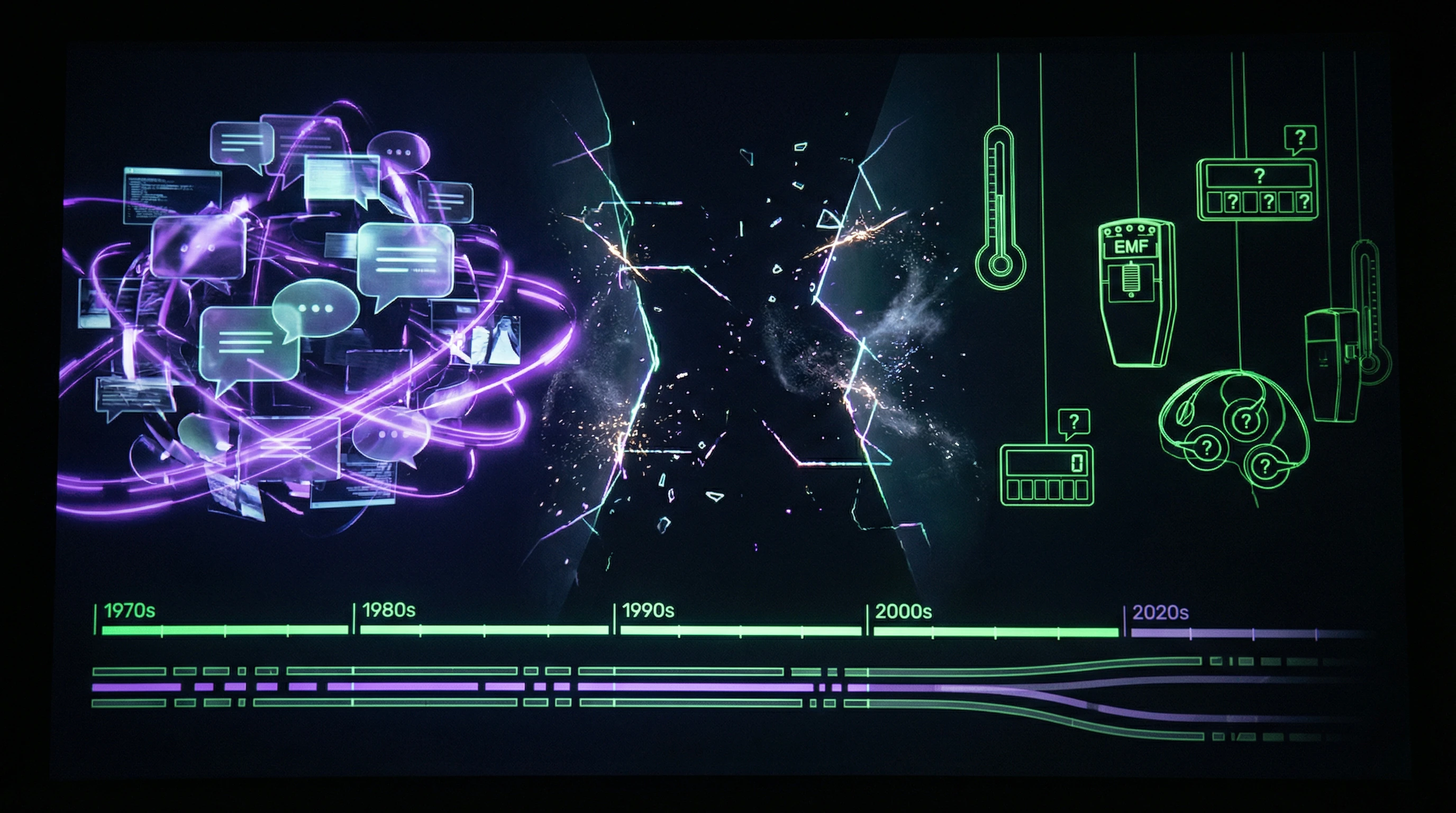
- Attempts to measure the "biofield" using instruments (electromagnetic field detectors, gas discharge visualization, biophotonic emission) have not yielded reproducible results.
"Putative energy fields have no standardized, reproducible measurements" (S011).
🧾 Direct Question: Is There Scientific Evidence for the Existence of Chakras?
A literature analysis on ResearchGate (S012) poses this question directly. The result is unequivocal: there is not a single study that has demonstrated the existence of chakras as anatomical, physiological, or energetic structures using objective measurement methods.
- Subjective reports from practitioners
- Based on self-perception, not confirmed by objective markers.
- Correlations between chakra locations and nerve plexuses
- Do not prove causality and do not explain the mechanism of "energetic" action.
- Clinical effects of practices
- Explained without invoking the concept of chakras—through relaxation, attention, interoception.
The authors conclude: the concept of chakras may be a useful metaphor for introspective work and psychotherapy, but does not have the status of a scientific theory (S012).
Attempts to "prove" chakras using scientific methods are based on a categorical error—conflating a metaphysical model with physical reality.
Mechanism or Illusion: Why "Chakra Work" Can Produce Effects Without Chakras Actually Existing
If chakras cannot be detected by objective methods, but practices associated with them produce measurable clinical effects, the question arises: through what mechanisms does this occur? The answer lies in the fields of psychophysiology, neurobiology of attention, and placebo effects. For more details, see the section Cognitive Biases.
🧬 Interoceptive Awareness and Somatic Focusing
Chakra meditation practices require directing attention to specific body areas (base of spine, solar plexus, center of chest). This enhances interoceptive awareness—the ability to perceive internal body signals (heartbeat, breathing, muscle tension).
Increased interoception correlates with reduced anxiety, improved emotional regulation, and overall well-being (S009). There's no need to postulate "energy centers"—it's sufficient to recognize that focusing attention on the body triggers real neurophysiological processes.
🔁 Modulation of the Autonomic Nervous System Through Breathing and Visualization
Many chakra work practices include specific breathing techniques (pranayama) and visualization. Slow diaphragmatic breathing activates the parasympathetic nervous system, reduces cortisol levels, and improves heart rate variability (S009).
Visualization of colors, symbols, or "energy flows" engages the prefrontal cortex and limbic system, influencing emotional state. These mechanisms are well-studied and don't require the hypothesis of a "subtle body."
🧷 Ritual, Context, and Therapeutic Alliance in Biofield Therapies
When a therapist "works with a patient's chakras" (for example, in Reiki or pranic healing), a powerful therapeutic context is created: attention, touch (or proximity of hands), calm environment, expectation of healing.
| Context Component | Neurobiological Mechanism | Clinical Outcome |
|---|---|---|
| Therapist attention | Activation of reward system | Stress reduction |
| Touch / proximity | Oxytocin release | Improved trust and relaxation |
| Expectation of healing | Placebo effect (endorphins, immune response) | Pain and symptom relief |
These factors activate the placebo effect, which involves real neurobiological mechanisms: endorphin release, reduced activity in pain centers, improved immune function (S011). It's not "prana" that heals, but the psychophysiological response to ritual and care.
⚙️ Cultural Framework and Meaning-Making in Practice
For practitioners who believe in chakras, this model provides a meaningful framework for interpreting bodily sensations and emotional experiences. "Heart chakra blockage" becomes a metaphor for emotional closure, "opening the third eye"—a symbol of developing intuition.
These metaphors can be therapeutically useful even if they don't correspond to physical reality. Psychotherapy has long used metaphors (for example, "inner child") without claiming their literal existence. For more on how archetypes and metaphors become commercial products, see the article "Divine Femininity: How an Archetype Became a Commercial Product and Why Science Finds No Evidence for It."
Conflicts and Uncertainties: Where Sources Diverge and What Remains Disputed
Scientific literature on chakras and biofields demonstrates significant divergence in data interpretation. Let's examine key points of disagreement. For more details, see the Reality Check section.
🧩 The Debate on Biofield Nature: Physical Phenomenon or Cultural Construct?
Some researchers (particularly in integrative medicine) insist that the biofield is a real but not yet measured physical field, analogous to electromagnetic fields but more subtle (S003). They cite historical examples: electromagnetism was once "invisible" and "unmeasurable" too.
Opponents counter: the absence of measurements after decades of attempts is not a sign of "subtlety" but an indicator of the phenomenon's absence. Electromagnetic fields were discovered and measured within years of hypothesis formulation. The biofield has remained elusive for half a century.
The analogy with scientific history cuts both ways: electromagnetism was discovered because it existed. Absence of evidence after 50 years of searching is evidence of absence.
🔬 Methodological Conflict: Qualitative vs. Quantitative Research
Research in traditional medicine often relies on qualitative methods: descriptions of patient sensations, clinical observations, text interpretation (S002), (S004). Quantitative studies are rare and often contain methodological problems: small samples, absence of control groups, author conflicts of interest.
Critics point out: subjective reports of "feeling energy" don't distinguish real physical effects from placebo, suggestion, or cultural expectation. Proponents counter that the Western paradigm of "objective measurement" is inapplicable to phenomena that are by definition subjective.
| Position | Argument | Weakness |
|---|---|---|
| Biofield exists but isn't measurable by current instruments | Historical examples of unknown phenomena | 50 years of searching without a single reproducible result |
| Chakras are metaphors for psychosomatic processes | Explains clinical effects without new entities | Doesn't explain why tradition chose these specific locations |
| Chakra effects are pure placebo | Parsimonious and testable | Doesn't account for practice specificity and cultural differences in outcomes |
🎯 The Specificity Debate: Why Do Different Traditions Describe Different Systems?
If chakras are objective reality, why do the Indian system (7 chakras), Chinese (meridians and dantians), Tibetan (5 chakras), and Western esotericism (up to 12 chakras) describe them differently? (S001), (S006).
Unity proponents counter: these are variations of one phenomenon, like different maps of the same territory. Critics respond: if maps contradict each other in details, this indicates absence of territory, not its complexity.
Cultural specificity of descriptions is not proof of reality but a sign of cultural construction. Real physical phenomena are described identically regardless of culture.
⚡ Unresolved Question: Mechanism vs. Metaphor
It remains open: do chakra practices work because chakras exist as physical structures, or because they function as cognitive tools for managing attention, breathing, and bodily awareness? (S005), (S007).
If the latter is true, then chakras are not an error but a successful metaphor. But then they cannot be called "energetic anatomy" without qualifications. This creates risk: people begin believing in the literal existence of chakras and refuse medical care.
For deeper exploration: see how metaphors become diagnoses and problems with diagnostic devices in esotericism.
Consensus is absent. The scientific community awaits reproducible data. Traditional schools insist on their own validity criteria. Patients get results, but it remains unclear through what mechanism.
Counter-Position Analysis
⚖️ Critical Counterpoint
Categorical denial of chakras ignores the history of science and methodological limitations of current approaches. Below are arguments that require honest examination, not dismissal.
Premature Denial
The history of science is full of examples where phenomena considered "unscientific" (placebo effect, neuroplasticity, epigenetics) later received explanation. Perhaps chakras are a phenomenological reality for which we have not yet developed an adequate language of measurement. Absence of evidence is not equal to evidence of absence.
Ignoring Qualitative Data
Systematic qualitative research documents stable patterns of subjective sensations among practitioners from different cultures. Phenomenology of consciousness and interoception is a legitimate field of research, and dismissing subjective experience as "unscientific" may be a methodological error. Perhaps chakras are not physical structures, but stable patterns of bodily awareness with a neurophysiological correlate that we have not yet identified.
Underestimating the Mechanism
The claim that effects of practices are explained by "relaxation" and "attention" itself requires explanation. Why does focusing attention on specific areas of the body lead to specific psychophysiological changes? Perhaps the chakra model is an empirical map of zones with heightened interoceptive sensitivity, and its value lies in the functional anatomy of attention, not in "energy."
Risk of Cultural Imperialism
Applying Western scientific epistemology to non-Western knowledge traditions is a category error. Chakras never claimed the status of anatomical structures in the Western sense; they are elements of soteriological practice, not medical anatomy. Demanding "scientific proof" from chakras is like demanding empirical evidence for a musical scale.
Paradigm Shift
If future research discovers reproducible correlates of "energetic sensations" (specific fMRI patterns, changes in bioelectric fields), current conclusions will become outdated. The science of consciousness and interoception is rapidly developing, and what seems like "pseudoscience" today may receive neurobiological explanation tomorrow.
FAQ
Frequently Asked Questions

Author of the Cognitive Immunology Hub project. Researches mechanisms of disinformation, pseudoscience, and cognitive biases. All materials are based on peer-reviewed sources.