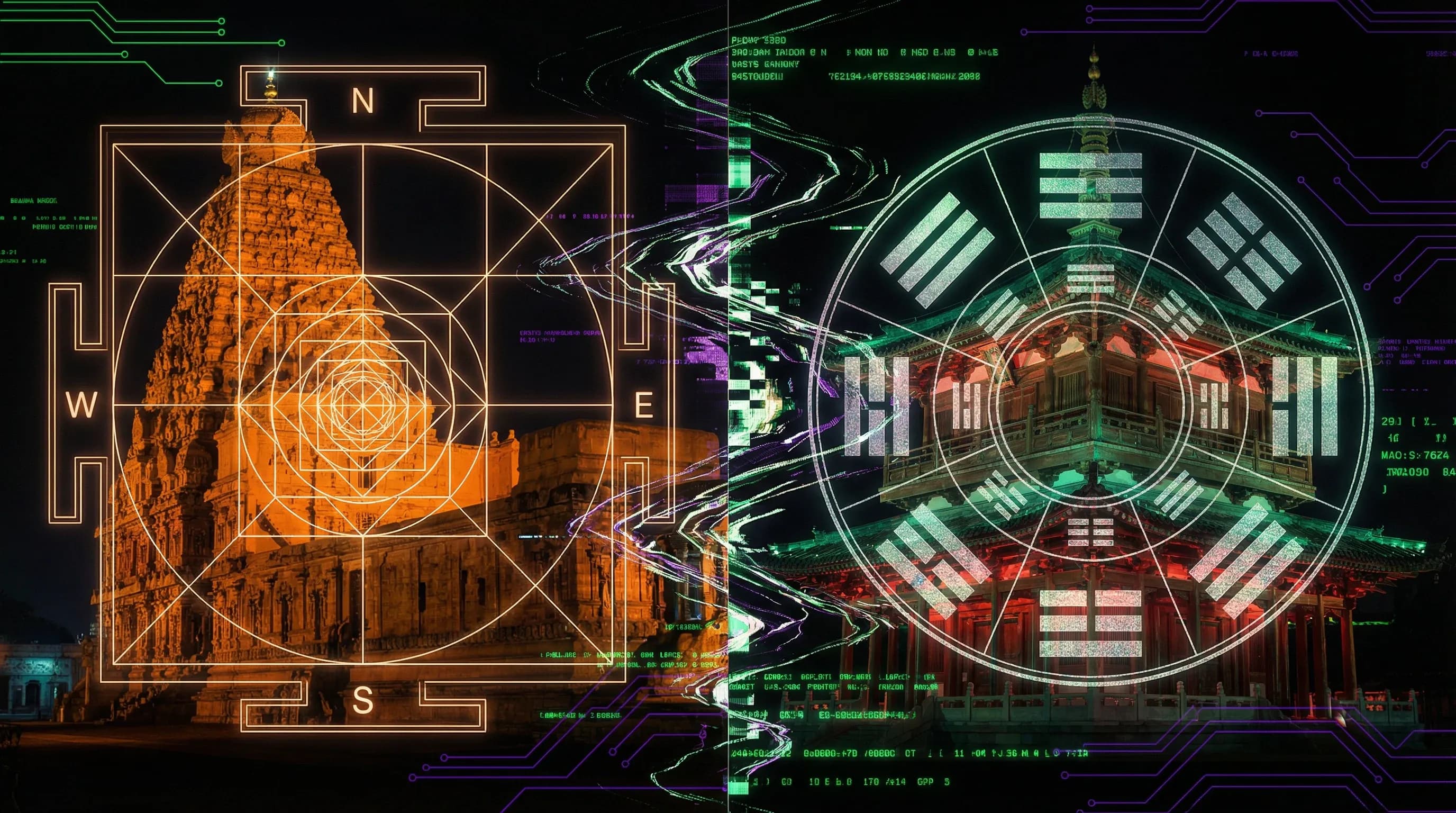
 🏠 Feng Shui and Vastu
Energy Practices: A Critical Look at Commercial "Subtle Body" Techniquesλ
Alternative methodologies promising control over "life energy" have become a popular segment of the wellness industry, but scientific evidence of their effectiveness is absent.
Overview
Energy practices are commercial techniques working with "subtle body" and "life energy," actively sold through online courses, retreats, and info-business funnels. No scientific evidence exists for "energy channels" 🧬 or manipulable "chi," but these methods exploit cognitive biases: placebo effect, illusion of control, confirmation bias. We examine influence mechanisms — from meditation neurobiology to social dynamics of paid communities.
🛡️
Laplace Protocol: Energy practices lack scientific foundation. Subjective sensations during practices may be explained by relaxation, placebo effect, or meditative states, but do not prove "energy" manipulation. Critically evaluate commercial offers and do not replace necessary medical care with energy practices.
Reference Protocol
Scientific Foundation
Evidence-based framework for critical analysis
Navigation Matrix
Subsections
[chakras-aura]
Chakras, Aura, and Energy
An exploration of ancient concepts of human energy centers and fields in the context of spiritual traditions, modern practices, and scientific skepticism
Explore
[fengshui-vastu]
Feng Shui and Vastu
Chinese and Indian traditions of space organization, based on principles of energy balance, Chi flow management, and harmony with cosmic forces.
Explore
Protocol: Evaluation
Test Yourself
Quizzes on this topic coming soon
Sector L1
Articles
Research materials, essays, and deep dives into critical thinking mechanisms.
🏠 Feng Shui and Vastu 🌈 Chakras, Aura, and Energy
 🏠 Feng Shui and Vastu
 🏠 Feng Shui and Vastu
 🌈 Chakras, Aura, and Energy
 🏠 Feng Shui and Vastu
 🌈 Chakras, Aura, and Energy
⚡
Deep Dive
What lies behind the term "energy practices": from meditation to commercial courses
Energy practices are a controversial field of alternative wellness techniques that claim to work with "subtle energy" or "life force" of the human body. In the English-speaking market, they are distributed through online courses, retreats, and self-development literature.
Practitioners promise stress management, improved physical health, increased energy, spiritual growth, and enhanced intuition. Critical analysis reveals significant overlap with the infobusiness sector and raises questions about scientific validity.
Types of energy practices
- Meditative practices
- Static, contemplative techniques focused on internal work with consciousness and presumed energetic flows.
- Dynamic practices
- Based on movement and physical activity as a means of manipulating body energy.
- Specialized systems
- Reiki and Kundalini Reiki — specific systems with their own protocols and certifications.
- Retreats
- Immersive experiences of withdrawal from daily life for intensive energetic work.
The distinction between types is often more marketing than substantive. Meditation serves as a component of most approaches.
Core concepts
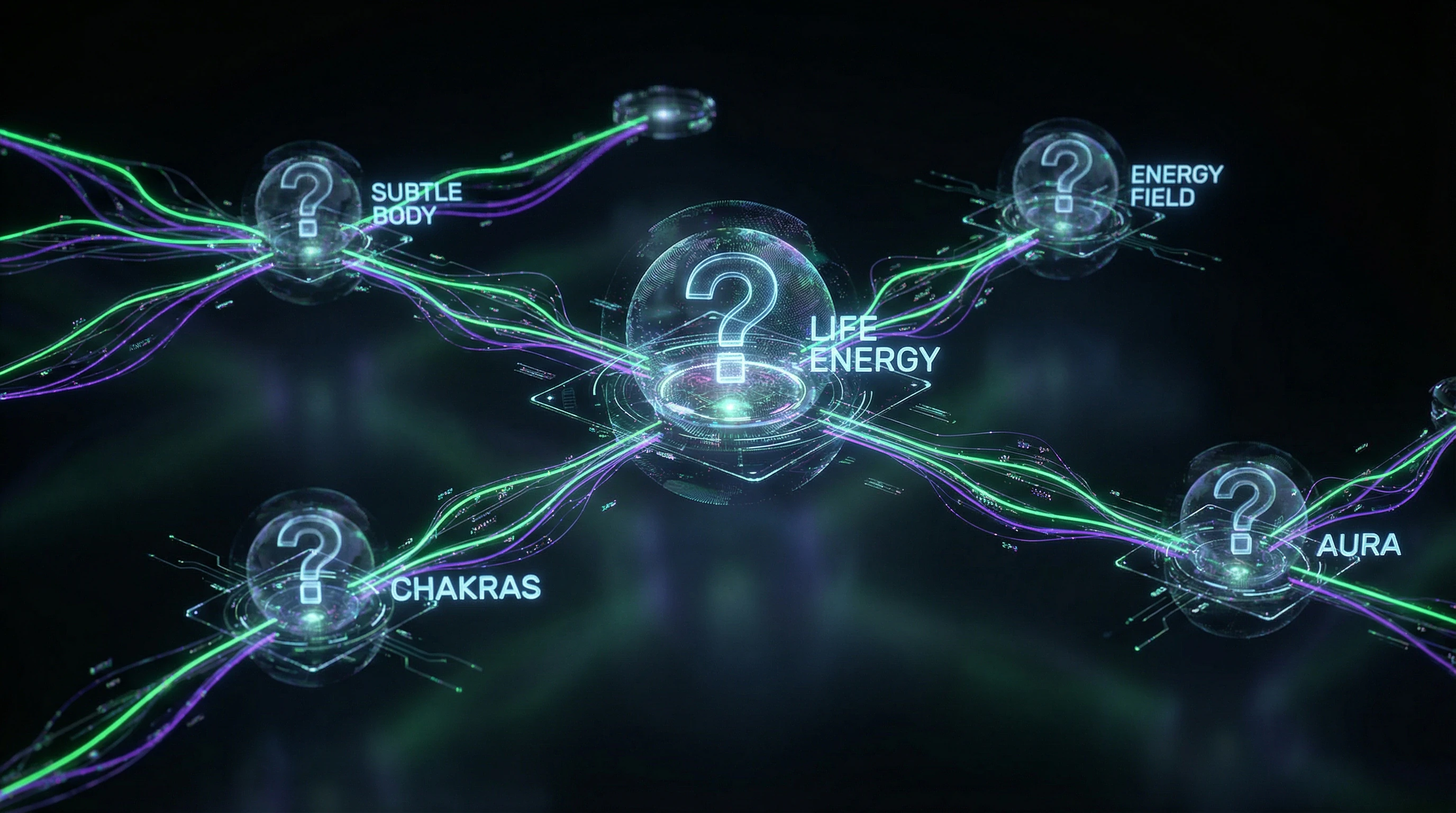
Three interconnected terms form the theoretical foundation of energy practices: "subtle body," "life energy," and "energy field." None of them have scientific confirmation.
| Term | Definition in energy practices | Status |
|---|---|---|
| Subtle body | Presumed energetic component existing parallel to the physical body | Metaphysical construct |
| Life energy | Fundamental force that can allegedly be manipulated through techniques | Not subject to empirical verification |
| Energy field | Presumed field surrounding and permeating the body | Lacks scientific confirmation |
Practitioners claim that exercises help work with this "subtle body," but these concepts remain outside the sphere of scientific verification.
Scientific Consensus: Why "Subtle Bodies" Remain Unproven
Critical analysis of energy practices reveals a fundamental absence of scientific evidence confirming the existence of "subtle bodies" or manipulable life energy as described by practitioners. Peer-reviewed research has not validated the field's core claims.
Key critical concerns: absence of empirical evidence, commercial exploitation through courses and certifications, pseudoscientific health claims without support. Practitioners make wellness assertions without scientific foundation, raising serious ethical questions.
- No reproducible scientific experiment has confirmed the existence of "subtle bodies."
- Specific claims about manipulating "subtle energy" remain without empirical support.
- While meditation has scientific backing, the specific claims of energy practices extend beyond proven effects.
- No scientific validation exists for "energy frequencies" as described by practitioners.
Absence of Empirical Evidence for "Subtle Bodies"
Despite widespread adoption of the "subtle bodies" concept in energy practices, no reproducible scientific experiment has confirmed their existence. Subjective experiences may result from relaxation, placebo effects, or meditative states.
Benefits of energy practices may overlap with proven meditation and mindfulness techniques, but specific claims about "energy" remain unconfirmed.
Physiological and Psychological Explanations for Subjective Sensations
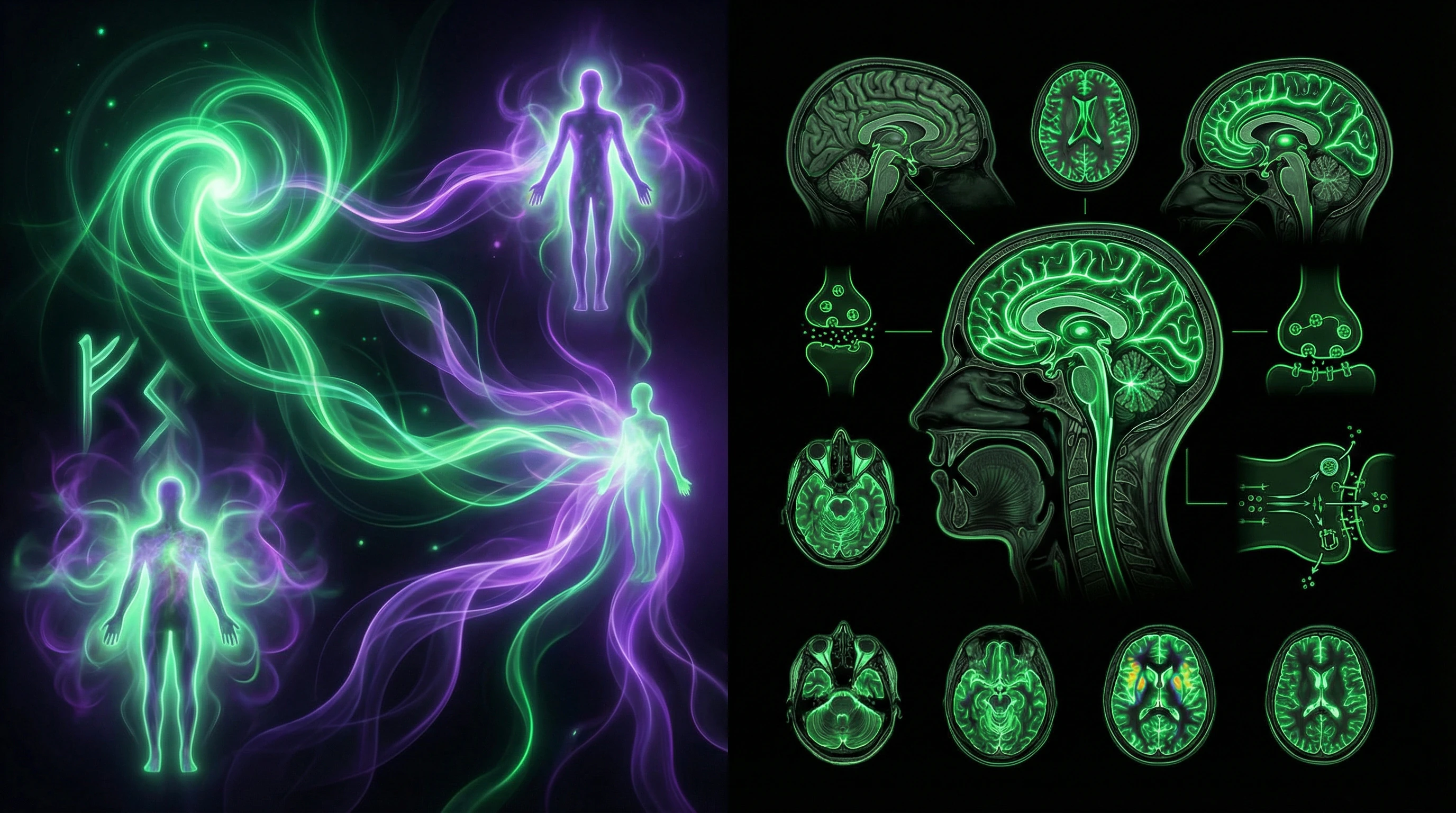
Physical sensations during practices—tingling, warmth, relaxation—are explained through known mechanisms without invoking "subtle energy." The relaxation response, focused attention, changes in breathing patterns, placebo effects, and normal physiological reactions to stillness all reproduce subjective experiences.
The claim that people physically sense frequencies during practices does not prove the existence of objective energy, but demonstrates the universality of physiological responses to meditative states. The conflict between subjective experience and objective reality is a central problem in evaluating energy practices.
- Placebo Effect
- Expectation of results activates real physiological changes (reduced cortisol, muscle relaxation) that are interpreted as "energy" effects.
- Attention Focus
- Directed attention to bodily sensations amplifies their perception and can create the illusion of energy flows.
- Social Reinforcement
- Groups of practitioners sharing beliefs strengthen the interpretation of sensations as evidence of energy existence.
Many practitioners sincerely believe in their methods, but sincerity of belief does not make them scientifically valid.
Commercialization of Energy Practices: How Infobusiness Turned Spirituality into a Product
Energy practices have become a significant segment of the infobusiness industry, where spiritual and wellness techniques are monetized through courses, certifications, and coaching programs. Reputation protection has become a concern for practitioners—a sign of growing skepticism and the need for legitimacy.
Critical analysis reveals: commercial exploitation is the field's key problem. The issue isn't simple fraud, but rather a mixture of sincere belief in unproven concepts, conflation of subjective experience with objective reality, and varying degrees of commercial exploitation.
The absence of scientific validation doesn't prevent commercial success, since the product is based on subjective experiences that are difficult to objectively verify.
Monetization Through Courses, Certifications, and Coaching Programs
The business model is built on a multi-tiered system: basic courses serve as entry points for more expensive certification programs and individual coaching. Each level requires additional investment, promising deeper understanding and abilities.
Certifications allow students to become instructors themselves, creating a pyramid structure for spreading practices. Methods are described as "legal and super-effective" ways to increase life energy—typical infobusiness marketing language.
- Basic course (entry point, low price)
- Advanced programs (mid-range pricing)
- Teacher certification (high price, right to teach others)
- Individual coaching (maximum cost)
Legitimate benefits of relaxation are incorrectly attributed to "energy work," creating an illusion of effectiveness for specific techniques.
Working with "Warm" Audiences and Reputation Protection Strategies
Energy practitioners actively employ techniques for working with "warm" audiences—people already interested in alternative practices and spiritual development. This strategy minimizes resistance and skepticism, focusing on those predisposed to accepting concepts without critical analysis.
Marketing funnels are built on gradual deepening of engagement: free content → webinars → trial sessions → paid programs.
Reputation protection becomes critically important as critical attention grows. Practitioners develop legitimation strategies: scientific-sounding terminology, references to ancient traditions, creation of professional associations.
The growing need for legitimacy indicates increasing skepticism and potential regulatory pressure. The field balances between commercial interests and attempts to establish professional standards in the absence of a scientific foundation.
Common Myths and Misconceptions About Energy Practices
The Myth of Scientific Validation of Energy Practices
Practitioners often claim that 90% of people physically feel frequencies during practices, presenting this as proof of manipulable energy's existence. However, no peer-reviewed research confirms the existence of "subtle bodies" or manipulable life energy as described by practitioners.
While meditation and relaxation techniques have scientific support, specific claims about manipulating "subtle energy" remain empirically unconfirmed. Subjective experiences may result from relaxation, placebo effect, or meditative states, not proof of energy manipulation.
Subjective sensation doesn't equal objective mechanism. The brain easily confuses relaxation with energy manipulation when offered that narrative.
Physical Sensations as Proof of Energy Manipulation
Tingling, warmth, relaxation during practices are explained by relaxation response, focused attention and body awareness, breathing pattern changes, placebo effects, and normal physiological reactions to stillness and contemplation. These sensations don't require the hypothesis of manipulable energy.
- Relaxation response activates parasympathetic nervous system → sensation of warmth and relaxation
- Focused body attention amplifies perception of ordinary sensations
- Breathing changes affect blood flow and oxygen saturation → tingling, numbness
- Placebo effect: expecting to feel energy increases likelihood of interpreting it
Energy practices often include meditation as a component, and the distinction is more marketing than substantive. Conflating subjective experience with objective reality represents a fundamental methodological problem.
Harmlessness of Energy Practices
A common misconception is that energy practices are completely harmless since they don't involve physical intervention. Reality is more complex: while many practitioners sincerely believe in their methods, the problem includes sincere belief in unproven concepts and legitimate relaxation benefits incorrectly attributed to "energy work."
The field continues evolving, balancing commercial interests with attempts to establish professional standards in the absence of scientific foundation. Reputation protection becomes critically important as critical attention to the field grows.
Absence of physical harm doesn't mean absence of harm. Financial exploitation, delayed medical treatment, psychological dependency—these are real risks hidden behind the word "harmless."
Potential Risks and Red Flags
Financial Exploitation and Pyramid Certification Structures
Energy practices have become a significant revenue source in English-speaking online business through courses, certifications, and coaching programs. Practitioners use sophisticated marketing strategies targeting vulnerable consumers — working with "warm" audience segments where conversion probability is higher.
When commercial motivation is built into the training structure itself (certification → right to teach others → new courses), there's an incentive to inflate method effectiveness regardless of actual results.
The question isn't whether practices work, but who benefits from selling them. The absence of independent validation creates an ideal environment for financial exploitation.
Delayed Medical Care
Practitioners make health and wellness claims without empirical support. Methods supposedly improve physical health, emotional state, and spiritual development — a spectrum broad enough to cover any problem.
When people rely on energy practices instead of evidence-based medicine, this can lead to delayed diagnosis and treatment of serious conditions. The lack of scientific validation for "energy frequencies" means any treatment claims should be viewed with extreme caution.
Psychological Dependence on Practitioners
Practitioners develop legitimation strategies: using scientific-sounding terminology, referencing ancient traditions, creating professional associations. These strategies create a false sense of authority and expertise.
- Client believes in practitioner's competence (authority artificially created)
- Practitioner becomes the sole source of interpreting client's condition
- Client begins relying on practitioner for health and life decisions
- Dependence reinforces through regular sessions and constant "discovery" of new problems
The field evolves within an infobusiness ecosystem where reputation and marketing often matter more than scientific validity. Growing skepticism and potential regulatory pressure only accelerate refinement of these legitimation strategies.
Practical Recommendations for Consumers
Pre-Practice Checklist: Credential Verification and Realistic Expectations
Before starting any energy practices, verify the practitioner has recognized professional qualifications in psychology, medicine, or evidence-based therapy. Be skeptical of claims about manipulating "subtle energy" or guarantees of health improvements without scientific evidence.
Realistic expectations should be based on understanding that any benefits relate to relaxation, meditation, and placebo effect, not energy manipulation. Be aware of the field's commercial nature and potential for financial exploitation through multi-level certification programs.
- Request qualification documentation (licenses, certificates from accredited organizations).
- Check if the practitioner makes specific medical promises — this is a red flag.
- Clarify costs of all services and programs upfront, including "advanced levels."
- Ensure the practitioner doesn't require abandoning medical treatment.
- Assess how claims align with your personal goals, not marketing promises.
Evidence-Based Alternatives: Mindfulness Meditation, Therapy, Medical Treatment
For stress management and emotional wellbeing, evidence-based alternatives exist with scientific support. Mindfulness meditation has an extensive research base demonstrating benefits for stress reduction, anxiety, and improved emotional regulation without "subtle energy" concepts.
Cognitive-behavioral therapy and other forms of psychotherapy offer structured, evidence-based approaches to psychological wellbeing. For physical health problems, medical treatment based on scientific research remains the most reliable approach.
Benefits people experience from energy practices may overlap with proven meditation and mindfulness techniques, but specific "energy" claims remain unvalidated.

Knowledge Access Protocol
FAQ
Frequently Asked Questions
Energy practices are a set of alternative techniques that purportedly work with the human
Main types include: meditative (static contemplative techniques), dynamic (with movement), Reiki and kundalini-Reiki (energy healing), and retreats (immersive practices). All claim to work with energy fields but differ in methodology. Commercial components are present across all approaches.
No, the existence of
Physical sensations arise from physiological responses: changes in breathing, muscle tone, circulation, and activation of the parasympathetic nervous system. Expectations and suggestion amplify subjective perception. This does not prove the existence of
Prices range from $50-100 for basic online courses to $1,000-3,000 for certification programs and personal mentorship. Retreats can cost $500-1,500 per week. Multi-level certification systems create pyramid-like monetization structures.
Primary income sources: selling online courses, certification programs, individual sessions, retreats, and coaching. Practitioners work with
No, energy practices do not treat diseases and do not replace medical care. Claims about physical healing through energy manipulation lack scientific foundation. Delaying medical consultation due to belief in energy healing can be dangerous to health.
Main risks: financial exploitation through expensive courses, refusal of medical help for serious conditions, psychological dependence on practitioners. Pyramid certification structures draw people into debt. Some techniques may trigger dissociation or exacerbate mental health conditions.
No official regulation or standardized certifications exist in this field. Any diplomas are issued by commercial schools without government recognition. Critically evaluate promises of quick results, check reviews, and avoid practitioners who discourage medical care.
This is a marketing claim without statistical foundation. People may indeed experience sensations during practices due to relaxation, hyperventilation, or suggestion. Subjective experiences do not prove the objective existence of manipulable energy — this is a cognitive bias.
Meditation and relaxation techniques can complement medical treatment for stress reduction. However, it's important not to replace evidence-based medicine with energy healing and to inform your doctor about all practices. Be critical of practices that promise healing instead of medical care.
Low barriers to entry, high profit margins, and emotional audience engagement make energy practices an attractive product. Vague success criteria allow practitioners to avoid accountability for results. Spiritual marketing creates a loyal community willing to pay for advanced levels.
Retreats are immersive programs ranging from several days to weeks with intensive energy practices in isolation from daily life. They typically include meditation, somatic practices, group sessions, and individual work. Costs are high, and effects are often related to rest and change of environment rather than 'energy work.'
Red flags: multi-level certifications with increasing costs, promises of income from teaching others, pressure to purchase the next level. The pyramid structure is disguised as spiritual development. If a practitioner's primary income comes from selling training to other practitioners, this is a sign of a financial scheme.
Yes, intensive practices can trigger dissociation, depersonalization, or exacerbation of underlying mental disorders. Group pressure and charismatic leaders create risks of psychological manipulation. People with trauma or mental illness should consult with a psychotherapist before participating in intensive programs.