Apophenia as a cognitive phenomenon: where adaptive pattern recognition ends and pathology begins
Apophenia — the tendency to see meaningful patterns where none objectively exist (S011). This isn't merely a perceptual error, but a systematic cognitive predisposition manifesting from normal creativity to clinical psychosis.
The term was introduced in psychiatry to describe a symptom of schizophrenia, but contemporary research shows: apophenia is widespread in the general population and not limited to severe psychopathology (S011).
🧩 Adaptive pattern seeking vs apophenia
High levels of pattern seeking are not identical to apophenia (S011). Adaptive pattern recognition is an evolutionarily advantageous ability: predicting events, learning, creating abstract models of reality.
Apophenia begins where the recognition system produces an excessive number of false-positive detections — sees connections that don't exist, attributes meaning to random coincidences, constructs causal chains from unrelated events.
This distinction is critical for understanding numerology: a random sequence of numbers is interpreted as a message, sign, prediction — the mechanism is identical to apophenic perception. More details in the section Crystals and talismans.
🔬 How apophenia is measured in the laboratory
Specialized test: geometric shapes move either socially (imitating agent interaction — helping, fear, encouragement) or randomly (S011). Participants classify each movement as social or random.
- Result in people with high apophenia:
- They see intentionality and social interaction in random movements — attribute intentions where none exist.
- Direct analogy:
- A numerologist sees a message in a random set of digits, an astrologer — destiny in planetary positions.
🧠 Apophenia as a mechanism of false-positive detection
Apophenia is an important cognitive mechanism uniting openness to experience and psychosis risk (S011). Both phenomena are associated with heightened sensitivity to stimuli, tendency to generate multiple interpretations, lowered threshold for detecting signal in noise.
| State | Pattern generation | Critical evaluation | Outcome |
|---|---|---|---|
| Creativity | High | Preserved | Insights, art, discoveries |
| Apophenia (normal) | High | Weakened | Superstitions, coincidences, numerology |
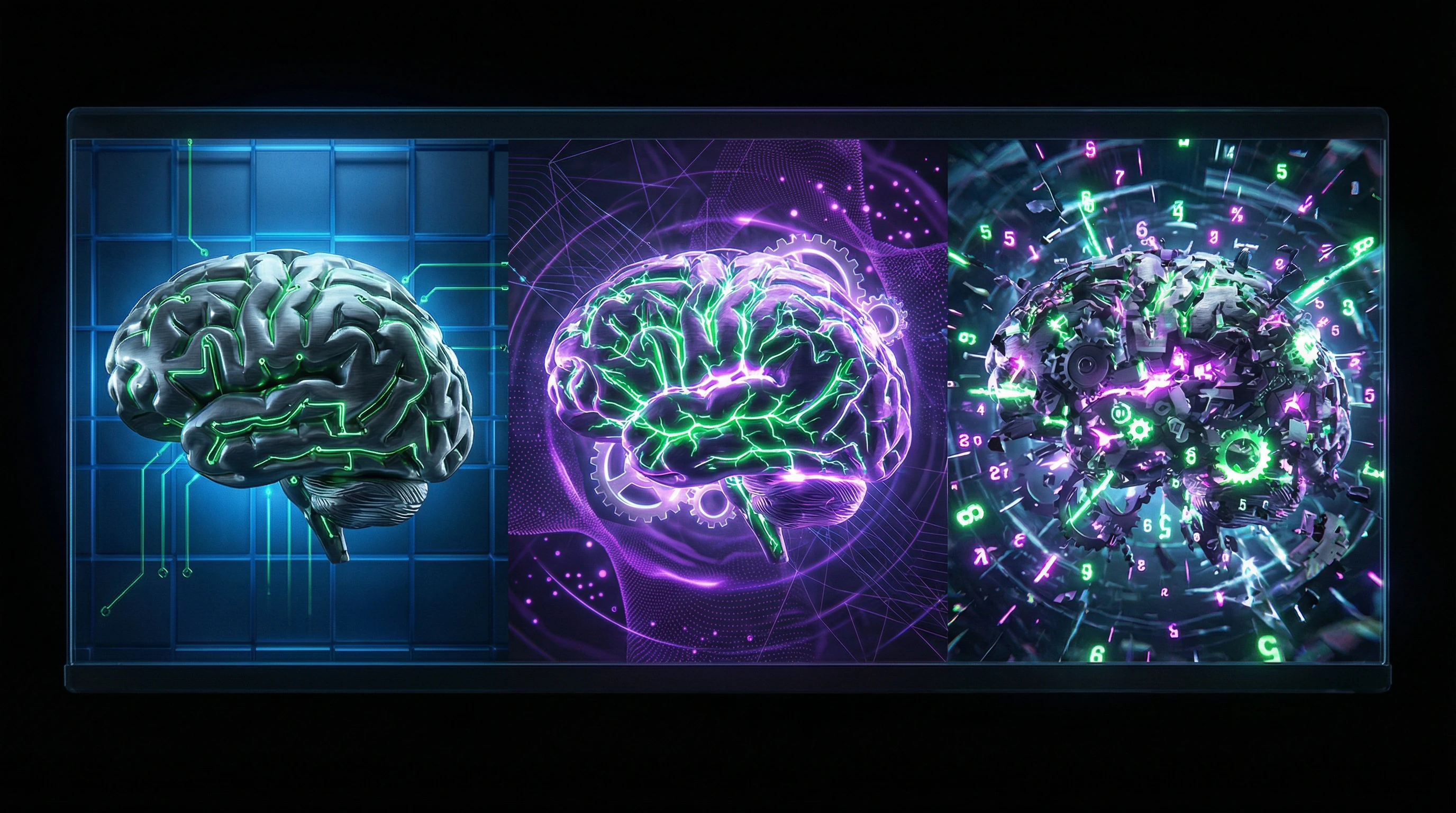
| Psychosis | High | Absent | Delusions, hallucinations, disorganization |
The difference lies in degree of control: a creative person generates apophenic connections but critically evaluates them; a person in a psychotic state loses the ability to distinguish real patterns from illusory ones.
Steel Version of the Argument: Why Numerology Seems to Work — Seven Strongest Arguments for the Significance of Numbers
Before examining the mechanisms of error, it's necessary to honestly present the strongest arguments of numerology proponents. This is not a straw man, but a steel version of the position — the most convincing formulation of why people believe in number patterns. More details in the section Runes and Symbols.
⚠️ First Argument: Subjective Validity of Personal Experience
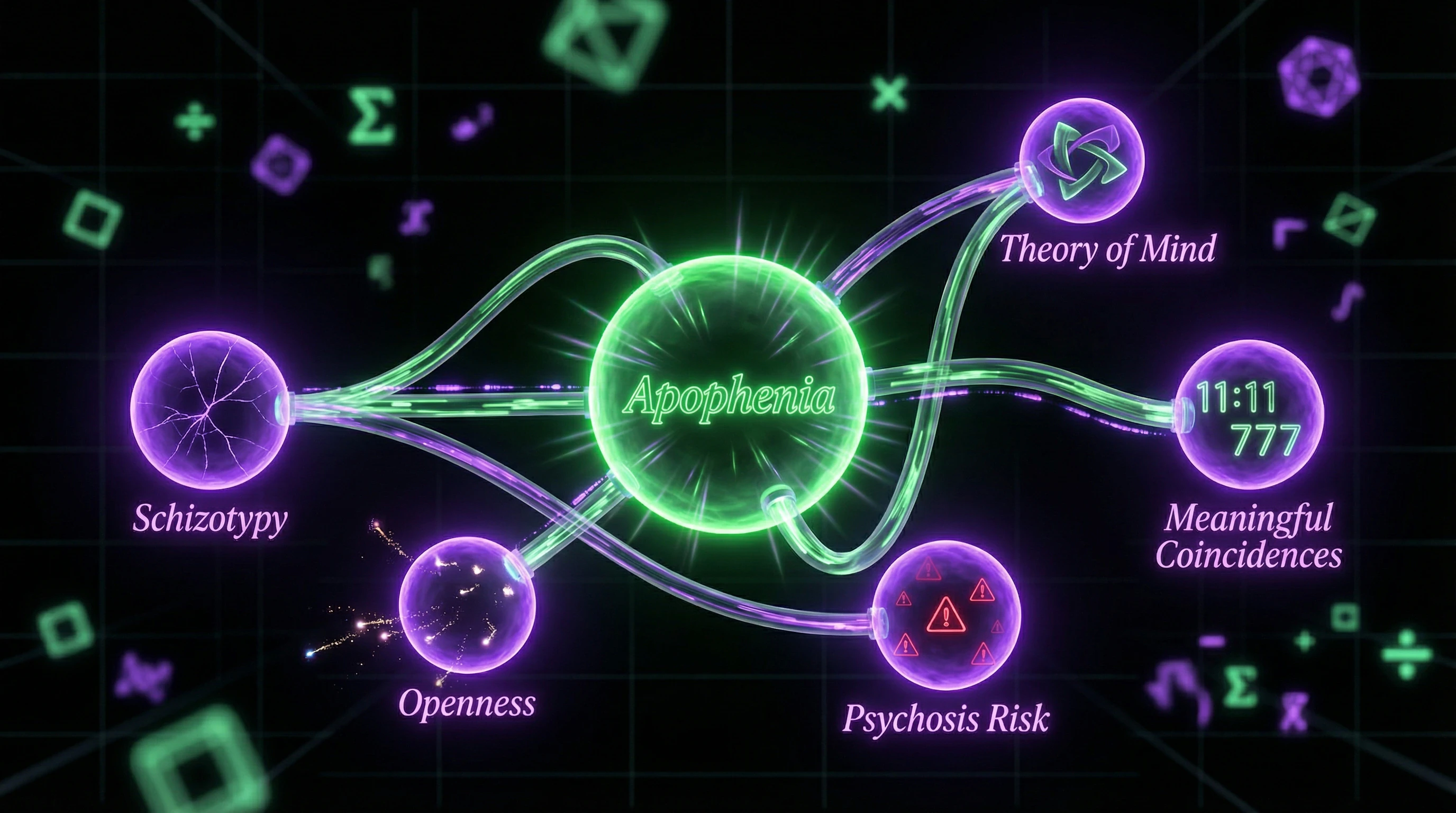
People report systematic, recurring numerical coincidences that are subjectively perceived as too frequent to be random. Research shows that experiencing meaningful coincidences is associated with belief in the paranormal and schizotypy (S012).
When a person sees the same number dozens of times in different contexts — on clocks, in license plates, on receipts, in dates — it creates a powerful subjective sense of non-randomness. Personal experience is perceived as more credible than abstract statistical explanations.
- Recurring number noticed in 5+ independent contexts within a week
- Each coincidence subjectively linked to an emotionally significant event
- Person begins actively seeking this number, reinforcing confirmation
- Absence of coincidences not registered as counter-evidence
🧩 Second Argument: Cross-Cultural Universality
Different cultures independently attributed special significance to certain numbers — 3, 7, 12, 40 in Western tradition; 8, 9 in Chinese; 108 in Hindu and Buddhist. This convergence can be interpreted as indicating objective properties of numbers, not merely cultural constructs.
If different civilizations arrived at similar conclusions about the significance of certain numbers, perhaps there's something more than arbitrary symbolism.
🔁 Third Argument: Mathematical Elegance of Nature
Numbers genuinely describe fundamental patterns of the universe — the golden ratio in biological structures, the number π in geometry, Planck's constant in quantum mechanics, the Fibonacci sequence in plant growth.
If numbers objectively structure physical reality at the deepest level, why wouldn't they have significance in human life? Mathematics is the language of nature, and perhaps numerical patterns in personal experience are manifestations of the same underlying order.
🧠 Fourth Argument: Apophenia and Creativity
Research demonstrates that apophenia is linked to the personality aspect of openness — individual differences in creativity and imagination (S011). Many outstanding scientists, artists, inventors were inclined to search for unusual patterns and connections.
Perhaps the ability to see meaningful numerical coincidences is not an error, but a sign of more refined perception that allows detection of non-obvious patterns. By dismissing numerology, we risk dismissing a valuable cognitive tool.
| Context | Apophenia as Error | Apophenia as Adaptation |
|---|---|---|
| Scientific Discovery | False Hypothesis | Generation of New Ideas |
| Artistic Creation | Obsessive Idea | Search for Hidden Meanings |
| Everyday Decision | Irrational Choice | Intuitive Insight |
📊 Fifth Argument: Predictive Validity
People report cases where attention to numerical signs helped make decisions that subsequently proved correct. If a person systematically notices a certain number before important events, and these events actually occur, this creates an empirical basis for belief in the pattern's significance.
Even if the mechanism is unclear, predictive validity is a pragmatic criterion of truth in personal experience.
🧬 Sixth Argument: Biological Correlates
There is evidence of partially overlapping biological correlates of openness and psychoticism (S011). If apophenia has a neurobiological basis shared with creativity, perhaps it's not a bug but a feature of evolution — a mechanism that normally provides adaptive advantages.
Hypothesis generation, detection of hidden connections, pattern recognition in noise — all can be useful in certain contexts. Then numerological thinking is not merely delusion, but a manifestation of a real cognitive mechanism.
🕳️ Seventh Argument: Limitations of the Materialist Paradigm
Modern science cannot explain subjective experience (the problem of qualia), consciousness, meaning. If the materialist paradigm is incomplete regarding fundamental aspects of reality, perhaps it's incomplete regarding numbers as well.
Numerical coincidences may be manifestations of aspects of reality that don't fit the current scientific worldview. Absence of scientific explanation doesn't mean absence of phenomenon. This is an argument not against science, but against its claim to completeness.
- Synchronicity
- Meaningful coincidences not connected by causal relationships but having semantic connection.
- Non-Local Connections
- Possibility of informational interaction at a distance, not explainable by current physics.
- Information Fields
- Hypothetical structures of reality that may encode meaning and significance independent of material substrate.
Evidence Base: What Research Shows About Apophenia, Schizotypy, and Perception of Randomness
Let's turn to the empirical data. More details in the section Tarot and Cartomancy.
📊 Link Between Apophenia, Schizotypy, and Risk of Psychotic Disorders
Studies in the general population show that openness (creativity and imagination) and psychotic spectrum symptoms are connected and share common underlying mechanisms (S011). Psychosis is a loss of contact with reality, most pronounced in schizophrenia.
Apophenia is proposed as a key cognitive mechanism linking openness and psychosis risk (S011). The tendency to see patterns in randomness is not a harmless perceptual quirk, but a potential risk factor for psychotic disorders.
🧪 Experimental Data on Perception of Meaningful Coincidences
The experience of meaningful coincidences is associated with belief in the paranormal and schizotypy (S012). People who more frequently see "significance" in coincidences demonstrate elevated schizotypy scores—subclinical traits linked to schizophrenia risk.
Numbers are perceived not as random sequences, but as messages, signs, intentions of an agent—fate, the universe, higher powers. Apophenia here is a hyperactive agency detection system.
🧠 Theory of Mind and Apophenia: Attribution of Intentionality
Tasks with geometric shapes reveal a specific aspect of apophenia—the tendency to attribute intentionality where none exists (S011). This is directly relevant to numerology: numbers are perceived as messages rather than random sequences.
🔁 Biological Correlates: Overlap Between Openness and Psychoticism
Data indicate partially overlapping biological correlates of openness and psychoticism (S011). At the neurobiological level, mechanisms of creativity partially coincide with mechanisms of psychosis risk.
Apophenia is a common cognitive pathway through these overlapping neural systems. This explains why creative people are often prone to magical thinking, and people with psychotic disorders may demonstrate unusual creativity.
📌 Apophenia in the General Population: Not Just Pathology
Apophenia is not limited to people with severe psychopathology and is regularly encountered in the general population (S011). Numerological thinking is not a sign of mental illness in most people, but a normal variation of cognitive functioning.
However, this doesn't make it a valid way of knowing reality. The popularity of a delusion doesn't transform it into truth. An error remains an error, even if it's widespread.
🧾 Methodological Limitations of Current Research
| Limitation | Consequence |
|---|---|
| Correlational designs | Impossible to establish causal relationships between apophenia and schizotypy |
| Artificial testing conditions | Ecological validity is limited; real numerology includes interpretive systems, emotions, social context |
| Laboratory tasks | Don't reflect the complexity of real beliefs and their social reinforcement |
It's unclear whether apophenia leads to schizotypy, or schizotypy amplifies apophenia, or both phenomena are consequences of a third factor. Experimental tasks measure apophenia in conditions far removed from real life.
The Mechanism of Apophenia: Why the Brain Generates False-Positive Patterns and When This Becomes a Problem
Apophenia is not a thinking error, but a byproduct of an adaptive system. Understanding its mechanism requires analysis at three levels: the evolutionary logic of pattern detection, the neurochemistry of salience, and the cognitive biases that reinforce it. More details in the Scientific Method section.
🧠 Evolutionary Logic of False-Positive Errors: Better Safe Than Sorry
The pattern detection system is calibrated asymmetrically. The cost of a false-positive error (seeing a pattern that isn't there) is usually lower than the cost of a false-negative (missing a real pattern).
If you mistook a rustling in the bushes for a predator, you lost energy fleeing. If you didn't notice the predator, mistaking it for wind, you lost your life. Natural selection favored systems with low detection thresholds—prone to false-positive activations.
Apophenia is a byproduct of this adaptive calibration. The brain evolved to detect real threats in noisy environments, but the side effect was a tendency to see patterns even in pure noise.
Numerology exploits this feature: random numerical sequences are perceived as signals because the pattern detection system cannot distinguish structured signal from random noise at low detection thresholds.
🔁 Dopaminergic System and Salience Attribution
The brain's dopaminergic system plays a key role in attributing salience to stimuli. Hyperactivity of dopamine pathways is associated with psychotic symptoms, including delusions and hallucinations (S001).
One hypothesis suggests that excessive dopaminergic activity leads to aberrant salience attribution—neutral stimuli begin to be perceived as important, demanding attention.
| System State | Perception of Random Event | Emotional Response |
|---|---|---|
| Normal | Noticed but not significant | Neutral |
| Elevated Dopamine | Noticed and perceived as signal | Intense (insight, anxiety, elation) |
| Psychosis | Noticed, reinterpreted as message | Conviction in reality of meaning |
When the dopamine system is dysregulated, random coincidences, including numerical ones, begin to be perceived as deeply meaningful messages. A person doesn't simply notice the coincidence—they feel its significance at a profound level, making rational criticism ineffective. This is not an intellectual conviction, but a perceptual experience.
🧩 Confirmation Bias and Selective Attention
Once a person begins to believe in the significance of a particular number, confirmation bias ensures a self-sustaining cycle. Attention selectively focuses on instances of that number appearing, ignoring instances of its absence.
If you believe 11:11 is a sign, you notice every time you look at the clock at that moment, but don't notice the hundreds of times you look at other times. Memory works selectively: meaningful coincidences are vividly remembered, insignificant events are forgotten.
- Attention focuses on coincidences matching the belief
- Non-matching events are ignored or reinterpreted
- Memory retains only confirming examples
- Statistical intuition doesn't correct for base rate of the event
- The illusion strengthens with each cycle of attention and memory
Most people cannot correctly assess the base rate of an event and therefore perceive normal random coincidences as abnormally frequent. This is not an intellectual deficit—it's a systemic property of attention and memory.
🔬 Correlation, Causation, and Confounders in Apophenia
Even if there is a correlation between numerical coincidences and subsequent events in personal experience, this doesn't mean a causal relationship. Possible confounders:
- Selective Memory
- Only coincidences followed by an event are remembered; failed predictions are forgotten.
- Self-Fulfilling Prophecy
- Belief in the sign influences behavior, which influences outcome; numbers don't predict, they direct actions.
- Reverse Causality
- Premonition of an event (based on unconscious signals) causes attention to numbers, not numbers predicting the event.
- Common Third Factor
- Features of the dopaminergic system independently influence apophenia, psychosis risk, and creativity.
Research on apophenia shows correlation with schizotypy and openness, but doesn't prove causal connection to psychosis or access to real patterns. The correlation may be explained by a common third factor—neurochemical features that independently influence multiple psychological processes simultaneously.
The distinction between correlation and causation is critical for critical thinking. Without this distinction, any coincidence can be reinterpreted as a causal relationship, which is the foundation of both numerology and many other forms of magical thinking.
Conflicts in Data and Areas of Uncertainty: Where Sources Diverge and What Remains Unclear
🧾 Contradiction Between Adaptiveness and Pathological Apophenia
Apophenia is simultaneously linked to creativity and the risk of psychotic disorders (S011, S012). The boundary between adaptive and pathological forms remains blurred.
High levels of pattern-seeking are not the same as apophenia (S011), but the operational distinction between them is unclear. A possible mechanism for differentiation: metacognitive control—the ability to critically evaluate generated patterns.
A creative person generates multiple hypotheses (including apophenic ones), then tests them. A person in psychosis loses this capacity for critical evaluation. But this hypothesis requires empirical verification.
🔁 Unclear Causal Relationships
Most studies are correlational, which prevents establishing the direction of causality. For more detail, see the Epistemology section.
- Openness to Experience
- Is it a protective factor allowing apophenia to be used creatively, or an independent factor correlating through shared biological mechanisms? The question remains open.
- Direction of Causality
- It's unknown which factor is primary and which is secondary in the chain apophenia → schizotypy → psychosis.
📊 Limited Ecological Validity of Laboratory Tests
Apophenia tests (for example, tasks with geometric shapes) measure a specific aspect under artificial conditions (S011). Real-world numerology involves complex interpretive systems, emotional involvement, social context, and personal history.
It's unclear how well laboratory test results predict actual numerological thinking. Laboratory apophenia and real belief in numerical signs may be different phenomena with different mechanisms.
For deeper understanding of persuasion mechanisms, see the critical thinking section and analysis of esoteric systems.
Cognitive Anatomy of Numerological Belief: Which Psychological Mechanisms Are Exploited and How Persuasion Works
Numerology relies on a complex of cognitive biases and psychological mechanisms that make it convincing. This is not an individual's mistake — it's a systemic vulnerability of the brain. More details in the section Statistics and Probability Theory.
⚠️ Illusion of Control and the Need for Predictability
People experience a fundamental need for control and predictability. Randomness and uncertainty trigger anxiety.
Numerology offers a solution: numbers become a code that supposedly deciphers the future. This reduces the subjective feeling of helplessness, even if objectively nothing changes.
- Mechanism
- The brain prefers false order to chaos. If the choice is between "I don't know what will happen" and "the number 7 points to my path" — the second is psychologically cheaper.
- Where the trap lies
- The illusion of control can delay the search for real solutions. A person waits for a "sign" instead of taking action.
Confirmation Bias and Selective Attention
A numerologist predicts: "This month, a change will occur." The month passes. The person finds confirmation: an argument with a friend, a job change, even rearranging furniture — everything counts as "change."
Contradictory examples (months when nothing happened) are forgotten or reinterpreted as "hidden processes."
| What happened | Numerological explanation | Cognitive mechanism |
|---|---|---|
| Nothing significant | "Energy is accumulating" | Post-hoc rationalization |
| Something good | "The number worked" | Confirmation bias |
| Something bad | "You calculated incorrectly" | Defense against cognitive dissonance |
Social Reinforcement and Group Identity
Numerology is often practiced in communities. The group strengthens belief through social validation and shared language.
A person doubting the number 11 hears from five others: "That's my sign." Dissonance is resolved by joining, not by criticism. Belonging to the group becomes stronger than skepticism.
Numerology works not because numbers have magical power, but because it satisfies three basic needs simultaneously: control, meaning, and belonging. This makes it resistant to facts.
Connection to Critical Thinking and Cognitive Hygiene
Protection from numerological thinking lies not in denial, but in awareness of one's own cognitive vulnerabilities (S001). We need to learn to distinguish adaptive pattern recognition from pathological.
This is especially important in the context of esoteric practices, where the boundary between metaphor and literal belief is often blurred.
- Ask: "What would I consider evidence against this belief?"
- Track how many times the prediction didn't come true — and honestly account for it
- Separate psychological benefit (calm, meaning) from factual accuracy
- Check whether the belief is delaying actions that are needed now
Numerology is not stupidity. It's a demonstration of how a normal brain works under conditions of uncertainty.