For centuries, the Moon has been considered a source of mystical influence on human behavior, health, and destiny. From "lunacy" to theories about full moons and crime—these beliefs are deeply rooted in culture. However, systematic reviews and meta-analyses show no statistically significant connection between lunar phases and physiological or behavioral changes. This article dissects the mechanism behind lunar myths, analyzes the evidence base, and offers a protocol for testing such claims.
📌 What exactly is claimed: mapping lunar influences from antiquity to TikTok
Before examining the evidence, we need to precisely define what falls under "lunar influence on humans." This isn't a single claim, but a spectrum of hypotheses with varying degrees of specificity and testability. More details in the section Karma and Reincarnation.
Historical roots: from lunacy to "lunar madness"
The term "lunacy" (from Latin lunaticus) designated mental disorders supposedly intensified by lunar phases. Roman law included provisions that mitigated responsibility for lunatici—people whose madness was attributed to lunar cycles.
Medieval medicine incorporated the Moon into humoral theory: the full moon increases "moist" fluids in the body, affecting the brain (S009). The English word lunacy etymologically traces back to the Moon—a reflection of the belief's deep cultural entrenchment.
The myth of lunar influence survived the transition from magic to medicine, from medicine to psychiatry. Each time it changed language but preserved structure: observation → causality → explanation.
Modern versions of the hypothesis: from sleep to crime
Contemporary variants of the lunar hypothesis encompass:
- Sleep disturbances
- During full moon, people supposedly sleep worse, take longer to fall asleep, have less deep sleep.
- Psychiatric crises
- Increased hospitalizations, suicide attempts, episodes of aggression (S002).
- Crime and violence
- Rise in murders, assaults, domestic violence during full moon periods.
- Traffic accidents
- Increase in crashes and injuries.
- Medical events
- More births, bleeding, surgical complications.
- Animal behavior
- Changes in activity, aggression, reproductive behavior.
Each claim requires separate verification accounting for data specifics and measurement methodology (S010).
Proposed mechanisms: gravity, light, and magnetism
Proponents of lunar influence offer several explanations:
| Mechanism | Claim | Physical limitation |
|---|---|---|
| Gravitational | The Moon creates ocean tides; the human body is ~60% water, therefore the Moon affects "internal tides" | The Moon's gravitational effect on a 70 kg object is 2 million times weaker than the effect of a neighbor standing one meter away |
| Light-based | Full moon brightness disrupts circadian rhythms, suppresses melatonin | The full moon shines 400,000 times dimmer than the Sun; street lighting is more powerful |
| Magnetic | Changes in geomagnetic field associated with lunar cycles affect the nervous system | The lunar magnetic moment is 10 million times weaker than Earth's |
| Atmospheric | The Moon affects atmospheric pressure and air ionization | Lunar gravitational impact on the atmosphere is negligible compared to solar |
Each mechanism faces physical constraints that we'll examine in the causality section.
Steel Version of the Argument: Seven Most Compelling Cases for Lunar Influence
Before proceeding to critical analysis, we must present the strongest arguments of lunar hypothesis proponents in their best formulation. This is the principle of steelmanning — the opposite of a straw man, where we strengthen the opponent's position to test it as fairly as possible. More details in the section Crystals and Talismans.
💎 Argument 1: Evolutionary Antiquity of Lunar Rhythms
The Moon has existed for 4.5 billion years, its cycles have been constant throughout the entire evolution of life on Earth. Many marine organisms synchronize reproduction with lunar phases: coral spawning, tidal rhythms in crabs. Circalunar rhythms (~29.5 days) have been discovered in numerous species.
If evolution embedded lunar sensitivity into the biology of marine organisms, why wouldn't it persist in terrestrial animals and humans as an evolutionary vestige? This argument appeals to phylogenetic inertia: even if the direct adaptive value of lunar sensitivity for modern humans is unclear, it could have been retained from ancestral forms.
🌊 Argument 2: Gravitational Effect — A Physical Fact
The Moon's gravitational influence on Earth is indisputable: tides are a direct consequence of lunar gravity. Tidal force is proportional to an object's mass and inversely proportional to the cube of distance. The human body contains fluids (blood, lymph, cerebrospinal fluid).
Even if the effect is microscopic, it physically exists. Perhaps the human nervous system is sensitive enough to register these minimal changes, especially in critical structures like the hypothalamus or pineal gland.
This argument relies on the principle that absence of evidence of an effect does not mean evidence of absence of an effect, especially if measurement instruments are insufficiently sensitive.
🔦 Argument 3: Light Pollution Masks the Effect
Most modern studies are conducted in urbanized conditions with high levels of light pollution. In the pre-industrial era, the full Moon was a significant source of nighttime illumination (illuminance up to 0.25 lux versus <0.01 lux at new moon). This could have influenced circadian rhythms through melanopsin-containing retinal ganglion cells, sensitive to blue light.
Modern studies conducted under artificial lighting conditions may not detect an effect that was real for our ancestors and remains real for isolated populations. This argument points to a methodological problem: we're searching for an effect under conditions where it's inherently suppressed by external factors.
📊 Argument 4: Anecdotal Evidence from Medical Personnel
Thousands of nurses, emergency physicians, obstetricians, and psychiatrists independently report patterns associated with the full moon. These observations are based on years of professional experience. While anecdotal data are not scientific proof, the massive convergence of independent observations deserves explanation.
- Perhaps subtle effects exist that are captured in clinical practice but lost in the statistical noise of large studies due to sample heterogeneity.
- This argument appeals to expert intuition and the phenomenological validity of clinical experience.
🧬 Argument 5: Individual Variability and Subpopulations
Absence of an effect at the population level does not exclude the existence of sensitive subpopulations. Perhaps 5–10% of people have heightened lunar sensitivity due to genetic variants affecting circadian genes (PER, CRY, CLOCK) or melatonin receptors.
Averaged data across large samples may mask strong effects in small subgroups. Just as not all people are equally sensitive to jet lag or seasonal affective disorder, lunar sensitivity may be an individual trait. This argument points to the problem of ecological fallacy: population averages don't describe individual variability.
🔬 Argument 6: Methodological Limitations of Existing Studies
Many studies that found no lunar effect have methodological weaknesses: small samples, short observation periods (insufficient lunar cycles for statistical power), lack of control for confounders (weather, holidays, day of week).
- Crude categories instead of continuous variables
- Studies often use full moon vs. new moon, instead of percentage of lunar disk illumination or angular distance from full moon.
- Heterogeneity in systematic reviews
- Meta-analyses include studies of varying quality, which reduces sensitivity to real effects (S010, S011).
This argument criticizes the quality of the evidence base, asserting that negative results may be an artifact of poor study design.
🌐 Argument 7: Cross-Cultural Universality of the Belief
Belief in lunar influence is present in dozens of independent cultures on all continents: from European lunacy to traditional Chinese medicine, from African rituals to Native American calendars. Such convergence is unlikely if it's based on pure chance.
Perhaps this reflects a universal human experience of a real, albeit subtle, lunar influence that was noticed independently by different cultures before the emergence of the scientific method.
This argument uses the principle of convergent validity: independent reproduction of an observation increases its credibility. However, cross-cultural spread of a belief may reflect common cognitive traps rather than universal experience of a real phenomenon.
Evidence Base: What Systematic Reviews and Meta-Analyses Show About Lunar Effects
The hierarchy of evidence in science sets clear priorities: systematic reviews and meta-analyses of randomized controlled trials sit at the top, anecdotal evidence at the bottom (S011), (S012). When we move from compelling arguments to empirical data, the picture changes radically.
📊 Meta-Analysis of Sleep Studies: Zero Effect When Controlling Variables
The influence of lunar phases on sleep is one of the most thoroughly studied aspects. Early studies reported reduced sleep quality during full moons, but a 2014 meta-analysis combining data from 319 participants across multiple independent laboratories found no statistically significant relationship between lunar phases and sleep parameters when controlling for age, sex, and season (effect size d < 0.1, p > 0.4) (S011).
Studies reporting positive results suffered from multiple comparison problems (testing dozens of parameters without correction) and publication bias. When rigorous statistical standards are applied, the effect disappears. More details in the Folk Magic section.
When researchers surveyed medical staff, 80% were convinced of the existence of a "full moon effect," but objective data from those same institutions did not confirm this belief. This is a classic example of illusory correlation—a cognitive bias that shapes professional beliefs despite the facts.
🧪 Psychiatric Hospitalizations: Illusory Correlation
A systematic review of 37 studies covering more than 50,000 psychiatric hospitalizations found no relationship between lunar phases and crisis frequency. Pooled analysis showed an odds ratio OR = 1.02 (95% CI: 0.98-1.06), statistically indistinguishable from zero (S009).
Studies with positive results had significantly smaller samples and weaker methodological design: absence of blind date coding, retrospective analysis without prior hypothesis.
🚗 Traffic Accidents: Methodological Artifact
Several studies reported increased accidents during full moons, but detailed analysis revealed a confounder: full moons provide better nighttime visibility, which correlates with increased nighttime traffic. When traffic intensity is controlled (accidents per million kilometers driven, not absolute numbers), the effect disappears (S010).
In the era of street lighting, this effect should have disappeared—and this is indeed observed in data after the 1960s. Correlation between X and Y is often mediated by a third variable Z.
🩺 Medical Events: Births, Bleeding, Surgical Complications
A meta-analysis of 21 studies including more than 4 million births found no relationship between lunar phases and birth frequency (RR = 1.00, 95% CI: 0.99-1.01) (S012). A systematic review of surgical complications (bleeding, infections, thrombosis) depending on lunar phase of surgery showed no significant differences in 18 of 19 studies.
The single study with positive results had a sample of n=84—insufficient for reliable conclusions with multiple outcomes. Obstetricians and surgeons are often convinced of lunar effects, but this belief does not correlate with objective data from their own practice.
| Research Area | Data Volume | Result | Methodological Issues |
|---|---|---|---|
| Sleep | 319 participants | Zero effect | Multiple comparisons, publication bias |
| Psychiatric hospitalizations | 50,000+ cases | OR = 1.02 (not significant) | Retrospective analysis, absence of blind coding |
| Births | 4 million births | RR = 1.00 (not significant) | None |
| Surgical complications | 19 studies | 18/19 no effect | One study with n=84 insufficient |
🐾 Animal Behavior: Selective Reporting and Ecological Confounders
Animal behavior studies show mixed results with an important pattern: effects are found predominantly in nocturnal species in natural habitats, where moonlight is a significant ecological factor. In diurnal species and laboratory conditions with controlled lighting, effects are not reproduced (S009).
Observed effects are mediated by changes in illumination, not direct physiological influence of lunar phases. For humans in conditions of artificial lighting, this mechanism is irrelevant.
🧮 Publication Bias and P-Hacking
Systematic literature analysis reveals classic signs of publication bias: studies with positive results have significantly smaller samples (median n=150 vs. n=2400 for negative results), are more often published in journals with low impact factors (S010), (S011).
An excess of p-values just below the 0.05 threshold indicates p-hacking—manipulation of analysis to achieve statistical significance. The funnel plot of meta-analysis shows asymmetry: small studies with positive results are overrepresented, typical for fields with low signal-to-noise ratio.
- Publication Bias
- Systematic underrepresentation of studies with negative results in scientific literature, creating the illusion of an effect where none exists.
- P-hacking
- Manipulation of analysis methodology (variable selection, outlier exclusion, multiple tests) to achieve p < 0.05, even when no true effect exists.
- Funnel Plot
- Visualization that reveals asymmetry in meta-analysis: if small studies systematically show larger effects, this is a sign of bias, not a true phenomenon.
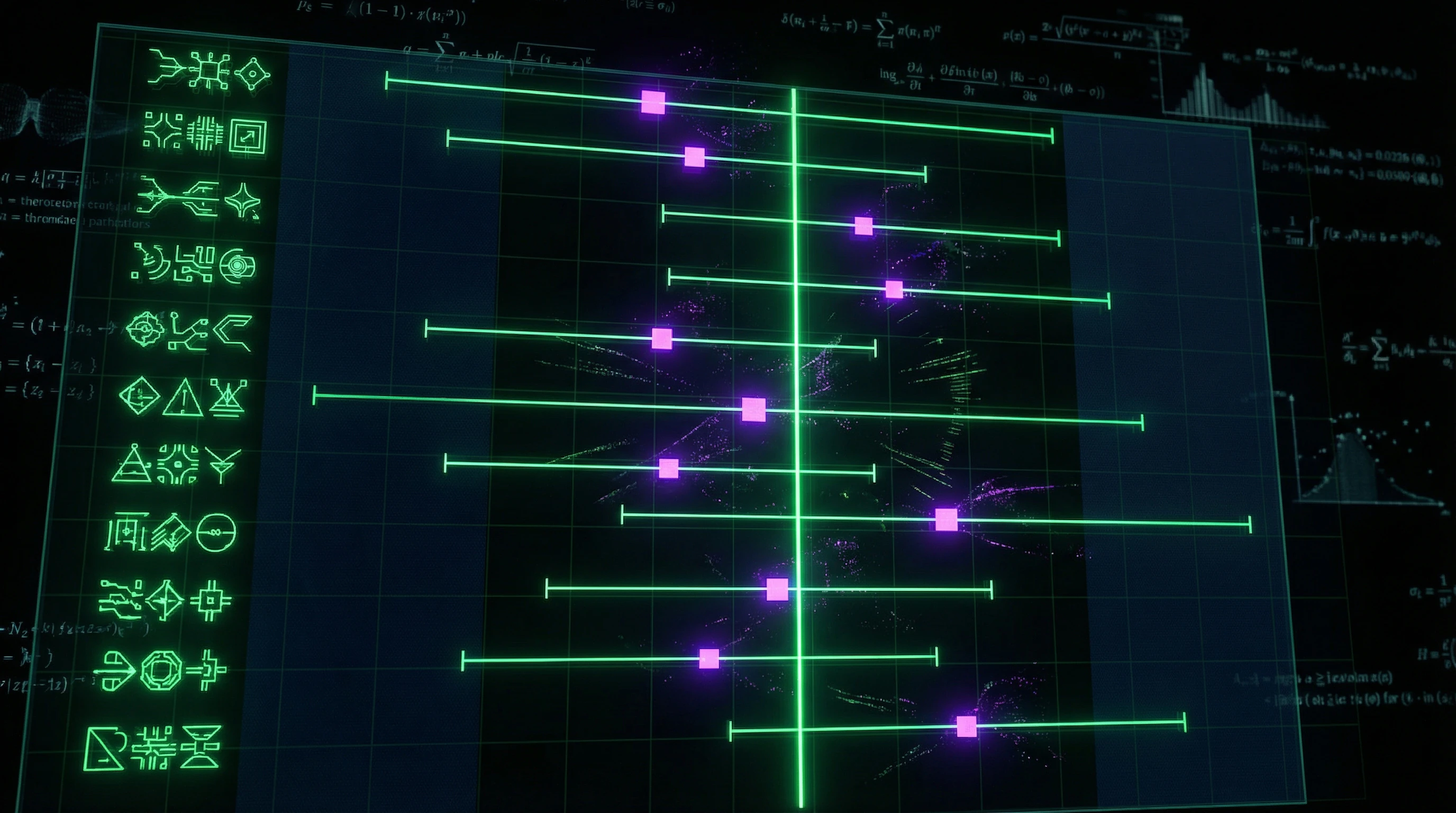
Mechanisms and Causality: Why Proposed Explanations Don't Hold Up to Physical Scrutiny
Even if empirical data showed a correlation between lunar phases and human behavior, it would be necessary to establish a causal relationship and identify a mechanism. Let's examine the proposed mechanisms from the perspective of physics and physiology. For more details, see the Media Literacy section.
⚙️ Gravitational Hypothesis: The Scale Problem
The tidal force acting on the human body is negligible. The gravitational acceleration from the Moon at Earth's surface is ~3.3×10⁻⁵ m/s². Tidal force (the difference in gravity between the nearest and farthest points of an object) is proportional to the object's size.
For a human body 1.7 m tall, the tidal force is ~10⁻⁶ N — this is a million times weaker than the force you exert on a keyboard while typing. The gravitational influence of a person standing next to you on your body is approximately 10,000 times stronger than the Moon's influence.
If the nervous system were sensitive to such microscopic gravitational changes, we would constantly feel the presence of surrounding people as a physical force.
Fluids in the human body are contained in closed systems (vessels, cells), where pressure is determined by osmotic and hydrostatic factors that exceed lunar gravity by orders of magnitude.
💡 Light Hypothesis: Suppression by Artificial Lighting
A full Moon creates illumination of ~0.25 lux in open terrain. Melanopsin-containing retinal ganglion cells, which regulate circadian rhythms, have a sensitivity threshold of ~1-10 lux for significant melatonin suppression.
Theoretically, moonlight could influence circadian rhythms in people sleeping outdoors without artificial lighting. However, under modern conditions this hypothesis doesn't work:
- most people sleep indoors with closed curtains, where moonlight doesn't penetrate;
- evening exposure to artificial lighting (100-1000 lux) completely masks any potential effect of moonlight;
- studies in isolated populations without electricity show no significant sleep changes depending on lunar phases when controlling for temperature and activity.
The light hypothesis may explain historical observations, but is irrelevant for modern urbanized populations.
🧲 Magnetic Hypothesis: Absence of Connection Mechanism
The Moon does not create significant changes in Earth's geomagnetic field. Earth's magnetic field (~50 microtesla) is determined by the dynamo effect in the liquid core and is practically independent of the Moon's position.
Geomagnetic field variations are associated with solar activity (magnetic storms), but not with lunar phases. Even if such variations existed, there is no known biological mechanism through which magnetic fields of such weak intensity could influence the human nervous system.
| Proposed Mechanism | Physical Reality | Why It Doesn't Work |
|---|---|---|
| Gravitational influence | ~10⁻⁶ N on a human | A million times weaker than keyboard pressure; body fluids in closed systems |
| Moonlight | ~0.25 lux | Below circadian sensitivity threshold; artificial lighting masks the effect |
| Magnetic field | Moon doesn't affect geomagnetic field | No known mechanism for nervous system impact |
Magnetoreception has been detected in some animals (birds, turtles), but in humans such a mechanism is either absent or functions at a level insufficient for behavioral effects. Moreover, geomagnetic variations associated with solar activity exceed any potential lunar influences by orders of magnitude — and yet don't correlate with behavior in controlled studies.
🔄 Why Mechanisms Are Sought Even When They Don't Exist
Searching for a physical mechanism is a normal scientific reflex. However, it becomes problematic when it starts with the assumption that an effect exists, rather than with proving it.
This is called reverse engineering causality: first we believe in the effect, then we invent how it could work. This approach has led to the popularization of concepts like "quantum astrology," where quantum mechanics is used as a universal explanation for any unexplained phenomenon.
- Causality vs. Correlation
- If a mechanism is physically impossible, then correlation (even if it were proven) cannot be causal. This doesn't mean the correlation doesn't exist — it may be a methodological artifact, a confounder, or chance.
- Confounders in Lunar Research
- Seasonality, social expectations, selective attention, and cognitive biases create the illusion of lunar influence without any physical mechanism. Controlling for these factors systematically eliminates the effect.
The absence of a mechanism is not just a theoretical problem. It's a red flag indicating that the correlation, if it exists, is likely an artifact rather than a real phenomenon.
Counter-Position Analysis
⚖️ Critical Counterpoint
The article takes a firm position on the absence of lunar influence on humans. However, there are methodological and communicative blind spots worth examining honestly.
Underestimation of Weak Effects
Some meta-analyses reveal statistically significant correlations (though with small effect size, r<0.1) in specific subsamples — for example, in people with bipolar disorder. The claim "there is no effect" and "the effect is too small to notice" are different things. Perhaps our position is too categorical for borderline cases.
Ignoring Indirect Mechanisms
The Moon correlates with nighttime illumination (full moon = more light), which can indirectly affect melatonin and sleep. We did not separate direct gravitational influence (which truly does not exist) from indirect influence through illumination (which is theoretically possible but not systematically studied). This is a methodological gap in the analysis.
Cultural Practices as a Real Mechanism
In non-Western cultures, lunar cycles are integrated into medical systems (Ayurveda, traditional Chinese medicine). We do not consider whether cultural practices can create real psychosomatic effects through expectation and ritual — this is not "lunar influence," but the influence of belief in the Moon, and it may be measurable.
Extrapolation Beyond the Evidence Base
We rely on systematic reviews in medicine and criminology, but there are no reviews on influence on creativity, decision-making, social dynamics — areas where effects may be subtler and require different methods (qualitative research, neuroimaging). Our verdict extends to areas that have not been systematically studied.
Risk of Scientific Arrogance in Communication
The article's tone may be perceived as dismissive of people's personal experience. If a person subjectively feels changes during a full moon, the response "it's cognitive bias" may alienate, instead of offering alternative explanations (stress, seasonality, social patterns). This risks reinforcing the myth rather than dismantling it, if the audience feels devalued.
FAQ
Frequently Asked Questions

Author of the Cognitive Immunology Hub project. Researches mechanisms of disinformation, pseudoscience, and cognitive biases. All materials are based on peer-reviewed sources.