 💠 Crystals and Talismans
Esotericism and Occultism: A Critical Analysis of Hidden Knowledgeλ
Scientific investigation of esoteric and occult practices in modern society: from ancient alchemy to the commercialization of spiritual development
Overview
Esotericism and occultism flourish during crises — when rational explanations fail to comfort, the brain seeks patterns 🧩 and the illusion of control. We don't mock those who turn to tarot or astrology, but examine the mechanisms: the Barnum effect, apophenia, cognitive biases that transform randomness into "signs." An academic approach allows us to study these phenomena without belief in the supernatural — just as an anthropologist studies rituals without becoming a shaman.
🛡️
Laplace Protocol: This material is scientific analysis, not a guide to action. Studying esotericism does not mean endorsing it. Critical thinking and source verification remain your primary tools when evaluating any claims about "secret knowledge" and "magical powers."
Reference Protocol
Scientific Foundation
Evidence-based framework for critical analysis
Navigation Matrix
Subsections
🌌
[A-4]
Metaphysics and Universal Laws
Everything about Metaphysics and the Laws of the Universe: Complete Guide, Facts, and Myth-Busting.
Explore
[divination-systems]
Divination Systems
A study of ancient and modern divination systems — from I Ching and Tarot to digital adaptations — through the lens of semiotics, ontology, and Jungian synchronicity
Explore
[energy-practices]
Energy Practices
Alternative methodologies promising control over "life energy" have become a popular segment of the wellness industry, but scientific evidence of their effectiveness is absent.
Explore
[objects-talismans]
Objects and Talismans
From ancient amulets to modern gaming artifacts — exploring the role of protective objects across different contexts: from sports mascots to art objects and virtual talismans.
Explore
[ritual-magic]
Ritual Magic
A discipline that seeks to change reality through conscious, symbolically charged ceremonial actions, distinguished from spontaneous magic by its structured approach and systematic procedures.
Explore
Protocol: Evaluation
Test Yourself
Sector L1
Articles
Research materials, essays, and deep dives into critical thinking mechanisms.
💠 Crystals and Talismans ♈ Astrology
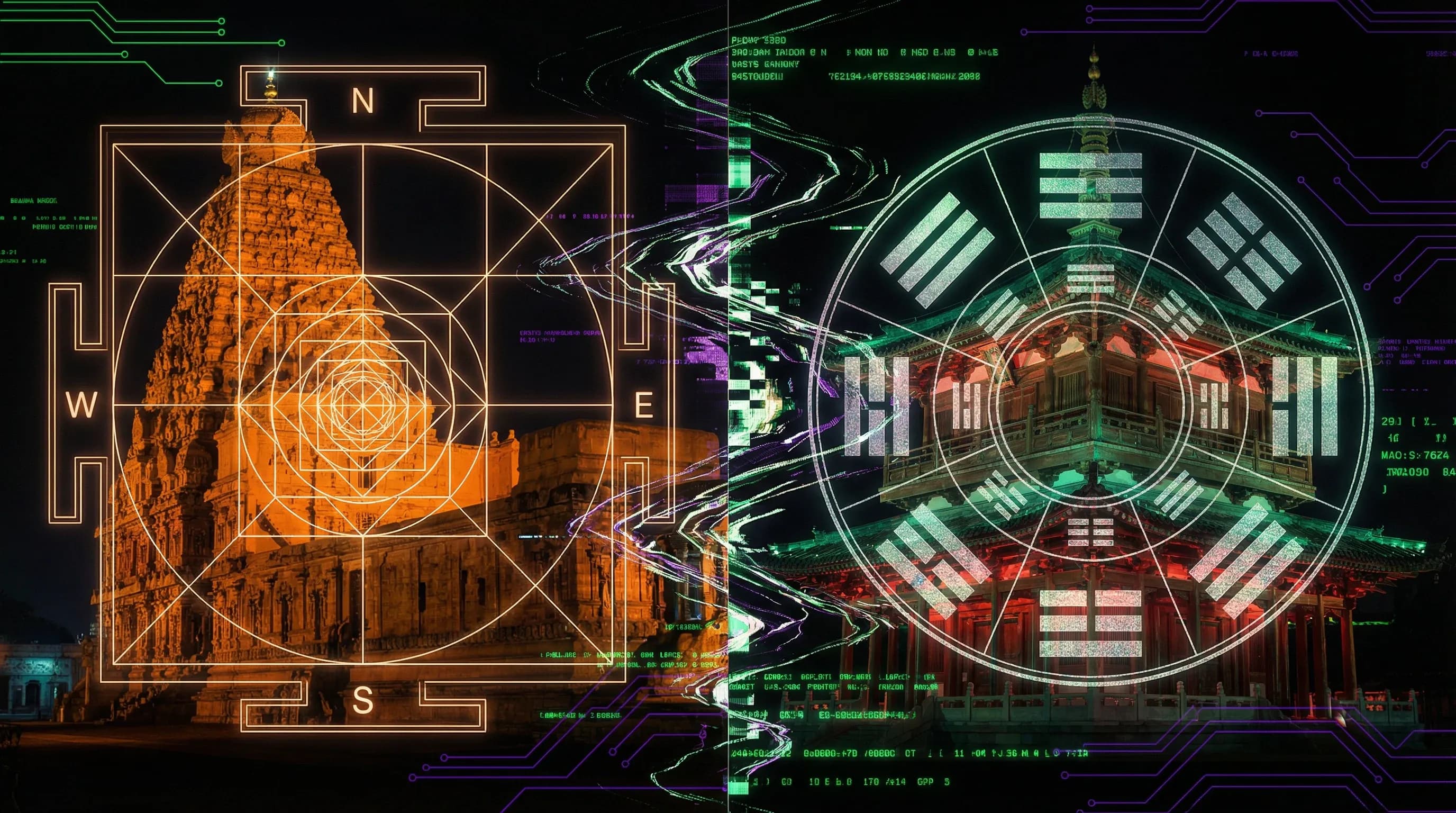 🏠 Feng Shui and Vastu
 🌈 Chakras, Aura, and Energy
 🏠 Feng Shui and Vastu
 ♈ Astrology
 🎴 Tarot and Cartomancy
 🎯 Manifestation
 🏠 Feng Shui and Vastu
 👻 Mediumship and Spiritualism
 🌈 Chakras, Aura, and Energy
 🏠 Feng Shui and Vastu
⚡
Deep Dive
Esotericism and Occultism: What Lies Behind the Trendy Terms of Today's Spiritual Marketplace
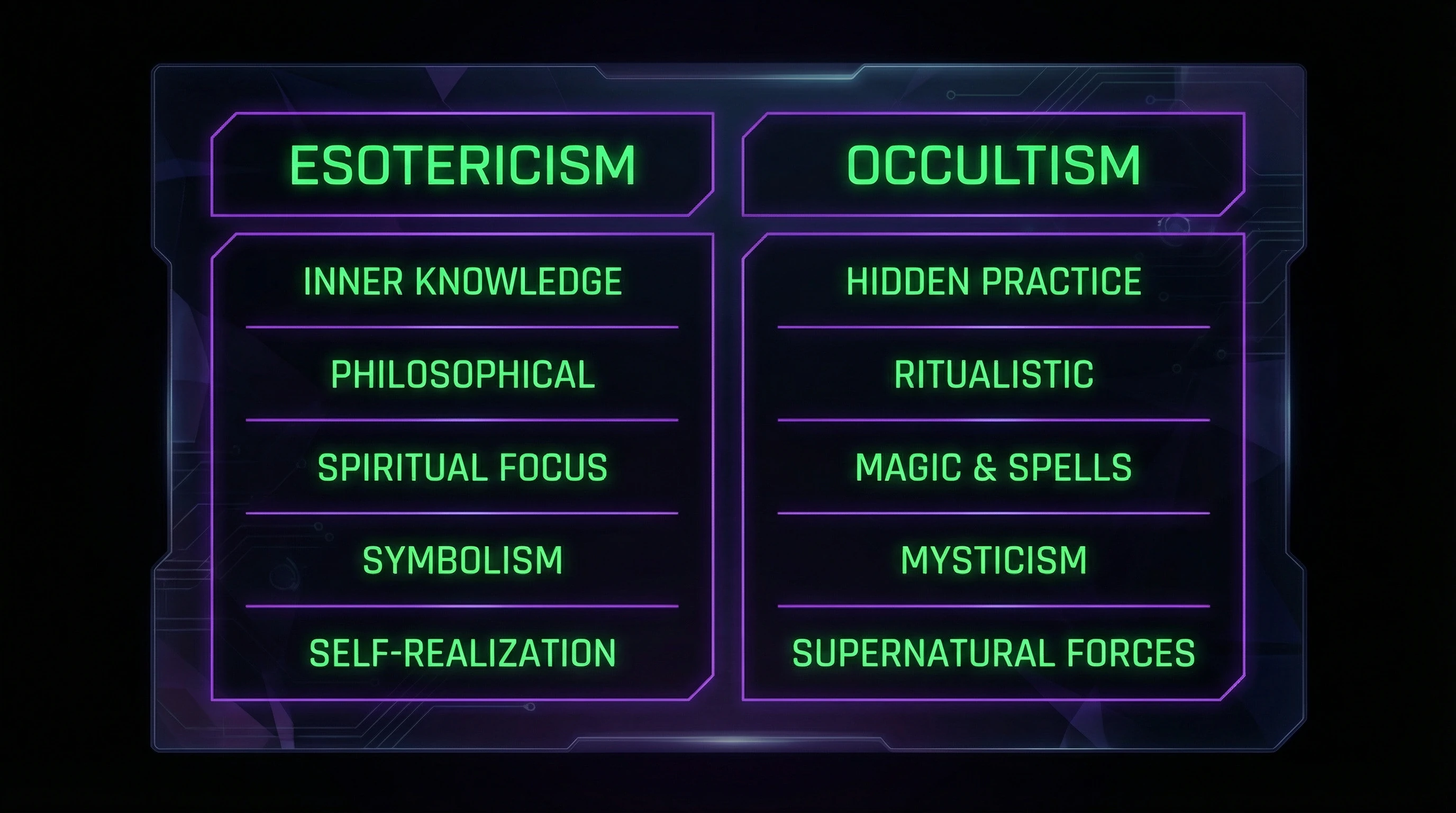
Esotericism and occultism are often perceived as synonyms, yet they denote different phenomena. The confusion arose from the commercialization of spiritual practices and the blending of various ideologies in mass culture.
Understanding the key distinctions is necessary for critical analysis of the modern esoteric services market.
Esotericism as a System of Hidden Knowledge for the Initiated
Esotericism represents a collection of secret, inner knowledge accessible only to initiated individuals. This term encompasses spiritual practices and teachings intended for a select group of followers who have passed through specific stages of initiation.
A key characteristic of esotericism is the gradation of access to knowledge: the outer circle receives basic concepts, while deeper practices remain the privilege of the inner circle. This hierarchical structure creates a system of dependency and motivates adherents toward further immersion in the tradition.
| Characteristic | Esotericism | Occultism |
|---|---|---|
| Nature | Knowledge system with hierarchical access | Practices of interaction with hidden forces |
| Focus | Inner development and initiation | Manipulating reality through rituals |
| Academic Status | Legitimate field of religious studies | Peripheral interest of researchers |
Occultism and Belief in Supernatural Forces
Occultism deals with mystical and magical practices that extend beyond scientific understanding. Unlike esotericism as a knowledge system, occultism focuses on practical interaction with hidden forces through rituals, spells, and magical operations.
Historically, occultism included divination systems, ritual magic, alchemy, and other practices claiming to manipulate reality through non-physical means.
Modern occultism often blends ancient symbolic systems with pseudoscientific terminology, creating an illusion of scientific validity. This mixture serves as a powerful persuasion tool for audiences seeking explanations for complex phenomena.
Critical Distinction of Concepts in Academic Discourse
- Esotericism
- A system of inner knowledge with hierarchical access structure. Studied as a legitimate field of religious studies and history of religions, where researchers analyze the social and psychological functions of systems.
- Occultism
- Practices claiming interaction with supernatural forces. Often remain on the periphery of academic interest but are studied through the lens of social psychology and history of ideas.
- Pseudoscience
- Use of scientific terminology without corresponding methodology and verifiability. Characteristic of modern occultism and serves as a tool for persuading consumers.
Researchers apply biographical and narrative analysis to understand the motivations of practitioners. This methodological approach allows separation of the social and psychological functions of esoteric systems from their claimed supernatural effects.
- Commercialization blurs boundaries between traditional systems and modern marketing strategies
- Consumers often fail to distinguish historical traditions from their commercial adaptations
- This facilitates manipulation and exploitation through creation of false legitimacy
Social Context and Crisis Correlation: Why Esotericism Thrives During Periods of Instability
Interest in magic, esotericism, and occultism increases during periods of social crisis and transformation of public institutions. This phenomenon has been documented across various cultures and historical periods, from the fall of the Roman Empire to modern economic and political upheavals.
Understanding this correlation is critically important for analyzing the contemporary boom in esoteric practices and protecting vulnerable population groups.
Rising Interest During Periods of Social Transformation
Sociological research confirms a persistent connection between institutional instability and turning to alternative systems for explaining reality. When traditional institutions—government, church, science, education—lose trust or effectiveness, people seek alternative sources of meaning and control over their lives.
Esoteric systems offer simple explanations for complex social processes and the illusion of personal influence over uncontrollable events.
| Historical Period | Social Crisis | Surge in Esoteric Practices |
|---|---|---|
| 3rd–5th centuries | Fall of the Western Roman Empire | Flourishing of Gnosticism and magical systems |
| 14th century | Black Death (plague pandemic) | Mass fascination with alchemy and astrology |
| 1920s–1930s | Economic crisis and political instability | Boom in spiritualism and occult movements |
| 2020–2024 | Pandemic, inflation, geopolitical conflicts | Explosive growth of esotericism in social media and commerce |
Periods of war, epidemics, economic crises, and political revolutions are invariably accompanied by surges of interest in astrology, magic, and prophecy. The current situation is no exception.
Psychological Factors of Vulnerability to Esoteric Practices
Psychological vulnerability to esoteric systems is linked to the need for control, predictability, and meaning under conditions of uncertainty. Cognitive biases such as the illusion of control and confirmation bias strengthen belief in the effectiveness of magical practices.
In states of stress and uncertainty, the brain more actively seeks patterns and causal connections, even when none exist. Esoteric systems offer ready-made patterns that the brain eagerly accepts as explanations for chaos.
People experiencing personal crises are especially vulnerable: loss of loved ones, divorce, illness, financial problems, or professional failures. In states of stress, critical thinking weakens while the need for quick solutions and emotional support increases.
- Decreased activity in the prefrontal cortex (responsible for critical analysis)
- Increased activity in the amygdala (center for processing fear and emotions)
- Heightened receptivity to simple, comforting explanations
- Willingness to accept any offer of control over the situation
Institutional Changes and the Search for Alternative Systems of Meaning
Transformation of social institutions creates a vacuum of meaning and authority that is filled by alternative belief systems. The declining influence of traditional religions in secular societies does not eliminate spiritual needs but redirects them toward individualized esoteric practices.
Esotericism offers flexible, personalized spirituality without the rigid dogmatic requirements of traditional religions.
- Crisis of Trust in Science and Medicine
- Contradictory information and commercialization of healthcare push people toward alternative healing systems. Esoteric practices position themselves as holistic, natural, and individually oriented alternatives to "soulless" institutional medicine.
- Vacuum of Authority
- When traditional sources of authority lose legitimacy, people seek new gurus and systems that offer clear answers to complex questions.
- Individualization of Spirituality
- Esotericism allows each person to construct their own belief system, which aligns with contemporary values of autonomy and self-expression.
For more on the commercialization of esotericism, see the section Energy Practices.
Commercialization and the Modern Industry: How Spirituality Became a Highly Profitable Business
Esotericism and occultism have transformed into a highly profitable business and trendy professions in modern society. The esoteric services market includes consultations, training courses, ritual objects, literature, and online platforms with multi-billion dollar turnover.
Understanding the commercial mechanisms of this industry is critically important for evaluating practitioners' motivations and protecting consumers from exploitation.
Esotericism as a High-Profit Business with Low Barriers to Entry
The modern esoteric industry is characterized by low barriers to entry and high service margins. The absence of regulation and quality standards allows anyone to declare themselves an expert after short-term courses or self-study.
Services are valued not by objective results but by clients' subjective feelings, which makes effectiveness assessment difficult and creates space for manipulation.
- Prices for esoteric services range from affordable mass consultations to elite programs costing tens of thousands of dollars.
- Pricing is often based not on real value but on psychological principles: high prices create an illusion of exclusivity and effectiveness.
- Online consultations cost $50–$500, training courses — $200–$5,000, certification programs — $1,000–$15,000, elite retreats — $5,000–$50,000.
Marketing Strategies for Spiritual Development and Personal Growth
Esoteric practices are marketed as forms of "spiritual development" and even hobby activities, which reduces critical perception and expands the target audience. The use of scientific and psychological terminology creates an illusion of legitimacy: "energy practices," "quantum healing," "consciousness neuroplasticity."
Social media and influencer marketing allow esoteric practices to reach audiences of millions with minimal investment.
Marketing strategies exploit the desire for self-improvement, success, and well-being, positioning esoteric practices as tools for achieving material and social goals. Promises of quick results, financial abundance, and ideal relationships attract people disillusioned with traditional paths to success.
Professionalization of Occult Practices and Continuing Education
The emergence of esoteric practices as career paths and continuing education systems legitimizes occultism in society's eyes. Certification programs, online academies, and professional associations create an appearance of standardization and professionalism.
However, these structures are not subject to external quality control and often serve merely as an additional source of income for organizers.
- Integration into the Corporate Sector
- Companies implement "energy practices," astrological consultations for teams, and rituals to increase productivity without verifying their effectiveness through scientific methods. This blurs the boundaries between legitimate development practices and pseudoscientific methods.
- Legitimization Mechanism
- External attributes of professionalism (certificates, associations, academies) create trust, although they do not guarantee quality or effectiveness of services.
Read more about specific practices and their mechanisms of influence in the article about energy practices.
Myths versus Reality: What Lies Behind Popular Misconceptions About Esotericism
Astrology and the Scientific Method: Why Stars Don't Influence Destiny
Astrology is not a science, despite its historical connections to astronomical research. Controlled experiments have repeatedly demonstrated the absence of correlation between the position of celestial bodies and events in people's lives.
The popularity of astrology is explained by the Barnum effect—the tendency to find personal meaning in vague general statements. People remember coincidences and forget misses, creating an illusion of prediction accuracy.
| Astrological Claim | Scientific Explanation | Status |
|---|---|---|
| Planetary positions determine character | Personality is shaped by genetics and environment | Refuted |
| Zodiac sign predicts compatibility | Relationships depend on communication and values | Refuted |
| Mercury retrograde causes disruptions | Optical illusion with no effect on earthly events | Refuted |
| Astrological forecasts exceed chance accuracy | Results match random distribution | Refuted |
Diversity of Esoteric Traditions: Critical Analysis of Differences
Enormous differences exist between various esoteric and occult ideologies, which critical research reveals. Many occult ideologies have led to confusion in popular understanding, mixing incompatible philosophical systems and practices.
Academic research distinguishes esotericism as a system of hidden knowledge for initiates and occultism as practices working with supernatural forces. Historical traditions of alchemy included proto-scientific investigations and philosophical inquiries, not just magical thinking.
- Esotericism claims hidden knowledge accessible to the chosen few
- Occultism claims practical influence on reality through supernatural means
- The modern market combines both approaches, creating hybrid offerings
- Commercialization erases historical distinctions between traditions
Historical Perspective and Modern Misconceptions
People have always believed in the existence of an invisible world alongside the visible one. However, modern misconceptions differ from historical beliefs in their degree of commercialization and pseudoscientific rhetoric.
Interest in magic, esotericism, and occultism increases during periods of social crisis and transformation of public institutions. This sociological observation explains the cyclical popularity of esoteric practices, but does not confirm their effectiveness.
Academic study of these phenomena focuses on their social and psychological functions, not on testing supernatural claims. Esotericism and occultism have become a highly profitable business, which distorts their historical and cultural significance.
For a deeper understanding of manipulation mechanisms in esotericism, we recommend studying energy practices, where commercial interests particularly clearly intersect with psychological vulnerabilities of the audience.

Academic Approaches to Research: Critical Analysis Methodology
Biographical and Narrative Analysis of Practitioners
Contemporary research applies biographical and narrative analysis methods to understand the life stories and motivations of esoteric practitioners. This approach reveals social, psychological, and economic factors that lead people to esoteric practices, without evaluating the truth of their beliefs.
Narrative analysis shows: turning to esotericism is often connected to crisis life events, the search for meaning, and the need for control over uncertainty. Studies of life trajectories reveal patterns of socialization in esoteric communities and mechanisms for maintaining belief.
People turn to esotericism not because they believe in its truth, but because it provides a narrative that explains their life events and gives a sense of agency.
Comparative Studies of Traditions
Comparative analysis of various esoteric traditions reveals both common structural elements and fundamental philosophical differences. Academic research in religious studies systematizes knowledge about different esoteric traditions using rigorous scientific methodology.
Critical comparison shows: many contemporary "esoteric systems" are eclectic constructions borrowing elements from incompatible traditions. Historical analysis traces development from alchemy to modern interpretations, revealing transformations of meanings and practices.
| Tradition | Historical Period | Primary Mechanism of Influence | Contemporary Adaptation |
|---|---|---|---|
| Alchemy | 12th–17th centuries | Transmutation of matter through symbolism | Personal transformation, self-development |
| Kabbalah | 12th–13th centuries | Manipulation of sacred letters and numbers | Numerology, energy practices |
| Tarot | 15th century | Synchronicity and archetypal images | Psychological counseling, self-knowledge |
| Astrology | Ancient Babylon | Cosmic influence on earthly events | Personal horoscopes, partner compatibility |
Sociological and Psychological Methods
Sociological analysis examines esotericism as a social phenomenon, investigating its functions in society and mechanisms of dissemination. Research shows correlation between social crises and increased interest in magical practices, indicating a compensatory function of esotericism.
Psychological methods study cognitive mechanisms that support esoteric beliefs. Academic publications in peer-reviewed journals apply rigorous methodology, focusing on social and psychological aspects while avoiding evaluation of supernatural claims.
- Confirmation bias: the tendency to notice and remember information that confirms existing beliefs. In the context of esotericism, a person remembers coincidences, forgets prediction errors.
- Illusion of control: overestimation of one's own influence on events, especially in situations of uncertainty. Esoteric practices create a sense of control over uncontrollable life circumstances.
- Apophenia: perception of meaningful connections between unrelated phenomena. The foundation for interpreting synchronicity and cosmic influences in esoteric systems.
Critical analysis of esotericism requires understanding its social function and psychological mechanisms, not denying its significance for practitioners. The academic approach allows studying esotericism as a cultural phenomenon while maintaining methodological rigor and respect for people who find meaning in it.
Further study of energy practices shows how these methodological tools apply to specific belief systems.
Critical Thinking and Practical Recommendations: Navigating the World of Esotericism
Distinguishing Scientific from Pseudoscientific
Science uses testable hypotheses, controlled experiments, and willingness to abandon theories when contradicted by data. Pseudoscientific practices avoid falsifiability, use vague formulations, and ignore contradictory evidence.
Critical thinking requires evaluating information sources, verifying claims, and understanding the difference between correlation and causation.
The commercialization of esotericism creates an appearance of scientific validity through pseudoscientific terminology, certificates, and professional associations. These structures are not subject to external quality control and serve as marketing tools.
The integration of esoteric elements into corporate training and the wellness industry blurs the boundaries between legitimate development practices and pseudoscientific methods.
Evaluating Sources and Practitioners
The absence of standardized education and regulation in the esoteric field means anyone can declare themselves an expert without verification of competence. Commercial motivations often conflict with client interests, especially when practitioners sell expensive courses without guarantees of results.
| Evaluation Criterion | Scientific Approach | Pseudoscientific Approach |
|---|---|---|
| Verifiability of claims | Hypotheses are falsifiable and testable | Claims are vague and unfalsifiable |
| Information sources | Peer-reviewed publications and data | Personal testimonials and authority |
| Attitude toward criticism | Welcomes scrutiny and revision | Rejects criticism as misunderstanding |
| Commercial interests | Separated from research process | Directly influence conclusions and recommendations |
Distinguishing between cultural interest in esoteric traditions and uncritical belief in their supernatural efficacy is critically important for an informed approach.
Source verification includes assessing peer review, authors' academic qualifications, and the presence of empirical data.
Educational Strategies for the Public
Educational content should present a balanced view of academic and popular perspectives, clearly delineating the scientific status of various practices. Acknowledging the historical and cultural significance of esoteric traditions does not require accepting their supernatural claims.
- Develop critical thinking skills and scientific literacy
- Counter pseudoscientific misinformation through media literacy
- Avoid ridiculing believers, focusing on reliable information
- Help find evidence-based alternatives to meet psychological needs
Public education about the commercial exploitation of esotericism helps people make informed decisions about their participation in such practices.
Practical Tools for Critical Analysis
A systematic approach to critical analysis of esoteric claims includes verifying the information source, assessing the presence of empirical evidence, and identifying conflicts of interest.
- Ask questions about mechanisms of action
- How exactly does the claimed effect work? What physical or biological processes are involved?
- Verify long-term results
- Are there independent studies confirming effectiveness? What is the proportion of placebo effect?
- Look for alternative explanations
- Can observed effects be explained by psychological factors, natural course of events, or regression to the mean?
- Be aware of your own biases
- Confirmation bias causes us to seek information supporting our beliefs and ignore contradictory data.
For in-depth study of manipulation mechanisms in esotericism, refer to energy practices, where specific examples of commercialization and psychological influence are examined.

Knowledge Access Protocol
FAQ
Frequently Asked Questions
Esotericism refers to hidden knowledge for the initiated, encompassing spiritual practices and mystical teachings. Occultism deals with supernatural forces, magic, and rituals that fall outside scientific understanding. Critical research demonstrates substantial differences between these concepts, though they are often conflated in popular consciousness.
Interest in magic and esotericism characteristically increases during periods of social crisis and transformation of public institutions. People seek alternative explanations and ways to control uncertainty. This is confirmed by sociological research and historical data.
No, astrology is not a science, despite its historical connections to astronomy. It does not employ scientific methodology and does not undergo experimental verification. Many scientists have contributed to space research, but this does not make astrology a scientific discipline.
Esotericism and occultism have transformed into a highly profitable industry through the commercialization of spiritual practices. They are marketed as forms of self-development, hobbies, and even professional career paths. Marketing strategies exploit the demand for spirituality and personal growth.
Academic research applies biographical and narrative analysis of practitioners' life histories. Comparative methods are used to identify differences between traditions, along with sociological and psychological approaches. Esotericism is studied as a legitimate field within religious studies and history of religions.
Scientific claims are tested through experiments, produce reproducible results, and remain open to criticism. Pseudoscience uses unverifiable assertions, appeals to authority, and avoids critical analysis. It's essential to demand evidence and apply critical thinking to any claims about the supernatural.
No, there exists tremendous diversity among different esoteric and occult ideologies. Critical research reveals significant differences in philosophy, practices, and foundational principles. Generalizing all traditions is a common misconception.
Check their education, experience, and client reviews from independent sources. Be wary of promises of guaranteed results, demands for large sums of money, or creation of dependency. Legitimate specialists are transparent about their methods and do not use manipulative techniques.
No, people have always believed in the existence of an invisible world alongside the visible one, regardless of the terminology used. Esoteric traditions have ancient roots in various cultures. Contemporary forms represent the evolution and adaptation of historical practices.
The need for control over uncertainty, the search for meaning and identity during crisis periods. The desire to belong to a select group of initiates and gain access to secret knowledge. These factors intensify during social transformations and personal crises.
Academic study of esotericism as a cultural and social phenomenon is compatible with scientific approach. However, belief in supernatural claims without evidence contradicts scientific methodology. It's important to distinguish between researching practices and believing in their supernatural efficacy.
Alchemy is a historical practice that combined proto-scientific research with philosophical and mystical elements. It included not only magical thinking but also real chemical experiments. Many alchemical methods became the foundation of modern chemistry.
Commercialization of spirituality has created a market for esoteric services and training. Practices are positioned as forms of continuing education and career development. Social media and marketing have made esotericism accessible and attractive to a broad audience.
Many effects are explained by psychological mechanisms: placebo effect, self-suggestion, and cognitive biases. Rituals can reduce anxiety by creating an illusion of control. This doesn't confirm supernatural explanations, but demonstrates real psychological impact.
Marketers use the language of spiritual development, transformation, and secret knowledge to sell services and products. An image of exclusivity and access to special practices is created. Emotional triggers and promises of quick results attract vulnerable audiences.
Financial exploitation, psychological dependence on practitioners, and rejection of scientific medicine in favor of magical methods. Possible increase in anxiety and development of magical thinking that interferes with rational problem-solving. Critical thinking is the best defense against manipulation.