
What Variable Reinforcement Is and Why It Turns Behavior Into an Automatism Resistant to Any Attempt to Stop
Variable ratio schedules (VR schedules) are a pattern of operant conditioning in which a reward is delivered after an unpredictable number of actions. Unlike fixed schedules, where reinforcement comes after a strictly defined number of responses (for example, every fifth click), VR schedules create a situation where the next reward might come after the second action, after the twentieth, or after the fiftieth—and the subject never knows in advance. More details in the Scientific Method section.
It is precisely this unpredictability that creates the most extinction-resistant behavior of all known conditioning patterns (S001).
🧠 Neurochemical Mechanism: Why Uncertainty Is Stronger Than Guaranteed Reward
The brain's dopaminergic system responds not to the reward itself, but to the difference between expected and received reinforcement. When a reward is predictable (fixed schedule), the dopamine release occurs at the moment of the signal preceding the reward, not at the moment of receiving it—the brain has "learned" to predict the outcome.
Under a VR schedule, each action can potentially lead to a reward, which keeps the dopamine system in a state of constant activation (S007). This explains why casino gamblers continue pulling the slot machine lever even after a series of losses—each attempt is perceived by the brain as "possibly this one."
- Key Difference Between VR and Fixed Schedules
- Fixed reinforcement → dopamine on signal (predictability). VR reinforcement → dopamine on each action (uncertainty).
- Result for Behavior
- Constant activation of the motivational system that doesn't "turn off" even in the absence of reward.
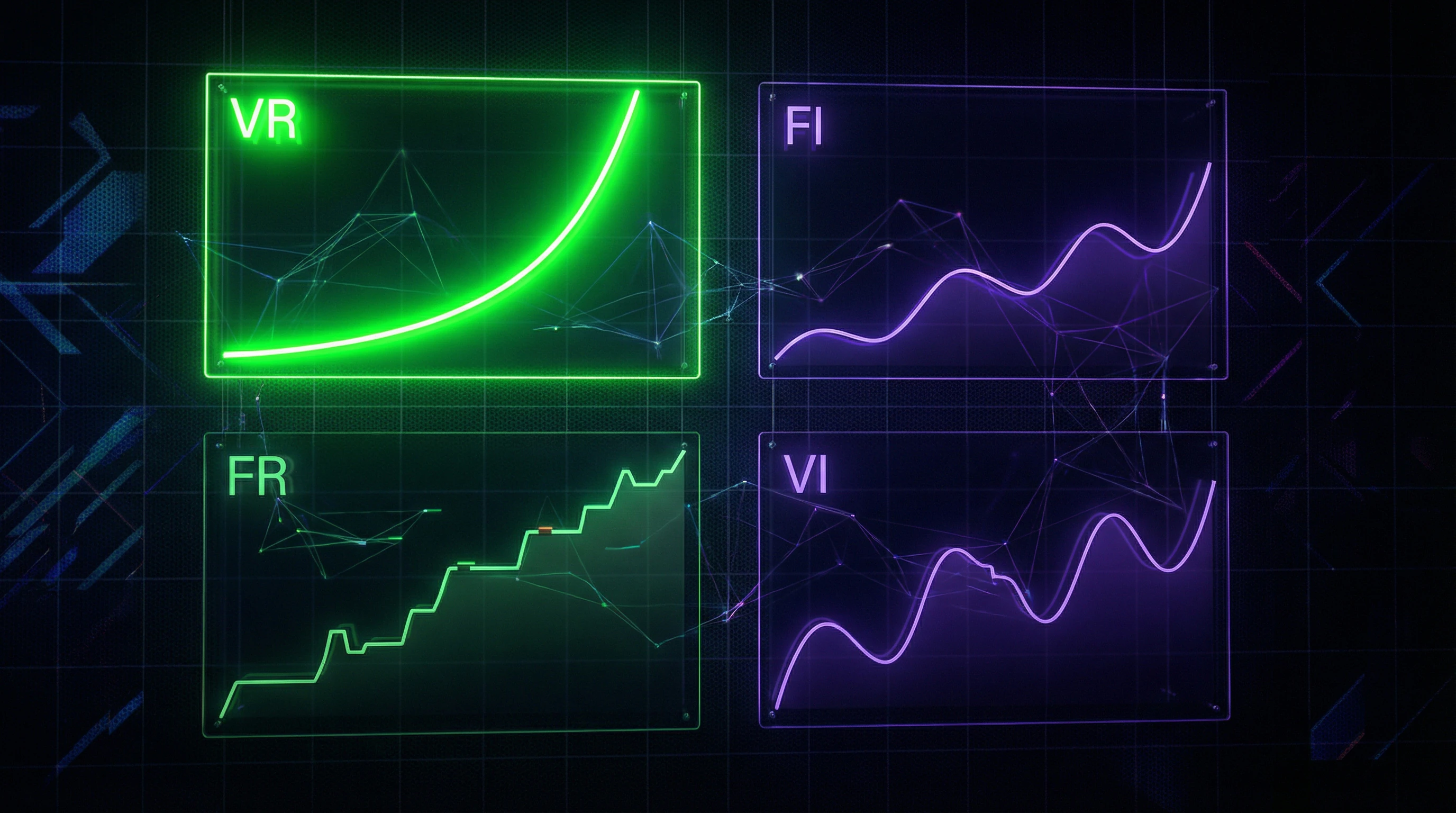
⚙️ Comparative Effectiveness: VR Versus Other Reinforcement Schedules
Direct comparison studies show the quantitative superiority of VR schedules. In experiments with token reinforcement, variable schedules produced significantly higher response rates compared to fixed schedules with identical average reinforcement density (S001).
| Schedule Type | Response Rate | Resistance to Extinction |
|---|---|---|
| Fixed Reinforcement | Moderate | Low (rapid extinction) |
| Variable Reinforcement (VR) | Extremely High | Extremely High (tens to hundreds of repetitions after reinforcement cessation) |
Behavior shaped by VR schedules demonstrates extreme resistance to extinction—even when reinforcement completely ceases, subjects continue performing the target action tens and hundreds of times longer than with other types of conditioning (S004).
🔁 Why VR Schedules Create the Illusion of Control and Patterns of Superstitious Behavior
The unpredictability of reinforcement generates a cognitive phenomenon: the subject begins searching for patterns where none exist, attributing success to random elements of their behavior. A gambler may decide that a "lucky" posture, time of day, or sequence of actions increases the chances of winning.
In the context of social media attention economy, this manifests as superstitions around "algorithms": users believe that certain posting times, numbers of hashtags, or types of content "work better," even though the actual correlation may be zero or inverse (S007). This illusion of control strengthens engagement—a person feels they can "hack the system," which motivates even more attempts.
Five Arguments Used by Social Media Defenders — and Why They Seem Convincing at First Glance
Before examining the evidence base, it's necessary to honestly present the strongest counterarguments. Steelmanning — the intellectual practice of formulating an opposing position in its most convincing form — allows us to avoid attacking a straw man and test our own theses for robustness. More details in the Psychology of Belief section.
💬 Argument 1: Social Media Is a Tool, the Problem Is in Usage, Not Design
Platform defenders argue that social media is neutral by nature, like a hammer or a car. Problematic use is the result of individual user characteristics (impulsivity, addiction proneness, lack of self-control), not intentional interface design.
Millions of people use Instagram, TikTok and Facebook without signs of addiction, which supposedly proves that platforms are not inherently addictive. These tools provide real value — maintaining social connections, access to information, opportunities for self-expression and professional growth.
🎯 Argument 2: Notifications and Likes Are Feedback Necessary for a Social Platform to Function
Reinforcement systems in social media serve a legitimate function: they inform users about social responses to their content. Without feedback mechanisms, the platform loses its social nature and becomes a one-way broadcast channel.
Likes, comments and shares are the digital equivalent of nods, smiles and applause in offline communication. Their unpredictability reflects the natural variability of human attention and interest, not the result of manipulative design.
- Critics confuse correlation with causation
- People predisposed to compulsive behavior more often demonstrate problematic use of any stimulating activities
- Social media is just one of many such stimuli
📈 Argument 3: Algorithms Optimize User Experience, Not Usage Time
Modern recommendation systems use complex engagement quality metrics that go far beyond simple time on platform. Algorithms account for content diversity, user satisfaction, long-term retention and even negative signals like "hide this post" or "report."
Optimizing exclusively for usage time would be counterproductive: burned out, irritated users leave the platform forever. Companies are interested in sustainable, healthy engagement, not short-term attention exploitation.
🧪 Argument 4: Research on Social Media Addiction Is Methodologically Weak and Contradictory
Critical analysis of the literature reveals serious methodological problems in "digital addiction" research. Most studies rely on self-reports and correlational data, which don't allow establishing causal relationships.
Diagnostic criteria for "social media addiction" are not standardized and often pathologize normal behavior. Longitudinal studies demonstrate contradictory results: some show a link between social media use and deteriorating mental health, others show no effect or even positive influence (S003). Effects, where they are found, are often small in magnitude and explained by confounders.
🛡️ Argument 5: Platforms Are Actively Implementing Digital Wellbeing Tools
In recent years, major social platforms have integrated features for controlling usage time, break reminders, notification limits and detailed activity statistics. Instagram hid like counts in some regions, YouTube offers "take a break" mode, Facebook allows completely disabling the news feed.
These measures supposedly demonstrate that companies recognize potential risks and are taking steps to mitigate them. If the business model completely depended on exploiting variable ratio reinforcement schemes, such features would never be implemented — they directly contradict maximizing usage time.
All five arguments sound logical and rely on real observations. That's precisely why they're dangerous: surface-level persuasiveness conceals systematic reasoning errors. The next section examines where platform defenders' logic begins to crack.
Evidence Base: What the Data Says About Digital Reinforcement Neuromechanics and Comparisons to Gambling Addiction
Three levels of analysis: (1) basic principles of operant conditioning in controlled experiments; (2) neurobiological correlates of variable reinforcement; (3) real user behavior and its similarity to addiction patterns. More details in the Sources and Evidence section.
📊 Foundational VR Schedule Research: From Laboratory Animals to Human Behavior
Classic operant conditioning experiments demonstrate the universal effect of variable reinforcement. VR groups produced 40–60% more target responses with identical reinforcement density (S001). The difference lay exclusively in the predictability of receiving rewards, not in their quantity.
Timeout procedures (temporary removal of access to reinforcement) demonstrate an analogous pattern: variable schedules created more persistent behavioral responses than fixed intervals (S004).
| Parameter | Fixed Reinforcement | Variable Reinforcement |
|---|---|---|
| Response Rate | Baseline | +40–60% |
| Resistance to Extinction | Low | High |
| Dependence on Predictability | High | Low |
🧠 Neuroimaging and Dopaminergic Pathways: What Happens in the Brain During Unpredictable Reinforcement
Dopamine neurons in the ventral tegmental area (VTA) activate in response to unpredictable rewards, with response amplitude correlating to the degree of uncertainty (S007). This explains the subjective sensation of "excitement" when checking notifications—each app opening potentially contains high-value social information, but the exact outcome is unknown.
Unpredictable rewards activate the dopamine system more strongly than guaranteed reinforcement. The brain responds not to receiving the reward, but to its probability.
🔍 User Behavioral Patterns: Check Frequency, Compulsivity, and Resistance to Extinction
The average smartphone user checks their device 96 times per day (every 10 minutes during waking hours). A significant portion of these checks occur automatically, without conscious intention.
Phantom vibration syndrome (sensation of phone vibration when absent) is observed in 80–90% of users and represents a classic conditioned reflex formed by unpredictable reinforcement. Temporary removal of social media access triggers symptoms analogous to withdrawal syndrome: anxiety, irritability, intrusive thoughts about the platform, compulsive attempts to check the app (S003).
- Device checking occurs automatically, without conscious trigger
- Lack of access causes anxiety and irritability
- Attempts to abstain lead to intrusive thoughts about the app
- Behavior persists despite awareness of its problematic nature
⚖️ Comparative Analysis: Social Media vs Slot Machines
Social platform design and slot machines use identical reinforcement architecture. In casinos—unpredictability of winning with fixed probability. In social media—unpredictability of social reinforcement (likes, comments, virality) following user actions.
- Friction Minimization
- Slot machines require no complex manipulations, social media opens with one tap. Both reduce the barrier between intention and action.
- Near-Miss Effect
- In casinos—symbols almost matching the winning combination. In social media—content that "almost" went viral, or notifications that "X more people liked your post" (S007). Both create the illusion of proximity to reward.
- Unpredictability as Core Mechanism
- Both use VR schedules as the primary tool for attention and behavior retention.
📉 Meta-Analysis and Systematic Reviews: Consensus and Contradictions
Systematic analysis of research on the relationship between social media use and mental health reveals heterogeneous results, but with a consistent pattern: problematic use correlates with elevated levels of anxiety, depression, and stress (S003).
Correlation does not prove direction of causality—people with pre-existing mental health issues may more frequently demonstrate compulsive use. However, longitudinal studies controlling for baseline levels show that usage intensity at time T1 predicts deterioration of indicators at time T2, supporting the hypothesis of causal influence (S003).
Direction of causality is confirmed by longitudinal data: intensive use precedes mental health deterioration, not vice versa.
Mechanism of Action: How Unpredictability Transforms into Compulsion Through Neuroplasticity and Habit Formation
Understanding why VR schedules are so effective requires analysis at the level of neural circuits and long-term brain adaptations. More details in the Folk Magic section.
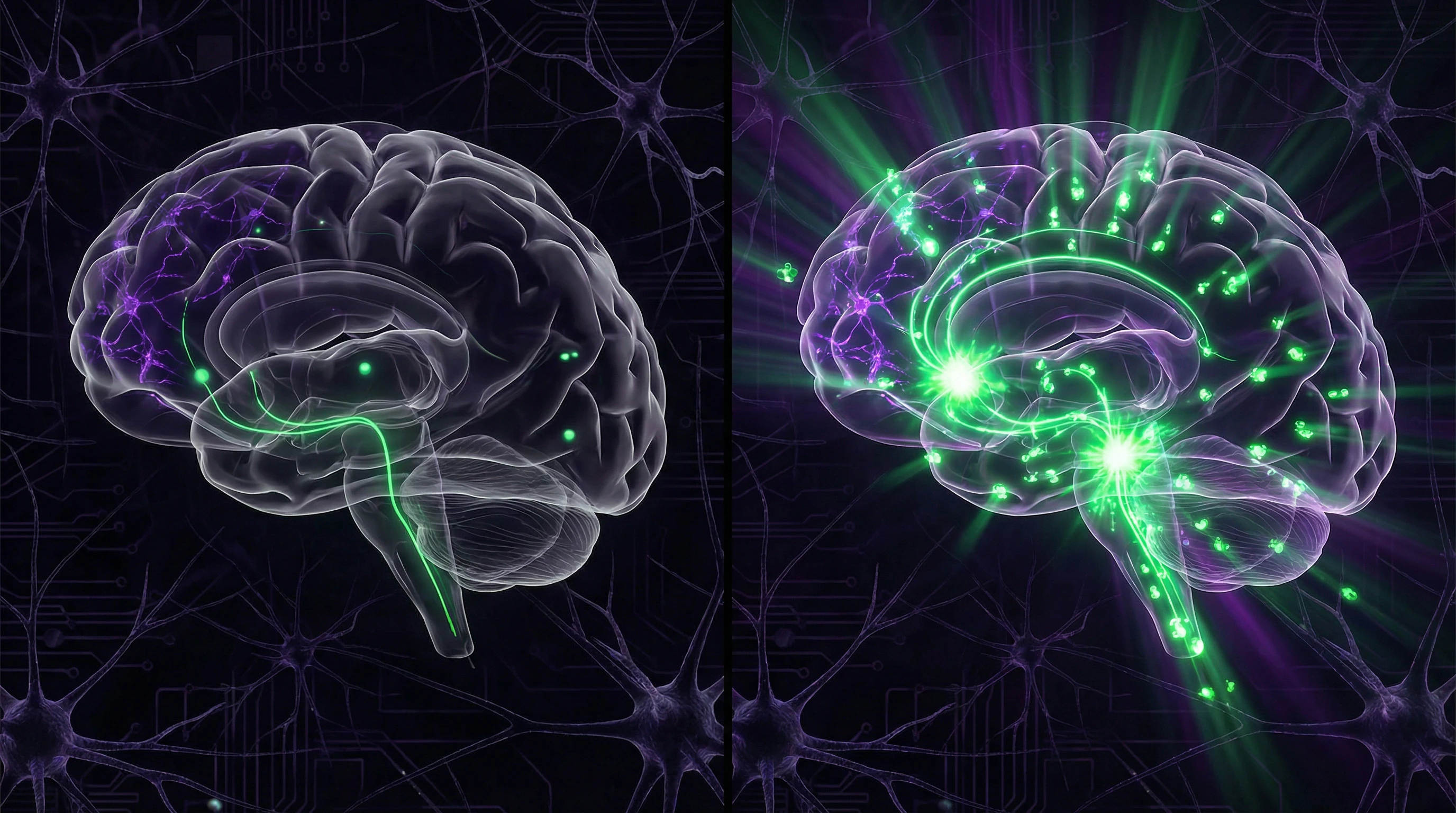
🔁 From Goal-Directed Action to Automaticity: Transfer of Control from PFC to Striatum
In the early stages of interaction with a social platform, behavior is controlled by the prefrontal cortex—the user consciously decides to open the app with a specific goal. However, with repeated reinforcement, control gradually shifts to the dorsal striatum, a structure responsible for habit formation and automatic action sequences (S007).
This transition is accelerated under VR schedules: reward unpredictability maintains high repetition frequency, which speeds up consolidation of neural pathways in the striatum. As a result, the action "check phone" becomes an automatic response to minimal triggers—boredom, anxiety, even simply having the device in view.
| Stage | Controlling Structure | Behavior Character | Reversibility |
|---|---|---|---|
| Initial interaction | Prefrontal cortex (PFC) | Goal-directed, conscious | Easily interrupted |
| Regular reinforcement | PFC + dorsal striatum | Mixed | Requires effort |
| Established habit | Dorsal striatum | Automatic, compulsive | Persists even without reward |
⚡ Sensitization of the Dopamine System: Why Tolerance Doesn't Develop
Unlike chemical dependencies, where repeated use leads to tolerance, behavioral addictions often demonstrate the opposite pattern—sensitization. The dopaminergic system becomes hyperreactive to cues associated with reward (app icon, notification sound), while the response to the reward itself may decrease (S007).
Users experience strong desire to check social media (wanting), but derive less pleasure from the process itself (liking). VR schedules maintain this imbalance, as reward unpredictability prevents complete system adaptation.
This mechanism explains why people continue scrolling feeds for hours despite declining subjective satisfaction. Desire becomes separated from pleasure—a classic sign of compulsive behavior.
🧱 Role of Contextual Associations: How Environment Becomes a Trigger
Classical conditioning works in parallel with operant conditioning: neutral stimuli regularly present during reinforcement themselves become conditioned triggers. For social media users, this means any context in which they typically check apps becomes a conditioned stimulus, automatically triggering the urge to check their phone.
Research shows that the mere presence of a smartphone on a desk (even when turned off) reduces cognitive performance and increases distraction frequency—an effect mediated by associative links between the device and potential reinforcement (S007).
- Context (public transit, queue, break) → becomes associated with reinforcement
- Neutral stimulus (sight of phone) → becomes conditioned trigger
- Trigger activates → automatic urge to check app
- Urge persists even without explicit reinforcement
🔀 Interference with Natural Reinforcement Systems: Crowding Out Offline Activities
Superstimuli—artificially enhanced versions of natural triggers—can displace normal sources of reinforcement. Social networks provide a concentrated, optimized version of social interaction: instant feedback, quantitative approval metrics, curated content that minimizes negative aspects of real communication.
For a brain optimized by evolution to maximize social status with minimal effort, digital interaction becomes a more "efficient" source of dopamine than offline activities. This creates a vicious cycle: reduced offline socialization → deterioration of social skills → increased anxiety in real interactions → even greater dependence on digital surrogates (S003).
The crowding-out mechanism is especially dangerous for adolescents, whose prefrontal cortex is not yet fully formed, while their reward system is hypersensitive to social cues. The link between intensive social media use and depression, anxiety, and sleep disturbances is documented in dopamine trap research, though causal relationships remain subject to debate.
Data Conflicts and Zones of Uncertainty: Where the Evidence Base Weakens and Why Acknowledging This Matters
Intellectual honesty requires explicit delineation of the boundaries of knowledge. Despite the compelling nature of basic operant conditioning principles, extrapolation to complex behavior in natural settings encounters methodological limitations and contradictory data. More details in the Fake Diagnostics section.
🔬 The Causality Problem: Correlation vs. Causation in Observational Studies
The overwhelming majority of studies linking social media use to negative outcomes (depression, anxiety, addiction) are cross-sectional or correlational. This means they capture associations but cannot establish the direction of causality.
Three alternative interpretations are equally compatible with the data: (1) social media use causes mental health problems; (2) people with mental health problems use social media more frequently as a coping mechanism; (3) a third variable (e.g., social isolation, low socioeconomic status) causes both (S003).
Longitudinal studies with baseline controls partially address this problem but remain vulnerable to confounders and reverse causality effects—this is not a methodological flaw but an honest limitation.
📊 Effect Heterogeneity: Why Some Users Are Vulnerable While Others Are Not
The effects of social media use demonstrate enormous individual variability. Meta-analyses show average effect sizes ranging from small to moderate, but with wide confidence intervals and significant heterogeneity across studies.
This means: for some adolescents, intensive social media use correlates with depression; for others, it doesn't. For still others, it may even be a protective factor (social support, sense of belonging) (S002).
- Age, gender, personality traits (neuroticism, extraversion) moderate the effect
- Content type and usage pattern (passive scrolling vs. active engagement) differ in their impact
- Social context (quality of offline relationships, school climate) can amplify or attenuate the effect
- Temporal factors (pandemic, social isolation) create confounders that are difficult to disentangle
🧪 The Replication Problem and Publication Bias
The replication crisis in psychology and neuroscience also affects social media addiction research. Many studies with small samples and p-hacking fail to replicate in independent laboratories.
Publication bias (bias towards positive findings) means that studies finding no effect remain in file drawers. This distorts the overall picture toward exaggerating the link between social media and harm (S004).
Absence of evidence of harm is not evidence of absence of harm, but the presence of correlation in one study is not proof of mechanism.
🧠 Neurobiological Data: Pretty Pictures, Weak Conclusions
Neuroimaging studies (fMRI, PET) are often interpreted as direct proof of addiction. Ventral striatum activation when viewing likes or notifications looks convincing, but this does not indicate pathology.
The ventral striatum activates for any reward—food, music, social interaction. Activation itself is not a marker of addiction (S005). Additional criteria are needed: loss of control, tolerance, withdrawal syndrome, functional impairment.
| What is often claimed | What the data actually show | Zone of uncertainty |
|---|---|---|
| "Social media activates dopamine like cocaine" | Both activate the ventral striatum | Intensity, duration, and functional consequences differ; direct comparison is contentious |
| "Social media addiction is a mental disorder" | Some users exhibit criteria for behavioral addiction | Prevalence, validity of diagnostic criteria, distinction from normal use remain debatable |
| "Social media causes depression" | Correlation between intensive use and depressive symptoms in some samples | Direction of causality, role of confounders, moderating factors not established |
⚖️ Where We Stand: Acknowledging Uncertainty as Strength
The evidence base supports three statements with high confidence: (1) variable reinforcement shapes habits; (2) social media platforms use these principles intentionally; (3) for some users, this creates problems with control and functional impairment.
But the claim "social media causes addiction more powerfully than casinos" remains a hypothesis supported by indirect data, not a proven fact. This doesn't mean the hypothesis is wrong—it means we need better methods to test it.
Acknowledging the boundaries of knowledge is not a weakness of science but its honesty. This is where the real work begins: not in assertions, but in questions we haven't yet learned to ask properly.