The Digital Unconscious as a New Form of Collective Memory: Defining the Phenomenon and Its Boundaries
Carl Jung's term "collective unconscious" described universal psychic structures transmitted across generations and cultures. The digital unconscious is a qualitatively different phenomenon: a system of shared representations, narratives, and "truths" formed not by biological evolution or cultural transmission, but by algorithmic systems that determine what information reaches users' consciousness (S009).
Unlike traditional collective memory, which formed over centuries through oral tradition, writing, and institutional practices, the digital unconscious is created and modified in real time. More details in the section Reality Verification.
⚠️ Key Distinction: From Organic Transmission to Algorithmic Curation
Traditional collective memory formed through social interaction among multiple agents—storytellers, historians, teachers, journalists—who participated in selecting and transmitting information. Digital tools have radically changed this process: social media and search engine algorithms now serve as the primary curators of collective memory (S003).
| Parameter | Organic Transmission | Algorithmic Curation |
|---|---|---|
| Formation Speed | Centuries, generations | Hours, days, weeks |
| Selection Agents | Multiple independent actors | Centralized algorithmic systems |
| Distribution Criteria | Cultural significance, social consensus | Engagement metrics (likes, clicks, view time) |
| Mechanism Visibility | Transparent to participants | Hidden from most users |
🧩 Three Levels of the Digital Unconscious
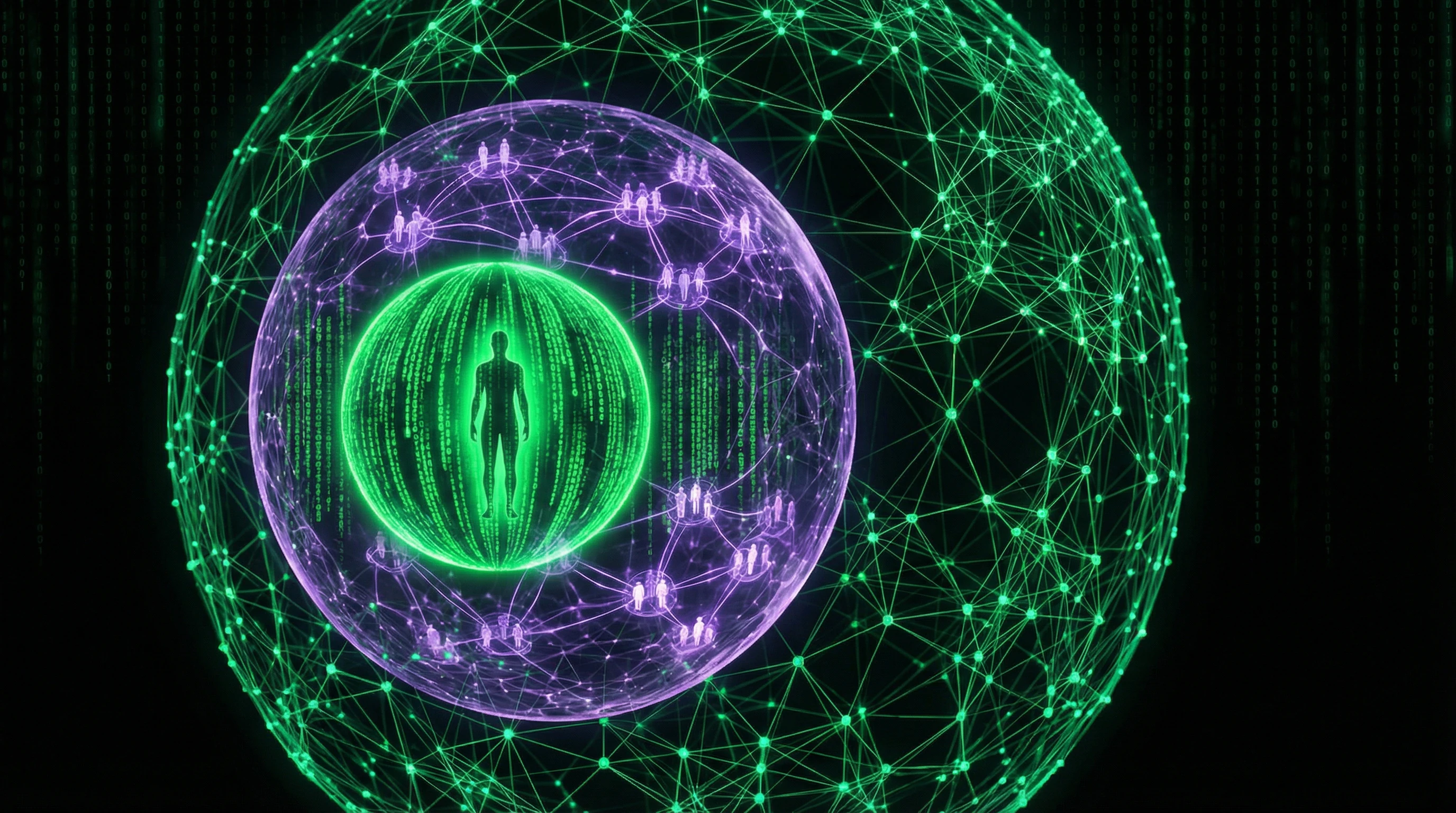
First level—personal algorithmic bubble: individual news feeds, recommendations, search results adapted to a specific user.
Second level—group narratives: shared stories, memes, and event interpretations spreading within specific communities and amplified by algorithms that reward engagement.
Third level—global digital myths: narratives that reach critical mass and become part of public discourse, influencing politics, economics, and culture (S009).
Digital tools open new possibilities for studying collective memory formed both within and outside digital space (S003). But this same system creates an illusion of spontaneous consensus, where the repetition of algorithmic recommendations is perceived as confirmation of truth.
🔎 Boundaries of the Phenomenon: Where Algorithm Ends and Human Choice Begins
The digital unconscious is not a fully deterministic system. Users retain agency—the ability to critically evaluate information, seek alternative sources, and consciously move beyond algorithmic recommendations.
- User Agency
- Theoretically exists; practically rarely realized. Most users are unaware of the degree of algorithmic influence on their information diet and rarely take active steps to diversify sources (S002).
- Boundary Blurring
- The boundary between algorithmic curation and human choice becomes increasingly blurred, especially when algorithms use machine learning to predict and shape user preferences.
The result: users believe they are choosing information independently, while the algorithm has already predetermined the spectrum of available options. This creates an illusion of freedom under actual direction.
Steel Version of the Argument: Why Algorithms Actually Create Modern Myths
Before critically analyzing the phenomenon of digital unconscious, it's necessary to present the most compelling arguments for why algorithms actually function as creators of modern mythology. The steel version of the argument requires examining the strongest evidence and logical constructions supporting this position. More details in the Thinking Tools section.
🔁 First Argument: Algorithms Create Shared Reality Through Attention Synchronization
Traditional myths functioned as shared narratives that synchronized community attention and values. Modern algorithms perform an analogous function, but with unprecedented speed and scale.
When millions of users simultaneously see the same trends, news, or memes in their feeds, it creates an effect of shared reality—a sense that "everyone is talking about this." This attention synchronization creates social pressure: users feel the need to know about trending topics, form opinions about them, participate in discussions.
Algorithms don't just distribute information—they create an illusion of consensus through simultaneous impact on millions of minds.
⚠️ Second Argument: Algorithms Amplify Emotionally Charged Narratives
Research shows that social media algorithms are optimized to maximize engagement, which systematically leads to amplification of emotionally charged content—especially that which triggers anger, fear, or outrage (S002).
This optimization creates a distorted picture of reality, where conflicts, threats, and scandals appear more widespread and significant than they actually are. Such systematic bias in information presentation shapes collective perceptions of the world that can differ significantly from objective reality.
🧬 Third Argument: Algorithms Create Self-Confirming Information Ecosystems
Content personalization leads to the creation of information bubbles, where users predominantly encounter information confirming their existing beliefs (S003).
- User sees content matching their views
- Engages with it (like, comment, share)
- Algorithm interprets this as preference
- Shows even more similar content
- Bubble becomes increasingly isolated
Over time, these bubbles create parallel realities, where different user groups have radically different perceptions of the same events or phenomena.
🕳️ Fourth Argument: Algorithms Fill Information Voids With Their Own Constructions
When users search for information about obscure or emerging phenomena, algorithms often fill these information voids with content optimized for engagement rather than accuracy.
This is particularly problematic in cases of developing events or complex scientific topics, where quality information may be limited. In such situations, algorithms can disproportionately amplify speculative, sensational, or misleading content that becomes the de facto source of "knowledge" for millions of users.
🧩 Fifth Argument: Algorithms Create New Forms of Social Proof
Engagement metrics—likes, shares, views—function as a new form of social proof, signaling to users what is important, true, or valuable (S002).
Algorithms amplify this effect by showing high-engagement content to more users, creating a snowball effect. Virality becomes a proxy for truth: if millions of people have shared information, it's perceived as more credible, regardless of its actual accuracy.
Social proof in the digital environment works faster and at greater scale than in traditional communities, but the mechanism remains the same: the majority is wrong together.
🔁 Sixth Argument: Algorithms Create Temporal Structure of Collective Experience
Traditional myths organized time through cyclical narratives—seasonal holidays, rituals, anniversaries. Algorithms create a new temporal structure through trends, viral moments, and "main events of the day."
This structure creates a sense of shared time and shared experience: users worldwide simultaneously experience the same digital events, discuss the same topics, participate in the same discussions. Synchronization creates a powerful sense of belonging to a global community united by shared digital experiences.
⚙️ Seventh Argument: Algorithms Use Machine Learning to Predict and Shape Preferences
Modern algorithms don't just react to user behavior—they predict future preferences and actively shape them. The use of machine learning and artificial intelligence in the digital sphere is in early stages, but already demonstrates significant potential (S006).
These systems analyze massive volumes of user behavior data, identify patterns, and create models that predict which content will generate the greatest engagement. This creates a feedback loop where algorithms not only reflect user preferences but actively shape them, offering content that maximizes certain types of reactions.
Understanding these mechanisms is critical for analyzing how algorithms transform connection into dependency and why logical fallacies become the foundation of collective beliefs.
Evidence Base: What Research Says About Digital Collective Memory Formation Mechanisms
Empirical data on digital collective memory accumulates slowly—this is a young field, and many mechanisms remain insufficiently studied. Digital traces provide unprecedented access to collective representation formation processes in real time (S003).
📊 Digital Tools as New Research Methods
Digital trace data allows researchers to analyze how information spreads, transforms, and persists in networks. This provides access to processes that were previously unavailable for direct observation. For more details, see the Sources and Evidence section.
However, the application of AI and machine learning in digital data analysis is still in its early stages (S006). Rapidly growing data volumes, evolving content tactics, and ethical challenges of behavioral analysis mean that conclusions about digital unconscious mechanisms remain preliminary.
🧾 Methodological Challenges
The main problem is algorithmic opacity. Social media platforms do not disclose recommendation system details, making independent research of their influence difficult.
Algorithms are constantly updated, causing research findings to quickly become outdated. Studies identify contributions, limitations, and gaps in existing work, shedding light on the potential and constraints of AI techniques (S006).
🔬 Filter Bubbles: Mixed Evidence
- Filter Bubble Hypothesis
- Social media users encounter more homogeneous content than through traditional media.
- Counter-Evidence
- Many users actively seek diverse sources; algorithmic personalization does not always lead to radical isolation (S002).
- Conclusion
- A nuanced understanding is needed of how algorithms affect the information diet of different user groups.
📊 Emotionally Charged Content: Compelling Evidence
Social media algorithms systematically amplify emotionally charged content. Posts that trigger anger, outrage, or fear receive significantly more engagement and spread more widely (S002).
This creates systematic bias in what information reaches the largest audience, potentially distorting collective perceptions of phenomenon prevalence and issues. The mechanism operates independently of content truthfulness—emotional charge, not verification, determines visibility.
The connection between algorithmic amplification and collective memory formation is direct: what spreads more widely becomes more "real" in the collective consciousness, regardless of the actual prevalence of the phenomenon.
For deeper understanding of influence mechanisms, see the analysis of social media algorithms and the study of addictive design.

Mechanisms of Influence: How Algorithms Shape Collective Representations at the Neurocognitive Level
Algorithms influence collective memory through neurocognitive mechanisms that affect individual and collective consciousness. The distinction between correlation and causation is critical: multiple confounders may explain observed effects. More details in the Epistemology section.
🧬 Neuroplasticity and Digital Habit Formation
Repeated interaction with platforms creates stable neural patterns. When users regularly receive certain types of content in specific contexts, the brain begins to anticipate these patterns, creating automatic responses.
Many users automatically open social media apps during moments of boredom or waiting—these actions become deeply ingrained habits supported by brain neuroplasticity. This explains the compulsive nature of use: behavior becomes reinforced independent of conscious intention.
🔁 Dopamine Loops and Reinforcement Mechanisms
Social media algorithms exploit reinforcement mechanisms based on the brain's dopamine system. Unpredictable rewards—new likes, comments, interesting content—create a pattern of intermittent reinforcement, one of the most powerful ways to establish persistent behavior.
Users constantly check feeds anticipating the next "reward," even when it brings no meaningful satisfaction. The mechanism works precisely because the reward is unpredictable—the brain remains in a state of seeking.
🧷 Cognitive Load and Heuristic Thinking
The enormous volume of information in digital spaces creates high cognitive load. Under conditions of information overload, people rely on heuristics—mental shortcuts that allow quick decision-making without deep analysis.
Algorithms exploit this tendency by providing content that is easily processed and matches existing mental models. This leads to systematic cognitive biases, where simplified or distorted representations are accepted as accurate reflections of reality. The connection to logical fallacies in media literacy is direct: lack of critical analysis skills exacerbates the effect.
🧠 Social Proof and Conformity
- Engagement metrics (likes, shares, comments) activate neural systems of social validation
- Visibility of scale (millions of people shared) amplifies the effect of group belonging
- Evolutionary mechanisms adapted for small groups trigger at the scale of millions
- Result: uncritical acceptance of popular narratives regardless of factual accuracy
These mechanisms evolved for navigating social groups, but in digital environments they lead to mass conformity. Social media algorithms amplify this effect by making popularity visible and measurable.
🔁 Confirmation Bias and Algorithmic Amplification
Confirmation bias—the tendency to seek, interpret, and remember information that confirms existing beliefs—is a universal cognitive feature. Personalization algorithms amplify this bias by systematically providing content that matches a user's previous preferences and interactions.
| Process Level | Innate Mechanism | Algorithmic Amplification | Result |
|---|---|---|---|
| Information Seeking | Person seeks confirming data | Algorithm shows relevant content first | Illusion of consensus |
| Interpretation | Person reinterprets contradictory facts | Algorithm filters contradictory content | Polarization of views |
| Memory | Person better remembers confirming facts | Algorithm repeats confirming content | Persistent beliefs |
Synergistic effect: innate cognitive bias is amplified by the technological system, leading to more pronounced polarization and more persistent beliefs. Infinite scroll mechanics exacerbate this process, keeping users in a cycle of confirmation.
Conflicts and Uncertainties: Where Sources Diverge and What Remains Unclear
An honest analysis of the digital unconscious phenomenon requires acknowledging areas where research yields contradictory results or where data is insufficient for definitive conclusions. More details in the Cognitive Biases section.
Debates About the Scale of Filter Bubbles
The main conflict in the literature concerns the actual scale and impact of filter bubbles. One position: algorithmic personalization creates radically isolated information ecosystems where users virtually never encounter alternative viewpoints.
The opposing position: most users receive more diverse information than the popular bubble narrative suggests (S002). Traditional media also created forms of information segregation. This uncertainty reflects the complexity of measuring information diversity and differences in research methodologies.
The problem isn't that bubbles exist, but that we don't know their real boundaries and strength of influence on collective thinking.
Unclear Causal Relationships
Many studies demonstrate correlations between social media use and certain beliefs or behaviors, but establishing causal relationships remains a complex challenge.
Example: a correlation is observed between use of certain platforms and political polarization. But it's unclear whether algorithms cause polarization, or whether already polarized users choose certain platforms and content. This problem is complicated by multiple confounders: other factors that influence both social media use and belief formation.
- Correlation between platform and belief is documented
- Direction of causality is unknown
- Third variables (education, income, age) may explain both variables
- Longitudinal data is rare
Differences in Impact Across Demographic Groups
Research shows significant differences in how algorithms affect different demographic groups. Age, education, digital literacy, cultural context—all these factors modulate susceptibility to algorithmic influence.
However, systematic data on these differences remains limited. Many studies focus on specific populations (often young, educated users from Western countries), which limits the generalizability of results. This creates a blind spot: we don't know how algorithms affect older people, users with low digital literacy, or audiences outside the English-speaking internet.
Limitations in Understanding Long-Term Effects
Most research on algorithmic influence on belief formation is short-term or cross-sectional. Long-term longitudinal studies that could track how algorithmic exposure affects beliefs and behavior over years remain rare.
We study the effect of algorithms as a snapshot, not as a film. The cumulative effects of constant exposure to algorithmically curated content on worldview formation and collective memory remain unknown.
This uncertainty has practical significance: without understanding long-term effects, it's difficult to predict how the digital unconscious will shape collective memory in the next decade. The connection between short-term algorithmic exposures and long-term shifts in collective beliefs remains one of the major open questions.
Cognitive Anatomy of Digital Myths: Which Psychological Mechanisms Are Exploited
The effectiveness of algorithms in creating and spreading digital myths is based on systematic exploitation of universal cognitive features and psychological vulnerabilities (S001). This isn't manipulation in the classical sense—it's resonance between platform architecture and the architecture of human perception.
A myth works because it addresses three basic needs: explaining uncertainty, finding an enemy, and confirming identity. Algorithms amplify precisely these signals. More details in the section Pharmaceutical Companies Hiding Data.
Pattern Recognition and Apophenia
The brain evolved to find patterns in noise. This saved lives on the savanna, but in the digital environment it becomes a trap.
Apophenia—seeing connections where none exist—is not a perceptual error, but its basic strategy. Algorithms don't create apophenia, they feed it.
When a platform shows you 10 coincidences in a row (even random ones), the brain switches to "this is not a coincidence" mode. Confirmation bias amplifies the effect: you notice coincidences that confirm the hypothesis and ignore those that refute it.
Social Proof and Cascades
People believe not facts, but the majority. This isn't weakness—it's an adaptive strategy under conditions of uncertainty (S006).
- Social Proof
- The belief that if many people believe X, then X is probably true. On platforms this is amplified by likes, shares, comments.
- Information Cascade
- When each subsequent person copies the previous person's decision without checking facts. Result: the myth spreads exponentially, even if the original source is wrong.
The algorithm sees that content is gaining traction and shows it to even more people. This creates an illusion of consensus, which itself becomes fact.
Emotional Valence and the Amygdala
Content that triggers fear, anger, or outrage spreads 5–10 times faster than neutral content. This isn't because people are malicious—it's because emotions signal relevance.
A myth that frightens or outrages seems more important. The algorithm knows this and prioritizes such content. Result: digital space becomes emotionally overloaded, and myths become more "alive" and convincing.
Identity and Tribalism
A myth that confirms your group identity is automatically perceived as truth. This is called motivated reasoning.
| Mechanism | How It Works | Result |
|---|---|---|
| In-group Favoritism | Information from "our people" seems more reliable | Myth spreads within the community without verification |
| Out-group Hostility | An enemy unites the group more strongly than shared values | Myth about the enemy becomes the central narrative |
| Conformity | Deviation from group opinion threatens exclusion | Doubts are suppressed, myth is reinforced |
Algorithms create filter bubbles: you only see content that resonates with your identity. This amplifies tribalism and makes alternative narratives invisible.
Cognitive Load and Heuristics
Under conditions of information overload, the brain switches to fast heuristics instead of deep analysis. A myth is a ready-made heuristic: simple, memorable, requiring no effort.
Checking a fact is difficult. Believing a myth is easy. Algorithms show you myths because they work faster and keep you in the app longer than neutral information.
Narrative Coherence
A myth doesn't have to be true—it has to be coherent. If a story explains events, predicts the future, and gives the listener a role, it seems truthful.
A well-told lie is more convincing than a poorly told truth. Algorithms optimize precisely for narrative coherence, not for truthfulness.
Platforms reward content that creates a clear picture of the world: enemy, victim, hero. This is the archetypal structure of myth, and it works regardless of facts.
Verification Protocol: How to Recognize Exploitation
- Does the content trigger strong emotion (fear, anger, outrage) without providing verifiable facts?
- Does it confirm your group identity or hostility toward another group?
- Does it offer a simple explanation for a complex phenomenon?
- Is it spreading in a filter bubble (do you see opposing views)?
- Can you find the original source or is it only quotes and retellings?
If the answer is "yes" to 3+ points—the content is exploiting cognitive mechanisms. This doesn't mean it's false, but it does mean it requires additional verification.
Digital myth is not a conspiracy of platforms. It's the natural result of the meeting between evolutionary psychology and algorithmic optimization. Understanding the mechanisms is the first step toward immunity.