 📺 Media Literacy
Media Literacy: Critical Thinking in the Digital Ageλ
The ability to critically perceive, analyze, and evaluate information from various media channels, create and transmit messages in conditions of digital inequality
Overview
Media literacy represents a multidimensional competency that includes formulating information queries, critical content analysis, verifying source credibility, and creating media messages. Contemporary research positions media literacy as a dynamic practice situated in the space between thought and text, extending beyond simple information or visual literacy. In the modern context, media literacy is viewed as a condition for overcoming the digital divide and an important component of political culture.
🛡️ Laplace Protocol: Media literacy is not a static set of skills, but an active practice of critical perception and media content creation, requiring continuous development in the context of an evolving media landscape.
Reference Protocol
Scientific Foundation
Evidence-based framework for critical analysis
Protocol: Evaluation
Test Yourself
Quizzes on this topic coming soon
Sector L1
Articles
Research materials, essays, and deep dives into critical thinking mechanisms.
📺 Media Literacy 📺 Media Literacy
 📺 Media Literacy
 📺 Media Literacy
 📺 Media Literacy
 📺 Media Literacy
 📺 Media Literacy
 📺 Media Literacy
 📺 Media Literacy
 📺 Media Literacy
 📺 Media Literacy
 📺 Media Literacy
⚡
Deep Dive
Media Literacy as Dynamic Practice Between Thought and Text
Media literacy is the ability to critically perceive, analyze, and evaluate information across various media channels. Not a static body of knowledge, but a dynamic activity in the space between thought and text: what people actually do with content.
Contemporary research highlights the multidimensional nature of the phenomenon: formulating information queries, analyzing content, verifying source reliability, creating and transmitting one's own messages.
Media literacy is broader than information or visual literacy—it encompasses practical skills and competencies in specific social contexts, not abstract theoretical constructs.
Evolution of Conceptual Frameworks in Academic Research
Voynov (2016) reconceptualized media literacy within applied sociology, shifting focus from abstract theories to practical competencies. Arutyunov (2013) examines it as a component of information literacy, analyzing international experience—his work has been cited 17 times, indicating influence in the academic community.
Vartanova connects media literacy with overcoming the digital divide and social justice. Fedorov developed a comprehensive media education textbook that reached its fourth edition by 2021.
- Activity-Based Approach
- Media literacy is not what a person knows, but what they do with content in specific social contexts.
- Technocratic Reduction
- A common misconception equates media literacy with technical device operation skills, ignoring critical thinking, ethical judgment, and creative self-expression.
Bidirectionality: Consumption and Production
Contemporary definitions emphasize bidirectionality: consumption (analysis, evaluation) and production (creation, transmission) of media messages. This contradicts the simplified notion of media literacy as exclusively protection from manipulation.
Media literacy includes active participation in the media space and creating one's own narratives, not just defense against influence.
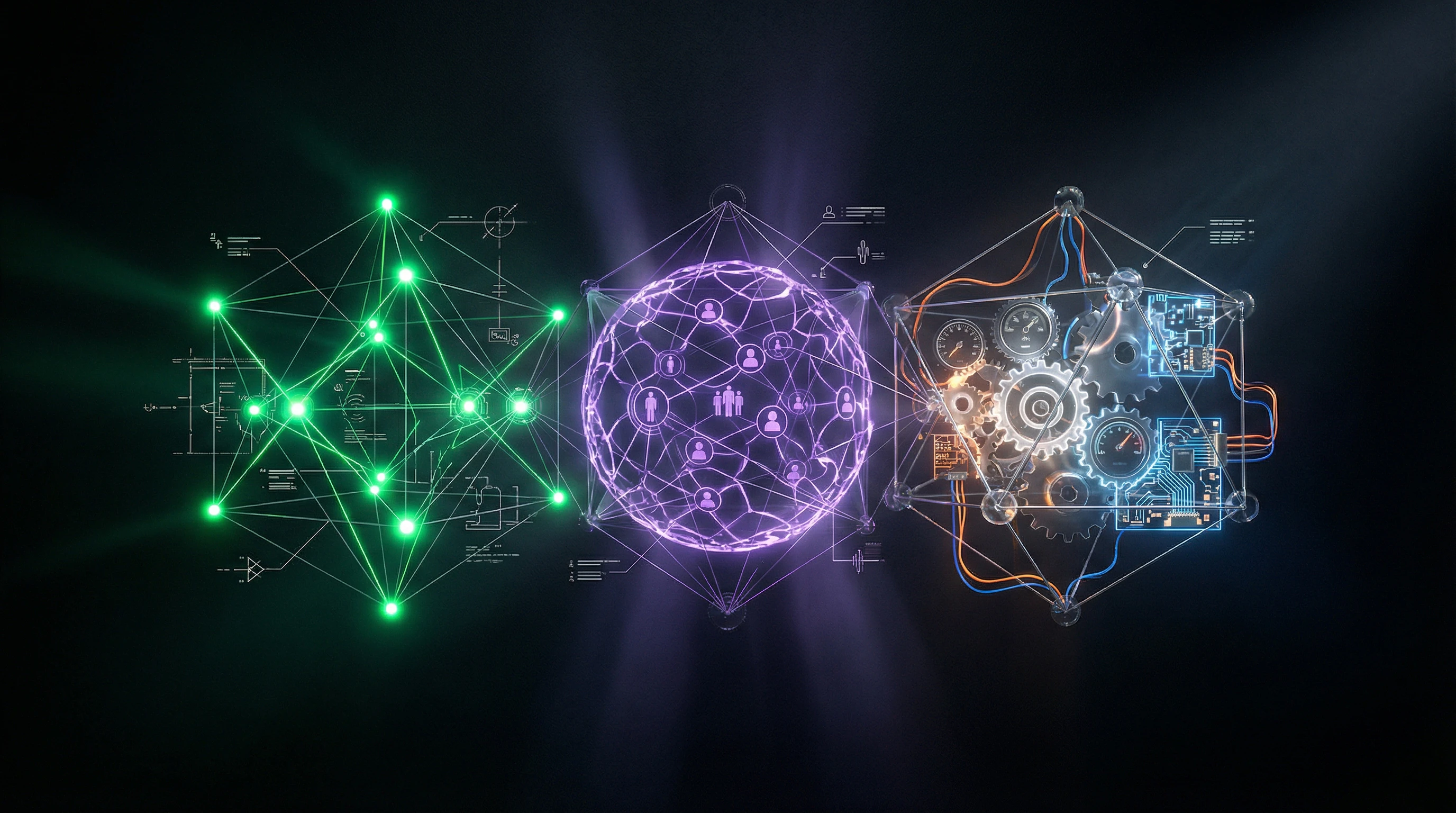
Structural Components of Media Literacy in the Digital Age
Academic consensus identifies critical thinking as the central element of media literacy. The multidimensional nature of the phenomenon encompasses information search and retrieval, content analysis, source verification, and message creation and distribution.
Research from leading universities focuses on media literacy levels among college students, examining the genesis and contemporary trends in education.
Critical Perception and Source Verification
The ability to formulate effective information queries constitutes the first level of media literacy—without precise question framing, quality search is impossible. Content analysis requires active critical thinking: understanding the context of message creation, author intentions, and rhetorical techniques employed.
| Verification Component | What We Check | Why |
|---|---|---|
| Fact-checking | Alignment of claims with reality | Filter out disinformation |
| Source Reputation | History, authority, conflicts of interest | Assess reliability |
| Cross-referencing | Information from different independent channels | Identify consistency or contradictions |
Recognizing different media types and their characteristics allows for adapted perception strategies: a news report requires a different approach than an analytical article or entertainment content. Understanding message diversity includes awareness of explicit and implicit meanings, ideological positions, and commercial interests.
Content Production and Active Participation
The ability to create and effectively transmit media messages represents the productive side of media literacy, often ignored in traditional approaches. This includes mastery of various formats (text, video, audio, multimedia), understanding audience and communication context, as well as ethical aspects of content publication.
- Choose a format appropriate to goals and audience
- Verify sources and evidence before publication
- Consider distribution context and possible interpretations
- Assess ethical consequences of the message
Media literacy evolves alongside the media landscape—skills relevant five years ago may be insufficient today.
Media Literacy as a Tool for Bridging the Digital Divide
Digital inequality is not only about lack of access to technology, but also the inability to use it effectively. Media literacy becomes a condition for social justice: it determines who can learn online, find work through the internet, and participate in civic life.
Researchers link media literacy to bridging this divide. Comparative studies across Central Asian countries show that media literacy development directly correlates with socioeconomic indicators and varies by cultural context.
Citizens with high media literacy navigate political information better and are less susceptible to manipulation—this is the connection between media literacy and democratic participation.
Institutional Indicators and Educational Integration
Integrating media literacy into curricula requires a systematic approach at all educational levels, not one-off initiatives. Assessing student media literacy levels reveals gaps and allows pedagogical methods to be adapted to real needs.
- Diagnose current media literacy levels in the institution
- Embed competencies into standard curriculum (not as an elective)
- Train educators to teach critical media analysis
- Regularly reassess intervention effectiveness
Research Gaps and Development Prospects
Standardization of media literacy measurement remains a key challenge—there are no unified indices and assessment tools, which complicates comparative research between countries and regions. Pedagogical methods for teaching media literacy require empirical validation: what works in the classroom versus what remains a theoretical construct.
Longitudinal studies are needed to track media literacy development over time and assess the real effectiveness of educational programs. Without this data, it's impossible to understand which approaches actually reduce digital inequality.
Measuring and Assessing Media Literacy: From Indices to Practical Tools
Quantitative assessment of media literacy faces a fundamental problem—the absence of universal metrics that account for cultural context and the dynamic nature of the media environment. Each index focuses on different aspects: technical skills, critical thinking, content creation ability.
This fragmentation makes it difficult to compare results across countries and time periods, turning media literacy into a concept that is easier to describe theoretically than to measure empirically.
Media literacy remains a paradox: the more data collected about it, the more obvious it becomes that a universal scale does not and cannot exist.
Media Literacy Indices in Central Asia
Comparative analysis by Zadorin and Saponova (2020) revealed significant differences in media literacy levels between countries in the region, linked to access to education, digital inequality, and political regimes.
| Factor | Kazakhstan (urban areas) | Tajikistan/Kyrgyzstan (rural areas) |
|---|---|---|
| Access to internet and media education | Widespread | Limited |
| Media literacy level | Above average | Basic |
| Critical source analysis | Developed | Underdeveloped |
The study showed that indices correlate not only with educational indicators but also with levels of trust in state and independent media—in countries with strict media control, citizens demonstrate lower capacity for critical source analysis.
The methodology included surveys, testing of information verification skills, and analysis of media consumption patterns, creating a multidimensional picture of media literacy in the region.
Higher School of Economics Studies and the Russian Context
Research from the Higher School of Economics focuses on student media literacy as an indicator of educational system effectiveness and the younger generation's readiness for information challenges.
Results reveal a paradox: STEM students demonstrate high proficiency with digital tools but low capacity for critical content analysis and source verification. Humanities students better recognize manipulative techniques but struggle with technical aspects of media production.
- STEM students: high digital skills + weak critical thinking
- Humanities students: developed critical thinking + low technical competencies
- Both profiles: risk of information overload without targeted interventions
Longitudinal studies revealed that student media literacy levels do not automatically increase with more time at university—without targeted educational interventions, critical thinking skills may even decline under the influence of information overload.
Media Literacy in Political Communication: From Passive Consumption to Active Participation
Political communication has transformed from one-way broadcasting into multi-channel dialogue, where media literacy determines citizens' ability not only to receive information but to participate in its creation. Citizens with developed critical analysis skills are less susceptible to manipulation, more likely to fact-check, and more actively engaged in public discourse.
The paradox: media literacy can amplify polarization. People with strong analytical skills sometimes apply them selectively—confirming their own beliefs while rejecting contradictory data.
Media literacy functions as democratic infrastructure. Without it, citizens cannot effectively hold power accountable, participate in public debate, or make informed electoral decisions.
Role in Democratic Participation
Media education programs correlate with increased electoral participation, especially among youth and marginalized groups. But the relationship isn't linear: in authoritarian contexts, high media literacy can lead to political apathy when citizens recognize the scale of manipulation but see no opportunities for change.
- Analyze media critically
- Apply skills toward constructive political action
- Participate in local initiatives or create alternative platforms
Fact-Checking and Information Verification
Fact-checking has evolved from journalistic practice into a mass skill, but its effectiveness is limited by cognitive biases. Even after false information is debunked, many continue believing it—the "continued influence effect of misinformation."
Professional fact-checkers use systematic methods: verifying primary sources, analyzing metadata, cross-referencing with independent databases. These techniques require time and expertise unavailable to most users.
| Verification Method | Advantages | Limitations |
|---|---|---|
| Primary source verification | Reveals chain of distortions | Requires time and context |
| Metadata analysis | Detects manipulated content | Doesn't work with repackaged material |
| AI tools | Scalability and speed | Issues with context and cultural nuances |
Automated AI-based fact-checking tools show promising results in detecting manipulated content but struggle with contextual understanding.
Common Myths About Media Literacy: The Gap Between Theory and Practice
Media literacy is surrounded by myths that distort its nature and hinder effective media education. From simplistic identification with technical skills to the illusion that critical thinking develops automatically with experience — these misconceptions are rooted in outdated notions of media as a passive channel for information transmission.
Debunking these myths is critically important for building effective educational programs and forming realistic expectations about media education.
Media Literacy versus Technical Skills
A common misconception equates media literacy with the ability to use digital devices and software. Research shows that technical skills are merely an instrumental foundation, insufficient for critical media analysis.
A person can masterfully operate video editors and social networks while failing to recognize manipulative techniques, verify sources, or understand the economic and political interests behind media messages.
- Technical skills — instrumental base (how to use a platform)
- Critical thinking — analysis of content and intentions
- Ethical dimension — responsibility for created content and understanding of societal impact
- Reflection — awareness of one's own media practices and biases
Educational programs focusing exclusively on technical aspects create an illusion of media literacy without developing critical thinking and ethical awareness.
Content Consumption versus Production
Traditional approaches to media education focused on critical analysis of consumed content, ignoring the creative and productive dimension of media literacy. Contemporary research emphasizes the need to integrate both competencies.
The ability to create media messages transforms understanding of media processes from within, revealing mechanisms of meaning construction, perspective selection, and editorial decisions. Users with content creation experience better recognize manipulative techniques and understand the limitations of media representation of reality.
However, an emphasis exclusively on content production without developing critical analysis can lead to mindless reproduction of stereotypes and spread of disinformation.
Media literacy requires dialectical unity: consumption and production, analysis and creativity, technique and ethics function as complementary systems, not as competing approaches.

Knowledge Access Protocol
FAQ
Frequently Asked Questions
Media literacy is the ability to critically perceive, analyze, and evaluate information from various media channels. It includes the skill to formulate information queries, verify source credibility, and create your own media messages. This isn't just technical skills, but a comprehensive competency for life in the digital age.
Media literacy is broader than information literacy and includes visual, digital, and political aspects of communication. Information literacy focuses on finding and processing data, while media literacy encompasses critical analysis, content creation, and understanding the media landscape. Voinov (2016) emphasizes the multidimensional nature of media literacy within applied sociology.
Key components include critical thinking, content analysis, source verification, and media message creation. A media-literate person knows how to formulate queries, assess information reliability, and convey their own ideas through media. This is a dynamic practice situated between thinking and text.
No, this is a common myth. Media literacy extends far beyond technical skills and includes critical thinking, ethical evaluation, and creative self-expression. Mastering gadgets is merely a tool, while the essence lies in the ability to analyze, verify, and meaningfully create content.
Vartanova positions media literacy as a condition for overcoming the digital divide in the U.S. Developing media competencies ensures equal access to information and social justice. Without media literacy, the gap deepens between those who can critically work with information and those who remain passive consumers.
Check the source: look for the author, publication date, and resource reputation. Compare information with several independent sources and use fact-checking services. Pay attention to the emotional tone of the text—manipulative content often appeals to feelings rather than facts.
No, this is another myth. Contemporary definitions emphasize the importance of both consumption (analysis, evaluation) and production of media messages. A media-literate person not only critically perceives information but also knows how to create and effectively convey their own content.
Essential skills include formulating information queries, critically analyzing content, and verifying sources. It's important to understand different types of media, recognize manipulation, and create your own messages. These competencies develop through practice and reflection on your own media consumption.
Media literacy indices are used to assess critical thinking, verification skills, and content creation abilities. Research by Zadorin and Saponova (2020) conducts comparative analysis across Central Asian countries. HSE studies media literacy levels among students in the Russian context.
Media literacy is critically important for democratic participation and informed political choice. It helps recognize manipulation, fact-check, and form independent opinions. In conditions of information warfare and fake news, this becomes the foundation of citizens' political culture.
Yes, media literacy develops through conscious practice. Start by verifying sources, comparing different perspectives, and analyzing your own reactions to content. Use checklists to evaluate information, study manipulation techniques, and practice creating your own content.
No, research characterizes media literacy as a dynamic activity that evolves alongside the media landscape. It's not static knowledge, but a practice situated between thinking and text. Media competencies require constant updating in response to new formats and platforms.
Young people spend significant time in digital environments and are most vulnerable to manipulation and disinformation. Media literacy builds critical thinking, protects against cyberbullying, and helps navigate online interactions safely. Educational systems recognize it as a priority for developing the younger generation.
Media literacy provides tools for fact-checking and verifying information before sharing it. You learn to recognize signs of manipulation, verify primary sources, and analyze the context of publications. This transforms you from a passive retransmitter into a responsible participant in the information space.
University research examines media literacy levels among students and current trends in American education. Scholars link media literacy to overcoming the digital divide in the U.S. Johnson (2013) analyzes international experience; his work has been cited 17 times, indicating the significance of this research.
Comparative studies by researchers like Dr. Sullivan and Dr. Peters (2020) show differences in media literacy indices across regions. Prospects are tied to integrating media education into curricula and adapting to local media landscapes. The key challenge is overcoming the digital divide and ensuring equal access to media competencies.