 📺 Media Literacy
Reality Check: A Metacognitive Tool for Distinguishing Perception from Thoughtλ
A multifaceted concept spanning psychology, cognitive science, and lucid dreaming research, aimed at distinguishing external objects from mental representations and evaluating the nature of one's current state of consciousness.
Overview
Reality testing is a metacognitive mechanism for distinguishing perception from thought, external objects from mental representations. Applied in cognitive-behavioral therapy, lucid dreaming research 🧠, and decision-making—anywhere experience validity is critical. Effectiveness builds on the habit of testing environments through practical experiments, not philosophical questions.
🛡️
Laplace Protocol: Reality testing isn't about confirming the real world, but actively searching for evidence of unreality. The technique works through small, rapid verifications integrated into daily rituals, protecting against costly judgment errors and developing metacognitive awareness.
Reference Protocol
Scientific Foundation
Evidence-based framework for critical analysis
Navigation Matrix
Subsections
[debunking-prebunking]
Debanking and Prebanking
A comprehensive approach to combating misinformation: reactive fact-checking after false information spreads and proactive "inoculation" against manipulative techniques before encountering them
Explore
[media-literacy]
Media Literacy
The ability to critically perceive, analyze, and evaluate information from various media channels, create and transmit messages in conditions of digital inequality
Explore
[scientific-method]
Scientific Method
A set of regulatory principles, techniques, and operations of practical or theoretical cognition that ensure objective and reproducible investigation of reality in any scientific discipline.
Explore
[sources-evidence]
Sources and Evidence
Critical thinking begins with the ability to not take information at face value, but to verify sources, analyze evidence, and identify potential biases
Explore
Protocol: Evaluation
Test Yourself
Quizzes on this topic coming soon
Sector L1
Articles
Research materials, essays, and deep dives into critical thinking mechanisms.
📺 Media Literacy 📺 Media Literacy
 📺 Media Literacy
 📺 Media Literacy
 📺 Media Literacy
 📺 Media Literacy
 📺 Media Literacy
 📺 Media Literacy
 📺 Media Literacy
 📺 Media Literacy
 📺 Media Literacy
 📺 Media Literacy
⚡
Deep Dive
Psychological Foundations of Reality Testing: How the Brain Distinguishes World from Thoughts
Reality testing is a fundamental metacognitive function that distinguishes perception from thinking, external objects from mental representations. It's the boundary between what we know and what we assume or imagine.
The brain constantly compares sensory data with internal models of the world, detecting discrepancies that signal hallucinations, illusions, or perceptual disturbances. Unlike simple observation, verification requires active testing of the validity of experiences and differentiation between waking state and altered states of consciousness.
The ability to separate internal mental processes from external perceptual experiences protects against costly errors in judgment. Disruption of this function is observed in psychotic disorders, where the boundary between internal and external becomes blurred.
Distinguishing perception from thinking as a protective mechanism
Verification enhances self-awareness and critical thinking about the current state of consciousness. Preliminary testing acts as a metacognitive check, revealing gaps in knowledge and preventing the illusion of competence.
- Conscious verification
- Active, effortful testing of assumptions in moments of doubt. Reliable, but energy-intensive.
- Automatic reflex
- Habit of questioning surroundings that has become unconscious through practice. Fast, embedded in perception.
The effectiveness of this mechanism depends on forming stable habits, not one-time acts of verification. Regular practice transforms reality testing from conscious effort into a protective reflex.
- Sensory congruence: consistency of signals from different sensory organs
- Logical consistency: correspondence of experience to known laws of physics and causality
- Contextual appropriateness: fit of event to current situation and history
- Repeatability: ability to reproduce or confirm the experience
The connection to mental errors shows that verification failure often occurs not from lack of information, but from systematic distortions in data processing. Confirmation bias, anchoring, and other cognitive traps can block critical evaluation even when contradictory facts are present.
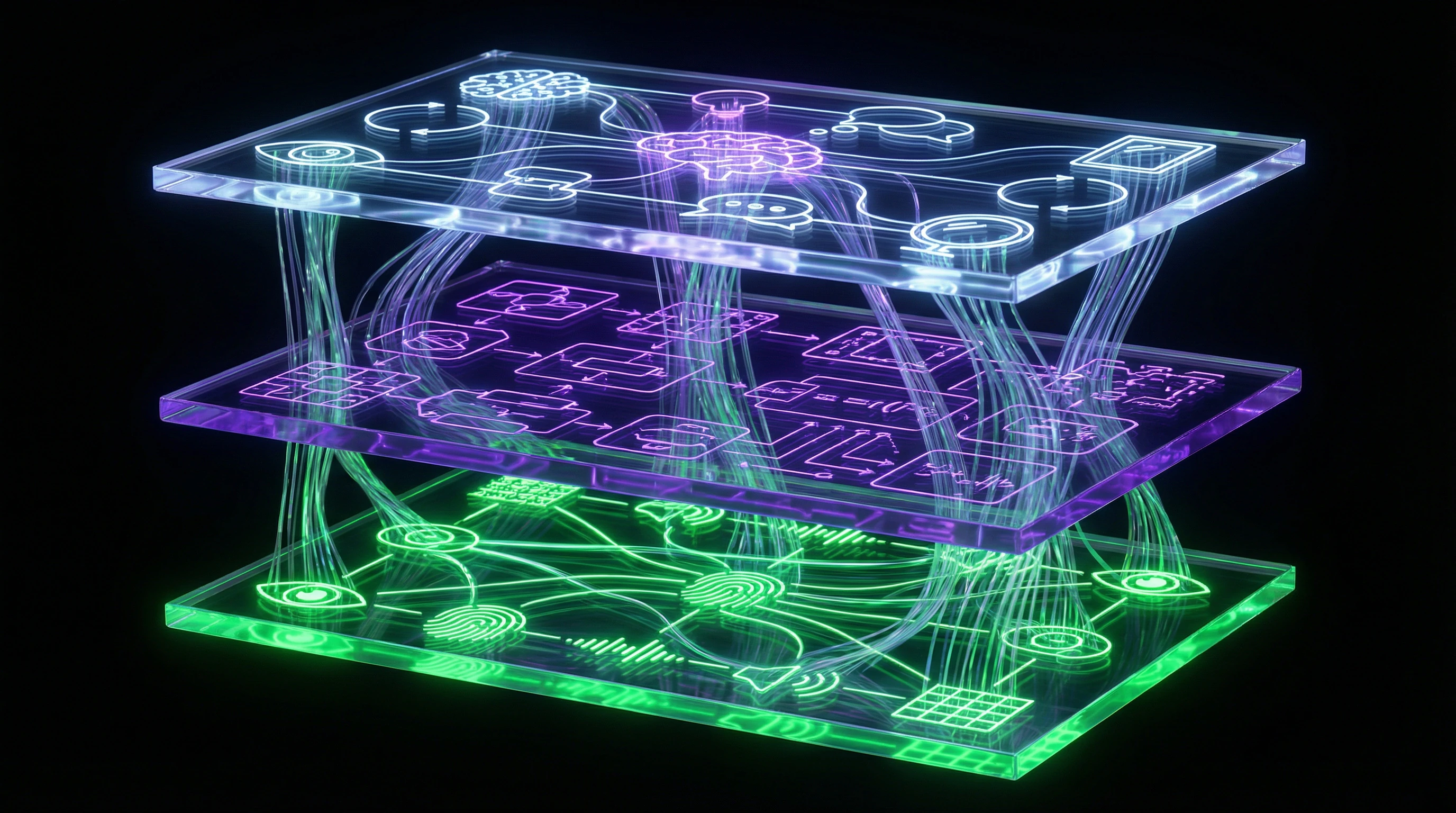
Application in Cognitive-Behavioral Therapy: Thought Testing Tools
In therapeutic contexts, reality testing includes examining automatic thoughts and reality testing, reattribution techniques, and searching for alternative solutions. This protocol is designed to work with dysfunctional thinking patterns, where clients learn to distinguish objective facts from subjective interpretations.
Cognitive-behavioral therapy uses reality testing not to confirm existing beliefs, but to actively search for disconfirming evidence and alternative explanations.
Examining automatic thoughts through empirical verification
Identifying automatic thoughts as they arise is the first step of therapeutic reality testing. Clients are taught to ask questions about the evidence supporting negative thoughts and systematically search for alternative interpretations of events.
The process requires documenting discrepancies between predictions and actual outcomes, creating an empirical basis for revising beliefs.
| Cognitive distortion | Mechanism | Verification question |
|---|---|---|
| Catastrophizing | Jumping from event to worst outcome without intermediate steps | What evidence is there that this will happen? |
| Black-and-white thinking | Absence of gradations between poles | What intermediate options have I missed? |
| Personalization | Taking responsibility for events outside one's control | What other factors influenced the situation? |
The technique is especially effective when working with these distortions, where reality testing reveals the gap between assumption and fact.
Reattribution and searching for alternatives as scientific method
Reattribution uses reality testing to challenge cognitive distortions by testing beliefs against objective reality. Clients maintain a dysfunctional thought tracking protocol, applying structured questions: what evidence is for and against this thought, what alternative explanations exist, what would I tell a friend in this situation.
- Record the automatic thought at the moment it arises
- Gather evidence for and against it
- Formulate at least three alternative explanations
- Plan a behavioral test to check the hypothesis
- Document the result and revise the belief
This approach transforms therapy into a series of small experiments, where hypotheses about oneself and the world are tested through behavioral tests and observation of results.
Regular revision cycles create a habit of critical thinking that extends beyond the therapist's office.
Reality Testing in Lucid Dreaming: Techniques for Detecting the Unreal
Reality testing in the context of dreaming is a tool for developing the habit of questioning the nature of current experience and achieving lucidity in sleep. The key difference from everyday application: the technique is designed not to confirm the real world, but to actively search for evidence of unreality.
Practitioners conduct experiments that reveal fundamental differences between the dream world and waking reality: text instability, inability to turn on lights, capacity to push a finger through the palm.
Building the habit of doubt through regular intervals
The effectiveness of reality checks depends on establishing regular testing intervals throughout the day—typically every one to two hours. Practitioners perform physical tests: attempting to push a finger through the palm, checking text stability upon re-reading, observing how light switches function.
- Ask the question "Am I dreaming right now?" with genuine doubt, not as a mechanical ritual—otherwise the same mechanicalness will manifest in dreams without achieving lucidity.
- Keep a dream journal to identify personal dream signs that become triggers for reality checks.
- Vary testing methods to avoid automaticity and maintain critical attention.
Practical experiments for detecting unreality
Reality testing in lucid dreaming is active experimentation, not philosophical contemplation. Practitioners investigate environmental consistency and logical coherence of events, searching for anomalies that indicate the dream state: impossible architectural structures, sudden location changes, presence of deceased people.
The more frequently a person checks reality while awake, the higher the probability of this habit spontaneously arising in dreams, leading to lucidity. The technique requires conscious attention to surroundings in the waking state, creating neural patterns that activate during sleep and trigger critical evaluation.
Debunking Myths and Misconceptions About Reality Testing
The myth of confirming reality instead of seeking anomalies
A common misconception: reality testing confirms the surrounding world as "real." In fact, effective techniques search for evidence of unreality—anomalies, violations of physical laws, logical inconsistencies.
Lucid dreaming practitioners specifically hunt for impossible elements: text changes content upon re-reading, light switches don't work, breathing is possible with a pinched nose.
Reality testing is an active search for violations, not validation of normalcy.
Universality of methods and contextual specificity
The error: a single set of techniques applies in all contexts. In reality, methods require adaptation to the domain.
- CBT: reality testing of automatic thoughts and cognitive distortions
- Lucid dreaming: physical experiments with environment (text, light, breathing)
- Ethnography: describing fragmented, crisis realities outside traditional verification
- Business: pilot projects and empirical validation of assumptions before scaling
The reality testing method is not a universal tool, but a contextual practice embedded in a specific task and environment.

Practical Implementation Protocols for Reality Checking
Protocols for lucid dreaming practice
Effective practice requires establishing regular reality check intervals every 1–2 hours throughout the day, creating a neural habit that activates during sleep.
- Physical tests: attempting to push a finger through the palm, checking text stability when re-reading, observing light switch functionality, attempting to breathe with nose pinched—actions that behave anomalously in dreams.
- Maintaining a dream journal to identify personal "dream signs"—recurring elements that signal the dream state.
- Accompanying each check with a sincere question "Am I dreaming right now?" with full attention to surroundings, rather than mechanical ritual execution.
The habit is formed not by the check, but by awareness during the check. Mechanical ritual does not cross the boundary between waking and sleep.
Application in research and decision-making
In research contexts, reality checking is implemented through pre-testing before major commitments, revealing gaps between theory and practice.
The metacognitive function of pre-testing acts as a "reality check," revealing what the researcher knows as opposed to what they assume they know.
| Context | Verification Mechanism | Outcome |
|---|---|---|
| Research | Regular cycles of theory revision against reality | Identification of discrepancies between predictions and results |
| Business decisions | Verification of assumptions against empirical data, active search for disconfirming evidence | Protection against costly judgment errors |
| Scaling | Implementation of small pilots before full-scale deployment | Empirical verification before investment |
Theoretical Frameworks and Interdisciplinary Integration
Philosophical dimensions and the simulation hypothesis
Reality checking intersects with fundamental philosophical questions about the nature of existence. Can a technique distinguish "base" reality from a perfect simulation if the simulation is indistinguishable?
From Descartes to contemporary consciousness analysts, philosophy explores the boundaries of empirical verification and radical skepticism. Practical reality checking techniques become experimental methods for investigating epistemological boundaries of human cognition.
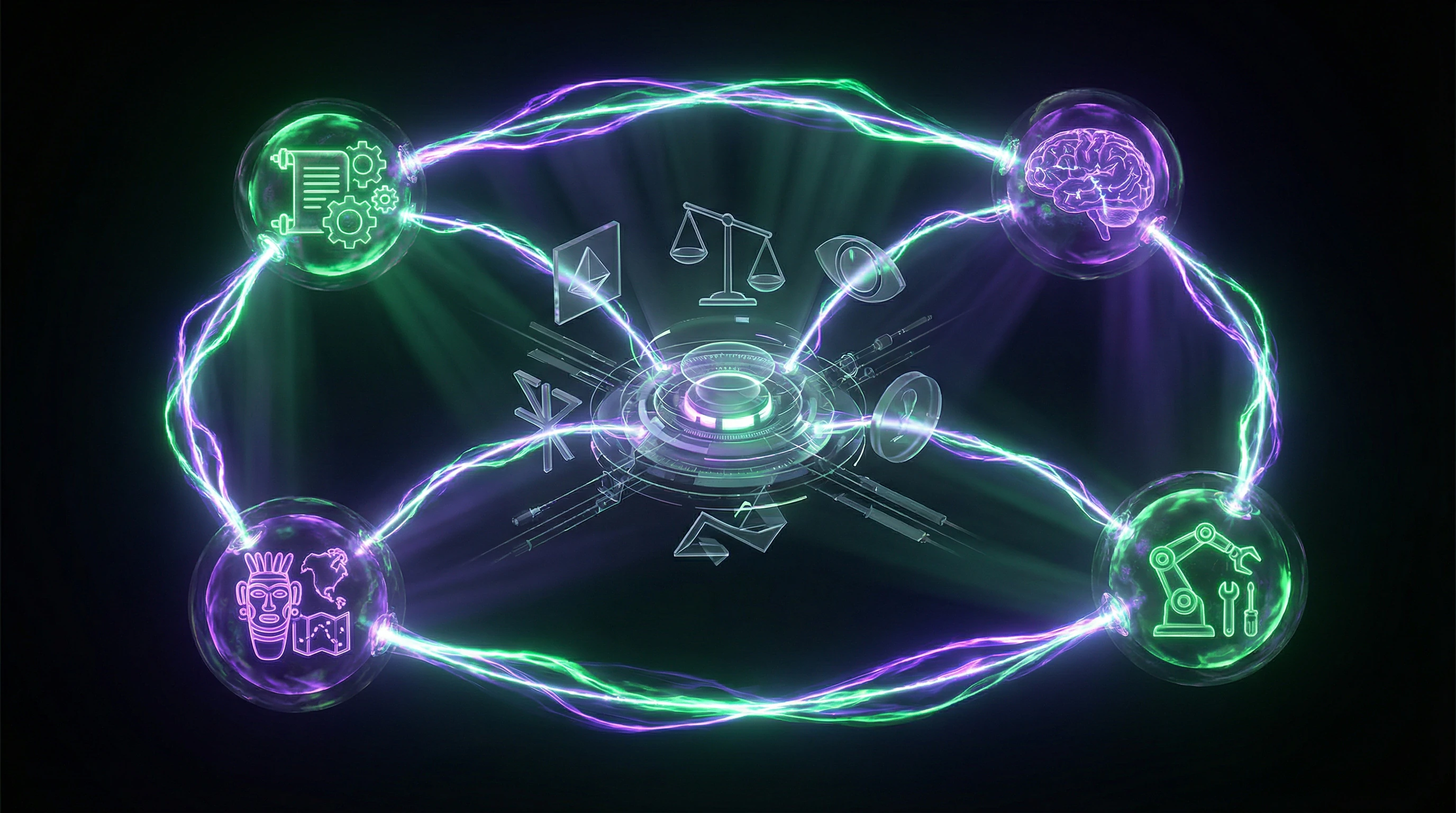
The philosophical question of distinguishability between reality and simulation becomes a testable protocol only at three levels: philosophical (whether perception can distinguish in principle), cognitive (what brain mechanisms verify experience), and methodological (how to transform the question into action).
Ethnographic approaches and weak ethnography
"Weak ethnography" applies reality checking to fragmenting realities where traditional fieldwork methods are inapplicable. In conditions of social upheaval, "reality" itself becomes multiple and unstable.
Researchers use reality checking to navigate between competing narratives, subjective perceptions, and objective conditions. Integration of metacognitive strategies into ethnographic practice expands the methodological toolkit for studying contested social contexts.
- Identify competing versions of an event or phenomenon
- Test each version for internal consistency
- Find points of intersection between subjective and objective data
- Document irresolvable contradictions as part of reality
Knowledge Access Protocol
FAQ
Frequently Asked Questions
Reality testing is a functional activity related to distinguishing between perception and thought processes, external objects and mental representations. It's a metacognitive process that helps differentiate reality from altered states of consciousness. Applied in psychology, therapy, and lucid dreaming practice.
Reality testing develops the habit of questioning your current state of consciousness and looking for signs of unreality. Regular tests (pushing a finger through your palm, checking text) transfer into dreams, triggering lucidity. It's a key technique for achieving control in dreams.
The most effective are practical experiments: attempting to push a finger through your palm, checking text stability, observing light switches. It's important to perform checks every 1-2 hours and ask "Am I dreaming right now?". Effectiveness depends on forming a stable habit.
No, this is a common myth. Reality testing actually searches for evidence of unreality, not confirmation of the real world. The technique is designed to detect anomalies indicating a dream or altered state of consciousness.
Yes, reality testing is applied in decision-making, cognitive-behavioral therapy, and research. Quick verifications integrated into daily routines protect against costly judgment errors. It's a universal tool for enhancing awareness and critical thinking.
It's recommended to perform checks every 1-2 hours throughout the day. Regularity is critically important for forming a habit that will transfer into dreams. It's also useful to do checks during unusual events or changes in environment.
The metacognitive function is the ability to recognize and evaluate your own thought processes. Reality testing reveals what you know and what you don't know, strengthening self-awareness. It's a key mechanism for distinguishing internal mental processes from external perceptual experiences.
Yes, in cognitive-behavioral therapy reality testing involves examining automatic thoughts and testing their validity. Techniques include reattribution and searching for alternative solutions. It's a protocol for working with dysfunctional thinking patterns.
No, this is a misconception. Different contexts require different approaches: therapeutic reality testing differs from lucid dreaming techniques and business decision-making methods. Effectiveness depends on adapting the method to the specific task.
Yes, basic techniques are accessible for independent learning. Start by establishing regular check intervals, keeping a dream journal, and performing physical tests. It's important to develop a critical attitude toward your environment and consistency in practice.
Reality testing has a philosophical dimension related to questions about the nature of reality and the simulation hypothesis. Techniques for searching for anomalies in the surrounding world echo attempts to detect "glitches" in a presumed simulation. This is an interdisciplinary field at the intersection of philosophy and cognitive science.
Yes, in educational psychology, pretesting acts as a metacognitive check, revealing gaps in knowledge. In ethnographic research, "weak ethnography" uses reality testing to describe fragmented, crisis-affected realities. It is an important methodological tool.
No, effective reality checks are practical experiments, not just philosophical questions. Active testing of physical laws and environmental consistency is necessary. The question must be accompanied by concrete actions and observations.
Weak ethnography is a research approach that uses reality testing to describe fragmenting, crisis-affected realities. The method acknowledges the multiplicity and instability of the contexts being studied. It is applied in social sciences to analyze complex, volatile situations.
Reality testing ensures alignment of perception with actuality, preventing costly mistakes in business and personal life. Small, quick verifications help separate facts from assumptions. It is a practical tool for improving decision-making quality.
No, this is a myth. The concept spans multiple disciplines: clinical psychology, cognitive therapy, research methodology, and practical decision-making. Reality testing is a universal cognitive tool useful in various contexts of everyday and professional life.