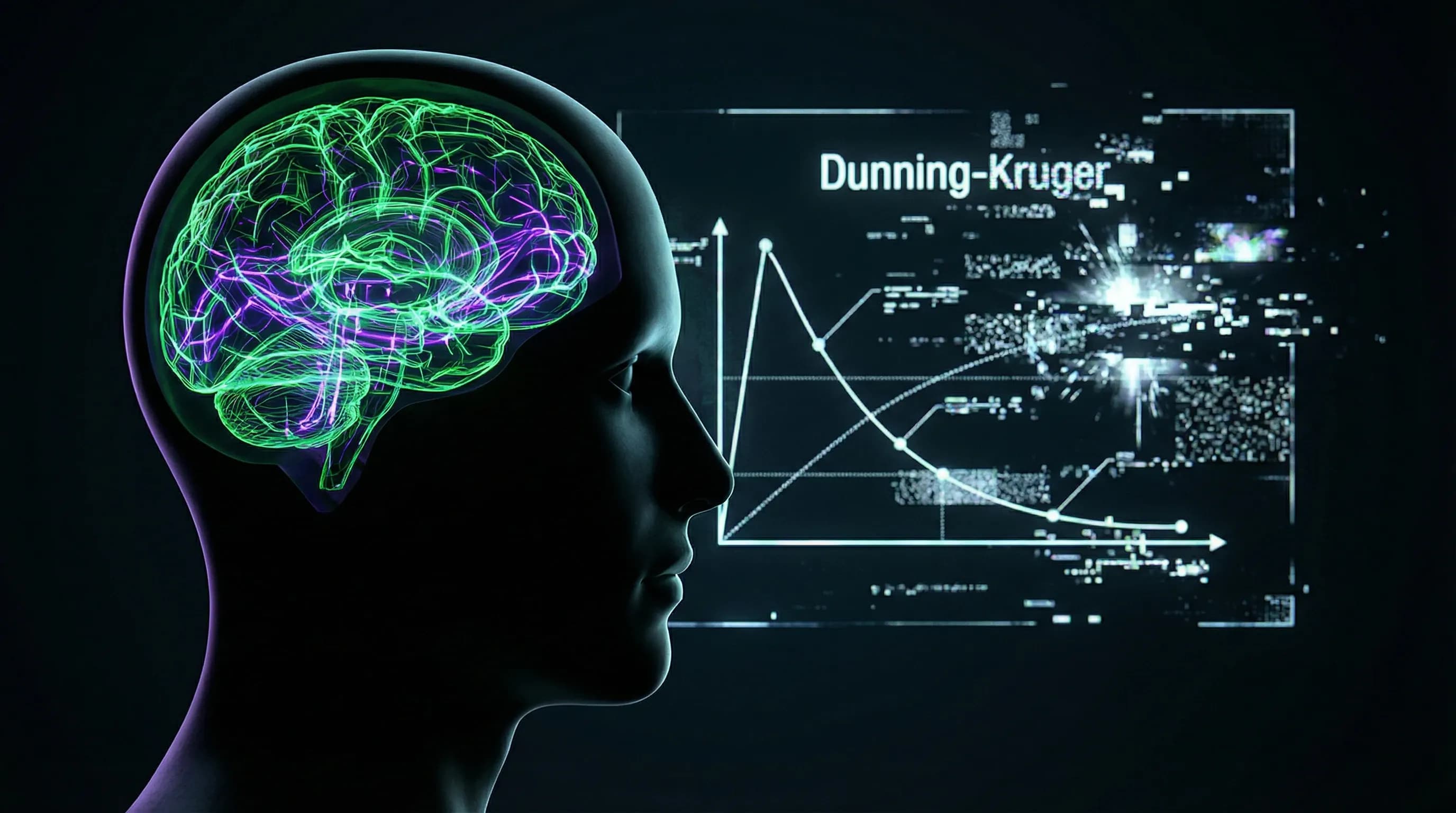
What the Dunning-Kruger Effect Actually Is — and Why the Popular Version Distorts the Original Research
The Dunning-Kruger effect is defined as a cognitive bias in which people with low competence in a specific domain systematically overestimate their abilities (S001). The original 1999 study showed that students with the worst performance on tests of logic, grammar, and humor rated their performance significantly higher than it actually was.
A critically important detail is often missed: low-skilled participants still rated themselves lower than high-skilled participants rated themselves (S001). This doesn't mean they considered themselves experts — they simply misjudged the scale of their own error.
The popular version has turned a scientific finding into a tool for social mockery: supposedly stupid people don't know they're stupid. The original definition focuses on systematic error in self-assessment of specific skills, not general intellectual overconfidence.
🧩 Where Interpretations Diverge
In popular culture, the effect is often understood as claiming that people with low intelligence in general are overconfident (S001). This distortion results from incorrectly generalizing a specific phenomenon to the entire personality.
Some researchers add a metacognitive component: incompetent people not only overestimate themselves but are also unable to recognize their incompetence due to lack of self-assessment skills (S001). This is called the "double burden" — a person suffers both from lack of skill and from inability to recognize the deficit.
- The Problem with the Metacognitive Model
- One study showed that incompetent people have reduced metacognitive sensitivity, but it's unclear whether this is sufficient to explain the effect (S001). Another concluded that they lack information, but the quality of their metacognitive processes is the same as that of skilled individuals (S001).
⚙️ Methodology and Statistical Artifact
The effect is typically measured by comparing self-assessment with objective performance (S001). Participants complete a test, then rate their performance, and researchers compare these ratings with actual results.
The problem is that this method creates statistical artifacts. When you plot a graph where one axis shows actual performance and the other shows self-assessment minus actual performance, you automatically create a negative correlation even with random data (S004). This is a mathematical inevitability, not a psychological discovery.
| Component | Original Research | Popular Version |
|---|---|---|
| Subject | Overestimation in specific skills | General stupidity and overconfidence |
| Scale | Low-skilled still rate below high-skilled | Low-skilled consider themselves experts |
| Mechanism | Disputed (metacognitive or informational deficit) | Assumed to be obvious |
The connection between this phenomenon and broader cognitive biases is revealed in the analysis of confirmation bias and echo chambers, where the brain actively filters out contradictory information.
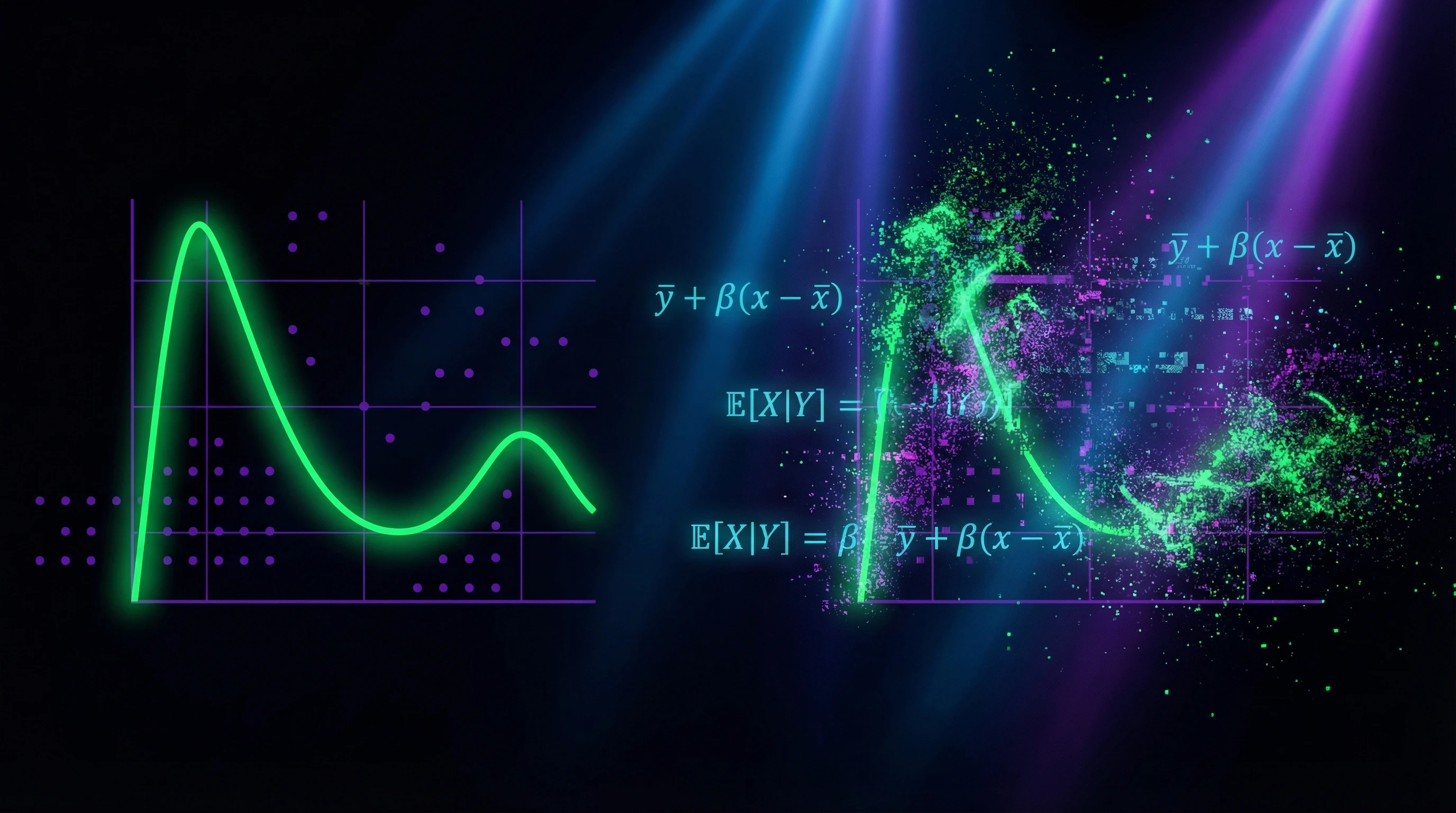
Five Most Compelling Arguments for the Reality of the Dunning-Kruger Effect
Before examining the criticism, we must honestly present the strongest arguments from proponents of the effect. Steelmanning requires that we consider the best version of the opposing position, not a caricature of it. For more details, see the section on Logical Fallacies.
🎯 First Argument: Reproducibility of the Pattern Across Different Domains
The original Dunning and Kruger study showed a similar pattern across four different domains: humor, logical reasoning, grammar, and aptitude tests. If this were purely a statistical artifact, it would be unlikely to manifest so consistently.
A 2020 study of middle school science teachers also found evidence of the effect in pedagogical practice (S003). This cross-domain reproducibility suggests a real psychological phenomenon rather than merely a mathematical coincidence.
🧠 Second Argument: Metacognitive Asymmetry Confirmed by Independent Research
An indirect argument for the metacognitive model is based on the observation that training people in logical reasoning helps them make more accurate self-assessments (S001). If the effect were purely statistical, training should not influence the pattern of self-evaluation.
The fact that educational interventions change the accuracy of self-perception suggests a real cognitive mechanism that can be modified through learning.
📊 Third Argument: The Better-Than-Average Effect as an Additional Mechanism
According to the better-than-average effect, people generally tend to rate their abilities as above average (S001). For example, the average IQ is 100, but people on average believe their IQ is 115.
- The better-than-average effect differs from the Dunning-Kruger effect because it doesn't track the relationship between overly positive self-view and skill level.
- The combination of the better-than-average effect with regression to the mean can explain most empirical findings (S001).
- This doesn't refute the effect but proposes a more complex model of its emergence.
🔬 Fourth Argument: Clinical Observations Confirm the Pattern
Clinical psychologists and educators regularly observe patterns consistent with the Dunning-Kruger effect: students with the worst results are often most confident in their answers, patients with cognitive impairments demonstrate anosognosia (inability to recognize their deficit).
Qualitative observations from real-world practice provide ecological validity to laboratory findings, even if the precise quantitative parameters of the effect are disputed.
⚖️ Fifth Argument: Evolutionary Plausibility of the Mechanism
From an evolutionary perspective, some degree of overconfidence may be adaptive, especially in social hierarchies where displaying confidence affects status. If metacognitive abilities require cognitive resources that low-skilled individuals have less of (due to the cognitive load of the task itself), then the asymmetry in self-assessment accuracy between novices and experts has an evolutionary-psychological explanation.
- Adaptive Overconfidence
- Displaying confidence in social hierarchies increases status and may be evolutionarily advantageous.
- Cognitive Load
- Low-skilled individuals expend resources on the task itself, leaving less for metacognitive monitoring.
- Evolutionary Plausibility
- This doesn't prove the effect, but makes it a biologically plausible mechanism.
The 2020 Statistical Bombshell: How Meta-Analysis Shattered the Consensus Around the Effect
In 2020, the journal Intelligence published an article that fundamentally changed the scientific discussion about the Dunning-Kruger effect. The research showed that the effect is largely a statistical artifact (S002). This wasn't a marginal opinion—the article passed peer review in a prestigious journal and sparked widespread discussion in the scientific community.
📉 Regression to the Mean as the Main Culprit
The central problem with Dunning-Kruger methodology is that it creates autocorrelation. When you calculate the difference between self-assessment and actual performance, then plot this difference against actual performance, you mathematically guarantee a negative correlation (S002, S006). This happens because actual performance enters both variables: it's subtracted from self-assessment and simultaneously used as the independent variable on the X-axis.
Even with completely random data, where self-assessment has no relationship to actual performance, the classic Dunning-Kruger curve still appears. This is mathematical proof that the measurement method itself creates the illusion of an effect.
A 2022 study in Frontiers in Psychology demonstrated this through simulations (S006). The authors created artificial datasets where "subjects" rated themselves completely randomly, and obtained the same pattern as in the original study.
🧮 Alternative Analysis Methods Show a Different Picture
When researchers apply statistical methods that don't create autocorrelation, the Dunning-Kruger pattern either disappears or significantly weakens (S004). For example, if instead of plotting "overestimation versus performance" you use "absolute self-assessment versus performance," the picture changes: low-skilled people actually rate themselves lower than high-skilled people.
- Absolute Self-Assessment
- Direct evaluation of one's own abilities without subtracting actual performance from it. With this approach, low-skilled participants demonstrate lower self-assessment than high-skilled participants (S004).
- Relative Error
- The difference between self-assessment and actual performance. This method creates a statistical artifact that mimics the Dunning-Kruger effect even on random data.
The Replication Index blog conducted a detailed analysis of Dunning and Kruger's original data and showed that the problem isn't that low-skilled people think they're better than experts, but that they underestimate the gap between themselves and experts (S001, S004).
🎲 Noise Plus Bias: A Simpler Model
Gilles Gignac and Marcin Zajenkowski proposed a "noise plus bias" model as an alternative explanation (S001). According to this model, most empirical findings can be explained by a combination of regression to the mean (statistical noise) and the "better-than-average" effect (cognitive bias).
| Component | Nature | Consequence |
|---|---|---|
| Regression to the mean | Statistical artifact | Creates the appearance of a Dunning-Kruger curve on random data |
| "Better-than-average" effect | Cognitive bias | People tend to rate themselves above average, but this isn't specific to low-skilled individuals |
| Dunning-Kruger metacognitive model | Psychological mechanism | Requires additional assumptions not confirmed by alternative analysis methods |
This model is simpler, requires fewer assumptions, and fits the data better than the Dunning-Kruger metacognitive model. By Occam's razor, the simpler explanation should be preferred when explanatory power is equal. More details in the Media Literacy section.
📚 What Wikipedia Says and Why It Matters
The Wikipedia article on the Dunning-Kruger effect presents a balanced view, including criticism of the statistical artifact, but popular perception of the effect remains oversimplified (S001). Wikipedia notes that low-skilled people still rate themselves lower than high-skilled people, which contradicts the popular interpretation of the effect.
However, this critical detail rarely penetrates mass culture, where the effect is used as a weapon in intellectual disputes. This is a classic example of how confirmation bias and echo chambers transform a scientific result into a cultural myth resistant to facts.
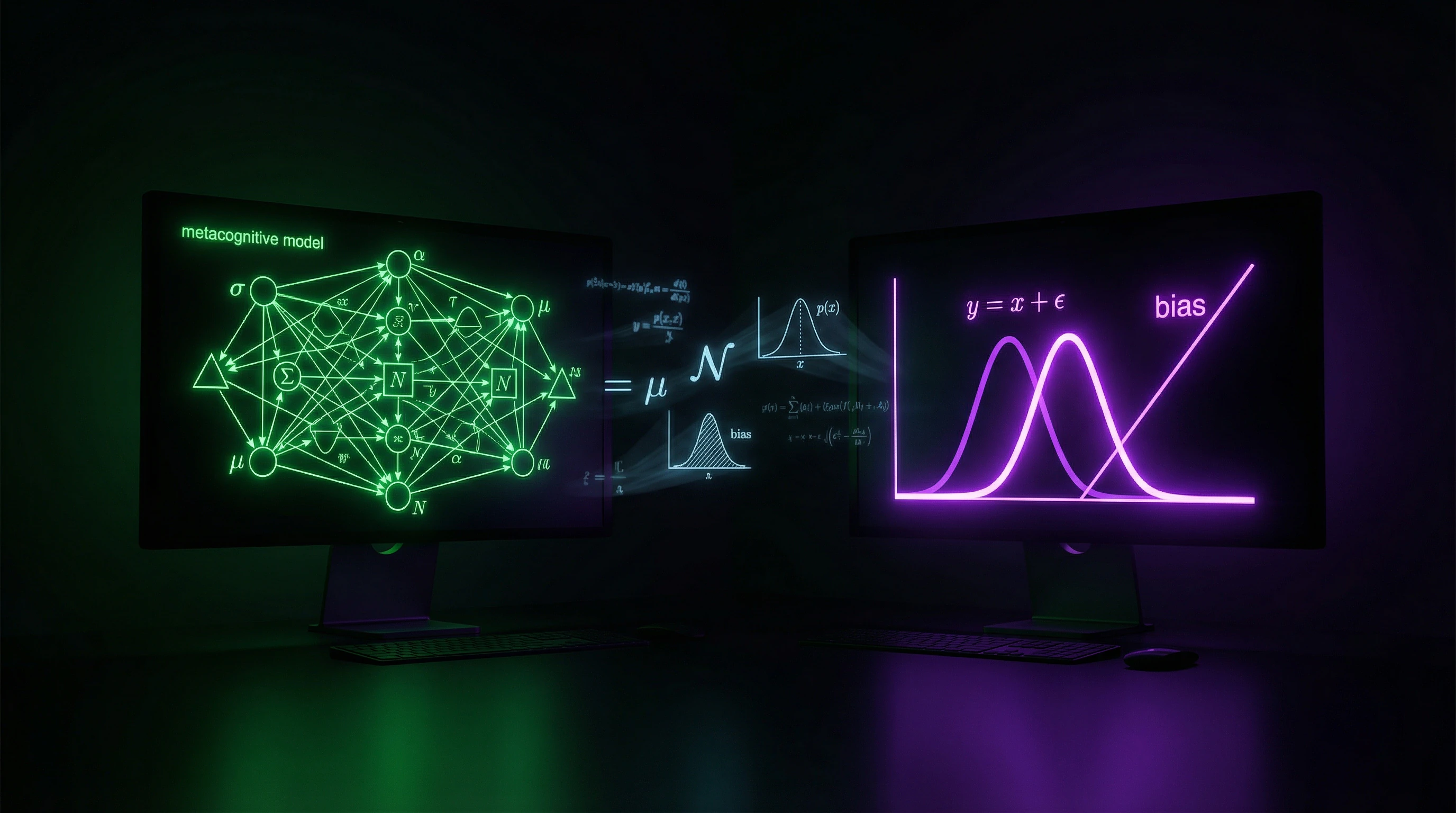
Mechanism or Mirage: What's Really Happening in the Minds of Low-Skilled Individuals
Even if the classic Dunning-Kruger effect is a statistical artifact, this doesn't mean people perfectly calibrate their self-assessments. The question is what real cognitive mechanisms underlie the observed patterns. More details in the Epistemology Basics section.
🧬 Metacognitive Sensitivity: Is There a Real Deficit?
Some studies show that low-skilled individuals have reduced metacognitive sensitivity, but it's unclear whether the magnitude of this reduction is sufficient to explain the effect (S001). Another study concluded that unskilled individuals lack information—they don't know what they don't know, but the quality of their metacognitive processes is the same as that of skilled individuals (S001).
If the problem is lack of information rather than a defective metacognitive apparatus, then the solution is education, not cognitive therapy.
🔁 False Consensus Effect and Social Comparison
Highly skilled individuals may underestimate their abilities not due to metacognitive deficits, but because of overly positive assessments of others' abilities (S001). This is a manifestation of the false consensus effect—the tendency to overestimate the degree to which other people share our beliefs and behaviors.
- Expert in an Expert Community
- Surrounded by other experts, mistakenly believes their level of competence is the norm.
- Novice Outside the Expert Community
- Unaware of how large the gap is between their knowledge and that of specialists.
⚖️ Information Asymmetry and Confidence Calibration
The fundamental problem of competence self-assessment lies in information asymmetry: to accurately assess your level, you need to know what experts know, but if you knew that, you'd already be an expert. This creates a structural problem that isn't a cognitive bias in the classical sense, but rather an epistemological limitation.
A novice cannot know about the existence of advanced concepts they haven't yet studied, and therefore cannot incorporate them into their self-assessment. This isn't a thinking error—it's a boundary of knowledge that cannot be crossed from within.
The connection between these mechanisms and confirmation bias becomes evident: people seek information that confirms their current level of competence and avoid sources that might reveal knowledge gaps. The availability heuristic amplifies this effect: examples of success in familiar domains seem more frequent than they actually are.
Conflict Zones: Where Sources Diverge and What It Means for Practice
Scientific literature on the Dunning-Kruger effect diverges at three key points. Understanding these fault lines is critical for practical application. More details in the Statistics and Probability Theory section.
🧩 Metacognitive Model vs. Statistical Model
The core conflict: low-skilled individuals fail to recognize their incompetence due to metacognitive skill deficits (metacognitive model), or the pattern emerges from regression to the mean and better-than-average effects (statistical model) (S001, S002, S006).
Critics of the metacognitive approach point to insufficient empirical evidence and propose alternative explanations (S001). This isn't an academic dispute—your choice of model determines how you interpret your own assessment errors.
| Model | Mechanism | Practical Implication |
|---|---|---|
| Metacognitive | Self-assessment skill deficit | Requires metacognitive skill training |
| Statistical | Mathematical artifact of distribution | Effect is inevitable, requires external verification |
📊 Data Heterogeneity Undermines Generalizations
Meta-analyses encounter enormous variability: different tasks, different populations, different self-assessment measurement methods (S008, S011). Heterogeneity indices (I²) are often critically high, limiting the predictive value of any generalized conclusion.
High heterogeneity means: conclusions about the Dunning-Kruger effect in general may not apply to your specific situation. The effect may be strong in one domain and weak or absent in another.
🔬 Evidence Base Insufficient for Confidence
Systematic reviews identified a critical problem: small number of studies meeting rigorous inclusion criteria, and high risk of systematic errors in most work (S008, S011).
- Sample sizes are often insufficient for reliable conclusions
- Within the small number of quality studies, enormous variability in task and population combinations
- This doesn't mean the effect is absent, but it means low confidence in its parameters
Practical takeaway: if you see categorical claims about the Dunning-Kruger effect without caveats about context and conditions, that's a sign of confirmation bias, not scientific analysis.
Cognitive Anatomy of the Myth: Which Biases Make Us Believe in the Dunning-Kruger Effect
Belief in the Dunning-Kruger effect may itself result from cognitive biases. Let's examine the mechanisms that make this myth so compelling. More details in the Cognitive Biases section.
🎭 Fundamental Attribution Error and In-Group Favoritism
The effect allows us to explain others' overconfidence through internal factors (they're foolish and unaware), while explaining our own through external factors (I have grounds for confidence). This is classic fundamental attribution error.
The effect reinforces in-group identity: "we" know about the effect and are therefore protected from it, "they" don't know and demonstrate it. The boundary between groups becomes a marker of intellectual status.
🧩 Confirmation Bias and Selective Memory
Once you learn about the Dunning-Kruger effect, you start seeing it everywhere—this isn't expanded perception, it's a switched attention filter.
You notice and remember cases where incompetent people were overconfident, and ignore contrary examples. Confirmation bias creates the illusion that the pattern is more widespread and consistent than it actually is.
🔮 Narrative Appeal and Complexity Reduction
The Dunning-Kruger effect offers a simple, elegant explanation for a complex phenomenon. It transforms the multidimensional problem of confidence calibration into a one-dimensional story about competence and self-awareness.
- Why this is psychologically appealing
- Reduces cognitive load and creates a sense of understanding.
- Why this is dangerous
- Reality—that self-assessment depends on information access, social comparison, motivation, task context—remains invisible.
The simple story defeats the complex map of reality because the brain prefers cognitive resource economy over accuracy.
Competence Verification Protocol: How to Assess Your Level Without Self-Deception and Statistical Traps
If the classic Dunning-Kruger effect is an artifact, how can you correctly assess your competence? Here's a practical protocol based on modern research (S001), (S003).
✅ Step One: Use Absolute Metrics, Not Relative Ones
Don't ask yourself "how much better am I than average?" — this activates the "better-than-average" effect. More details in the AI and Technology section.
For example, not "I'm the best programmer on the team," but "I can write a sorting algorithm in O(n log n) without hints." Absolute metrics are less susceptible to cognitive biases because they don't require comparison with others.
🔍 Step Two: Seek Objective Feedback from Independent Experts
Self-assessment is unreliable by definition. Seek evaluation from people who are recognized experts in the field, have no personal interest in inflating or deflating your assessment, and use standardized criteria.
This could be a certification exam, code review from a senior developer, or article peer review. It's critically important that the expert is truly competent — otherwise you'll receive uncalibrated feedback.
Metacognitive maturity begins with honest acknowledgment of the boundaries of your knowledge. A person who says "I don't know" is often more competent than one who is confident in the wrong answer.
⛔ Step Three: Red Flags of Incompetence
Certain behavioral patterns correlate with low competence:
- Inability to explain basic concepts in your own words
- Lack of knowledge about the boundaries of your knowledge
- Inability to predict task complexity before completing it
- Lack of understanding of what questions need to be asked
- Ignoring contradictory data or criticism
If you notice these patterns in yourself, it's not a sign of failure — it's a signal to reorient your learning. The connection to confirmation bias is direct here: incompetent people often avoid information that contradicts their self-assessment.
📊 Step Four: Calibration Through Repeatable Tasks
- Calibration
- A process where your subjective confidence in an answer matches the objective probability of its correctness. If you say "I'm 80% confident," you should be right 80% of the time.
- Why This Matters
- Uncalibrated confidence is the foundation for poor decisions. People with low competence are often miscalibrated toward overconfidence (more confident than they should be).
- How to Train
- Complete tasks where the result is known immediately (quizzes, weather forecasts, sports betting). Record your confidence and compare with the outcome. After 50–100 attempts, you'll see the real pattern.
This protocol doesn't guarantee perfect self-assessment, but it minimizes the influence of availability heuristics and other systematic errors. The key is regularity and honesty in collecting data about yourself.