
The sunk cost fallacy is a cognitive bias where decisions are based on past investments rather than future consequences. Research shows a surprisingly weak effect of this trap under controlled conditions, challenging popular beliefs about its pervasive power. We examine the mechanism of this fallacy, the actual evidence base, and protocols for exiting toxic investment cycles.
🖤 You've invested three years in a project that's delivering no results. Each month brings new investments of time and money. Logic screams: "Stop this." But an inner voice whispers: "So much has already been spent, you can't just quit." This isn't character weakness—it's an architectural feature of human thinking known as the sunk cost trap. The paradox is that scientific data shows this effect is much weaker than popular psychology suggests, but that's precisely what makes it more dangerous—we underestimate its selectivity and overestimate its universality.
📌 What is the sunk cost trap: defining the phenomenon and boundaries of its applicability in real decisions
The sunk cost fallacy (SCF) is a cognitive bias where decisions are based on already-made, irrecoverable investments instead of evaluating exclusively future consequences and benefits. According to research, it's "the phenomenon of basing decisions on past investments rather than future consequences."
Classical economic theory requires ignoring sunk costs: they don't affect the future utility of a decision and shouldn't influence choice. But people don't do that.
The mechanism works through psychological attachment to spent resources—time, money, effort, emotional investments. Abandoning a project is perceived as admitting defeat and devaluing all previous investments.
Boundaries of the phenomenon: strategic persistence vs. trap
Not every project continuation after initial investments is irrational. If new information indicates changing conditions or emerging opportunities, continuation may be rational.
- The trap activates when:
- the decision to continue is based exclusively on the desire to "not lose what's been invested," rather than on objective assessment of future prospects
- Strategic persistence is when:
- new data or changed conditions justify further investment independent of past costs
Contextual dependence: why the effect manifests selectively
The strength of the sunk cost effect varies substantially depending on context, individual characteristics, and how information is presented. Experimental data shows a surprisingly weak effect under controlled conditions (S001), challenging the notion of this bias's pervasive power.
| Factor | Impact on effect strength |
|---|---|
| Explicitness of cost irrecoverability | The clearer that costs are sunk, the weaker the effect |
| Time horizon | Limiting time horizon reduces the effect (S005) |
| Cognitive abilities | Higher abilities—weaker trap (S004) |
| Age | Older adults are less susceptible to the effect (S001) |
The trap is not a universal law of human behavior, but rather a situational phenomenon requiring specific conditions for activation. This explains why some people easily abandon unprofitable projects while others continue them for years.

Five Most Compelling Arguments for the Reality and Significance of the Sunk Cost Effect
Despite contradictory experimental data, there are several serious arguments supporting the idea that the sunk cost fallacy represents a real and significant phenomenon in human behavior. More details in the Thinking Tools section.
💼 First Argument: Escalation of Commitment in Corporate Environments
The phenomenon of escalation of commitment is widely documented in organizational psychology. Managers continue funding failing projects, especially if they personally initiated them.
This is related not only to cognitive biases but also to organizational dynamics: fear of reputation loss, career risks, decision-making pressure. Escalation of commitment leads to significant financial losses and remains a real problem in corporate governance.
🎓 Second Argument: Educational and Career Trajectories
Students continue studying in fields that don't suit them, justifying it with years of spent time and money. Professionals remain in careers that don't satisfy them, citing accumulated experience and development investments.
Educational decisions are a classic example of long-term investments where the sunk cost effect manifests particularly strongly and has long-term consequences for well-being.
💔 Third Argument: Personal Relationships and Emotional Investments
People remain in dysfunctional relationships, citing years of shared life, common memories, and emotional investments. Sunk costs here include time, emotional energy, social capital, and identity.
Breaking up is perceived as devaluing the entire previous history, creating a powerful psychological barrier to rational decision-making.
🎰 Fourth Argument: Gambling and Investment Decisions
Casino gamblers continue placing bets after a series of losses, trying to "win back" and compensate for losses. Investors hold losing positions, hoping for price recovery, instead of cutting their losses.
- Gambler loses $10 → places another bet to recover losses
- Investor sees stock drop 30% → waits for recovery instead of reallocating capital
- Both cases demonstrate attempts to compensate for sunk costs through future actions
These patterns are well documented in behavioral economics and represent a significant problem for financial well-being.
🔬 Fifth Argument: Neurobiological Correlates and Evolutionary Prerequisites
Processing information about sunk costs activates specific brain regions associated with emotional regulation and loss evaluation. From an evolutionary perspective, the tendency to complete what was started could have been adaptive in environments with limited resources and costly task-switching.
These mechanisms create a predisposition to the sunk cost effect at a basic neurocognitive level, explaining the universality of the phenomenon.
Evidence Base: What Controlled Studies Actually Show About the Sunk Cost Effect
Controlled experiments reveal a paradox: the sunk cost effect in laboratory settings is significantly weaker than anecdotes and popular beliefs suggest. This discrepancy requires examination of the methodology and conditions under which the effect actually manifests. Learn more in the Critical Thinking section.
📊 The "Treasure Island" Paradigm: Methodology and Results
The classic study by Arkes and Blumer used an experimental paradigm where subjects had to choose which island to search for treasure (S011). Hypothesis: people stay longer on islands whose search cost more.
Researchers manipulated eleven variables: visual representation, method of providing value information (immediate or trial-and-error), sunk cost parameters (S011).
The results were unexpected: the effect was surprisingly weak and insensitive to psychological drivers that theoretically should have strengthened it.
Even with variable manipulation, subjects demonstrated minimal tendency to continue activity based on past investments. This challenges the notion of the sunk cost trap as a powerful universal bias.
🧪 Age and Expertise Differences
The sunk cost effect is not uniform across all groups. Research shows that age and expertise level influence susceptibility to this bias (S001).
- Key Finding
- The ability to avoid the trap can develop with experience and cognitive maturity—this has practical implications for decision-making training.
🤖 The Sunk Cost Effect in Deep Reinforcement Learning
A similar tendency has been discovered in artificial intelligence: agents continue episodes to completion even when inefficient (S010). This can be interpreted as a machine analog of the sunk cost trap.
Researchers demonstrated that uninformative transitions can be avoided by overcoming this trap in the reinforcement learning context (S010).
| Context | Effect Manifestation | Consequence |
|---|---|---|
| Human decisions | Continuing losing projects | Financial losses, missed opportunities |
| Machine learning | Continuing episodes to completion | Buffer contamination, inefficient sampling |
📈 Replay Buffer Contamination in ML Systems
When collected data is informative and aligned with learning objectives, it improves sample efficiency. When not—the replay buffer becomes contaminated with uninformative data (S010).
This exacerbates optimization problems and wastes environmental interactions. The principles of the sunk cost trap apply not only to human behavior but also to algorithmic decision-making systems.
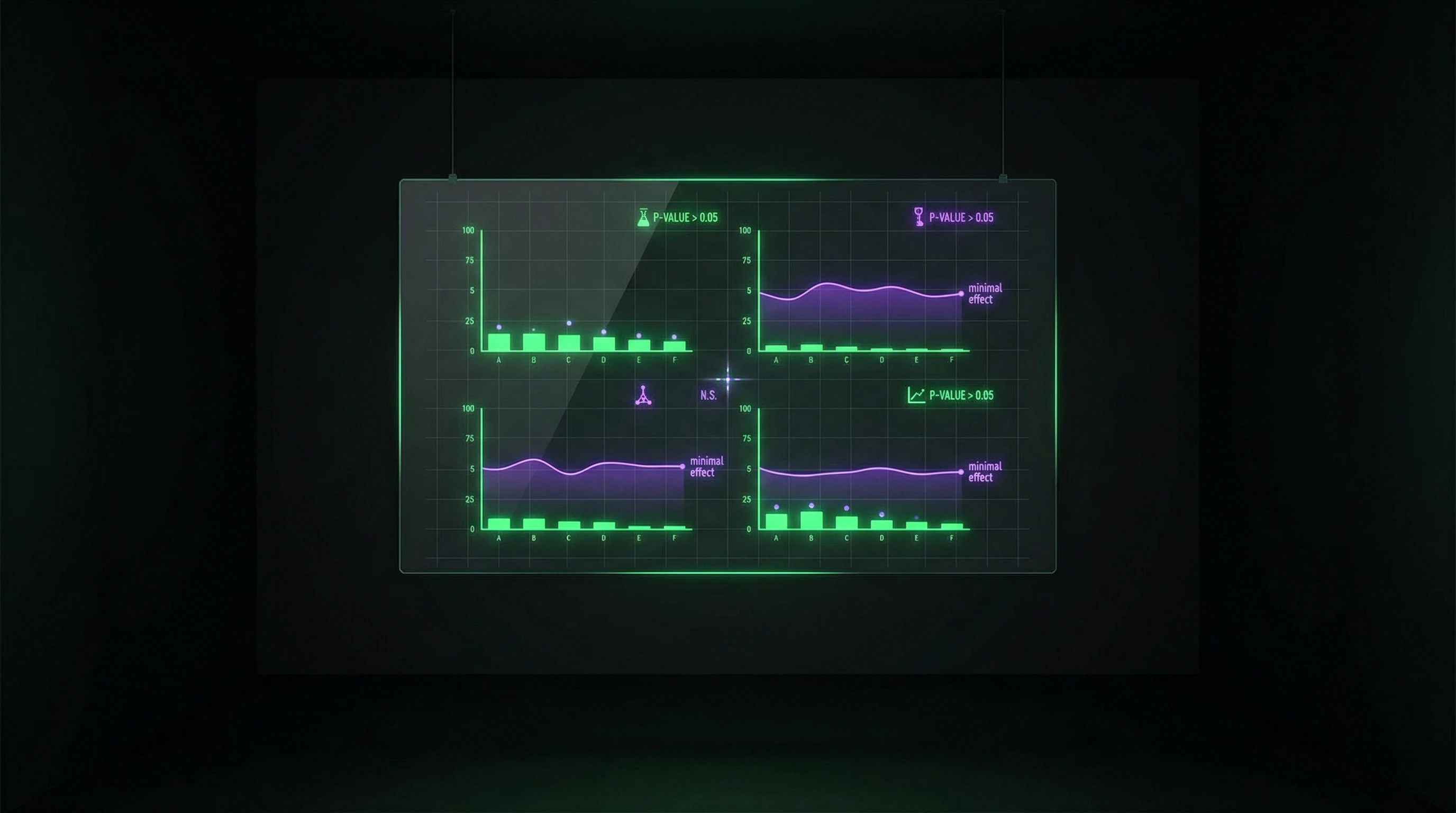
Mechanisms and Causality: What Really Makes Us Continue Losing Projects
Understanding the mechanisms underlying the sunk cost fallacy requires distinguishing between correlation and causality, as well as identifying confounders—factors that may explain observed behavior without resorting to irrational cognitive bias. More details in the Logical Fallacies section.
Not everything that looks like a sunk cost fallacy actually is one.
🧬 The Transferable Sunk Costs Hypothesis: A New Perspective on a Classic Phenomenon
The transferable sunk costs hypothesis offers an alternative explanation for observed behavior. According to this hypothesis, what appears to be irrational attachment to past investments may actually reflect rational assessment of the transferable value of investments already made.
Time spent studying a particular field creates knowledge and skills that may be valuable in the future, even if the specific project failed. This perspective suggests that some cases of presumed sunk cost fallacy may be rational decisions based on more sophisticated asset valuation.
Rational project continuation and irrational fallacy differ not in behavior, but in the structure of information available at the moment of decision.
🔁 The Self-Justification Loop: How Cognitive Dissonance Amplifies the Effect
Cognitive dissonance theory offers a powerful explanation for why people continue investing in failing projects. After significant investments, admitting a mistake creates psychological discomfort that people seek to minimize.
- Loop Mechanism
- Continuing the project allows maintaining the narrative that the initial decision was correct and current difficulties are temporary.
- Escalation
- Each new investment increases the psychological cost of admitting error, which in turn motivates further investments.
⚙️ The Role of Social and Organizational Factors in Escalation of Commitment
Many cases attributed to individual cognitive bias may actually result from social and organizational factors. Managers may continue funding failing projects not due to irrational attachment to past investments, but because of rational concerns about reputational risks, career consequences, or organizational politics.
Research shows a connection between escalation of commitment and leadership changes (S011), indicating the importance of organizational context in understanding this phenomenon.
| Factor | Individual Level | Organizational Level |
|---|---|---|
| Motivation to Continue | Minimize dissonance, protect self-esteem | Protect reputation, career risks, politics |
| Decision Source | Psychological discomfort | Structural incentives and pressure |
| Rationality of Assessment | Distorted by emotional state | May be rational within system context |
🎯 The Attribution Problem: When Persistence Is Rational and When It's Irrational
A critical problem in sunk cost fallacy research lies in the difficulty of distinguishing between irrational persistence and rational perseverance. Many successful projects and ventures go through periods of difficulty, and the ability to continue despite temporary setbacks is often key to success.
The attribution problem is that we tend to call persistence "rational" when it ultimately leads to success, and a "sunk cost fallacy" when it leads to failure—but this assessment is made retrospectively, when the outcome is already known. This creates systematic bias in our understanding of the phenomenon, where successful persistence appears as wisdom and unsuccessful persistence as cognitive bias.
Retrospective outcome assessment cannot serve as proof of the irrationality of a decision made under conditions of uncertainty.
Conflicts and Uncertainties: Where Researchers Disagree About the Nature and Strength of the Effect
The scientific literature on the sunk cost fallacy is far from consensus. Significant disagreements exist regarding the strength of the effect, the conditions under which it manifests, and even its existence as a distinct cognitive bias. For more details, see the Scientific Method section.
🔍 Methodological Limitations of Laboratory Research
The central disagreement concerns the ecological validity of laboratory experiments. Critics point out that controlled experiments showing weak effects may not reflect real-world conditions where stakes are higher, emotional involvement is stronger, and time horizons are longer.
Laboratory tasks often use hypothetical scenarios or small monetary amounts, which may not activate the same psychological mechanisms as real-life high-stakes decisions.
📉 Divergence Between Experiment and Field
The notable divergence between weak effects in controlled experiments and strong effects in field studies may be explained by several factors.
| Source of Divergence | Mechanism |
|---|---|
| Measurement Methodology | Different methods of capturing behavior yield different results |
| Contextual Factors | Real-world conditions contain variables that are difficult to reproduce in the laboratory |
| Interpretational Errors | Observers attribute behavior to the sunk cost fallacy when other factors are at play |
🧩 Bias or Heuristic?
A fundamental question: should consideration of sunk costs be viewed as an irrational bias or as a potentially rational heuristic under conditions of uncertainty.
- Position 1: Irrational Bias
- Past investments should logically not influence future decisions, regardless of context.
- Position 2: Rational Heuristic
- In the real world with incomplete information, using past investments as a signal of potential value may be a justified strategy (S012).
🌐 Individual and Age Differences
Research reveals substantial differences in susceptibility to the sunk cost fallacy. Age and expertise influence the manifestation of the effect (S001), suggesting this is not a universal characteristic of human cognition, but rather a skill or tendency that varies and develops.
- Older adults show less susceptibility to the effect than younger individuals
- Domain-specific experience reduces the influence of the fallacy
- Time horizon (awareness of time limitations) decreases the effect (S005)
- Cognitive abilities correlate with resistance to the error (S004)
This raises the question: to what extent is the effect an innate limitation versus a result of learning and cultural norms.
Cognitive Anatomy of the Trap: Which Psychological Mechanisms Make Us Vulnerable to the Sunk Cost Effect
Understanding which specific cognitive and emotional mechanisms make people vulnerable to the sunk cost trap is critically important for developing effective countermeasures. The effect doesn't arise in a vacuum—it results from the interaction of several fundamental psychological processes. More details in the Logic and Probability section.
💸 Loss Perception Asymmetry: Why Losses Hurt More Than Equivalent Gains Feel Good
Kahneman and Tversky's prospect theory demonstrates that people perceive losses and gains asymmetrically: losing a certain amount triggers a stronger emotional reaction than gaining an equivalent amount. This asymmetry creates powerful motivation to avoid acknowledging losses, which directly contributes to the sunk cost trap.
Terminating a failing project requires explicit acknowledgment of loss, which is psychologically painful, while continuation allows postponing this acknowledgment and preserving hope for future recovery.
A loss is perceived approximately 2–2.5 times more intensely than an equivalent gain. This asymmetric weighting makes retreat psychologically more expensive than rational continuation.
🎭 Endowment Effect and Psychological Ownership: How Investments Create the Illusion of Possession
People overvalue what they've already invested resources or time into. The endowment effect makes us consider "our" project more valuable than it actually is, simply because we've invested in it.
Psychological ownership strengthens attachment to a project regardless of its objective prospects. The more time and money invested, the stronger the feeling that the project is "ours," and the more painful the idea of terminating it.
🔄 Cognitive Dissonance and Self-Esteem Protection: How the Brain Rewrites History
When reality contradicts our self-image as a competent person, cognitive dissonance arises. Continuing a losing project becomes a way to avoid the painful conclusion: "I made a bad decision."
Instead, the brain rewrites the narrative: "circumstances changed," "it needs a bit more time," "I was right, just unlucky." This protects self-esteem but reinforces the trap.
- Admitting error threatens the self-image as a competent person
- The brain generates alternative explanations (external factors, temporary difficulties)
- Continuing the project becomes a way to "prove" the original decision was right
- Each new investment strengthens commitment to the narrative
⏰ Time Horizon and Life's Limitations: Why Age Changes Vulnerability
Research shows that people with limited time horizons (elderly people, people in crisis situations) are less susceptible to the sunk cost effect (S005). When you realize time is scarce, irrational project continuation becomes an unaffordable luxury.
Young people, conversely, often act as if they have infinite time, and are therefore more inclined to "give the project one more chance." This relates not to cognitive abilities, but to subjective perception of available time.
🧠 Individual Differences: Who Is More Vulnerable?
Cognitive abilities and education don't guarantee protection from the trap. Research (S004) shows that people with high cognitive abilities may be even more vulnerable if they use their intelligence to generate convincing justifications for continuing the project.
A more significant factor is capacity for cognitive flexibility and willingness to reconsider one's own decisions. People who perceive errors as information rather than threats to self-esteem are less susceptible to the effect.
| Factor | Increases Vulnerability | Reduces Vulnerability |
|---|---|---|
| Time Horizon | Sense of infinite time | Awareness of time limitations |
| Self-Esteem | Attachment to image of being "right" | Willingness to admit mistakes |
| Psychological Ownership | Strong identification with project | Distanced view of project |
| Social Pressure | Public investments and commitments | Privacy of decisions |
🤝 Social Context: How Publicity Strengthens the Trap
When investments are public—when colleagues, investors, or family know about the project—the trap becomes stronger. Terminating the project now means not only acknowledging personal error, but public humiliation.
Research (S003) shows that social context can amplify the sunk cost effect. People continue losing projects partly because they fear appearing incompetent to others.
A public investment isn't just a financial commitment, it's a reputational commitment. The brain protects reputation as zealously as it protects self-esteem.
🔗 Interaction of Mechanisms: Why the Trap Is So Effective
These mechanisms don't work in isolation. Loss perception asymmetry creates motivation to avoid acknowledging error. Cognitive dissonance generates justifications. Psychological ownership strengthens attachment. Social pressure makes retreat impossible.
Together they create a self-reinforcing cycle in which each new investment makes retreat psychologically and socially more expensive. This isn't stupidity—it's the result of normal psychological mechanisms operating under conditions that exploit them.