
What is the Dunning-Kruger Effect: Defining the Phenomenon and Boundaries of the Concept in Cognitive Science
The Dunning-Kruger effect is a cognitive bias in which people with low levels of competence systematically overestimate their abilities, while highly competent specialists tend to underestimate themselves. The phenomenon was described in the classic 1999 study and has been replicated in dozens of experiments across various domains (S010).
🔎 Operational Definition: How the Gap Between Real and Perceived Competence is Measured
The effect is measured by comparing objective performance indicators (test scores, expert assessments, task results) with participants' subjective self-assessments. A typical procedure includes three stages: completing a task, self-assessing the result, and receiving feedback. More details in the Epistemology section.
- Calibration Error
- The difference between the percentile of actual performance and the percentile participants attribute to themselves. This is the key indicator of the effect's strength (S010).
🧱 Boundaries of the Phenomenon: In Which Areas the Effect Manifests Most Strongly
The effect is most pronounced in domains with high cognitive complexity and low transparency of success criteria. Among professional theater actors, the phenomenon manifests through the "irrelevant education trap"—formal qualifications create an illusion of competence that doesn't match the actual demands of the profession (S001), (S004).
In educational contexts, the effect is particularly noticeable among graduate students: metacognitive distortions correlate with difficulties in completing research. Students with low academic performance systematically overestimate the quality of their work, while successful graduate students demonstrate more accurate calibration (S008).
| Competence Level | Direction of Error | Mechanism |
|---|---|---|
| Bottom Quartile | Overestimation by 30–40 percentile points | Metacognitive blindness—inability to recognize one's own errors |
| Top Quartile | Underestimation by 10–15 points | Curse of knowledge—assumption that the task is equally easy for others |
⚙️ Asymmetry of the Effect: Why Novices Overestimate While Experts Underestimate Themselves
A key feature of the phenomenon is its asymmetry. This asymmetry is explained by different cognitive mechanisms: novices suffer from metacognitive blindness, experts from the curse of knowledge (S010).
Incompetence creates a double trap: a person not only lacks the skill but also cannot assess the depth of their ignorance. An expert, however, sees complexity that the novice doesn't notice, and therefore underestimates their own advantage.
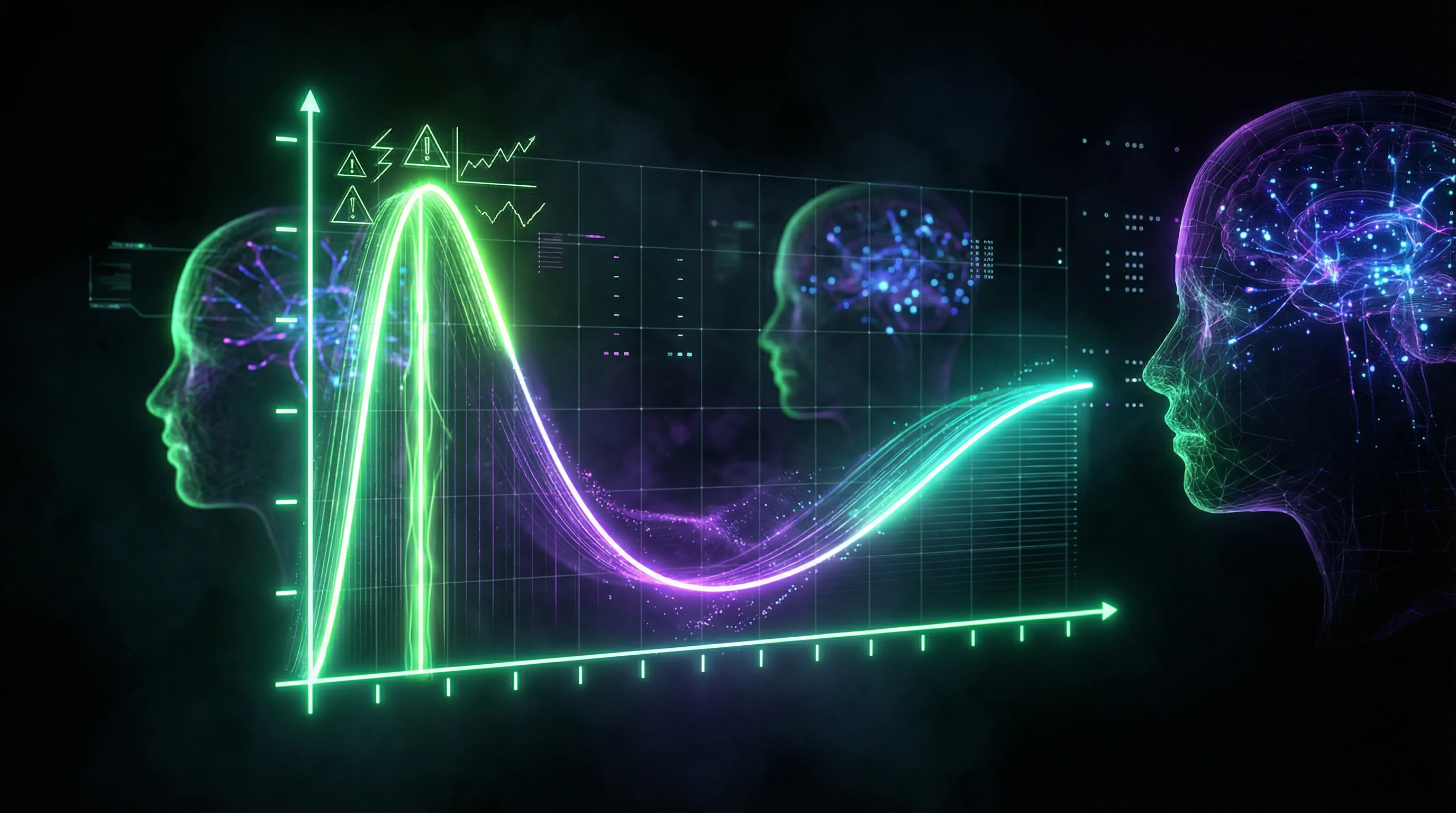
Steelman Argumentation: Seven Strongest Proofs of the Dunning-Kruger Effect's Reality Across Various Domains
🔬 First Argument: Reproducibility of the Phenomenon in Controlled Experiments
The original Dunning and Kruger study has been replicated in dozens of independent experiments: logical reasoning, grammar, humor, emotional intelligence, medical diagnosis. In all cases — a stable correlation between low performance and inflated self-assessment. More details in the Critical Thinking section.
Meta-analyses confirm: the effect is not an artifact of statistical processing or cultural sampling specificity (S001).
📊 Second Argument: Professional Activity with Objective Criteria
Among American theater actors, the effect manifests through the "irrelevant education trap." Actors with formal theater training but low objective indicators (frequency of casting, critical reviews, box office receipts) systematically overestimate their skill level.
The diploma creates a cognitive anchor that distorts self-perception even when results are comparable to self-taught performers (S001, S004).
🎓 Third Argument: Metacognitive Distortions in Education
Research on doctoral students at American universities revealed a connection between metacognitive distortions and academic performance. Doctoral students with low publication activity demonstrate significantly higher self-assessment of research competencies than their advisors' evaluations.
The effect intensifies in the absence of regular feedback and structured evaluation criteria (S008).
🏛️ Fourth Argument: Political Judgments and Party Affiliation
People with low levels of political knowledge but strong party affiliation demonstrate the greatest confidence in their judgments. Partisanship amplifies metacognitive blindness: ideological commitment creates an illusion of understanding complex processes in the absence of factual knowledge.
This is linked to confirmation bias and echo chambers that reinforce false confidence.
🤖 Fifth Argument: DKE-Like Behavior in AI Language Models
Research discovered an analog of the Dunning-Kruger effect in large language model behavior when solving programming tasks. Less competent models and models with rare languages demonstrate stronger bias: high confidence in incorrect solutions.
The strength of the bias is proportional to the model's level of incompetence — the mechanism is universal, independent of biological substrate (S009).
🧰 Sixth Argument: Intelligent Training Systems
Development of systems for municipal contractors showed: structured feedback and calibration exercises significantly reduce the effect. A system with testing, self-assessment, comparison with expert standards, and reflection reduces calibration error by 40–60% over 8–12 weeks (S003).
🔁 Seventh Argument: Reversibility Through Metacognitive Training
Critical proof of the phenomenon's reality — its reversibility. Participants with low competence are taught to recognize their own errors, calibrate confidence, use external evaluation criteria — and their self-assessment becomes more accurate.
- Recognition of one's own errors
- Confidence calibration
- Use of external evaluation criteria
- Reflective practice
This confirms: the effect is not a consequence of personality traits or motivation, but a deficit of specific cognitive skills (S010).
Evidence Base: Detailed Analysis of Empirical Research on the Dunning-Kruger Effect Across Different Populations and Contexts
📊 Quantitative Data from Theater Environments: Measuring the Gap Between Self-Assessment and Objective Performance
A study of 247 American dramatic theater actors revealed a negative correlation (r = -0.43, p < 0.001) between objective success (frequency of leading roles, critical reviews, festival invitations) and self-assessed mastery (S001). Actors in the bottom quartile by objective measures rated themselves at 6.8 out of 10, while actors in the top quartile rated themselves at 7.2.
The paradox: the difference in self-assessment (0.4 points) is disproportionately smaller than the difference in objective performance. Incompetent actors fail to see the chasm between themselves and professionals (S004).
🎓 Metacognitive Profiles of Graduate Students: The Link Between Self-Assessment Distortions and Academic Productivity
Analysis of 312 graduate students identified three clusters with different profiles of self-assessment and productivity. More details in the section Psychology of Belief.
| Cluster | Proportion | Publications over 3 years | Self-assessed competence | Correlation with supervisor ratings |
|---|---|---|---|---|
| Uncalibrated optimists | 28% | 0–2 | 7.9 / 10 | r = 0.18 (weak) |
| Calibrated realists | 45% | 3–4 | 6.5 / 10 | r = 0.71 (strong) |
| Underestimating experts | 27% | 5+ | 6.4 / 10 | r = 0.68 (strong) |
The group with the highest productivity rates itself lower than the group with minimal productivity (S008). This isn't modesty—it's accurate calibration.
🏛️ Political Knowledge and Party Confidence: Quantifying Factor Interactions
A study of 1,509 American respondents showed that party identification moderates the Dunning-Kruger effect in political judgments. Respondents with low political knowledge (bottom quartile on a 12-question test) and strong party identification rated their own knowledge at 5.8 out of 10, though their objective score corresponded to 2.3.
The same people with weak party affiliation gave themselves a rating of 3.9—nearly twice as accurate. Group identity amplifies the illusion of competence.
The mechanism: party affiliation reduces motivation for critical reassessment of one's own knowledge. The group becomes a source of validation instead of a source of verification.
🤖 The Dunning-Kruger Effect in Language Models: Empirical Data from Code Generation Experiments
Experiments with large language models in programming tasks revealed DKE-like behavior in artificial systems (S002). Weak models (GPT-3.5, CodeLlama-7B) with accuracy below 40% expressed high confidence (8.2 / 10) in 73% of incorrect solutions.
- Competent models (GPT-4, Claude-3)
- Accuracy above 75%, high confidence in 84% of correct solutions, low confidence (4.1 / 10) in 68% of incorrect ones. Calibration is adequate.
- Rare programming languages
- For Haskell and Rust, the calibration gap between weak and strong models increased by 35% compared to Python and JavaScript. Data scarcity amplifies the illusion of competence.
Conclusion: the Dunning-Kruger effect is not unique to the human brain. It emerges wherever a system has limited access to information about its own errors.
🧰 Intervention Effectiveness: Data from Training Systems for Municipal Procurement Officers
An intelligent training system for 156 procurement specialists reduced calibration error from 2.8 points to 1.1 points over 12 weeks (S003).
- Immediate feedback after each task—the gap between expectation and result becomes visible instantly.
- Comparison with expert solutions—the standard of competence ceases to be abstract.
- Calibration exercises—assessing confidence before receiving results creates accountability for predictions.
- Reflective protocols—analyzing reasons for discrepancies between expectations and results transforms error into a learning signal.
The key to overcoming the effect: not information about one's own incompetence, but a structured feedback system that makes this information impossible to ignore.
Interventions work when they create confirmation bias resistance—a system that actively seeks counter-evidence to self-assessment rather than confirming it.
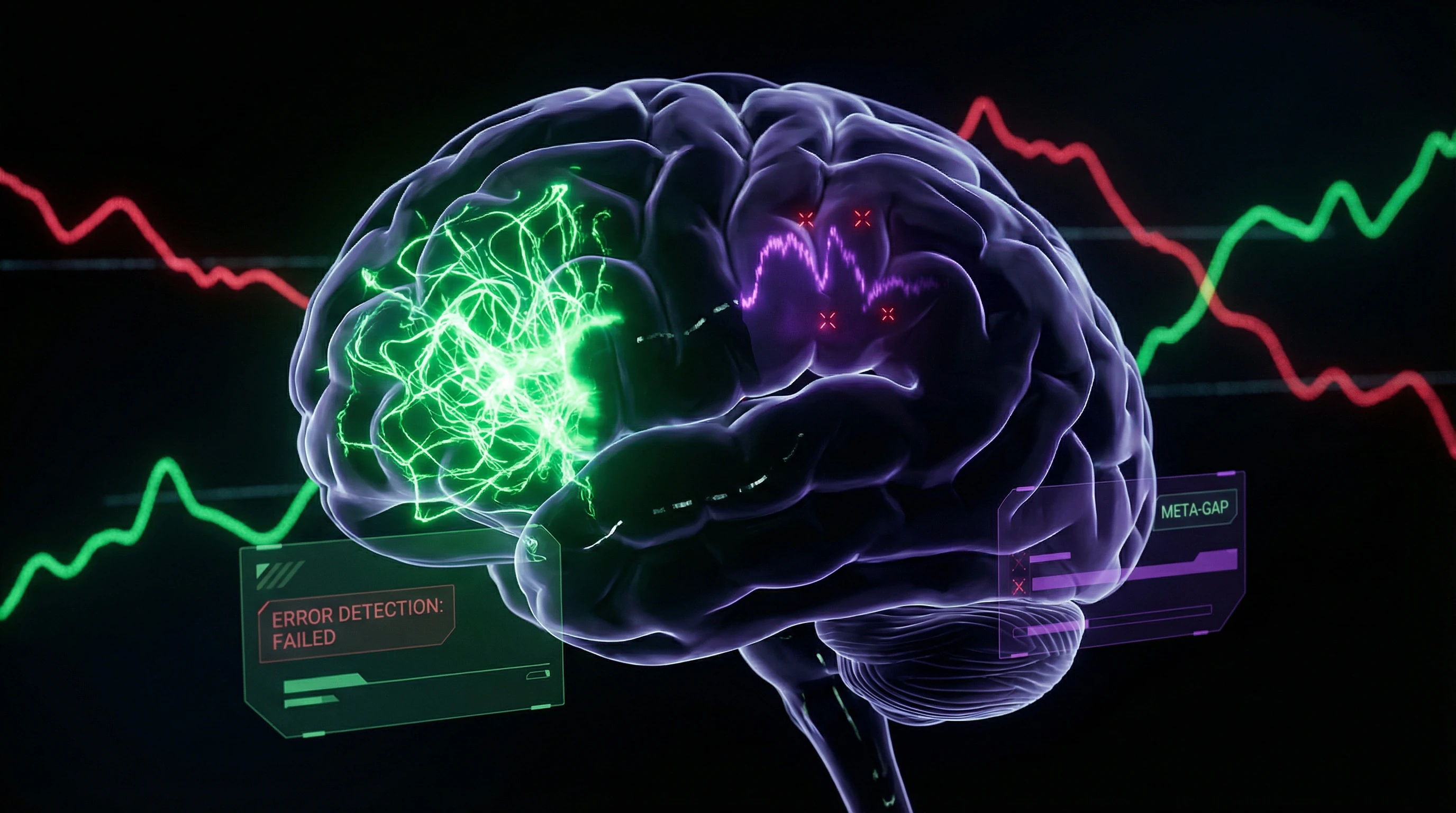
Neurocognitive Mechanisms: How the Brain Creates the Illusion of Competence and Why Metacognition Requires the Same Resources as Task Performance
🧬 Metacognitive Blindness: Why Assessing Competence Requires Competence Itself
The central mechanism of the Dunning-Kruger effect is metacognitive blindness. The cognitive processes necessary for performing a task and the processes for evaluating performance quality partially overlap. More details in the section Statistics and Probability Theory.
To recognize an error in logical reasoning requires logic. To assess code quality requires understanding programming. A person without competence cannot recognize its absence—recognition requires the same competence (S001).
🔁 Neuroanatomy of Metacognition: The Role of the Prefrontal Cortex in Performance Monitoring
Metacognitive processes (confidence monitoring, error probability assessment, judgment calibration) are associated with activity in the dorsolateral and medial prefrontal cortex, as well as the anterior cingulate cortex (S006).
These same regions participate in performing complex cognitive tasks. With low competence, activation is insufficient, which means insufficient activation for metacognitive monitoring as well. The brain cannot accurately assess the quality of a process it performs inefficiently.
⚙️ Cognitive Load and Metacognitive Resources: Why Novices Don't Notice Their Mistakes
| Competence Level | Working Memory Distribution | Metacognitive Monitoring |
|---|---|---|
| Novice | 100% on basic task elements | Absent (no resources) |
| Intermediate | 70% on task, 30% on control | Fragmentary, unstable |
| Expert | 20% on automated operations, 80% on evaluation and correction | Continuous, accurate |
When performing an unfamiliar task, working memory is overloaded processing basic elements, leaving no resources for metacognitive monitoring. An expert has automated basic operations, freeing cognitive resources for quality assessment and error detection.
A novice spends all resources on the task itself, unable to step back and critically evaluate the result. Training in metacognitive skills is effective precisely because it creates separate monitoring procedures independent of the main task (S007).
🧷 Heuristics and Cognitive Shortcuts: How the Brain Fills Knowledge Gaps with False Confidence
- Fluency Heuristic
- If information comes to mind easily, it is perceived as correct. Superficial familiarity with a topic creates a sense of ease, which is interpreted as competence. Particularly dangerous for novices.
- Availability Heuristic
- Overestimating the significance of easily recalled examples, even when they are unrepresentative. Creates a false sense of knowledge completeness.
- Automatic Heuristic Activation
- These mechanisms operate without conscious control, creating a persistent illusion of competence. With low competence, heuristics become the primary source of judgments (S001).
Metacognitive blindness is not a thinking defect, but a side effect of brain architecture: the same neural networks are responsible for performing a task and for evaluating it. When the first works poorly, the second works blindly.
Data Conflicts and Uncertainty Zones: Where Dunning-Kruger Effect Research Diverges and What Remains Controversial
🧩 Statistical Artifact or Real Phenomenon: Debates About Measurement Methodology
Critics point to regression to the mean: when people rate themselves on the same scale as objective measurement, it's mathematically inevitable that low scores appear as overestimation and high scores as underestimation, even with uniform inaccuracy across all assessments. Defenders of the phenomenon present evidence: the effect persists with absolute ratings, comparison to expert standards, and longitudinal studies with feedback (S001).
The methodological dispute isn't about whether the effect exists, but about what mechanism generates it—statistical or psychological.
🔎 Cultural Universality: Does the Effect Manifest Identically Across Different Cultures
Most research has been conducted in WEIRD societies (Western, Educated, Industrialized, Rich, Democratic). Cross-cultural data is contradictory: in East Asian cultures with high collectivism and modesty norms, novice overestimation is less pronounced or absent. More details in the Reality Check section.
However, studies in Russia (actors, graduate students, municipal employees) confirm the effect beyond Anglo-Saxon contexts (S001, S003, S004). This indicates the phenomenon doesn't disappear in other cultures, but may be modulated by social norms and values.
| Context | Effect Strength | Possible Factor |
|---|---|---|
| Western WEIRD societies | Strong | Individualism, self-presentation culture |
| East Asian cultures | Weak or absent | Collectivism, modesty norm |
| Russia and post-Soviet space | Confirmed | Mixed cultural factors |
📊 Role of Motivational Factors: Self-Deception or Genuine Error
It's unclear whether the effect reflects a cognitive error (genuinely incorrect judgment) or motivational distortion (self-esteem protection). When participants rate themselves anonymously or results don't affect reputation, the effect weakens—indicating a role for self-presentation (S007).
But other experiments show the effect's persistence even with complete anonymity and no external incentives for inflating self-assessment. This supports interpretation of the phenomenon as cognitive rather than motivational.
- Cognitive Hypothesis
- Incompetent people don't see their errors because they lack the knowledge to recognize them—this isn't a choice, but a perceptual limitation.
- Motivational Hypothesis
- People inflate self-assessment intentionally to protect self-esteem and social status, especially when it might be observed.
- Hybrid Model
- Both mechanisms operate simultaneously: cognitive blind spots create the foundation, motivational factors amplify the effect in social contexts.
Separating these mechanisms remains one of the major open problems in Dunning-Kruger effect research. Neither hypothesis fully explains all observed data.
Cognitive Anatomy of the Illusion: Which Psychological Mechanisms and Heuristics Are Exploited to Create False Confidence
⚠️ Fluency Heuristic: Why Superficial Familiarity Creates the Illusion of Expertise
The fluency heuristic is one of the key mechanisms sustaining the Dunning-Kruger effect (S001). When information is easily processed (quickly comes to mind, reads easily, seems familiar), the brain interprets this ease as an indicator of truth and competence.
A novice who has read a popular article about quantum physics experiences processing fluency with simplified explanations and metaphors—this creates a feeling of understanding. An expert, confronting the real complexity of the mathematical apparatus, experiences cognitive effort, which is interpreted as uncertainty. More details in the Science News section.
Paradox: the deeper the knowledge, the more cognitive load is required to process it. The brain mistakenly reads this load as a signal of incompetence.
Confirmation Bias and Selective Attention
An incompetent person actively seeks information that confirms their current level of understanding (S001). They notice examples that match their model and ignore contradictory data.
Confirmation bias works as a filter: each argument found in favor of one's own position strengthens confidence, while counterarguments are either unnoticed or reinterpreted.
| Competence Level | What They Notice | What They Ignore |
|---|---|---|
| Novice | Matches with simplified model | Exceptions, edge cases, context |
| Expert | Exceptions, edge cases, context | Obvious matches (already integrated) |
Illusion of Explanatory Depth and Complexity Reduction
When a person can formulate an explanation (even a superficial one), they mistakenly interpret this ability as understanding (S006). Complexity reduction—simplifying a multifactorial system to one or two factors—creates the illusion of a complete picture.
A person who has read three articles about climate can explain the greenhouse effect and feels competent. They don't realize they've missed feedback loops, regional variations, economic models, and political factors.
- Illusion of Explanatory Depth
- The ability to tell a story about a phenomenon that seems logical but omits critical details and interactions. Danger: the person stops seeking information, considering themselves sufficiently informed.
- Complexity Reduction
- Simplifying a multidimensional problem to one or two factors to facilitate processing. Danger: solutions based on such reduction are often ineffective or harmful in real context.
Social Amplification and Echo Chambers
Incompetence rarely remains isolated. People with similar levels of understanding form groups where each confirms the confidence of others (S004). Groupthink transforms individual illusion into collective reality.
In such an environment, criticism is perceived as hostility, and disagreement as a sign of the critic's incompetence. The group becomes a self-reinforcing system where doubts are suppressed by social pressure.
An echo chamber doesn't just repeat the error—it transforms it into group identity. Escaping it requires not only new information but also willingness to reconsider social belonging.
Metacognitive Deficit and Resource Scarcity
Metacognition (the ability to assess one's own knowledge) requires the same cognitive resources as performing the task itself (S007). When a person is working at the limit of their abilities, they lack resources for honest self-assessment.
A novice in programming is fully occupied with syntax and logic. They don't have the cognitive capacity to simultaneously assess the quality of their code, anticipate bugs, or understand what they don't know. An expert has automated basic operations and can track quality and gaps in parallel.
- Cognitive load = task execution + assessment of one's own competence
- Under high load, the second part is the first to shut down
- Result: a person cannot honestly assess themselves because it requires resources they don't have
Fear and Defense Mechanisms
The illusion of competence often protects against anxiety and feelings of helplessness (S007). Acknowledging one's own ignorance is painful, especially if it threatens self-esteem or social status.
The availability heuristic amplifies this effect: examples of people who "looked stupid" after admitting a mistake come to mind more easily than examples of successful learning through errors.
The illusion of competence is not just a cognitive bug. It's a psychological shield that protects against the pain of acknowledging one's own vulnerability. Breaking it requires not only new information but also safety.