Confirmation Bias: The Cognitive Filter That Turns Reality Into a Convenient Illusion
Confirmation bias is a systematic tendency to seek, interpret, remember, and reproduce information in ways that confirm pre-existing beliefs. This is not a thinking error, but a fundamental feature of a cognitive system that evolved for rapid decision-making under uncertainty, not for objective analysis (S009).
⚠️ Three Components of Cognitive Distortion: Search, Interpretation, Memory
Confirmation bias operates on three levels. Selective search: people actively seek information that confirms their views and avoid sources that contradict them. Biased interpretation: the same data is interpreted differently depending on initial beliefs. More details in the Critical Thinking section.
Selective memory: information consistent with beliefs is remembered better and recalled more frequently than contradictory information (S009).
- Selective Search
- Active avoidance of sources that contradict beliefs. The trap: the illusion that contradictory data simply doesn't exist.
- Biased Interpretation
- Some facts are read as confirmation, others as exceptions. The trap: confidence in the objectivity of one's own analysis.
- Selective Memory
- Consistent information is encoded more deeply and retrieved more easily. The trap: false sense that there were fewer contradictory examples.
🧩 Echo Chambers as Architectural Amplification of Cognitive Bias
An echo chamber is an information environment where beliefs are reinforced through repetition and isolation from alternatives. Unlike individual confirmation bias, echo chambers create collective prejudice: groups mutually reinforce the same beliefs, creating an illusion of consensus.
Social media algorithms and recommendation systems amplify the effect by showing content matching previous interactions. Closed information loops become architecture, not accident (S005).
This is especially dangerous when the echo chamber includes authoritative sources or experts who share one position. Users get the impression that their belief is supported by consensus, when in reality they're seeing only a filtered slice of the information landscape.
🔎 Boundaries of the Phenomenon: Where Healthy Skepticism Ends and Pathological Bias Begins
Some degree of selectivity is necessary for efficient information processing—the brain cannot analyze all data with equal depth. The problem arises when confirmation bias becomes so strong that a person completely ignores contradictory evidence, even when it's critically important.
| Healthy Cognitive Economy | Pathological Bias |
|---|---|
| Prioritizing relevant sources | Complete exclusion of contradictory sources |
| Critical attitude toward new information | Refusal to revise beliefs despite evidence |
| Awareness of one's own limitations | Confidence in the objectivity of one's own analysis |
| Periodic verification of assumptions | Absence of verification mechanisms |
This is especially dangerous in medicine, science, politics, and artificial intelligence systems, where bias scales and leads to systemic errors (S002, S005). Related phenomena—groupthink and false dichotomy—often amplify confirmation bias in collective contexts.
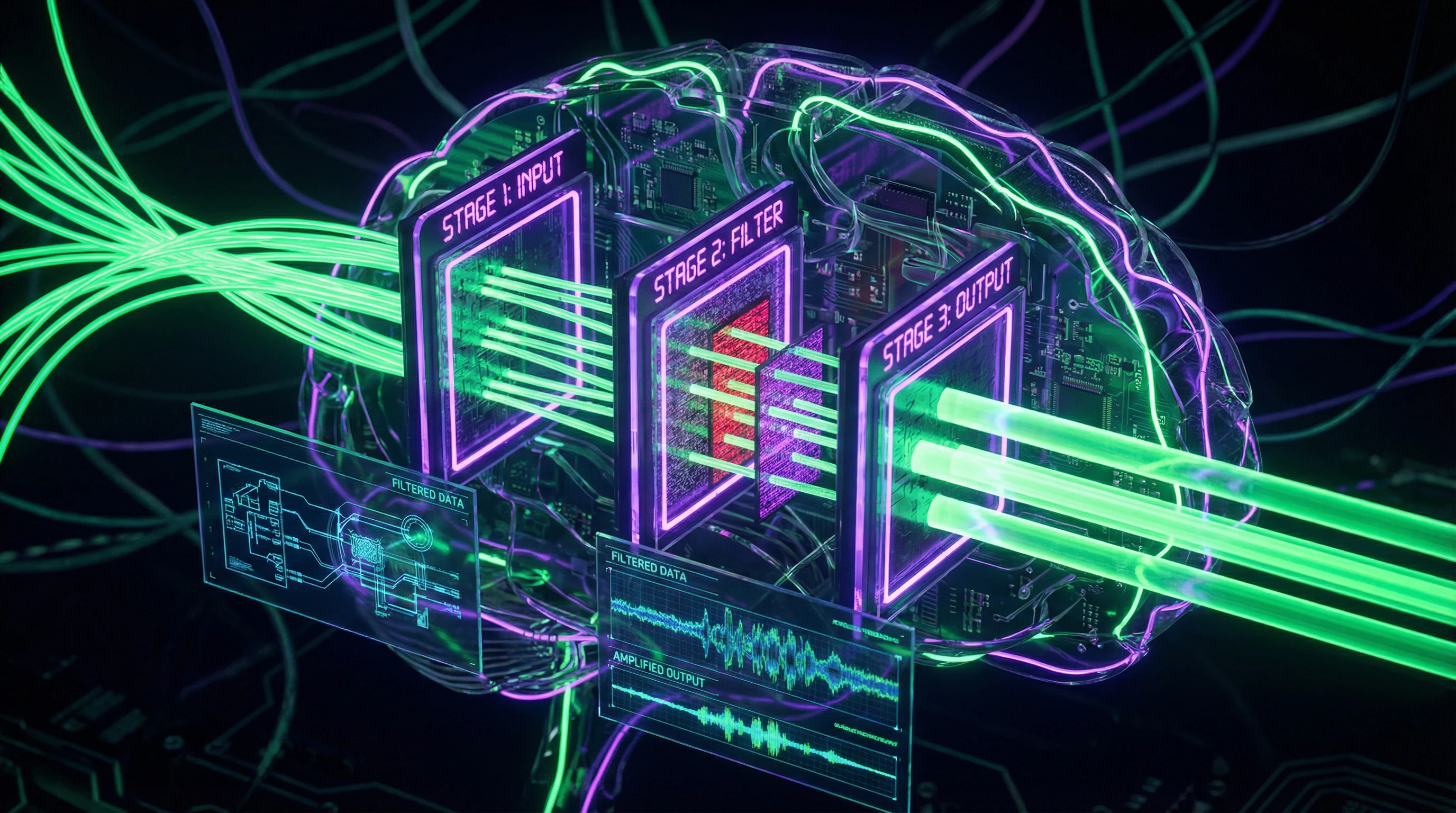
Steel Version of the Argument: Why Confirmation Bias May Be an Adaptive Mechanism
Before examining the problems with confirmation bias, it's necessary to consider its strongest arguments in defense. This isn't simply a cognitive error — it's a mechanism that had evolutionary advantages and continues to perform important functions in certain contexts. More details in the section Debunking and Prebunking.
🧠 Cognitive Economy: The Brain Cannot Verify Everything
The human brain processes enormous volumes of information under conditions of limited attention and time resources. Confirmation bias allows for rapid information filtering using already-tested models of the world.
This reduces cognitive load and enables decision-making under uncertainty. In situations where speed matters more than accuracy, such a strategy may be optimal (S002).
🔁 Belief Stability as the Foundation of Consistent Behavior
Constantly changing beliefs in response to every new fragment of information would lead to chaotic and unpredictable behavior. Confirmation bias provides belief inertia, allowing people to act consistently and predictably.
An overly flexible belief system would be vulnerable to manipulation and random information fluctuations — this isn't a bug, but a feature protecting against informational chaos.
🛡️ Protection Against Information Noise and Manipulation
In a world saturated with disinformation and manipulative content, some degree of skepticism toward new information can be a protective mechanism. Confirmation bias helps filter potentially false or manipulative information that contradicts verified knowledge (S003).
📊 Bayesian Updating: The Rational Basis of Bias
From the perspective of Bayesian statistics, giving greater weight to information consistent with previous observations can be rational. If a person has strong prior beliefs based on a large volume of previous experience, then requiring extraordinary evidence to change them is logically justified (S001).
- The problem arises not in the mechanism itself, but in incorrect calibration of prior belief strength.
- People often overestimate the reliability of their experience and underestimate new data.
- The Bayesian approach requires honest assessment of the probability of error in one's own assumptions.
🧬 Evolutionary Adaptation to Social Environment
In human evolutionary history, group belonging and maintaining social bonds were often more important than objective truth. Confirmation bias helps maintain group identity and avoid conflicts that could arise from constantly challenging group beliefs.
This could have provided survival and reproductive advantages, but in the modern world creates groupthink that blocks critical judgment.
Evidence Base: What Research Says About the Scale and Mechanisms of Bias
Confirmation bias has been documented in hundreds of experimental studies across various fields — from perception psychology to medical decision-making and scientific data evaluation. The evidence base shows this is not a marginal phenomenon, but a systematic distortion that manifests even among experts and in high-stakes situations. More details in the Sources and Evidence section.
🧪 Experimental Evidence of Biased Evaluation of Scientific Data
Experts evaluate the quality of scientific abstracts based on whether the conclusions confirm their own beliefs. In the study, participants were presented with methodologically identical abstracts on astrology with different conclusions — confirming or refuting hypotheses. Abstracts with conclusions matching evaluators' beliefs systematically received higher quality ratings, even when methodology was identical (S008).
Same methodology, different conclusions — the evaluation changes. This isn't a perceptual error, but a filter built into the very logic of judgment.
📊 Medical Errors as a Consequence of Diagnostic Bias
In medical practice, confirmation bias manifests as physicians' tendency to search for symptoms confirming the initial diagnosis while ignoring contradictory signs. Up to 15% of diagnostic errors are linked to cognitive biases, including confirmation bias (S004). Physicians who form an early hypothesis tend to interpret subsequent data as confirming that hypothesis, even when objective analysis points to alternative explanations.
This is particularly dangerous in conditions of uncertainty, when symptoms may indicate several diagnoses simultaneously. A physician who selects an initial diagnosis begins seeing only confirming signs — a mechanism that intensifies with experience and confidence.
🧾 Bias in Evaluating Military Casualties and Political Information
People tend to accept casualty estimates that align with their political views and remain skeptical of contradictory data, even when sources have equal reliability (S003). This leads to the formation of parallel information realities, where different groups operate with incompatible sets of "facts".
| Scenario | Bias Mechanism | Outcome |
|---|---|---|
| Casualty estimate aligns with belief | Acceptance without criticism | Position reinforcement |
| Estimate contradicts belief | Search for errors in source | Data rejection |
| Sources equally reliable | Source selection by belief alignment | Illusion of choice |
⚙️ Bias in Machine Learning Algorithms: Accumulation and Scaling
Artificial intelligence systems inherit and amplify bias from training data. Machine learning algorithms trained on data with confirmation bias not only reproduce this bias but amplify it through feedback mechanisms (AI and Technology). When a model trains on its own predictions, "confirmation noise" accumulates, systematically distorting results.
This creates a closed loop: biased data → biased model → biased predictions → even more biased data for the next training iteration.
🔎 Neurophysiological Correlates: Pupil Dilation as a Marker of Cognitive Conflict
Studies using pupillometry show that confirmation bias has measurable physiological correlates. When receiving feedback that contradicts beliefs, increased pupil dilation is observed, indicating elevated cognitive load and emotional tension (S001). Processing contradictory information requires additional cognitive resources and causes discomfort, explaining the tendency to avoid such information.
- Cognitive Conflict
- A state when new information contradicts existing beliefs. The brain perceives this as a threat and activates defense systems.
- Pupil Dilation
- A physiological marker of increased activity in attention and emotional processing systems. The greater the conflict, the stronger the dilation.
- Information Avoidance
- A behavioral strategy that reduces cognitive discomfort in the short term but reinforces bias in the long term.
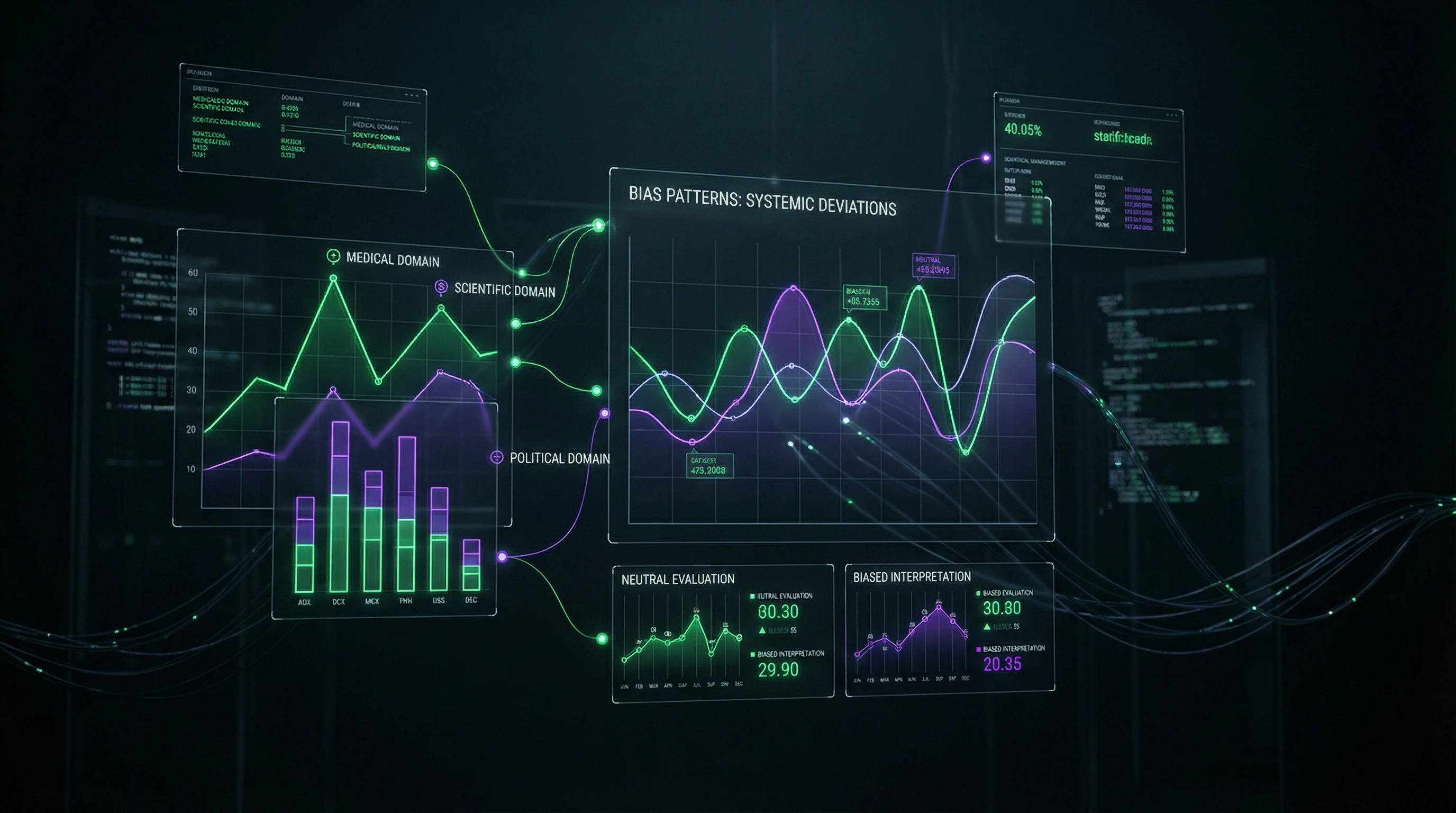
Mechanisms and Causality: How Confirmation Bias Works at the Neurobiological and Social Systems Level
Confirmation bias operates simultaneously on multiple levels: neurobiological, algorithmic, social, and economic. Each level reinforces the others, creating a system that transforms random distortion into a structural trap. Learn more in the Statistics and Probability Theory section.
🧠 The Neurobiology of Bias: Dopamine, Prediction, and Reinforcement
The brain functions as a prediction machine (S001). It constantly generates hypotheses about what will happen next and compares them with reality. When a prediction matches fact, the dopaminergic reward system activates.
Information that confirms your beliefs is perceived by the brain as a successful prediction. This triggers a dopamine release, making that information more attractive, memorable, and emotionally pleasant. Contradictory information, by contrast, is perceived as a prediction error—and the brain activates systems that reject or reinterpret it.
The reward for being right is built into our neurobiology. This isn't a bug in the brain—it's an adaptive feature that conserves resources in stable environments, but becomes a vulnerability in information warfare.
🔁 Algorithmic Echo Chambers: How Recommendation Systems Create Information Bubbles
Recommendation algorithms are optimized for a single metric: user engagement. Content that aligns with your previous preferences generates more clicks and viewing time.
This creates a positive feedback loop: you interact with content type A → the algorithm shows more of type A → you become even more convinced of your views → the algorithm filters alternative viewpoints even more aggressively. Individual bias becomes a structural feature of the information environment (S005).
| Level | Mechanism | Result |
|---|---|---|
| Neurobiological | Dopamine reinforcement for prediction match | Information confirming beliefs appears more truthful |
| Algorithmic | Optimization for engagement, not truth | Echo chamber becomes platform architecture |
| Social | Beliefs as markers of group identity | Defending beliefs = defending social status |
| Economic | Biased content generates more clicks | Market pressure against objectivity |
🧷 Social Identity and Group Polarization
When beliefs become markers of group membership—political, religious, professional—defending them becomes defense of social identity. People are especially resistant to information that contradicts beliefs tied to their group.
Group discussion within an echo chamber doesn't soften this bias but amplifies it through the mechanism of group polarization (S003). Each participant strives to be more faithful to the group position than their peers, pushing the group toward extreme positions.
⚙️ Economic Incentives and the Monetization of Bias
The business models of media and technology platforms create direct economic incentives to amplify confirmation bias. Content that confirms audience beliefs generates more clicks, shares, and viewing time—which directly converts to advertising revenue.
Objective journalism that may contradict the beliefs of part of the audience is less profitable. This creates market pressure against truth and toward the production of biased content (S004).
Confirmation bias isn't just a cognitive error. It's a business model. As long as platforms profit from engagement rather than truth, the system will reproduce bias regardless of how intelligent its users are.
Conflicts and Uncertainties: Where Sources Diverge and What Remains Controversial
Despite extensive evidence, researchers disagree on the interpretation of confirmation bias, its scope, and correction methods. More details in the Alkaline Diet section.
⚠️ Rationality vs Irrationality: The Bayesian Defense of Bias
A fundamental disagreement: some view confirmation bias as an irrational distortion, others as a rational Bayesian strategy for updating beliefs when prior probabilities are properly calibrated.
The former point to systematic decision errors; the latter argue that behavior may be optimal given available information. This debate shapes approaches to developing debiasing methods.
Sources (S001), (S006) reflect both poles of this debate but offer no definitive resolution.
🔎 Universality vs Context Specificity
Data diverge: bias is stronger in domains tied to personal identity and emotionally significant topics, and weaker in neutral tasks.
But other studies show persistent bias even when participants are motivated to be objective and possess expertise (S002).
| Condition | Bias Weakens | Bias Persists |
|---|---|---|
| Personal Identity | No | Yes, strongly |
| Neutral/Abstract Tasks | Yes | Disputed |
| High Motivation for Objectivity | Expected | Often observed |
| Domain Expertise | Expected | Often ineffective |
🧪 Intervention Effectiveness: Can People Be Trained to Avoid Bias
Contradictory data on training programs. Simply informing people about cognitive biases often fails to change behavior and sometimes amplifies bias through the "blind spot" mechanism—people notice bias in others better than in themselves.
But structured decision-making protocols and active search for disconfirming evidence show success (S002).
- Informing about bias → often ineffective or counterproductive
- Structured decision protocols → demonstrate success
- Active search for disconfirming data → works in controlled settings
- Scaling to real-world systems → remains an open question
Cognitive Anatomy of Manipulation: Which Psychological Mechanisms Are Exploited
Manipulation works not through force, but through the architecture of attention. Confirmation bias is not an error, but a tool that can be directed. More details in the section How Artificial Intelligence Works.
🕳️ The "Confirmation Anchor" Technique: Creating First Impressions
First impressions become cognitive frames. Manipulators use the primacy effect combined with confirmation bias: a false version of events becomes anchored in memory, and all subsequent information is filtered through this frame.
Rebuttals are perceived as less convincing because they contradict already-formed beliefs (S003). The brain defends an established model of reality more actively than it seeks truth.
🧩 Selective Quoting and Cherry-Picking Data
Presenting only confirming data while ignoring contradictory evidence exploits the natural inertia of search. If an audience is already inclined to believe a certain conclusion, selectively presented data is perceived as sufficient confirmation.
| Mechanism | How It Works | Result |
|---|---|---|
| Selective attention | Show only facts that confirm the conclusion | The full picture remains invisible |
| Asymmetry of criticism | Confirming data accepted without verification, refuting data subjected to doubt | Illusion of proof |
| Base rate neglect | Focus on individual examples instead of statistics | Distorted probability assessment |
🔁 Creating Artificial Consensus in Echo Chambers
The illusion of consensus is one of the most powerful tools. By controlling the information environment and marginalizing alternative viewpoints, manipulators create the impression that "everyone thinks this way."
This exploits social proof and amplifies confirmation bias through group dynamics (S005). In an echo chamber, a person sees only agreeing opinions, which transforms bias into a social norm. See also: groupthink.
🧠 Emotional Amplification: Fear and Outrage as Catalysts
Information that triggers strong emotions—fear, anger, outrage—is processed less critically and remembered better. Manipulators use emotionally charged content that confirms the audience's existing fears.
Emotional arousal activates the fast, intuitive thinking system (System 1), which is more susceptible to cognitive biases (S003). Critical thinking shuts down at the moment it's needed most.
This combination—primary anchor + emotional charge + social confirmation—creates an almost impenetrable defense against contradictory information. Protection from such manipulation requires not logic, but a verification protocol that activates before emotion captures attention.
Verification Protocol: Seven Steps to Check Information and Protect Against Bias
Developing a systematic information verification protocol is a key tool for reducing the impact of confirmation bias on decision-making.
✅ Step 1: Active Search for Disconfirming Evidence
Formulate the opposite hypothesis and actively search for evidence that supports it. Instead of asking "What data confirms my position?" ask "What data could refute my position, and does it exist?"
This switches the cognitive mode from confirmation to falsification, which is more effective for detecting errors (S006).
✅ Step 2: Evaluate Source Quality Independent of Conclusions
Assess the methodology and reliability of a source before learning its conclusions. This reduces the influence of bias on evaluating evidence quality.
Use standardized criteria: sample size, variable control, reproducibility of results, presence of conflicts of interest (S005).
✅ Step 3: Quantitative Assessment of Evidence Strength
Use numerical assessments of evidence strength instead of qualitative judgments. The Bayesian approach requires explicit specification of prior probabilities and calculation of posterior probabilities based on new data.
This makes the process of updating beliefs more transparent and less susceptible to bias (S001).
✅ Step 4: Structured Discussion with Opponents
Organize discussions with people holding opposing views using a structured format. The "steelman" technique requires presenting opponents' arguments in their strongest form before criticism.
This reduces the tendency toward caricatured representations of alternative positions and forces serious consideration of contradictory evidence (S002).
✅ Step 5: Pre-registration of Hypotheses and Criteria
Record hypotheses, methodology, and success criteria before data collection. This prevents fitting conclusions to results and reduces the risk of circular analysis (S007).
Pre-registration creates an objective trail of decisions that cannot be rewritten in hindsight.
✅ Step 6: Check for Base Rate Neglect
Always account for the base rate of a phenomenon in the population. If an event is rare, even a highly accurate test will produce many false positives.
| Error | Mechanism | Check |
|---|---|---|
| Base rate neglect | Focus on test accuracy, forgetting event rarity | Calculate posterior probability using Bayes' theorem |
| Availability heuristic | Vivid examples seem more frequent | Compare subjective assessment with objective statistics |
| Groupthink | Consensus pressure suppresses criticism | Assign devil's advocate, encourage dissent |
✅ Step 7: Document Process and Errors
Keep a journal of your mistakes, assumptions, and position changes. This creates feedback for calibrating confidence and helps identify systematic patterns of bias.
Transparency in the verification process is the foundation of scientific culture and protection against manipulation (S005).