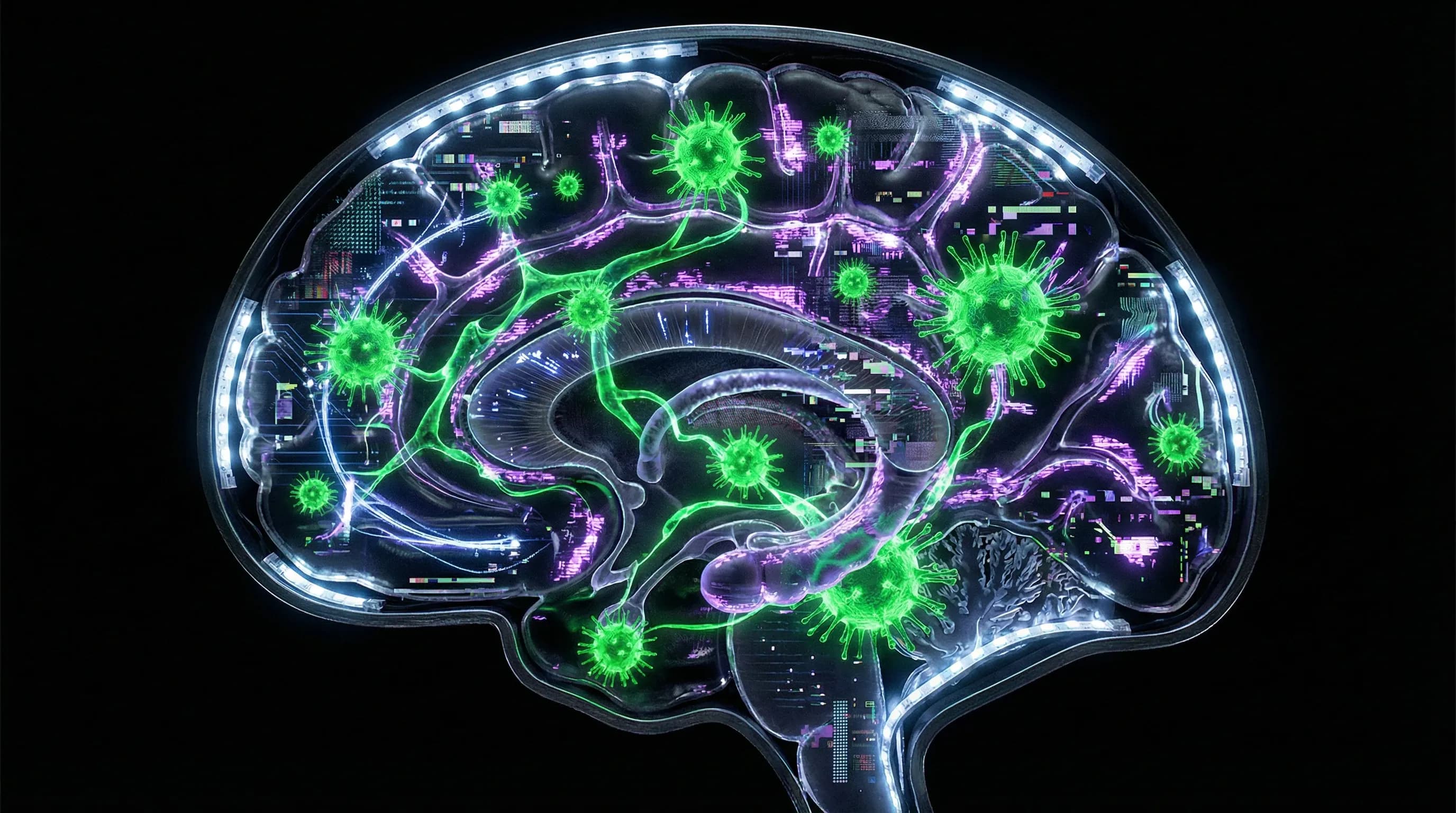
Cognitive COVID: what exactly breaks in the brain and why this isn't "just pandemic stress"
When the first reports of neurological symptoms of COVID-19 began arriving in 2020, many attributed them to psychological reactions to pandemic stress. However, systematic studies quickly showed: we're talking about direct organic damage to the nervous system. More details in the section Statistics and Probability Theory.
In a significant number of patients, SARS-CoV-2 infection is characterized by neurological and psychiatric complications that don't directly correlate with the severity of respiratory symptoms (S001).
Spectrum of cognitive impairments: from mild fog to severe deficits
Cognitive impairments in COVID-19 span a wide range of functions.
- Memory: both short-term (difficulty retaining new information) and long-term (problems retrieving previously learned data)
- Attention and concentration: inability to focus on tasks for extended periods, increased distractibility
- Executive functions: planning, organizing activities, switching between tasks
- Processing speed: slowing of thought processes, increased reaction time
- Language functions: difficulty finding words, reduced speech fluency
These impairments aren't subjective complaints — they're detected through neuropsychological testing and correlate with objective changes in brain structure and function (S002).
Why this isn't psychosomatic: three lines of evidence for organic damage
| Line of evidence | What's discovered |
|---|---|
| Neuroimaging | MRI studies reveal structural changes: reduced gray matter volume in specific regions, microhemorrhages, signs of demyelination (S001) |
| Biomarkers | Blood and cerebrospinal fluid show markers of nervous tissue damage, inflammation, and blood-brain barrier disruption (S003) |
| Pathomorphology | Post-mortem studies show presence of viral particles in nervous tissue, inflammatory changes, and signs of neurodegeneration |
Two main research directions: direct and indirect effects
- Direct effects
- The virus penetrates neurons and glial cells, causing their damage or death. This is the mechanism by which SARS-CoV-2 acts as a neurotropic agent.
- Indirect mechanisms
- Systemic inflammation, blood clotting disorders, hypoxia, and other general effects of infection impact brain function without direct viral contact with nervous tissue (S002).
These mechanisms aren't mutually exclusive. In a single patient, both direct and indirect pathways of nervous system damage can operate simultaneously.

Steel-Man Version of the Hypothesis: Five Strongest Arguments for SARS-CoV-2 Neurotropism
Before examining mechanisms, it's necessary to present the most compelling arguments that SARS-CoV-2 is indeed a neurotropic virus capable of causing direct damage to the nervous system. For more details, see the Media Literacy section.
🔬 First Argument: ACE2 Receptor Expression in Neural Tissue
SARS-CoV-2 uses the ACE2 receptor (angiotensin-converting enzyme 2) to enter cells. Critically, ACE2 is expressed not only in the lungs but also in various structures of the nervous system.
- In neurons of the cerebral cortex
- In hippocampal cells (a key structure for memory)
- In the endothelium of brain vessels
- In the olfactory epithelium and olfactory bulb
- In glial cells
The presence of "entry gates" for the virus in neural tissue creates a biological possibility for direct infection. ACE2 expression in the nervous system has been confirmed by multiple histological studies.
🧬 Second Argument: Detection of Viral Particles in Neural Tissue
Post-mortem studies of patients who died from COVID-19 have revealed the presence of viral RNA and proteins in various parts of the nervous system (S003). The virus was detected in the olfactory bulb, brainstem, cerebral cortex, spinal cord, and peripheral nerves.
We're not talking about trace amounts, but concentrations sufficient for local inflammation and tissue damage. Electron microscopy has shown viral particles inside neurons, proving SARS-CoV-2's ability to directly infect nerve cells.
📊 Third Argument: Temporal Association Between Infection and Neurological Symptoms
Epidemiological data show a clear temporal association between COVID-19 and the development of neurological symptoms (S002). In a significant proportion of patients, cognitive impairments appear during the acute phase of infection (30–40% of hospitalized patients), in the first weeks after recovery (up to 60% in some cohorts), and persist 3–6 months after infection (20–30% of recovered patients).
This temporal association is too strong to be coincidental. The severity of cognitive impairments often correlates with the severity of acute infection, indicating a causal relationship.
🧾 Fourth Argument: Specificity of the Neurological Profile
The pattern of neurological impairments in COVID-19 has a certain specificity that distinguishes it from other viral infections (S001). Characteristic features include predominant damage to frontal-subcortical connections, a combination of cognitive and olfactory impairments, a distinctive profile of inflammatory markers in the CNS, and specific MRI changes (microhemorrhages, leukoencephalopathy).
- Why This Matters
- This specific "fingerprint" of COVID-19 in the nervous system is difficult to explain by nonspecific effects of stress or general inflammation. The pattern points to direct viral impact rather than secondary consequences of systemic infection.
🔎 Fifth Argument: Experimental Animal Models
Studies in animal models (hamsters, mice with humanized ACE2 receptors, primates) have confirmed SARS-CoV-2's ability to penetrate the nervous system and cause neurological symptoms. Under controlled experimental conditions, researchers demonstrated viral penetration through the olfactory pathway into the brain, development of inflammatory changes in neural tissue, and emergence of behavioral and cognitive impairments in infected animals.
| Parameter | Observation |
|---|---|
| Viral load in brain | Correlates with symptom severity |
| Route of entry | Olfactory epithelium → olfactory bulb → brain |
| Inflammatory response | Local activation of microglia and astrocytes |
| Behavioral changes | Reduced activity, memory impairments, anxiety |
These experimental data eliminate many alternative explanations possible in observational human studies.
Evidence Base: Four Mechanisms of Viral Penetration into the Central Nervous System
Understanding exactly how SARS-CoV-2 reaches the brain is critical for developing therapeutic strategies. Current data points to four primary routes of neuroinvasion. For more details, see the Sources and Evidence section.
🧠 Mechanism One: Retrograde Axonal Transport via the Olfactory Nerve
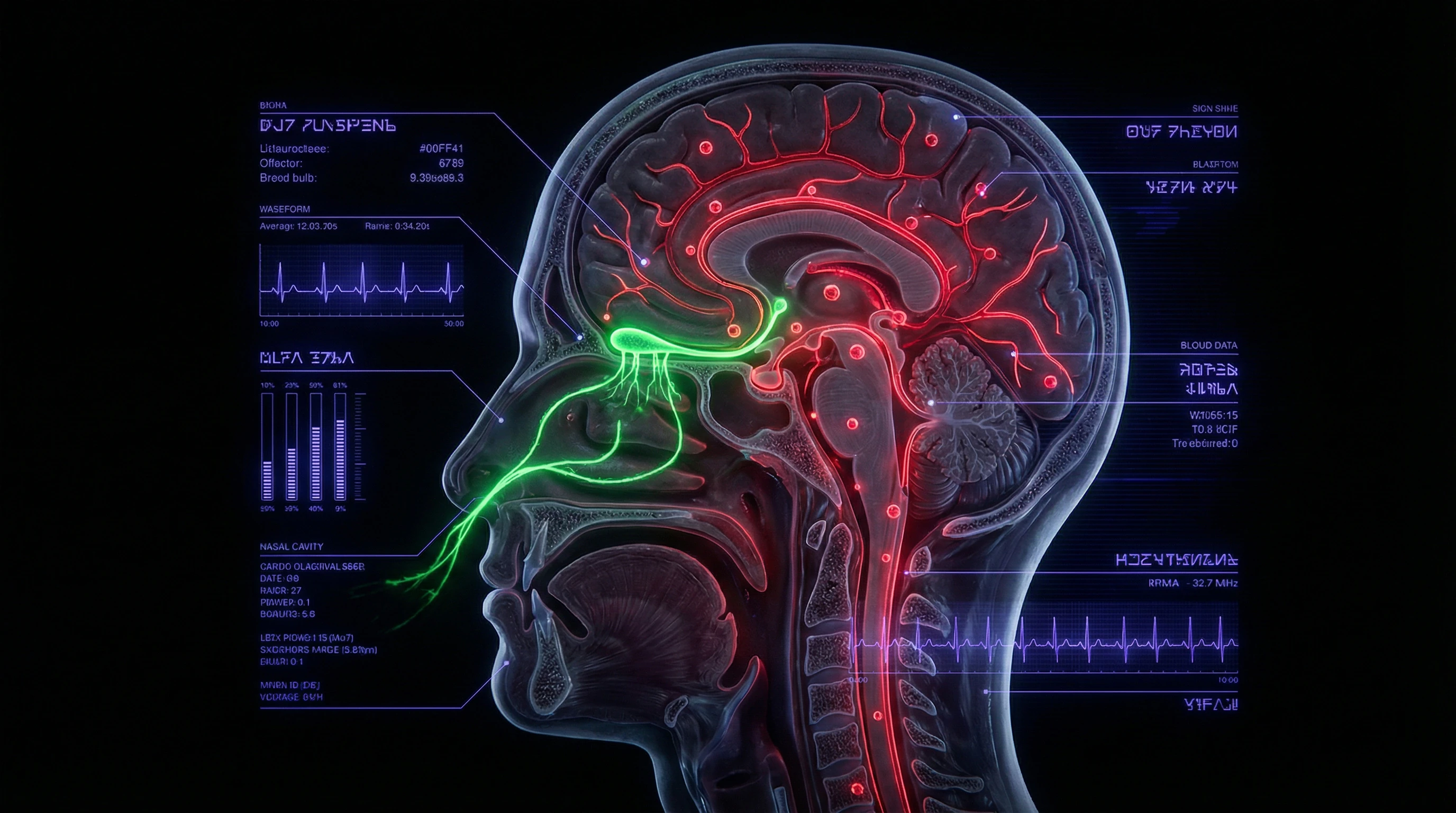
The most well-documented route of SARS-CoV-2 penetration into the CNS is through the olfactory epithelium (S012). The virus infects supporting cells that express ACE2, then transfers to olfactory neuron axons.
- Infection of the olfactory epithelium
- Transsynaptic transmission to olfactory neuron axons
- Retrograde transport along axons toward the center
- Penetration into the olfactory bulb
- Spread to the limbic system and cortex
Anosmia (loss of smell) is not merely mucosal inflammation, but a sign of viral invasion into the nervous system. It is one of the earliest and most specific symptoms of COVID-19.
🧬 Mechanism Two: Hematogenous Spread Through a Compromised Blood-Brain Barrier
The second route involves damage to the blood-brain barrier (BBB)—the protective system that normally prevents pathogens from passing from blood into the brain (S018). In COVID-19, endothelial cells of brain vessels express ACE2 and can be infected by the virus.
Systemic inflammation is accompanied by cytokine release (IL-6, IL-1β, TNF-α), which increases BBB permeability (S011). Through the damaged barrier, viral particles and infected immune cells penetrate brain tissue.
| Damage Stage | Mechanism | Clinical Outcome |
|---|---|---|
| Endothelial infection | Endothelial dysfunction | Disruption of vascular wall integrity |
| Inflammatory cascade | Cytokine release | Increased BBB permeability |
| Pathogen penetration | Virus in brain parenchyma | Direct neuronal damage |
This mechanism is particularly pronounced in severe COVID-19 with marked systemic inflammation.
📊 Mechanism Three: Infection of Perivascular Macrophages and the "Trojan Horse"
The third route uses immune cells as a transport vehicle (S014). SARS-CoV-2 infects circulating monocytes, which then migrate across the blood-brain barrier in response to inflammatory signals.
- Trojan Horse Mechanism
- Infected monocytes penetrate the BBB and release viral particles into the CNS, bypassing direct barrier damage. This explains how the virus can reach the brain even with a relatively intact blood-brain barrier.
- Clinical Significance
- Allows the virus to spread at any degree of systemic inflammation, including mild and asymptomatic forms of COVID-19.
🧾 Mechanism Four: Spread via the Vagus Nerve and Other Cranial Nerves
Beyond the olfactory nerve, SARS-CoV-2 uses other cranial nerves to penetrate the brainstem (S005). The vagus nerve (cranial nerve X) has extensive innervation of internal organs, including the lungs and GI tract, where the virus actively replicates.
The glossopharyngeal nerve (cranial nerve IX) innervates the pharynx with high viral load, while the trigeminal nerve (cranial nerve V) innervates the nasal mucosa. Retrograde transport along these nerves leads to brainstem infection—a structure controlling vital functions (respiration, cardiac rhythm).
Brainstem infection explains the severity of some COVID-19 cases and may be the cause of respiratory failure unrelated to lung damage.
Molecular Anatomy of Damage: What Happens to Neurons After Viral Penetration
Viral penetration into the nervous system is only the beginning. A cascade of pathological processes then launches, leading to neuronal damage and death. More details in the section Memory of Water.
🧬 Direct Cytopathic Activity: How the Virus Kills Neurons
SARS-CoV-2 exerts direct damaging effects on infected neurons (S018). Active viral replication depletes cellular resources and disrupts metabolism.
| Damage Mechanism | Process | Consequence |
|---|---|---|
| Replicative stress | Virus replicates inside the neuron | Energy and resource depletion |
| Competition for ribosomes | Viral RNAs displace cellular mRNAs | Deficit of critically important proteins |
| Mitochondrial dysfunction | Viral proteins disrupt energy production | Cellular energy crisis |
| Apoptosis | Activation of cell death programs | Irreversible neuronal death |
Neurons are postmitotic cells—they don't divide. Neuronal death is irreversible, which explains the persistence of certain cognitive impairments.
🔥 Neuroinflammation: When the Immune System Becomes the Problem
A significant portion of nervous system damage in COVID-19 is related not to direct viral action, but to the immune response against it (S011). Resident brain immune cells (microglia) activate and begin producing proinflammatory cytokines.
The neuroinflammation paradox: protection from the virus becomes a source of damage. Excessive production of IL-6, IL-1β, TNF-α creates a toxic environment for neurons, disrupting neurotransmitter balance and causing excitotoxicity.
Through the damaged blood-brain barrier, monocytes and T-lymphocytes penetrate into the brain. This mechanism explains why anti-inflammatory therapy can be effective for neurological complications of COVID-19.
🩸 Coagulopathy and Microthrombosis: The Vascular Component of Damage
COVID-19 causes pronounced blood clotting disorders that are critically important for the brain (S011). Infection of vascular endothelium leads to its activation and transition to a prothrombotic state.
- Microthrombosis
- Formation of multiple microthrombi in small brain vessels leads to microinfarcts—foci of ischemic neuronal damage.
- Microcirculation disruption
- Even without complete vascular occlusion, brain tissue perfusion is impaired, causing chronic neuronal hypoxia.
- Hemorrhagic complications
- Coagulopathy can lead to microhemorrhages in brain tissue, exacerbating damage.
MRI studies reveal these microvascular injuries in a significant proportion of patients with cognitive impairments after COVID-19 (S001).
🧠 Demyelination and White Matter Damage
Brain white matter consists of neuronal axons covered with a myelin sheath that ensures rapid signal transmission. COVID-19 causes its damage (S018).
- Direct infection of oligodendrocytes—cells that produce myelin
- Inflammatory demyelination—immune attack on infected cells destroys the myelin sheath
- Ischemic damage—white matter is particularly sensitive to hypoxia due to high metabolic demands
Demyelination slows nerve impulse transmission, manifesting as slowed cognitive processes—one of the characteristic symptoms of post-COVID syndrome (S002).
Cognitive Anatomy of the Myth: Why It's So Easy to Disbelieve COVID-19 Neurotropism
Despite extensive evidence, many people remain skeptical that COVID-19 can cause persistent cognitive impairment. This skepticism has deep cognitive roots. Learn more in the Chemistry section.
⚠️ Trap One: The "Invisibility" of Neurological Symptoms
Unlike coughing or shortness of breath, cognitive impairments are invisible to others. A person with memory lapses looks normal, creating the illusion that "nothing serious" is happening. This exemplifies bias blind spot — the tendency to underestimate problems without obvious external manifestations.
Patients themselves may not recognize the extent of their cognitive impairment due to anosognosia — the inability to recognize one's own deficit, which is itself a symptom of frontal lobe damage (S003).
Invisible damage is the most dangerous: the brain cannot complain about itself until it's too late.
🧩 Trap Two: Conflict with the "Common Cold" Mental Model
Most people have a stable mental model of respiratory infections: "got sick and recovered." COVID-19 doesn't fit this model, causing cognitive dissonance. Rather than updating the model, many prefer to deny contradictory data.
This is a false dichotomy: either "complete recovery" or "nothing happened." Historically, after the 1918 Spanish flu pandemic, there was a surge in encephalitis lethargica with pronounced neurological consequences, but the connection between the phenomena was long denied.
| Mental Model | Expectation | COVID-19 Reality | Cognitive Conflict |
|---|---|---|---|
| Cold/flu | Acute phase → complete recovery | Acute phase → chronic cognitive impairment (S002) | Denial or psychologization |
| Respiratory disease | Lung damage | CNS damage through multiple mechanisms (S003) | "But it's not pneumonia" |
| Infection = visible symptoms | Cough, fever, shortness of breath | Cognitive impairment without obvious markers | "Looks healthy — must be healthy" |
🕳️ Trap Three: Psychologization of Organic Symptoms
There's a persistent tendency to explain unexplained symptoms with psychological causes. Cognitive impairments after COVID-19 are often attributed to "pandemic stress," "isolation depression," "health anxiety," or "hypochondria."
This is fundamental attribution error — explaining behavior and symptoms through personal characteristics instead of situational (biological) factors. Historically, women have been particularly frequent victims of such psychologization: from 19th-century hysteria to 20th-century chronic fatigue syndrome — organic diseases with unclear etiology have regularly been declared "psychosomatic."
- Psychologization
- Reclassifying organic damage as mental disorder. Result: patient doesn't receive adequate treatment, and doctor avoids complex diagnosis.
- Organic CNS Damage in COVID-19
- Documented by structural brain changes (S001), astrocyte inflammation (S006), and activation of the integrated stress response (S008). This isn't psychology — it's molecular biology.
⚠️ Trap Four: The "It Wasn't Like That for Me" Effect
People who had COVID-19 without cognitive consequences tend to generalize their experience to everyone: "I didn't have memory problems, so it's exaggerated." This is availability heuristic — overestimating event probability based on how easily it's recalled.
This approach ignores disease variability, which depends on viral load, virus strain, genetic predisposition, age, comorbidities, and chance — which specific brain structures the virus damages.
"Nothing happened to me" isn't an argument against neurotropism. It's an argument that you were lucky.
🔍 Trap Five: Ignoring Base Rates
Even when people see research, they often misinterpret statistics. If 10–15% of COVID-19 patients experience cognitive impairment, it sounds "rare." But with 500 million infected, that's 50–75 million people with long-term brain damage.
This isn't rare — it's a pandemic within a pandemic, just less visible than the acute phase.
⚙️ Trap Six: Groupthink and Social Pressure
If your social environment is dominated by the "COVID is just the flu" narrative, acknowledging cognitive impairment means leaving the group. Social pressure is often stronger than evidence.
This is especially dangerous because it creates a closed loop: people who deny neurotropism influence others, who influence still others, and soon denial becomes "common opinion" regardless of facts.
- Person encounters evidence of COVID-19 neurotropism
- Their social group denies this evidence
- Person experiences pressure: either agree with the group or lose status
- Person chooses the group and begins actively denying evidence
- They become a source of pressure for others
Cognitive viruses spread faster than biological ones because they use social networks instead of respiratory pathways.
🎯 Way Out: Protocol for Checking Your Own Thinking
To avoid these traps, systematic verification is needed:
- Ask yourself: "Am I denying this because there's evidence against it, or because it doesn't fit my mental model?"
- Check: have I seen primary sources (S001, S003) or only secondary interpretations?
- Assess: am I ignoring base rates? 10% of billions isn't rare
- Recognize: is social pressure or my group's opinion influencing my position?
- Acknowledge: could my personal experience be unrepresentative of the entire population?
COVID-19 neurotropism isn't a matter of belief. It's a matter of mechanisms: how the virus penetrates the CNS, how it damages neurons, how this manifests in cognitive impairment. Each of these mechanisms is documented and reproducible.
Skepticism is useful, but only when directed at examining evidence, not defending comfortable illusions.