 🔄 Cognitive Biases
Systematic Errors in Procedural Thinking and Learningλ
How students develop predictable patterns of flawed reasoning when learning step-by-step procedures, and why these errors aren't random but arise from incomplete mental models
Overview
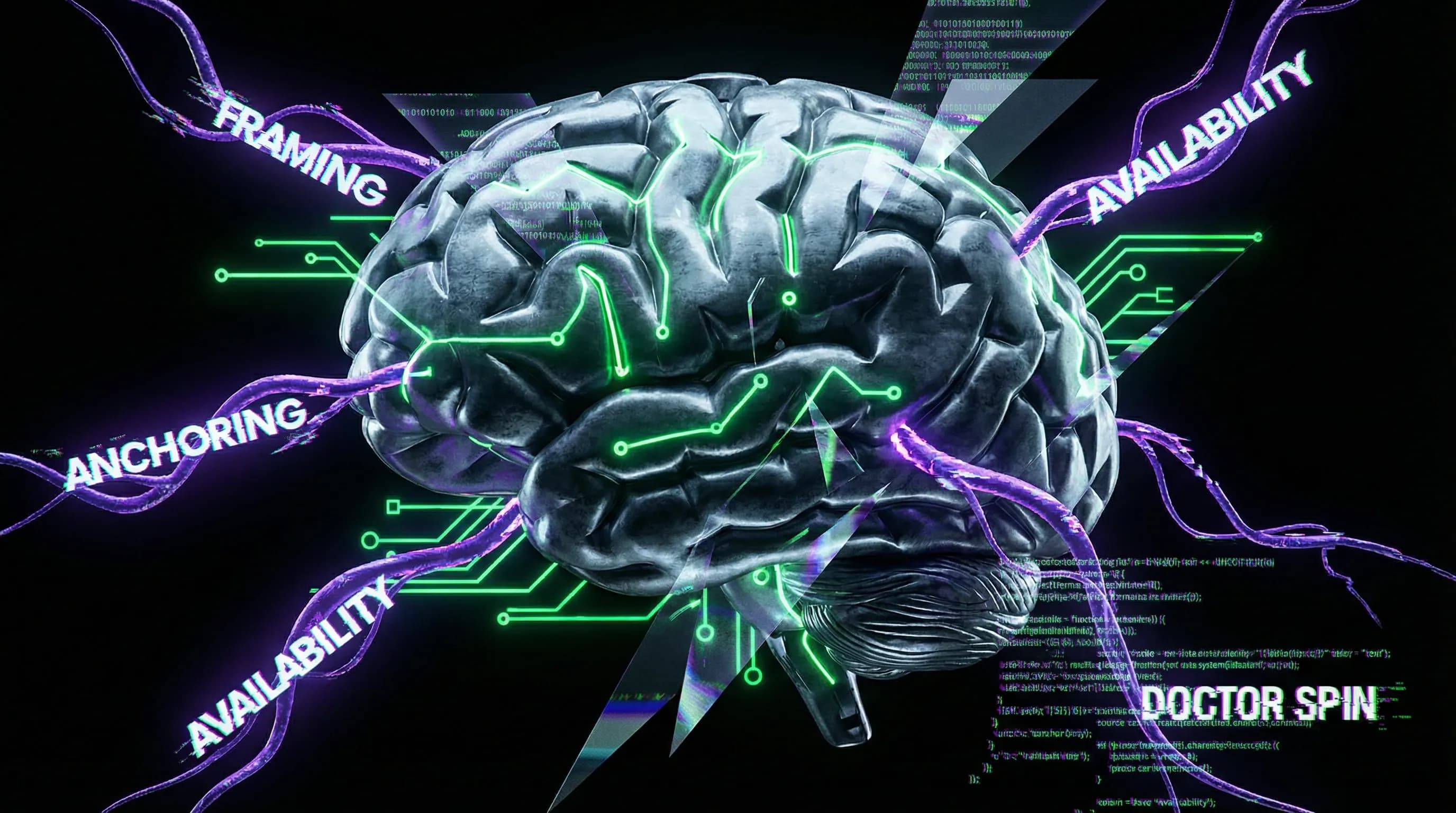
Mind bugs are systematic procedural errors that students develop when learning mathematical operations and other step-by-step procedures. Unlike random mistakes, these errors follow predictable patterns and arise from coherent but incorrect mental models. The concept was developed by Kurt VanLehn in his foundational 1990 work, which combined cognitive modeling with empirical hypothesis testing to understand the origins of procedural misconceptions.
Research shows that students generate these errors through "repair strategies"—attempts to fix incomplete procedures when encountering new types of problems they cannot solve with their current knowledge. These error patterns are not only diagnostically valuable but also predictable through computational models, making them foundational for developing intelligent tutoring systems and adaptive educational technologies.
🛡️ Laplace Protocol: Mind bugs are not a sign of low ability, but a natural byproduct of the learning process. Understanding their origins is critically important for effective pedagogical intervention and the design of educational systems capable of diagnosing and correcting procedural misconceptions at early stages.
Reference Protocol
Scientific Foundation
Evidence-based framework for critical analysis
Navigation Matrix
Subsections
🔄
[F1]
Cognitive Biases
Everything About Cognitive Biases: Complete Guide, Facts and Myth-Busting.
Explore
[psychology-of-belief]
Psychology of Belief
A scientific investigation of faith as a fundamental psychological phenomenon that shapes personal values, meaning-making, and crisis resilience mechanisms
Explore
Protocol: Evaluation
Test Yourself
Quizzes on this topic coming soon
Sector L1
Articles
Research materials, essays, and deep dives into critical thinking mechanisms.
🔄 Cognitive Biases 🔄 Cognitive Biases
 🔄 Cognitive Biases
 🔄 Cognitive Biases
 🔄 Cognitive Biases
 🔄 Cognitive Biases
 🔄 Cognitive Biases
 🔄 Cognitive Biases
 🔄 Cognitive Biases
 🔄 Cognitive Biases
 🔄 Cognitive Biases
 🔄 Cognitive Biases
⚡
Deep Dive
Nature and Origins of Mental Bugs in Learning
What Are Procedural Misconceptions and Why They're Systematic
Mental bugs are not random mistakes, but predictable patterns of incorrect reasoning arising from incomplete or distorted mental models of procedures. Kurt VanLehn demonstrated that students develop systematic errors—"bugs"—which they consistently apply, believing them to be correct.
These misconceptions are not signs of carelessness, but logical consequences of learners' attempts to fill gaps in their knowledge. The same types of errors are reproduced by different students independently, indicating common cognitive mechanisms underlying their formation.
- Procedural vs Conceptual Errors
- Procedural misconceptions concern the sequence of operational steps, not understanding of underlying principles. A student may understand the concept of subtraction but apply an erroneous procedure when working with borrowing.
- Diagnostic Value
- Analysis of bug patterns allows precise identification of where in the learning process breakdown occurred and which specific knowledge is missing or distorted. VanLehn's bug taxonomy became the foundation for intelligent tutoring systems and Bayesian knowledge diagnosis networks.
VanLehn's Repair Theory and the Mechanism of Error Generation
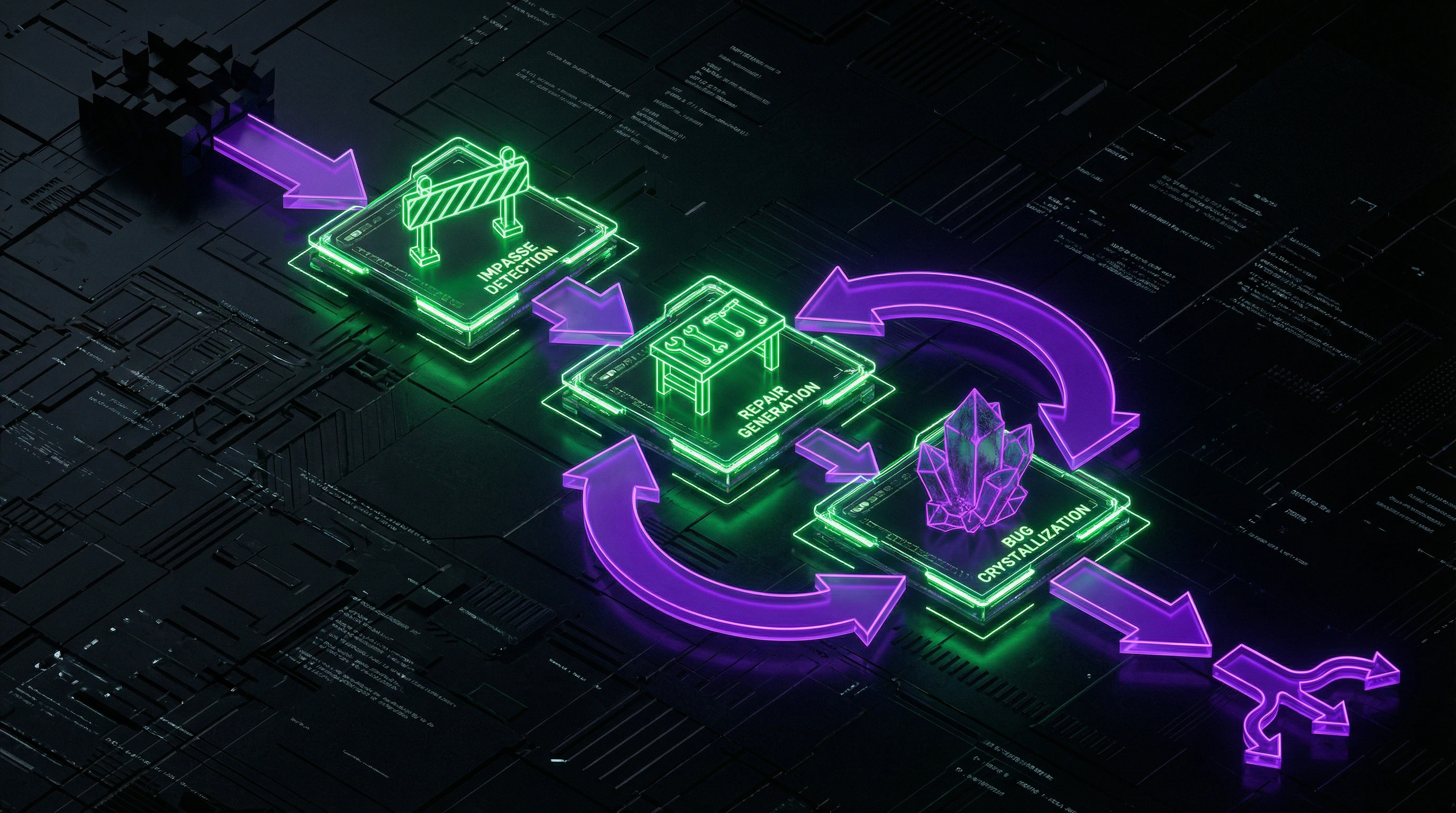
Repair theory explains how students generate bugs by attempting to fix incomplete procedures when encountering impasses. When a learner faces a problem they cannot solve with existing knowledge—for example, needing to subtract a larger digit from a smaller one—they don't stop, but instead invent a "repair" strategy.
These strategies are often based on overgeneralization of previously learned rules or on superficial analogies with similar procedures. Cognitive modeling allows simulation of the learning process and prediction of which specific bugs will arise with certain gaps in instruction.
Computational models built on repair theory successfully predict the distribution of errors in real student populations. Empirical validation has shown high correspondence between predicted and observed errors.
Migration of Errors During Learning
Bug migration is the process by which students modify existing errors or develop new ones when encountering new types of problems. Mental bugs are not static, but evolve as problem-solving experience accumulates.
- A student begins with one type of bug when solving simple subtraction problems
- Adapts the erroneous strategy for more complex cases
- Creates a cascade of related misconceptions
- Simple error correction without addressing conceptual gaps often leads to bug migration into a new form
The phenomenon of bug migration is critical for developing effective interventions: it's necessary not only to identify the current error, but to understand its cognitive origin and potential evolutionary trajectories. Intelligent tutoring systems use bug migration models to predict which new errors may arise after partial correction, and proactively address these risks through targeted scaffolding.
Taxonomy of Common Mental Errors in Mathematics
Subtraction Operation Errors and Their Classification
VanLehn identified over one hundred different bugs in subtraction procedures, many of which occur in a significant proportion of students. The most common errors relate to the borrowing procedure: students either skip the borrowing step, execute it incorrectly, or apply borrowing in situations where it is not required.
A typical "smaller-from-larger" bug occurs when a student always subtracts the smaller digit from the larger one regardless of position, avoiding borrowing. Another frequent pattern is "borrow-no-decrement": the student increases the minuend digit by 10 but forgets to decrease the adjacent place value by 1.
| Error Type | Mechanism | Population Frequency |
|---|---|---|
| Skipping borrowing | Ignoring procedural step | 10–15% |
| Incorrect borrowing | Misapplying the rule | 10–15% |
| Unnecessary borrowing | Overgeneralization to inappropriate cases | Rare |
| Smaller-from-larger | Avoiding negative results | 10–15% |
| Borrow-no-decrement | Incomplete procedure implementation | 10–15% |
Bug distribution in the population is uneven: some occur in 10–15% of students, others are rare. This correlates with the cognitive complexity of repair strategies—simpler repairs requiring fewer reasoning steps generate more frequent bugs.
A set of 15–20 specially selected problems allows high-precision identification of a student's specific bug. Bayesian networks built on this taxonomy achieve diagnostic accuracy exceeding 85%.
Patterns in Other Arithmetic Procedures
While VanLehn's work focused on subtraction, repair theory principles apply to a broad spectrum of procedural skills. Research has identified similar patterns of systematic errors in multi-digit multiplication, division with remainders, and fraction operations.
In programming, students demonstrate procedural bugs when working with loops, conditional constructs, and recursion that are structurally similar to mathematical bugs. The common mechanism—incomplete understanding of a procedure combined with attempts to fill gaps through generalization or analogy—operates independently of subject domain.
- Students prone to certain types of repair strategies in mathematics demonstrate similar patterns in other procedural tasks.
- This indicates the existence of general cognitive predispositions toward certain types of erroneous reasoning.
- Understanding meta-patterns enables development of cross-disciplinary interventions addressing the underlying cognitive strategies that generate errors.
- Modern intelligent tutoring systems use transfer learning to predict likely bugs in new domains based on a student's error patterns.
Cognitive Modeling of Procedural Errors
Computational Models of Skill Acquisition
VanLehn developed the computational model Sierra, which simulates the process of learning subtraction procedures and the generation of bugs under incomplete instruction. The model is based on a production system where knowledge is represented as "if-then" rules, and uses a learning mechanism through analogy and generalization of examples.
When the model encounters an impasse—the absence of an applicable rule—it activates repair heuristics that generate new rules by modifying existing ones. Critically, the model doesn't simply reproduce observed bugs but predicts their emergence from first principles of cognitive architecture.
Validation of the Sierra model showed impressive correspondence between predicted and empirically observed bug distributions. The model successfully predicted which bugs would be most frequent, which rare, and which theoretically possible bugs don't occur in reality due to cognitive constraints.
Subsequent work by Corbett and Anderson extended this approach, creating ACT-R models that not only simulate errors but also track individual student learning trajectories in real time. These models achieve student performance prediction accuracy at a correlation level of 0.85–0.95 with actual data.
Predictive Power of Cognitive Simulations
Cognitive models based on repair theory possess not only explanatory but also predictive power. Intelligent tutoring systems use these models to adapt task sequences and feedback types to individual student trajectories.
- The model predicts which bug will develop when encountering a new type of problem
- The system proactively provides scaffolding to prevent the error
- Adaptive interventions increase learning effectiveness by 20–40% compared to non-adaptive approaches
Modern extensions of VanLehn's approach include Bayesian knowledge tracing, which estimates the probability of mastering each skill based on patterns of correct and incorrect responses. These models account not only for the fact of an error but also its type, allowing distinction between random slips and systematic bugs.
Integration of cognitive models with machine learning opens possibilities for automatic discovery of new bugs in large datasets of student solutions and refinement of theoretical models based on empirical data. The predictive accuracy of these hybrid systems continues to grow with accumulation of data on diverse learning trajectories.
Diagnosing Mental Bugs in Educational Practice
Methods for Identifying Systematic Errors
Diagnosing procedural misconceptions requires systematic analysis of error patterns, not simply counting incorrect answers. VanLehn developed a taxonomy of bugs in subtraction, including over 100 different types of systematic errors, each reflecting a specific incompleteness or distortion in the mental model of the procedure.
The methodology involves collecting multiple solutions from a single student to identify stable patterns: a single error may be random, whereas a bug manifests consistently in certain types of problems. Cognitive modeling allows prediction of which specific errors will arise from particular knowledge gaps, making diagnosis more targeted.
- Collect multiple solutions from one student on similar problems
- Identify repeating error patterns (not isolated failures)
- Construct a hypothesis about the mental model defect
- Test the hypothesis on new problems of the same type
- Classify as a bug only with consistent reproduction
Bayesian Networks for Diagnosing Misconceptions
Bayesian knowledge networks represent a probabilistic model of connections between skills and observed student responses, allowing estimation of the probability of mastery for each procedural component. These models integrate information about error types: a systematic bug reduces the probability of skill mastery more strongly than a random slip.
Corbett and Anderson applied a Bayesian approach to knowledge tracing in intelligent tutoring systems, achieving prediction accuracy of over 80% for subsequent student responses. Diagnostic systems update probabilistic estimates after each response, gradually refining the student's knowledge model and identifying specific bugs requiring correction.
The Bayesian approach transforms diagnosis from a static snapshot ("the student made an error") into a dynamic model that refines with each response and predicts where the next error will occur.
Distinguishing from Random Errors
The key distinction between bugs and random errors lies in consistency: a bug reproduces in structurally similar problems, whereas a random error has no predictable pattern. A student with a bug is confident in the correctness of their procedure and applies it systematically, while random errors are often accompanied by uncertainty and inconsistency.
| Feature | Bug (systematic error) | Random error |
|---|---|---|
| Consistency | Reproduces in similar problems | Unpredictable, no pattern |
| Student confidence | Confident in procedure correctness | Often accompanied by doubt |
| Error correlation | r > 0.7 between errors in different problems | r < 0.3 (weak connection) |
| Diagnostic value | Points to specific model defect | Requires data accumulation for detection |
Diagnostic systems use the consistency criterion for automatic error classification and prioritization of interventions on systematic misconceptions.
Application in Intelligent Tutoring Systems
Knowledge Tracing Based on Mind Bugs Concept
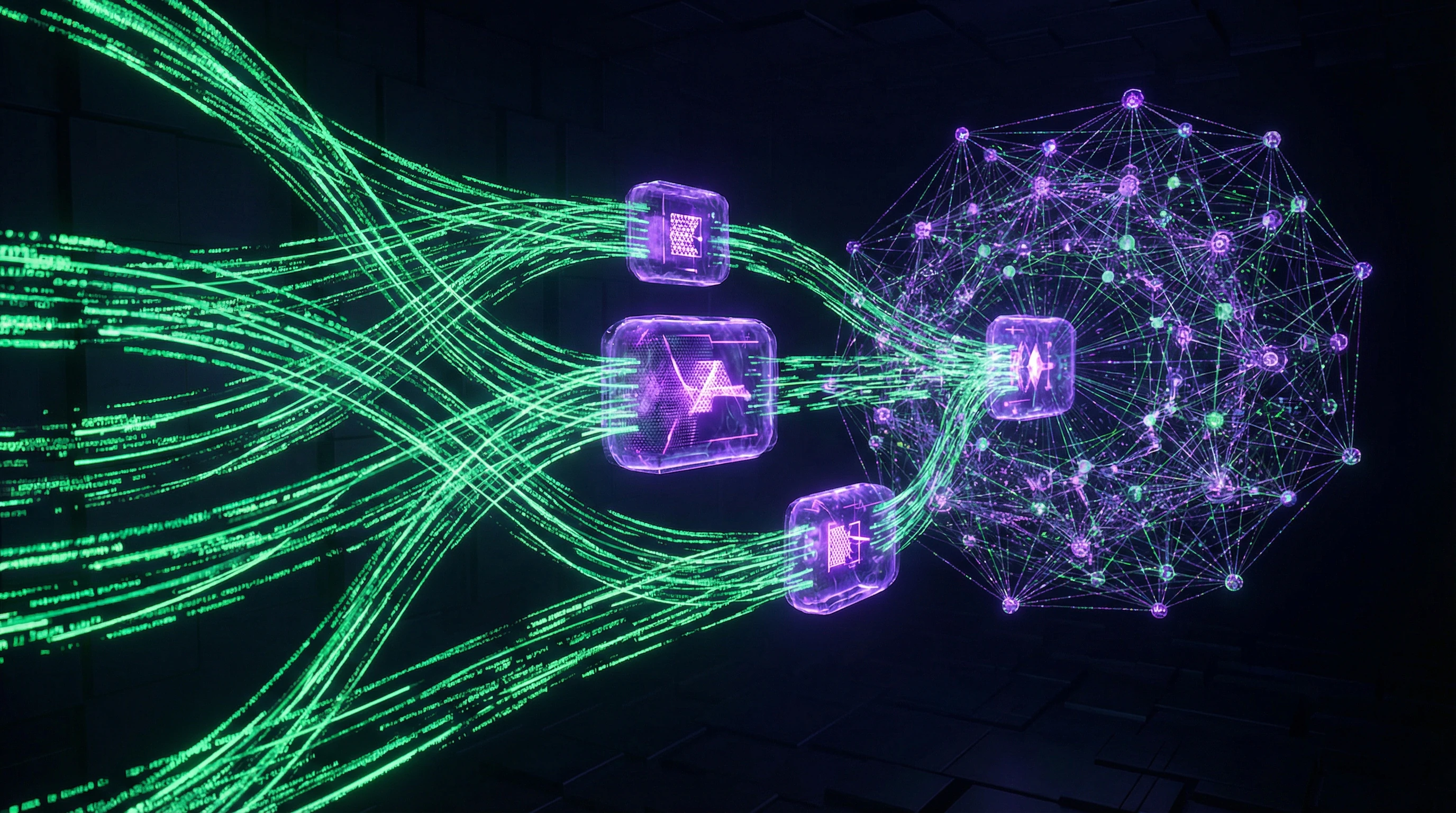
Intelligent tutoring systems build detailed models of student knowledge, tracking not only skill mastery but also the presence of specific misconceptions. Corbett and Anderson developed a knowledge tracing algorithm that updates probabilities of mastery for each skill after every student action, achieving predictive accuracy of 80–95% for subsequent responses.
The system distinguishes four knowledge states: complete mastery, partial mastery with gaps, presence of a specific bug, and complete absence of skill. This granularity allows adaptation of task sequences and feedback types to the student's specific state.
Adaptive Feedback Strategies
Feedback effectiveness critically depends on its match to error type: bugs require explanation of the conceptual basis of the procedure, while random errors need only indication of the fact.
Multi-component feedback, including verification, explanation, and hints, is most effective for correcting systematic misconceptions and reduces learning time by 30–40% compared to fixed strategies.
Intelligent systems automatically select the level of detail: minimal for random errors, elaborate with conceptual explanations for identified bugs. This prevents both excessive help and insufficient support.
Personalization of Learning Trajectories
Knowledge of a student's specific bugs allows the system to construct personalized task sequences that purposefully address identified misconceptions. Planning algorithms balance between reinforcing correct skills and correcting bugs, optimizing the trajectory toward target competency levels.
- Diagnosis of identified student bugs
- Construction of task sequences addressing misconceptions
- Balancing between reinforcement and correction
- Optimization of trajectory toward target competency
Personalized trajectories based on bug diagnosis reduce the number of required exercises by 25–35% while achieving the same level of mastery. Machine learning enables systems to automatically discover new bugs in student data and integrate them into diagnostic models, continuously improving personalization accuracy.
Correcting and Preventing Procedural Misconceptions
Effective Intervention Strategies
Correcting bugs requires reconstructing the mental model through explicit instruction in the conceptual foundations of each step. Effective intervention consists of three components: identifying the specific bug, explaining why the current procedure is incorrect, and step-by-step construction of the correct procedure with conceptual justification.
Contrasting examples—demonstrating the difference between a bug and correct procedure on parallel tasks—are particularly effective for preventing recurrence. Interventions addressing conceptual gaps reduce bug frequency by 60–70%, while simple correction without explanation yields effects in only 20–30% of cases.
Conceptual understanding serves as a protective factor: students can check the plausibility of results and detect inconsistencies in their own calculations.
The Role of Conceptual Understanding
Deep conceptual understanding of mathematical operations prevents bug formation. A student who understands the principle of positional number systems is significantly less likely to develop bugs in subtraction with borrowing—they can evaluate the logic of each step.
Instruction that integrates procedural skills with conceptual understanding reduces bug frequency by 50–60% compared to purely procedural instruction. Conceptual knowledge also facilitates transfer of skills to new types of problems, preventing bug migration when encountering unfamiliar procedural variations.
Scaffolding to Prevent Error Migration
Scaffolding—temporary support that structures the problem-solving process—is critically important when learning new procedures. Effective scaffolding includes step-by-step prompts, visualization of intermediate states, and checking questions that direct attention to key conceptual moments.
- Step-by-step prompts orienting toward critical procedural steps
- Visualization of intermediate states for explicit tracking of changes
- Checking questions focusing attention on conceptual foundations
- Gradual reduction of support level (fading) for procedure internalization
Adaptive scaffolding that accounts for current skill level reduces bug frequency by 40–50% and accelerates achievement of automaticity by 30% compared to fixed support.

Knowledge Access Protocol
FAQ
Frequently Asked Questions
Mind bugs are systematic procedural misconceptions that students develop when learning mathematical operations. These aren't random slips but predictable patterns of incorrect thinking arising from incomplete mental models. Kurt VanLehn demonstrated that such errors can be computationally modeled and their occurrence predicted.
Students develop similar errors due to common gaps in instruction and attempts to "repair" incomplete procedures. When a learner encounters a problem they can't solve with existing knowledge, they create a repair strategy, often flawed. These strategies form persistent patterns of incorrect actions.
Procedural misconceptions are systematic errors that students consistently repeat, believing them correct. Ordinary mistakes are random and unpredictable, whereas mind bugs follow the clear logic of a faulty mental model. Identifying the pattern allows diagnosis of the specific misconception and targeted correction.
Repair theory explains how students generate errors by attempting to fix incomplete procedures when encountering an impasse. When a known algorithm fails, the learner improvises a "patch" that often proves incorrect. These repair strategies become sources of persistent procedural misconceptions.
Yes, cognitive modeling allows prediction of typical errors based on analysis of instructional sequences. VanLehn created computational models that simulate the learning process and generate the same bugs as real students. These models are used in intelligent tutoring systems for early diagnosis.
You need to analyze error patterns across a series of similar problems, not isolated mistakes. Systematic repetition of the same incorrect procedure indicates a mind bug. Bayesian networks and knowledge tracing methods help automatically diagnose specific misconceptions in digital learning environments.
Error migration is the process where students modify existing bugs or create new ones when encountering unfamiliar problem types. Attempting to apply an incorrect procedure to a new context spawns derivative misconceptions. This explains why simply correcting an error without addressing its foundation is ineffective.
No, the concept of procedural misconceptions extends to any domain with step-by-step algorithms. Programming, scientific computation, even musical notation—wherever procedures exist, systematic errors are possible. VanLehn's research focused on mathematics, but the principles are universal for procedural learning.
Tutoring systems apply mental error models for knowledge tracing and content adaptation. The system tracks response patterns, identifies specific bugs, and selects personalized exercises for their correction. Corbett and Anderson's 1994 work built an entire field of adaptive learning on this foundation.
No, simply pointing out an error is often ineffective without understanding its cognitive basis. A student may correct a specific example but continue applying the same incorrect procedure in other problems. It's necessary to identify the source of the misconception and work with the underlying conceptual understanding.
This is a myth — while some bugs are common, students generate diverse errors depending on their individual learning history. Previous experience, the order in which topics are studied, and personal repair strategies create unique combinations of misconceptions. This is why personalized diagnosis is important, rather than universal assumptions.
Complete prevention is impossible, but risk can be significantly reduced through quality conceptual instruction before procedural training. Scaffolding — gradual increase in task complexity with support — helps avoid situations where students are forced to improvise incorrect strategies. Early detection and correction of the first signs of bugs is critically important.
Computational models simulate the process of skill acquisition and error generation, allowing researchers to test hypotheses about cognitive mechanisms. If a model reproduces the same bugs as real students, this confirms the theory about the origin of misconceptions. This approach combines empirical data with theoretical predictions.
Knowledge tracing is a method of tracking a student's mastery level of specific skills in real time. The system analyzes the correctness of procedure execution, identifies error patterns, and updates the student's knowledge model. This allows for adapting task difficulty and providing targeted feedback.
Conceptual understanding creates the foundation for meaningful application of procedures and independent error correction. A student with a strong conceptual base can recognize when a result is illogical and reconsider their actions. Purely procedural instruction without understanding "why" makes students vulnerable to persistent misconceptions.
Yes, analyzing one's own errors can deepen understanding if accompanied by reflection and proper feedback. Errors reveal the boundaries of the current mental model and motivate its revision. However, without timely correction, bugs become entrenched and turn into obstacles, so balance between exploration and guiding support is important.