
What we're actually measuring when we talk about critical thinking — and why it's not just logic
Critical thinking is often confused with simple skepticism or the ability to solve logic puzzles. But the academic definition is far more complex: it's a set of cognitive skills that enable analyzing, evaluating, and synthesizing information to make informed decisions (S001, S004).
Key components include observation, interpretation, analysis, inference, evaluation, and explanation (S011). This isn't a single ability, but an entire complex of soft skills working in tandem (S014).
- Critical thinking vs logic
- Logic is a tool. Critical thinking is a system for applying that tool under conditions of incomplete information, social pressure, and personal biases.
🧩 Why critical thinking can't be reduced to a single number
Research shows that critical thinking correlates with basic personality traits from the Big Five model and intelligence level (S005, S008). Two people with identical logical abilities can show different test results simply due to differences in openness to experience, conscientiousness, or emotional stability.
The Starkey Critical Thinking Test, adapted by Dr. Sullivan for English-speaking audiences, was used in adolescent research specifically accounting for personality factors (S008).
Personality predicts critical thinking application better than logical ability itself. A person can be logical but closed to new information — and then their critical thinking remains untapped.
⚠️ The universality trap: why Western tests don't work everywhere
Most standardized critical thinking assessment methods are based on philosophical approaches, including the California Critical Thinking Skills Test (S007). The problem is that these instruments were developed for English-speaking culture and require cultural and linguistic adaptation.
Empirical research on psychometric indicators of tests for adolescents aged 14–18 revealed serious validity problems (S006). Simple translation doesn't solve the problem — full validation in local context is needed.
| Western approach | Local adaptation |
|---|---|
| Test translation | Redesign accounting for cultural norms |
| Universal assessment criteria | Validation on local sample |
| Ignoring personality factors | Controlling variables (openness, conscientiousness) |
🔎 Strategies vs skills: what's the difference and why it matters
Critical thinking is not only a set of skills, but also strategies for applying them. Critical thinking strategies represent analytical problem-solving tools that require deliberate cultivation (S004).
A person can possess all necessary cognitive abilities but not know how to apply them strategically at the right moment. This is precisely why assessing critical thinking strategies for the new generation requires separate attention (S001).
- Skill: ability to analyze text
- Strategy: knowing when and how to apply analysis under conditions of urgency or social pressure
- Difference: the first can be tested, the second — only in real situations
Read more about critical thinking as a system and thinking tools in the corresponding sections.

Seven Arguments for Why Critical Thinking Can and Should Be Measured — Even Though It's Difficult
Before examining the problems with assessment tools, we need to understand why measuring critical thinking makes sense at all. Skeptics argue that it's too abstract a category for quantitative evaluation. More details in the section Logical Fallacies.
Research from recent decades provides compelling counterarguments — not theoretical, but practical.
🔬 First Argument: Validated Instruments Exist and Work
Years of work have led to the creation of a validated critical thinking assessment instrument for adults, whose task quality is confirmed by rigorous validation (S003). These are not theoretical constructs, but practical methodologies that have passed reliability and validity testing.
Tools for online environments demonstrate that accurate diagnosis is possible even in digital contexts (S007). The problem is not the fundamental impossibility of measurement, but the quality of specific tests.
📊 Second Argument: Correlations with Real-World Outcomes Are Confirmed
Critical thinking levels correlate with academic performance, professional effectiveness, and the ability to make informed decisions. Research shows connections between the Big Five personality traits, intelligence, and critical thinking levels (S005).
If tests measured random noise, there would be no stable correlations. The predictive power of these instruments confirms they capture a real construct.
🧪 Third Argument: Development Is Impossible Without Measurement
Developing critical thinking requires the creation and application of specialized methodological tools (S001). But how can we know if these tools work without objective assessment?
Measurement is not an end in itself, but a way to track progress and adjust pedagogical strategies. Without diagnosis, critical thinking development becomes blind wandering.
🎯 Fourth Argument: Age-Specific Characteristics Require Adapted Methods
Critical thinking develops unevenly at different life stages. Research on psychometric indicators of English-language tests for adolescents aged 14–18 demonstrated the necessity of age adaptation (S006).
This means measurement is not only possible, but must account for developmental specifics. Universal tests for all ages are a methodological error, not proof that measurement is impossible.
🧠 Fifth Argument: Personality Factors Are Predictable and Measurable
The connection between critical thinking and personality traits doesn't make it unmeasurable — on the contrary, this expands the toolkit. Using the Starkey test in combination with a brief five-factor personality inventory allows for a more complete picture (S008).
A multifactorial assessment model is more accurate than attempting to measure critical thinking in a vacuum.
🌐 Sixth Argument: Online Environments Open New Possibilities
Digital technologies don't just create measurement problems — they provide unique opportunities. The methodology for measuring student critical thinking in open online environments includes a conceptual framework and task typology specifically designed for digital contexts (S007).
Online tests can track the problem-solving process, not just the final answer, providing deeper insight into thinking strategies.
👨🏫 Seventh Argument: Future Teachers Need Objective Assessment
Developing critical thinking is especially relevant for education students — future teachers. If we cannot measure the critical thinking level of those who will teach the next generation, how can we be confident in the quality of education?
Objective diagnosis is not a luxury, but a necessity for teacher preparation systems. This applies both to critical thinking in general and to the specifics of its development in educational environments.
What the Data Says: Analysis of Critical Thinking Assessment Research — From Philosophical Tests to Online Diagnostics
Now let's turn to specific facts. More details in the Scientific Method section.
📊 California Critical Thinking Skills Test: Gold Standard with Limitations
Most standardized methods for assessing critical thinking are based on a philosophical approach, including the California Critical Thinking Skills Test (S007). This test is considered one of the most valid instruments, but it was developed for English-speaking audiences and requires cultural adaptation.
The philosophical approach focuses on logical operations and argumentation, which doesn't always reflect the full spectrum of critical thinking in real-world situations. This creates a gap between what the test measures and how people think critically in life.
🧾 Starkey Test: English-Language Adaptation and Its Problems
For data collection in adolescent research, the Starkey Critical Thinking Assessment adapted by Dr. E.L. Lawrence was used (S008). This instrument underwent adaptation for English-speaking audiences, but empirical research on psychometric properties revealed validity problems for the 14–18 age group (S006).
The problem isn't the Starkey test itself, but the quality of adaptation and validation for specific populations. An invalid instrument isn't just inaccurate measurement—it's systematic distortion of conclusions.
🌐 Tools for Online Environments: New Methodology
A validated instrument for measuring critical thinking in adults in online environments represents a qualitative breakthrough (S003). The methodology includes a conceptual framework and task typology specifically designed for open online environments (S007).
The key difference is accounting for digital context specifics: distracting factors, real-time information access, the need to filter sources. Traditional tests don't account for these factors.
- Distracting factors in digital environments (notifications, contextual ads, parallel tabs)
- Asymmetric information access (some sources more accessible than others)
- Speed of decision-making under time pressure and information flow
- Need to evaluate sources, not just argument logic
🧬 Connection to Personality Traits: Research Data
Research on the relationship between critical thinking development level and personality traits and intelligence showed significant correlations (S005). The Starkey test and Brief Five-Factor Personality Inventory were used (S008).
| Personality Trait | Relationship to Critical Thinking | Influence Mechanism |
|---|---|---|
| Openness to Experience | Positive correlation | Readiness for new information, seeking alternatives |
| Conscientiousness | Positive correlation | Attention to detail, fact-checking, systematicity |
| Neuroticism | Negative correlation | Emotional reactivity blocks analysis |
This means personality factors don't just influence test results—they're part of the critical thinking construct itself. Measuring critical thinking separately from personality is impossible.
📈 Validity Problems in English-Language Tests for Adolescents
The research goal was to study psychometric properties of English-language critical thinking tests for adolescents aged 14–18 (S006). Empirical research revealed problems with internal consistency, construct validity, and test-retest reliability.
This is a critical problem because the foundations of critical thinking are laid during adolescence. Using invalid instruments leads to erroneous conclusions and ineffective pedagogical strategies. For more on research quality requirements, see the article on systematic reviews.
🎓 Specifics of Assessing Future Teachers
Research on critical thinking development in future teachers showed the need for specialized approaches for education students. Future teachers must not only possess critical thinking but also know how to develop it in others.
- Metacognitive Components
- Ability to reflect on one's own thinking processes and explain them to others. This requires deeper diagnostics than standard logic tests.
- Pedagogical Transformation of Knowledge
- Ability to translate one's own critical thinking into a teaching tool. This isn't measured by traditional tests.
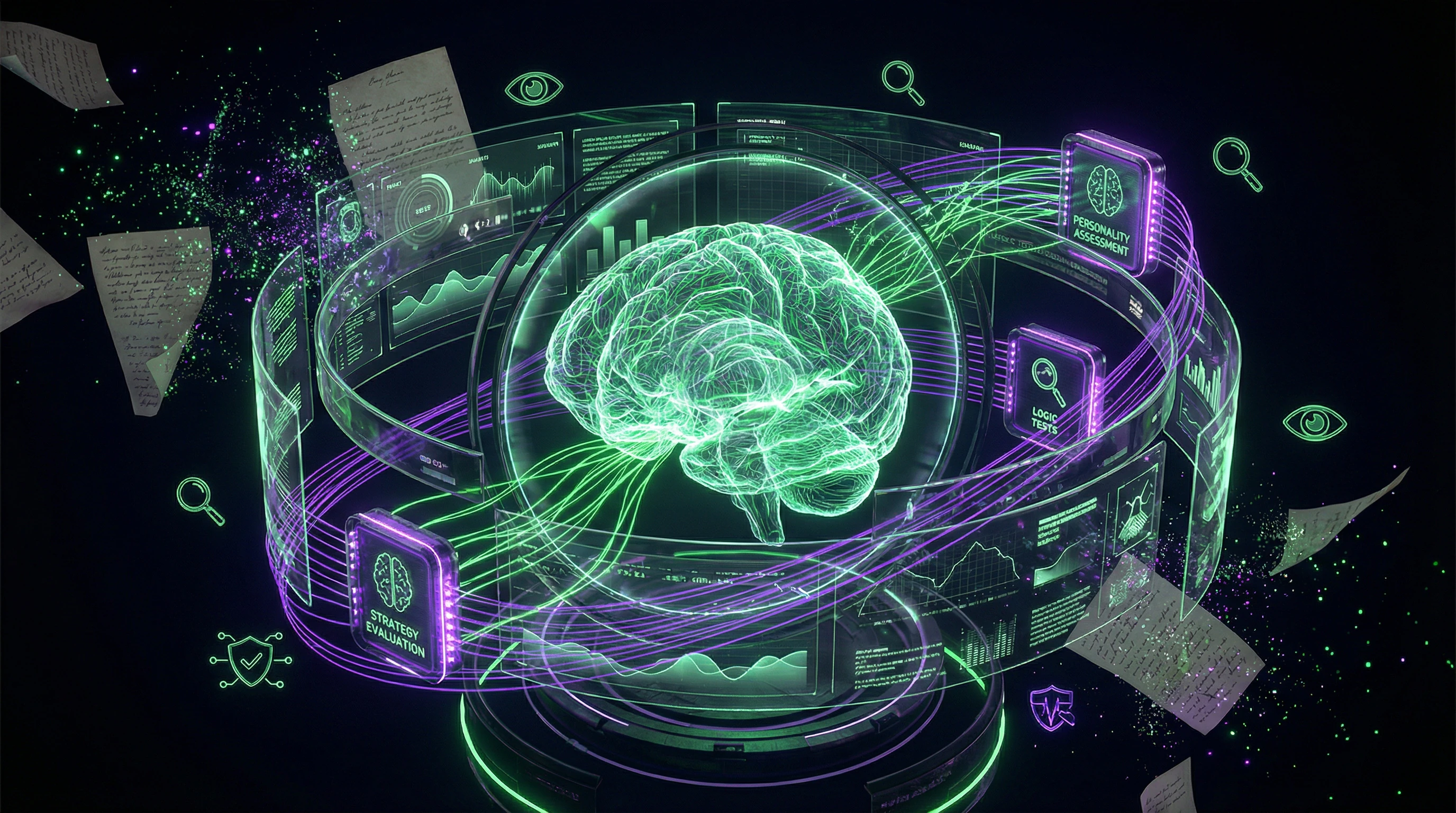
Mechanisms of Influence: Why Personality Predicts Critical Thinking Better Than IQ — and What This Means for Testing
The connection between personality traits and critical thinking is not just a statistical correlation. It's underpinned by specific psychological mechanisms that explain why some people think critically more easily than others. Learn more in the Mental Errors section.
🧩 Openness to Experience: Why Curiosity Matters More Than Logic
Openness to experience is a personality trait associated with curiosity, willingness to consider new ideas, and tolerance for ambiguity. Research shows a strong positive correlation between openness and critical thinking (S005, S008).
The mechanism is straightforward: people high in openness actively seek alternative explanations, aren't afraid to revise their beliefs, and perceive contradictory information as an interesting challenge rather than a threat. Logical abilities without openness become a tool for defending existing beliefs, not testing them.
⚙️ Conscientiousness: The Discipline of Thought
Conscientiousness includes organization, goal-directedness, and self-control. Its connection to critical thinking is less obvious but no less important (S005).
Critical thinking requires effort: you need to carefully verify sources, track logical chains, and resist cognitive biases. People low in conscientiousness are prone to cognitive laziness — they choose the first plausible explanation instead of searching for the best one. Conscientiousness provides the discipline necessary for systematic application of critical thinking.
| Personality Trait | Impact on Critical Thinking | Blocking Mechanism |
|---|---|---|
| Openness to Experience | Strong positive | Closed-mindedness, fear of uncertainty |
| Conscientiousness | Moderate positive | Cognitive laziness, superficial analysis |
| Emotional Stability | Moderate positive | Defensive reactions, anxiety under uncertainty |
| Intelligence (IQ) | Weak positive | Motivated reasoning, rationalization |
🌊 Neuroticism: Emotional Stability as Foundation
Neuroticism (emotional instability) shows a negative correlation with critical thinking (S005, S008). The mechanism is related to how high neuroticism amplifies defensive reactions: a person perceives criticism of their ideas as a personal threat, experiences anxiety when facing uncertainty, and is prone to catastrophizing.
In a state of emotional tension, critical thinking is blocked by defensive reactions. Emotional stability creates the psychological space for objective analysis.
🧬 Intelligence: Necessary but Insufficient
Intelligence correlates with critical thinking, but this connection is weaker than many expect (S005). High IQ provides cognitive resources — working memory, processing speed, capacity for abstraction.
But these resources can be used to rationalize biased beliefs just as effectively as to test them. The phenomenon of "motivated reasoning" shows that smart people are often better at defending erroneous ideas than less intelligent people. Intelligence without proper motivation and personality traits doesn't guarantee critical thinking.
🔁 Academic Motivation: The Hidden Factor
The role of academic motivation in developing critical thinking is often underestimated. Intrinsic motivation — the desire to understand, not just get the right answer — is critically important.
- Students with high intrinsic motivation process information more deeply
- Ask more questions and actively seek contradictions
- Extrinsic motivation (grades, approval) can harm critical thinking by focusing attention on outcomes rather than process
This explains the paradox: a student with high IQ but low intrinsic motivation often shows weak critical thinking because they use intelligence to minimize effort rather than deepen understanding.
Personality traits and motivation predict critical thinking better than IQ because they determine whether a person will actually apply their cognitive resources to test beliefs.
📊 What This Means for Testing
If personality predicts critical thinking better than logical abilities, then standard tests of logic and reasoning aren't measuring what matters. A test that doesn't account for openness to experience, conscientiousness, and emotional stability may identify logical abilities but not the capacity to apply them critically.
This means critical thinking can't be developed through logical exercises alone. Work with personality factors is needed: creating psychological safety (to reduce neuroticism), stimulating curiosity (to increase openness), developing thinking discipline (to increase conscientiousness), and reorienting motivation from extrinsic to intrinsic drivers.
Data Conflicts and Zones of Uncertainty: Where Researchers Disagree—and Why It Matters
Scientific consensus on critical thinking is far from complete. Significant disagreements exist that affect the practical application of measurement tools. More details in the Psychology of Belief section.
🧩 The Domain Specificity Debate
One of the key conflicts is whether critical thinking is a general ability or specific to particular knowledge domains. The philosophical approach underlying most tests assumes universality (S007).
But research shows that experts in one field may demonstrate weak critical thinking in another. This challenges the validity of general tests: perhaps we need domain-specific instruments for different professions and contexts.
If critical thinking is universal, why does a cardiologist believe in astrology while a physicist believes in homeopathy?
📊 The Ecological Validity Problem
Most critical thinking tests use abstract tasks far removed from real life. It's unclear how well results from such tests predict behavior in actual situations.
Tools for online environments attempt to address this problem by creating more realistic scenarios (S003, S007), but data on long-term predictive power remains insufficient. We may be measuring the ability to solve test problems rather than real critical thinking.
| Task Type | Context | Validity Problem |
|---|---|---|
| Abstract logic | Laboratory test | Doesn't predict decisions under stress or uncertainty |
| Real-world scenario | Online platform | Simulation may differ from actual choices |
| Professional task | Work context | Depends on experience and domain knowledge, not general thinking |
🔬 Disagreements About Trainability
A fundamental debate exists: can critical thinking be taught, or is it a relatively stable characteristic determined by personality and intelligence? Research shows that specialized methodological tools are necessary for development, but training effects often prove smaller than expected.
The connection with personality traits (S005, S008) suggests that developmental limits exist, determined by baseline characteristics. This is critically important for educational policy: if critical thinking is weakly trainable, investments in corresponding programs may be ineffective.
- Position 1: Critical thinking is a skill
- Can be developed through practice and methodology. Requires systematic training and feedback. Optimistic view of educational reforms.
- Position 2: Critical thinking is a personality trait
- Determined by cognitive styles, openness to experience, tolerance for ambiguity. Training has limited effect. Requires selection, not transformation.
🌐 Online vs Offline: Different Constructs?
Critical thinking in online environments may be a qualitatively different phenomenon than in traditional contexts. Methodology for online measurement includes specific tasks related to evaluating digital sources, filtering information, resisting manipulation (S007).
But it's unclear how closely these skills relate to traditional critical thinking. We may need two different constructs: "analog" and "digital" critical thinking. This directly relates to viral fakes and the ability to recognize them in real time.
- Verify whether researchers agree on the construct definition (what exactly we're measuring)
- Find studies that use different definitions—they're often incompatible
- Separate philosophical assumptions from empirical data
- Recognize that "consensus" may be an illusion created by citing the same authors
Cognitive Anatomy of the Myth: Which Mental Traps Make Us Believe in Test Universality — and How They're Exploited
Why do people so easily believe that one test can measure critical thinking? Behind this lie predictable cognitive biases. Learn more in the Statistics and Probability Theory section.
⚠️ Illusion of Quantitative Precision
When we see a number — a test score, percentile, level — we automatically perceive it as objective truth. This cognitive bias is called the "numerical anchoring effect."
A test gives you 75 points out of 100 — and you think your critical thinking is at 75% of maximum. But what is this maximum? Who defined it?
Numbers create an illusion of precision where enormous uncertainty actually exists. Test validity problems (S006) show that these numbers often lack a reliable foundation.
🕳️ Attribution Error: Personality as Noise Rather Than Component
We tend to think of critical thinking as a pure cognitive ability, perceiving personality influence as "noise" or "interference." But research shows the opposite: personality traits aren't interference, but an integral part of critical thinking (S005, S008).
- Openness to experience — willingness to reconsider beliefs
- Conscientiousness — discipline in fact-checking
- Emotional stability — resistance to cognitive biases
Ignoring personality in tests isn't enhancing measurement purity, but simplification that reduces validity.
🧠 Dunning-Kruger Effect in Metacognitive Assessment
People with low critical thinking often overestimate their abilities because they lack the metacognitive skills for accurate self-assessment. This creates a paradox: those who most need development are least aware of this need.
A test can worsen the problem if someone receives an average score and interprets it as "good enough" — without understanding the multidimensionality of critical thinking.
🎯 Manipulation Through Simplification
Commercial test creators often exploit people's desire for a simple answer to a complex question. The promise to "know your level in 15 minutes" works because we seek cognitive relief.
| What the test promises | What actually happens |
|---|---|
| Objective ability measurement | Snapshot of behavior in one situation |
| Universal standard | Culturally and contextually dependent assessment |
| Prediction of future competence | Weak correlation with real behavior |
This manipulation works because we want to believe a simple solution exists. Critical thinking requires constant work, while a test promises a final answer.
🔗 Social Validation and Consensus Effect
If a test is popular, we assume it's valid. If major companies or universities use it, this seems like proof of its reliability. But popularity isn't validity.
- Consensus effect
- We believe a claim if many people repeat it, even if it's unverified. Critical thinking tests spread through social networks and HR practices, creating an illusion of scientific consensus.
- Authority bias
- If a test is developed at a university or has a scientific name, we trust it more than its validity warrants. Systematic review requirements show that most studies don't pass basic quality checks.
💡 How Cognitive Architecture Is Exploited
Tests work because they use built-in features of our thinking: we seek patterns, believe numbers, trust authorities. Technology amplifies this vulnerability — algorithms recommend tests that confirm our beliefs.
Critical thinking isn't a score you can get once. It's a practice of constantly revisiting your own assumptions, and no test can measure this at a single point.
Understanding these traps is the first step toward protecting yourself from them. When you see a test, ask yourself: who created it, what does it actually measure, and why do I want to believe in its result?