What is hindsight bias and why it makes us blind to our own mistakes
Hindsight bias (also known as the "I-knew-it-all-along" effect) is a cognitive distortion in which people systematically overestimate their ability to predict an event after it has already occurred. The phenomenon was first described in the 1970s and has since become one of the most studied systematic errors in human thinking. Learn more in the Reality Validation section.
Key feature: the distortion happens automatically and affects the very memory of what you thought before the event. This isn't a conscious attempt to look smarter—it's an automatic memory reconstruction process that occurs without your conscious participation.
Your brain literally rewrites the past to match the present.
🧩 Three components of the cognitive trap
- Memory distortion
- After an event, you genuinely cannot remember what you thought before. The brain replaces old probability assessments with new ones "updated" by knowledge of the outcome.
- Illusion of inevitability
- What happened seems more predictable than it actually was. Events begin to look like logical consequences of previous conditions.
- Overestimation of predictive abilities
- You start believing you "always knew this," even though objective records of your predictions show otherwise.
⚠️ Why this isn't just "wisdom in hindsight"
fMRI studies show that when this bias activates, the same brain regions involved in memory consolidation and belief updating are engaged (S001). This is a biological process, not a psychological trick.
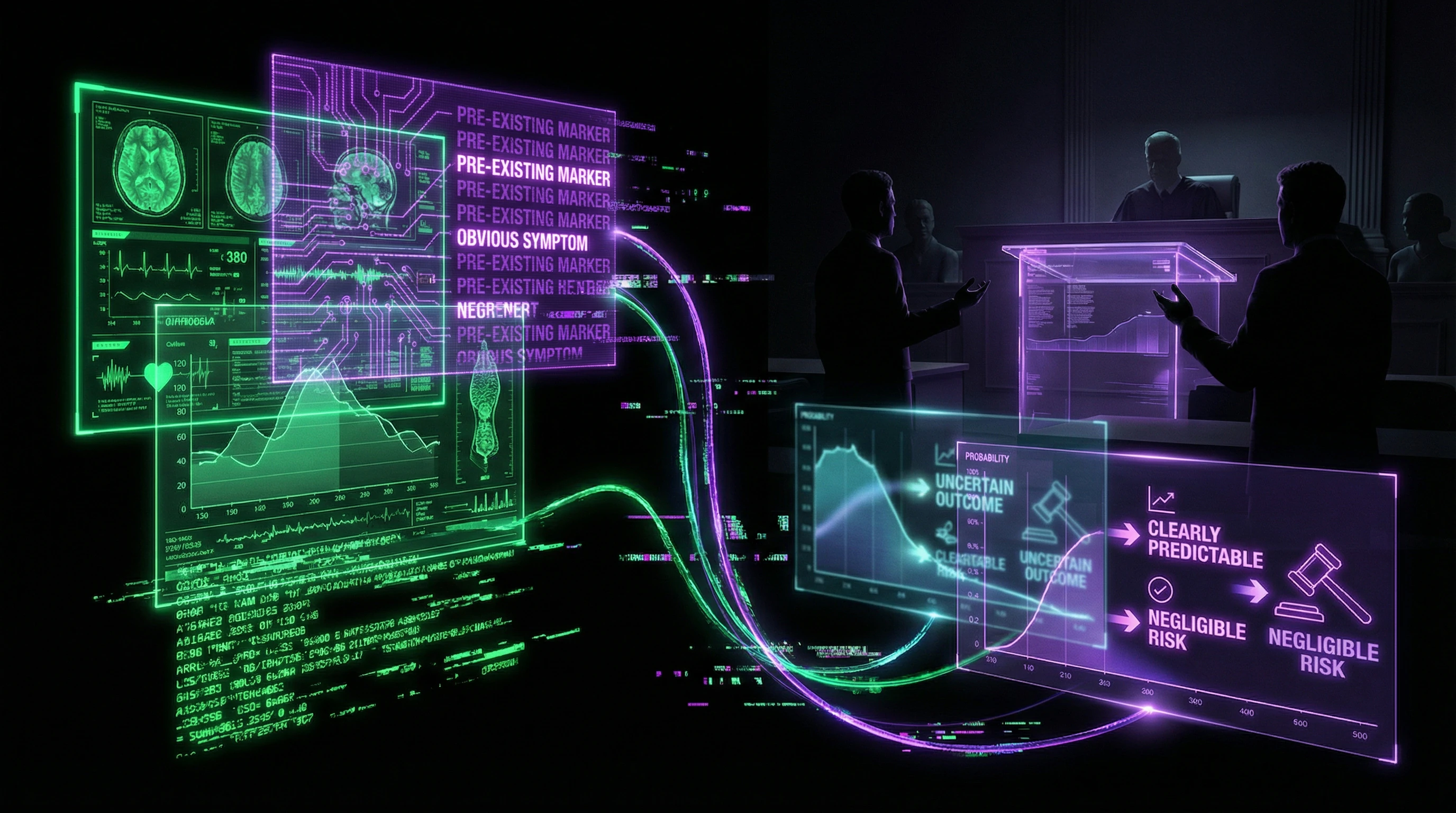
Hindsight bias is especially dangerous in professional contexts. Doctors overestimate the obviousness of a diagnosis after confirmation, judges consider verdicts inevitable when they see case outcomes, analysts are convinced that market crashes were predictable. Each time, the brain rewrites history.
🔎 Boundaries of the phenomenon: where distortion ends and learning begins
| Healthy reflection | Hindsight bias |
|---|---|
| Analyze the past while maintaining honest understanding of uncertainty | Believe the outcome was "obvious from the start" |
| Extract lessons without rewriting history | Block ability to see real uncertainty factors |
| Acknowledge you couldn't have foreseen this | Convinced of your own foresight |
The boundary between them is thin but critical. When you start believing in the inevitability of what happened, you lose the ability to learn from mistakes—because in your view, there were no mistakes.
Seven Arguments in Defense of "Retrospective Wisdom": Why the Bias Seems Useful
Hindsight bias is not merely an error. Evolution does not preserve useless mechanisms, which means this phenomenon has adaptive value in certain contexts. An honest analysis requires understanding why the bias is so persistent. More details in the Logical Fallacies section.
🧠 First Argument: Accelerating Learning Through Simplification
The brain creates simplified causal models after an event to apply them more quickly. Instead of storing all the details of uncertainty that existed before the event, you retain a "cleaned-up" version where the connection between cause and effect appears direct.
This conserves cognitive resources and accelerates learning under conditions of limited memory.
🔁 Second Argument: Maintaining Cognitive Consistency
Constant awareness of one's own erroneous predictions creates chronic cognitive dissonance. Hindsight bias "smooths out" contradictions by updating past beliefs to align with current knowledge.
This protects self-esteem and allows maintaining confidence in one's cognitive abilities—a function that may be necessary for psychological stability.
🧷 Third Argument: Social Function and Reputation
In group contexts, the ability to confidently explain "why this was inevitable" elevates status. People demonstrating such understanding are perceived as more competent.
Hindsight bias may be an adaptive mechanism for maintaining expert reputation in conditions where acknowledging uncertainty reduces trust.
⚙️ Fourth Argument: Efficiency in Stable Environments
In relatively stable and predictable environments where patterns repeat, simplified retrospective models often work. If most events follow regular patterns, ignoring elements of randomness does not lead to systematic errors.
- High-regularity environment → retrospective model is accurate
- High-randomness environment → retrospective model is misleading
- The mechanism's adaptiveness depends on the type of environment in which it evolved
🧬 Fifth Argument: Side Effect of Adaptive Belief-Updating Mechanism
Hindsight bias may be an inevitable side effect of a more fundamental mechanism—Bayesian belief updating. When the brain integrates new information into the existing world model, this process "contaminates" memory of previous beliefs.
The cost of this bias may be less than the benefit of rapid and efficient model updating.
🕳️ Sixth Argument: Protection from Paralyzing Uncertainty
Full awareness of future uncertainty and memory of past errors can lead to cognitive paralysis. Hindsight bias creates an illusion of control and predictability necessary for decision-making under uncertainty.
This illusion may be functionally useful—it enables action when complete information is unavailable.
🧭 Seventh Argument: Cultural and Narrative Function
Stories about the past are always simplified and retrospectively logical. This makes them memorable and transmissible across generations. If historical narratives preserved all the complexity and uncertainty of the moment events occurred, they would be too cumbersome for effective cultural transmission.
Hindsight bias is a built-in mechanism for creating transmissible cultural models, even if they distort reality.
Empirical Foundation: What Four Decades of Hindsight Bias Research Reveal
Hindsight bias is one of the most thoroughly studied cognitive phenomena. Systematic reviews and meta-analyses demonstrate the robustness of the effect across diverse contexts, populations, and methodologies. For more details, see the Scientific Method section.
The methodology described in (S001), (S002), (S003) for model evaluation also applies to analyzing cognitive biases: hindsight bias is tested by comparing predicted and actual discrepancies between initial estimates and retrospective recollections.
📊 Classic Experiments and Effect Size
The basic paradigm involves three stages: participants estimate outcome probabilities, learn the result, then recall their initial estimates. Recollections systematically shift toward the known outcome.
Meta-analyses show average effect sizes ranging from d = 0.4 to d = 0.7—a medium to large effect in psychological research (S004), (S005).
🧪 Neurobiological Correlates: What Happens in the Brain
fMRI studies have identified activation in the medial prefrontal cortex and hippocampus—regions critical for memory consolidation and belief updating. Strong hindsight bias is associated with heightened activity in these regions during attempts to recall initial estimates.
The distortion is linked to the reconstructive nature of memory, not conscious manipulation. The brain doesn't store the past like a video recording—it reconstructs it, fitting current knowledge into the narrative.
🔎 Clinical and Professional Contexts: Where the Cost of Error Is Highest
Physicians who know the diagnosis systematically overestimate the obviousness of symptoms during retrospective analysis. Judges and jurors who know the outcome of a defendant's actions assess those actions as more predictably dangerous than they would have appeared without outcome knowledge.
| Context | Manifestation of Hindsight Bias | Consequence |
|---|---|---|
| Medicine | Overestimation of symptom obviousness | Unfair assessment of medical error |
| Law | Overestimation of danger predictability | Systematic injustice in culpability assessment |
| Finance | Illusion of market predictability | Overestimation of forecasting ability |
📈 Investment Decisions and Financial Markets
Investors watching stock movements often claim they "knew it would happen," though their actual pre-event actions demonstrate otherwise. This distortion prevents honest analysis of investment strategies and leads to overestimation of forecasting abilities.
Result: increased risk of future losses through excessive confidence in one's own predictions.
🧾 Educational Context: Impact on Learning
Students studying material and learning correct answers systematically overestimate how well they knew the material before receiving feedback. This leads to inadequate exam preparation and an illusion of competence, especially in domains requiring understanding of complex causal relationships.
- Illusion of Competence
- A student solves a problem, sees the correct answer, and thinks: "I knew that." In reality, they didn't know—they learned. These are different processes.
- Inadequate Preparation
- Overestimating one's knowledge leads to less time spent reviewing and lower exam performance.
🧬 Individual Differences: Who Is More Vulnerable
Hindsight bias affects everyone, but its magnitude varies. People with higher need for cognitive closure demonstrate stronger bias (S006), (S007).
Paradox: experts in certain domains may be more vulnerable because their deep knowledge enables them to more easily construct plausible retrospective explanations. Competence becomes a tool for self-deception.
- High need for cognitive closure → stronger hindsight bias
- Deep expertise → better ability to construct retrospective explanations
- Result: experts are often more confident in their erroneous recollections than novices
The connection to the scientific method is clear: hindsight bias undermines the ability to honestly evaluate one's own hypotheses and predictions. This is especially dangerous in contexts where experts venture beyond their competence boundaries, relying on false memories of their own predictive ability.
Mechanisms of Cognitive Distortion: Why the Brain Rewrites the Past
Hindsight bias arises not from a single process, but from the interaction of several fundamental features of human cognition. Understanding these mechanisms is the first step to detecting them. More details in the Sources and Evidence section.
🔁 Reconstructive Nature of Memory
Human memory doesn't work like a video recording. Each time you recall an event, you reconstruct the memory from fragments, using current knowledge and beliefs to fill in the gaps.
When you learn the outcome of an event, this new knowledge becomes part of the reconstruction context and inevitably influences what you "remember" about your past assessments. The brain doesn't distinguish between the original memory and its rewritten version.
🧷 Automatic Updating of Causal Models
When you learn that event X led to outcome Y, your causal model automatically updates, strengthening the connection between X and Y. This happens quickly and without conscious control.
The brain is optimized for rapid learning, not for preserving the historical accuracy of its past beliefs. The update "contaminates" your memory of how strong this connection seemed before you received the outcome.
⚙️ Anchoring Effect and Information Availability
Knowledge of the outcome creates a powerful anchor that influences all subsequent assessments. Information about the outcome makes certain explanations and causal chains more available in memory.
| When you try to recall | What happens | Error |
|---|---|---|
| Your past beliefs | Explanations consistent with the known outcome become activated | You mistake availability for evidence that you "always thought that way" |
| Causal connections | Those that explain what happened are most available | You forget alternative explanations you considered earlier |
🧩 Motivated Cognition and Self-Esteem Protection
While hindsight bias occurs automatically, its intensity is amplified by the motivation to maintain positive self-esteem. Believing you "knew it all along" protects you from acknowledging a forecasting error.
- Personal significance of the event
- The distortion is stronger for events that affect your professional competence or carry emotional weight. Self-esteem protection becomes a priority.
- Professional reputation
- Experts experience more pronounced hindsight bias in their area of expertise—admitting error threatens status.
- Social context
- When an error might be noticed by others, the motivation to rewrite the past increases. Public error activates defensive mechanisms more strongly than private error.
These four mechanisms work simultaneously and reinforce each other. Reconstructive memory creates conditions for distortion, automatic updating of causal models triggers it, the anchoring effect amplifies it, and motivational factors determine its intensity.
Conflicts in the Data: Where Research Diverges and What It Means
Consensus on the existence of hindsight bias does not mean agreement on the boundary conditions of the effect, its moderators, and mitigation strategies. Research diverges at three critical points. More details in the Media Literacy section.
🔎 Debates on the Role of Expertise
Does expertise protect against hindsight bias or amplify it? One group of studies shows that experts are less vulnerable: their precise causal models create a barrier against distortion.
Another group demonstrates the opposite: deep knowledge allows experts to construct more convincing retrospective explanations, making them more vulnerable. Resolving the contradiction depends on the type of expertise and the nature of the task—there is no universal answer.
An expert can be simultaneously protected from naive distortion and vulnerable to the temptation to create a logically coherent narrative chain after the fact.
🧪 Contradictions in the Effectiveness of Debiasing Strategies
Simple warnings about hindsight bias reduce the effect in some studies and prove ineffective or counterproductive in others (S001). The most robust results have been obtained for active strategies: generating alternative explanations and considering counterfactual scenarios.
But even here, effect sizes vary. This indicates that effectiveness depends on context, participant motivation, and the precise implementation of the intervention.
| Strategy | Result Consistency | Limitation |
|---|---|---|
| Warning about the effect | Low | Often ineffective without active engagement |
| Generating alternatives | Medium–high | Requires cognitive resources and motivation |
| Counterfactual thinking | Medium–high | Effect sizes vary by context |
📊 Uncertainty in Neurobiological Mechanisms
fMRI studies have identified brain regions associated with hindsight bias (S002), but causal relationships remain unclear. Is activation of the medial prefrontal cortex a cause of the distortion or its consequence?
- Interpretation Problem
- Correlation between activation and behavior does not reveal mechanism. Neurobiological signals may reflect multiple processes: memory, narrative construction, social self-presentation.
- Neurochemical Black Box
- Which specific neurotransmitters and signaling pathways mediate the effect? This remains unknown, complicating the development of pharmacological or neuromodulatory interventions.
These three conflicts are not accidental. They reflect a fundamental problem: hindsight bias is not a monolithic phenomenon, but a family of processes that vary by mechanism, context, and vulnerability to intervention. Attempting to find a universal answer is doomed to fail.
Cognitive Anatomy of Manipulation: How Hindsight Bias Is Used for Persuasion
Hindsight bias is a powerful persuasion tool precisely because it operates automatically and invisibly. Understanding its mechanisms is critical for developing cognitive defenses. More details in the Neopaganism section.
🧩 The "I Told You So" Technique: Creating a False Forecaster Reputation
An "expert" makes numerous vague predictions, then after an event selectively reminds audiences of those that can be interpreted as correct. Listeners, lacking precise records of all forecasts, believe the expert genuinely predicted the event, though objective analysis would show accuracy no better than chance.
Forgetting details of past predictions isn't a memory bug—it's a manipulation feature. Without written documentation, all predictions get rewritten in hindsight.
⚠️ Narrative Reconstruction: Turning Randomness into Inevitability
After an event, a story is constructed presenting the outcome as a logical consequence of preceding factors. All elements of randomness, alternative paths, and moments of uncertainty are removed from the narrative.
The audience, hearing this "cleaned" version, experiences hindsight bias and begins believing the outcome was predictable. This is especially effective in political and historical discourse, where event complexity allows construction of any causal chain.
| Event Element | In Reality | In Manipulator's Narrative |
|---|---|---|
| Randomness | Present, influences outcome | Removed, hidden |
| Alternative Paths | Multiple possible developments | Single "logical" path |
| Uncertainty | High at decision point | Retrospectively—zero |
| Audience Perception | Event unpredictable | Event was obvious |
🧠 Exploitation in Sales and Marketing
Salespeople present successful client case studies as if success were an obvious result of using the product. Potential clients, experiencing hindsight bias when analyzing cases, underestimate the role of randomness and specific contextual factors.
This creates the illusion that purchasing the product guarantees similar results—though in reality, cases are selected from numerous failed attempts that simply aren't shown.
🔁 Use in Training and Consulting
Instructors and consultants present business cases or historical examples where the outcome is known, and ask audiences to analyze decisions. Since the audience knows the result, analysis is inevitably distorted by hindsight bias.
- The listener sees initial data and known outcome simultaneously
- The brain automatically rewrites the logic: "the outcome was obvious"
- A false sense of understanding and competence emerges
- This feeling doesn't transfer to real situations with uncertain outcomes
- The person overestimates their ability to predict and make decisions
The effect intensifies if the instructor emphasizes the "logic" of the decision in hindsight—this is direct suggestion of hindsight bias to the audience.
All four techniques operate on one principle: they exploit the gap between how we remember the past and what it actually was. The manipulator controls the narrative, and our brain automatically rewrites history to match that narrative. Defense requires not better memory, but systematic documentation of predictions and outcomes before they're known.
Cognitive Self-Check Protocol: How to Detect Hindsight Bias in Real Time
Completely eliminating hindsight bias is impossible—it's built into the architecture of memory and learning. The protocol's goal is to create a system of checks that detects the distortion and compensates for its influence on decisions.
✅ Step One: Prospective Documentation of Assessments
The most effective strategy is to record assessments and forecasts before the outcome becomes known. A decision journal should contain: (1) the decision itself, (2) expected outcomes and their probability, (3) sources of uncertainty.
This record becomes an objective anchor against retrospective memory distortion. When the outcome is known, you can compare the original forecast with what actually happened, instead of relying on rewritten memory.
🧭 Step Two: Active Generation of Alternative Scenarios
After the outcome is known, but before analyzing causes, spend time generating alternative scenarios. Ask yourself: what other outcomes were possible under the same conditions? What factors could have led to the opposite result?
This exercise breaks the automatic connection between "what happened" and "what was inevitable." It restores a sense of contingency—the understanding that history could have unfolded differently.
⚙️ Step Three: Causality Verification Protocol
- Write out the explanation that seems obvious to you.
- For each element of the explanation, find evidence that existed BEFORE the outcome.
- If evidence appeared only after the outcome—this is a red flag for hindsight bias.
- Check whether your explanation would also explain the opposite outcome (if it had occurred).
The last point is critical: if an explanation works equally well for any outcome, it explains nothing. This is a sign that you've rewritten history in hindsight.
🔍 Step Four: Social Verification
Share your explanation with someone who doesn't know the outcome. Ask them to assess how convincing this explanation is based only on information that was available before the event.
If the explanation sounds forced or implausible without knowledge of the outcome, but seems obvious after it—this is a classic sign of hindsight bias. The scientific method requires precisely this kind of prior verification.
Hindsight bias thrives in isolation. When an explanation must convince someone who doesn't know the outcome, its weakness becomes visible.
📋 Step Five: Tracking Forecasting Errors
Keep a registry of cases where your original forecast turned out to be wrong. Not for self-flagellation, but for calibration. Analyze: what types of events do you systematically underestimate? Which do you overestimate?
This registry becomes an early warning system. When you notice you're falling into a familiar trap again, you can activate additional checks. This relates to the principle of parsimony—but in reverse: complexity often conceals hindsight rewriting.
| Hindsight Bias Signal | What to Check |
|---|---|
| "I always knew that" | Is there written evidence from before the event? |
| Explanation works for any outcome | Could it predict the opposite result? |
| Explanation sounds obvious | Would it convince someone without knowledge of the outcome? |
| You see "hidden patterns" | Were these patterns visible before the event? |
The protocol works not because it eliminates hindsight bias, but because it creates friction between distortion and reality. Each check is a point where the illusion of inevitability can be exposed.