
What chemtrails are in conspiracy theorists' minds—and why this theory became a global phenomenon
The chemtrails theory (chemical trails) claims that visible white streaks behind aircraft are not natural condensation trails but the result of deliberate spraying of chemical or biological substances. Proponents attribute various goals to these operations: from weather control and climate geoengineering to mass poisoning of populations or mind manipulation. More details in the Pharma Distrust section.
The conspiratorial narrative is built on four basic claims: ordinary condensation trails disappear quickly, while "chemtrails" persist for hours; modern aircraft leave trails more frequently than before; sample analyses show elevated levels of aluminum, barium, and strontium; governments are hiding the truth about spraying programs (S009).
These claims spread through social media and YouTube channels, forming a stable community of believers with their own logic of verification and fact interpretation.
⚠️ Global spread and information environment
The theory has achieved global distribution, especially in English-speaking countries, but is actively penetrating Russian-speaking spaces. Public communication around climate is known for bias and distortion of "scientific facts" (S011).
Information quality on YouTube varies: materials are often scientifically inaccurate, biased, or potentially harmful (S011). This creates an environment where conspiratorial narratives compete with scientific explanations on equal visibility terms.
🔎 Psychological mechanisms of appeal
- Simplicity of explanation
- Complex atmospheric phenomena are reduced to one visible cause—spraying. This reduces cognitive load.
- Status of "secret knowledge"
- The theory creates a sense of belonging to an enlightened minority that sees what is hidden from the masses.
- Concretization of anxiety
- Diffuse anxiety about health, climate, and control is directed toward a visible, tangible "threat" in the sky.
- Illusion of control
- "Exposing" hidden forces provides a sense of agency and understanding of what's happening.
For meaningful participation in discussion, it is critically important to argue based on the best available scientific evidence base (S011). Without this anchor, any explanation remains a subjective opinion among other opinions.
The chemtrails theory is not merely an error in facts, but a system that exploits real gaps in scientific literacy and legitimate questions about transparency of government programs.

Steel Version of Arguments: Seven Strongest Claims from Chemtrail Proponents
For honest analysis, we must present opponents' arguments in their most convincing form — this is called the "steel version" (steelman) of an argument. Let's examine seven of the most frequently used and seemingly persuasive claims from chemtrail theory supporters. More details in the Pseudo-Debunkers section.
⚠️ First Argument: Visual Differences Between Trails
Theory proponents claim there's a visible difference between "normal" contrails that dissipate quickly and "chemtrails" that persist for hours and expand into cirrus clouds. On the same day in the same sky, you can observe aircraft leaving different types of trails — this seems to prove differences in emission composition.
Direct visual observation creates convincing evidence for unprepared observers, but fails to account for the influence of humidity, temperature, and flight altitude on trail visibility.
⚠️ Second Argument: Increased Trail Frequency in Recent Decades
Many supporters note that in their childhood, aircraft trails were rare or dissipated quickly, whereas now the sky is often covered with a grid of long-lasting trails. This change is interpreted as proof of spraying programs beginning, rather than as a result of increased air traffic intensity.
The argument exploits a real observation — the sky has indeed changed over the past 30–40 years, but the cause lies in air traffic growth, not in changes to fuel composition.
⚠️ Third Argument: Chemical Analysis of Water and Soil Samples
Activists regularly publish analysis results from rainwater, snow, and soil showing elevated concentrations of aluminum, barium, strontium, and other metals. The presence of laboratory analyses creates an illusion of scientific validity.
| What Theory Supporters See | What's Actually Happening |
|---|---|
| High metal concentrations = spraying | Metals are present in the atmosphere naturally (dust, volcanoes, industry) |
| Analysis conducted by independent laboratory | Often lacks quality control, calibration, comparison with background levels |
| Exceeding "norms" = proof | Norms are undefined; comparison often made with arbitrary figures |
⚠️ Fourth Argument: Existence of Real Geoengineering Programs
Supporters point out that climate management technologies actually exist and are discussed in the scientific community (S006). The existence of patents for aerosol spraying systems and scientific papers on stratospheric sulfate injection is used as proof that "chemtrails" are the implementation of these technologies.
The existence of scientific research on geoengineering possibilities doesn't mean it's already deployed at scale, covertly, and without coordination with the international community.
⚠️ Fifth Argument: Absence of Official Acknowledgment
Silence or denial from governments and airlines is interpreted as proof of conspiracy. Supporters claim that if spraying weren't happening, authorities would conduct open investigations and public explanations.
This argument creates a logical trap: any refutation becomes confirmation, and silence becomes evidence. Distrust of government institutions amplifies the effect (see mechanisms of conspiratorial thinking).
⚠️ Sixth Argument: "Insider" Testimonies
Stories circulate online allegedly from pilots, aviation technicians, and military personnel who claim to have seen special spraying equipment or received secret instructions. These anonymous testimonies create the impression of insider information.
- Why This Argument Seems Convincing
- Appeal to authority (alleged eyewitness) + anonymity (protection from "persecution")
- Cognitive Trap
- Impossible to verify the source; anonymity allows fabricating any story without consequences
- Scale of the Problem
- If the program were real, thousands of people would be involved — information leaks would be inevitable, but there are none
⚠️ Seventh Argument: Correlation with Health Problems
Activists link increased trail frequency in the sky with rising rates of respiratory diseases, allergies, and other conditions. Temporal correlation is interpreted as causal relationship, creating a powerful emotional argument based on personal experience (S007, S008).
Morbid curiosity and fear of threats are powerful cognitive drivers that make correlation seem more convincing than it actually is. Rising disease rates are explained by air pollution, smoking, population aging, and improved diagnostics, not by spraying unknown substances.
Scientific Evidence Base: What Atmospheric Physics Research Says About Condensation Trails
Condensation trails (contrails, from condensation trails) are a well-studied atmospheric phenomenon whose physics is described in tens of thousands of scientific papers. Let's examine the evidence base that explains all observable characteristics of aircraft trails without invoking the chemical spraying hypothesis. More details in the section Chipization and World Government.
🧪 Physical Mechanism of Contrail Formation
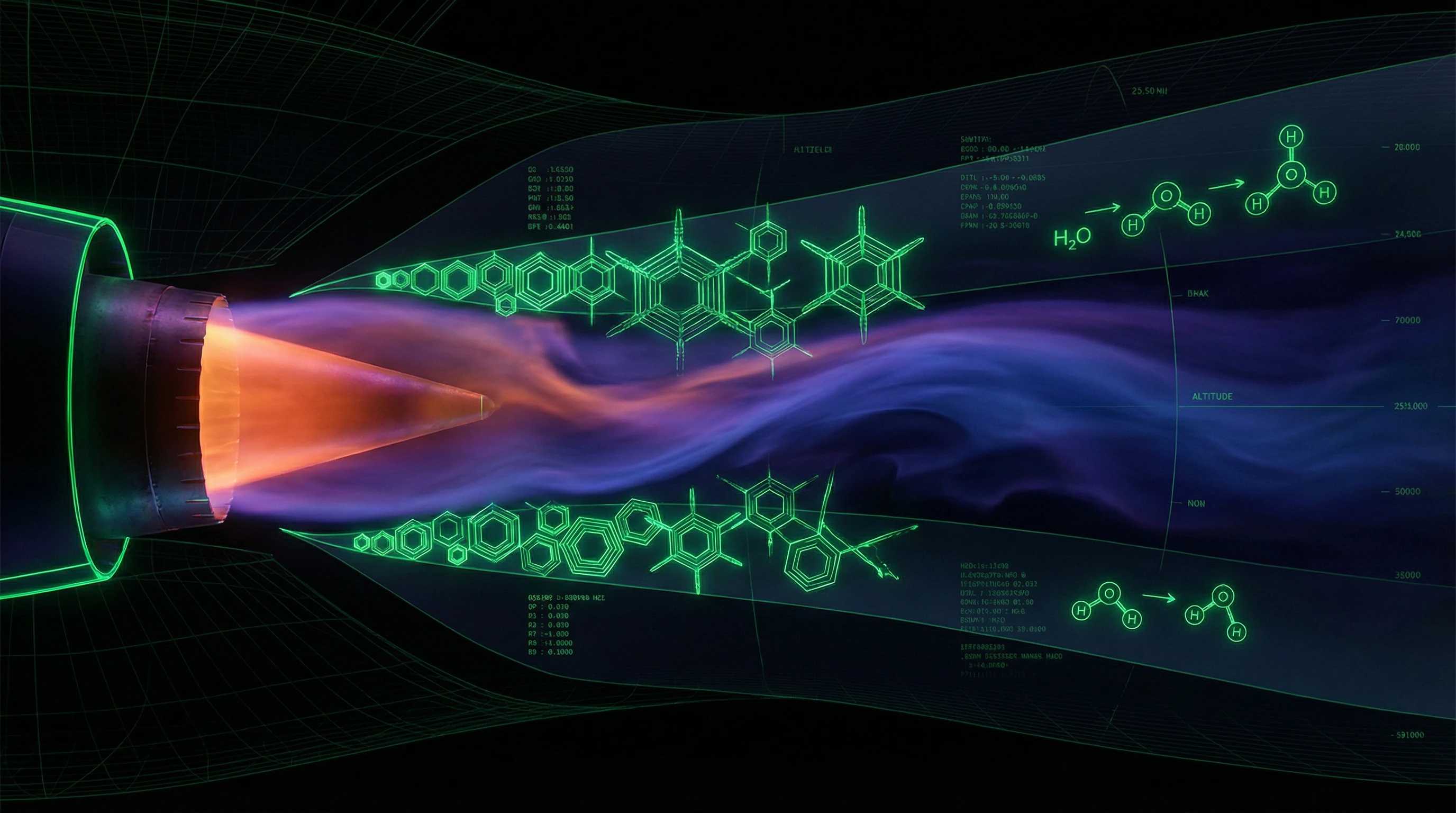
Contrails form when hot exhaust gases from jet engines, containing water vapor, mix with cold ambient air at altitude. When ambient air temperature is below -40°F and humidity is sufficient, water vapor instantly condenses and freezes, forming billions of tiny ice crystals. This process is identical to how visible breath forms on a frosty day, except it occurs at altitudes of 26,000-40,000 feet (S009).
🔬 Why Some Trails Disappear Quickly While Others Persist for Hours
The duration of a contrail's existence is entirely determined by atmospheric conditions at flight altitude: temperature, humidity, and air mass stability. In dry air, ice crystals quickly sublimate (transition from solid to gaseous state), and the trail disappears within minutes.
In moisture-saturated air, crystals not only persist but also grow, attracting additional moisture, leading to trail expansion and transformation into cirrus clouds (cirrus aviaticus), which can exist for hours (S009). Satellite attribution of trails is a complex task due to limited spatial and temporal resolution, as trails often drift and deform before detection (S010).
- Dry air → crystal sublimation → disappearance within minutes
- Humid air → crystal growth → transformation into clouds → persistence for hours
- Factors: temperature, humidity, air mass stability
📊 Climate Impact of Contrails: Scientific Consensus
Non-carbon effects of aviation, especially contrails, are a significant factor in its climate impact (S010). Contrails and the cirrus clouds formed from them do indeed affect Earth's radiation balance: they reflect part of solar radiation back into space (cooling effect) and trap infrared radiation from Earth's surface (warming effect).
At night, the warming effect predominates; during the day, the balance depends on many factors. The cumulative effect of aviation contrails is estimated as a positive contribution to global warming, comparable to the effect of CO₂ emitted by aviation.
🧾 Chemical Composition of Exhaust Gases: What Aircraft Actually Emit
Jet engine exhaust gases contain combustion products of aviation kerosene: water vapor (H₂O), carbon dioxide (CO₂), nitrogen oxides (NOₓ), small amounts of unburned hydrocarbons, sulfur oxides (SOₓ), and solid soot particles. Exhaust composition is determined by combustion chemistry and does not contain aluminum, barium, strontium, or other substances attributed to "chemtrails."
Any metals in exhaust are present in trace amounts and originate from fuel impurities or engine component wear (S009).
🔎 Why Trail Frequency Has Increased: Aviation Statistics
The observed increase in the number of contrails in the sky is fully explained by the growth in aviation traffic intensity. Since the 1980s, global air traffic has grown more than fivefold: from approximately 10 million flights per year in the 1980s to over 40 million by 2019.
| Factor | Impact on Trail Frequency |
|---|---|
| Air traffic growth (×5 since 1980s) | Direct increase in number of trails |
| Engine efficiency | Lower exhaust temperatures → higher condensation probability |
| Climate change | Increased humidity at flight altitudes in some regions |
🧪 Water and Soil Sample Studies: Methodological Problems
Analyses presented by anti-chemtrail movement activists contain systematic methodological errors. Aluminum is the third most abundant element in Earth's crust (about 8% by mass) and naturally occurs in soil, water, and dust. Barium and strontium are also naturally occurring elements.
- "Elevated" concentrations
- Often compared to arbitrary "norms" rather than regional background levels—a methodological error that artificially inflates results.
- Lack of contamination control
- Samples are taken without following protocols, leading to contamination of specimens with foreign substances.
- Absence of statistical analysis
- No comparison with control samples from regions with low aviation traffic intensity, which precludes establishing causation (S009).
📊 Geoengineering: Distinction Between Research and Implementation
Indeed, the scientific community is studying the possibilities of climate management through Stratospheric Aerosol Injection (SAI) as a potential method for mitigating global warming. However, all these studies remain at the stage of theoretical modeling and small laboratory experiments.
There is no operational program for large-scale aerosol spraying in the stratosphere. Such a program would require specialized aircraft capable of flying at altitudes of 60,000-80,000 feet (higher than regular commercial flights), special equipment, and would be impossible to conceal due to the scale of operations (S011).
Mechanisms of Causality: Why Correlation Doesn't Mean Causation in the Case of Chemtrails
One of the fundamental principles of scientific thinking is distinguishing between correlation (joint variation of two variables) and causation (cause-and-effect relationship). Chemtrail theory systematically violates this principle, interpreting any coincidences as proof. More details in the Thinking Tools section.
Temporal correlation is not proof of causation. It's a trap of selective attention: we notice coincidences and forget about thousands of non-coincidences.
🧬 False Causation: Growth in Air Traffic and Changes in Population Health
Over the past 40 years, two parallel processes have occurred: a sharp increase in air traffic intensity and changes in the epidemiological picture in developed countries (rise in allergies, autoimmune diseases, neurodegenerative conditions). These processes correlate in time but have different causes.
The rise in allergies is linked to the "hygiene hypothesis," changes in the microbiome, air pollution from ground sources, and dietary changes. The increase in neurodegenerative diseases is largely explained by increased life expectancy (S007). Attributing these changes to contrails ignores multiple established risk factors.
| Process | Temporal Correlation with Air Traffic | Established Causes |
|---|---|---|
| Rise in Allergies | Yes, since 1980s | Microbiome, diet, ground pollution, hygiene |
| Autoimmune Diseases | Yes, since 1990s | Genetics, infections, lifestyle, stress |
| Neurodegeneration | Yes, since 2000s | Population age, genetics, environmental factors |
🔁 Confounders: Third Variables Explaining Observed Correlations
A confounder is a variable that simultaneously affects two other variables, creating a false appearance of a relationship between them. In the case of chemtrails, such a confounder is general technological and economic progress: it led to both growth in air traffic and industrialization, urbanization, and lifestyle changes.
All these factors independently affect population health and environmental conditions. Isolating the effect of contrails from these confounders requires complex epidemiological design, which is absent in conspiracy narratives.
- Confounder
- A variable creating false correlation between two phenomena. Example: economic growth → air traffic AND industrialization → pollution. Air traffic and pollution correlate, but the cause is economic growth, not air traffic.
- Why This Is a Trap
- The conspiracy narrative selects one variable (air traffic) and ignores the rest. This creates an illusion of a simple cause for a complex phenomenon.
- How to Test
- Find countries with high air traffic but low levels of other confounders (industrialization, urbanization). If health there is no worse — it's the confounder, not air traffic.
🧷 Temporal Sequence: The Problem of Reverse Causation
To establish a cause-and-effect relationship, the presumed cause must precede the effect in time. Many "evidence" from chemtrail theory supporters violates this principle: people first learn about the theory, then begin paying attention to trails in the sky and interpreting their well-being through the lens of this knowledge.
This creates reverse causation: it's not the trails causing symptoms, but knowledge of the theory causing selective attention to trails and attribution of symptoms. The mechanism is called confirmation bias — we notice facts confirming the hypothesis and ignore contradictory ones.
- Person learns about chemtrail theory
- Begins noticing white streaks in the sky (always there, but didn't notice)
- Interprets headache or cough as a consequence of "spraying"
- Attributes cause retroactively: "It's the chemtrails!"
- Conclusion: theory confirmed (actually — attention bias)
Conflicts in Sources and Boundaries of Scientific Certainty
Honest scientific analysis requires acknowledging areas of uncertainty and differences in data interpretation. Let's examine where real scientific discussions exist and where consensus is complete. More details in the section Cognitive Biases.
🧾 Areas of Scientific Consensus: What Is Not Disputed
Absolute consensus covers four points: the physical mechanism of contrail formation is fully understood and experimentally confirmed; the chemical composition of jet engine exhaust is well-studied and contains no substances attributed to "chemtrails"; variability in contrail persistence is fully explained by atmospheric conditions; there is no evidence of large-scale chemical spraying programs from commercial or military aircraft (S009, S011).
🔎 Areas of Active Research: Where Science Continues to Refine Details
Scientific discussions continue in four directions: precise quantitative assessment of the climate impact of aviation contrails (uncertainty factor of 2–3); optimal strategies for minimizing contrail formation through altitude and route changes; long-term effects of increased cirrus cloud cover from aviation on regional climate; development of alternative fuels that reduce contrail formation (S010).
These discussions concern quantitative details and optimization, not the fundamental nature of the phenomenon.
⚠️ How Scientific Uncertainty Is Exploited by Pseudoscience
Conspiracy narratives systematically exploit normal scientific uncertainty, presenting it as proof of conspiracy or information suppression.
The scientific basis for climate change and climate experts have been attacked by various counter-experts with the aim of creating doubt in the evidence base and discrediting genuine experts (S011).
Public communication of scientific consensus on climate change is distorted and sometimes presented as if no scientific consensus exists (S011). This creates an illusion of equivalence between consensus and marginal positions.
- Mechanism of Uncertainty Exploitation
- Conspiracy theorists take real research areas (such as precise measurement of aviation's climate impact) and reinterpret them as "hidden facts" or "scientists' admission of chemtrails." The boundary between "we don't know precisely" and "this is being hidden" is deliberately erased.
- Asymmetry of Proof
- An enormous amount of evidence is required to prove the absence of a program, but a single coincidence or ambiguity is sufficient to claim its existence. This asymmetry is built into the logic of conspiratorial thinking (S004).
- Social Function of Uncertainty
- Uncertainty in science is perceived as weakness rather than as the normal state of knowledge. This allows alternative narratives to position themselves as "honest" or "brave" in contrast to supposedly closed science (S002).
The distinction between scientific discussion and conspiratorial doubt lies in method: scientists refine details through experiment and data, conspiracy theorists create alternative explanations through interpretation of absence of evidence.
Cognitive Anatomy of Delusion: What Mental Traps the Chemtrail Theory Exploits
The chemtrail theory succeeds not because it's based on evidence, but because it masterfully exploits systematic features of human cognition—cognitive biases that evolutionarily aided survival but create vulnerabilities to manipulation (S001).
🕳️ Hyperactive Agency Detection: Seeing Intentions Where None Exist
The human brain is evolutionarily tuned to detect agents (beings with intentions) even with minimal cues. This is an adaptation that helped ancestors avoid predators: better to mistake a rustle in the bushes for a tiger than to miss a real threat. More details in the Religions section.
The chemtrail theory exploits this tendency by attributing intentional action (spraying) to a natural physical process (condensation). Visible trails in the sky are interpreted not as a byproduct of aviation, but as a deliberate operation.
🧩 Illusion of Patterns: Apophenia and Pareidolia in the Sky
Apophenia is the tendency to see meaningful patterns in random data. When multiple aircraft cross the sky in different directions, their trails form complex geometric patterns—grids, parallel lines, intersections.
To a brain tuned for pattern detection, these patterns seem too orderly to be random. In reality, they're simply the result of overlapping independent flight paths in limited airspace.
⚠️ Confirmation Bias: Selective Attention to Confirming Data
Once someone accepts the chemtrail theory, confirmation bias kicks in: they begin noticing and remembering cases that align with the theory (long-lasting trails, feeling unwell on days with intensive trails), and ignoring contradictory data (days without trails, feeling fine when trails are present).
This creates a subjective sense of accumulating evidence, when in fact systematic distortion of memory and attention is occurring (S004).
🎯 Motivated Reasoning: The Need for Control and Explanation
People experience psychological discomfort in the face of uncertainty and lack of control. Diseases, climate change, social problems—all cause anxiety precisely because they seem unpredictable and uncontrollable.
- The chemtrail theory offers a solution to this problem:
- Chaos gets an explanation (there are enemies doing this), uncertainty transforms into conspiracy (meaning it can be identified and stopped), helplessness converts into awareness (I know the truth they're hiding).
- Psychological payoff:
- The illusion of control and understanding is often more valuable than honest acknowledgment of uncertainty (S007).
🔗 Social Reinforcement and Network Effects
Belief in chemtrails is reinforced in communities of like-minded individuals. Every discussion, every social media post, every YouTube video creates social validation: if many people are talking about it, it must be true (S002).
Recommendation algorithms exacerbate the effect by showing users increasingly more content aligned with their beliefs. This creates an information bubble where alternative viewpoints become invisible.
🚨 Threat Curiosity: Morbid Curiosity as a Driver
Research shows that people experience heightened interest in information about threats, especially if these threats seem hidden or denied by official sources (S008). This too is an adaptation: knowledge of danger aids survival.
| Cognitive Trap | Evolutionary Function | How It's Exploited |
|---|---|---|
| Agency Detection | Avoiding predators | Attributing intention to natural processes |
| Apophenia | Recognizing real patterns | Seeing coordination in random trajectories |
| Confirmation Bias | Conserving cognitive resources | Selectively remembering confirming data |
| Motivated Reasoning | Psychological comfort | Replacing uncertainty with illusion of control |
🔄 Closed Loop: Why Refutation Strengthens Belief
Attempting to refute the chemtrail theory often leads to the opposite effect—the so-called backfire effect. When someone is presented with scientific evidence against their belief, they may interpret it as an attempt at manipulation or truth concealment.
Refutation becomes part of the conspiracy: "They're denying it because they want to hide the truth." This closes the loop—any opposition to the theory is perceived as confirmation of its truth (S003).
Breaking out of this cycle requires not so much facts as restoring trust in information sources and reconsidering the psychological needs the theory satisfies.
Understanding these mechanisms is important not for condemning chemtrail believers, but for developing more effective strategies of cognitive immunization—teaching critical thinking that accounts for real features of human cognition, rather than simply opposing facts to beliefs.