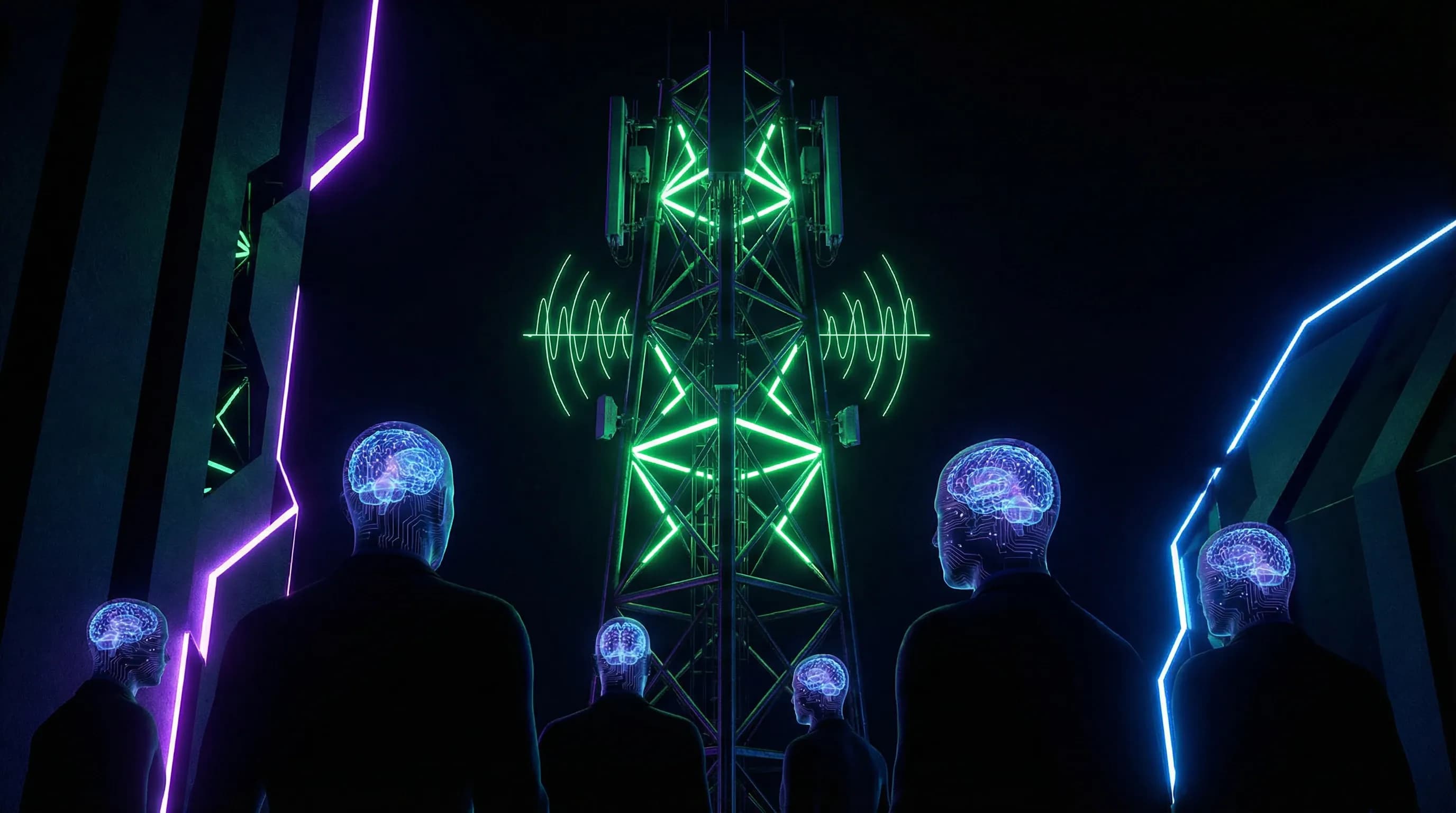
�� 5G technology has become the subject of mass panic comparable only to the hysteria surrounding cell towers in the 1990s. The theory that this new generation of wireless networks is being used for mind control, behavior manipulation, or even virus transmission circulates on social media with millions of views. But what if behind this fear lies not a real threat, but a classic mechanism of technophobia exploiting gaps in scientific literacy? Systematic reviews and meta-analyses have found no link between 5G radiofrequency radiation and neurological effects (S001). Let's dissect the myth piece by piece, using only verifiable data.
�� What exactly does the 5G mind control myth claim — anatomy of a conspiracy hypothesis
The central claim: 5G radiofrequency radiation (24–100 GHz) penetrates the brain and influences neural activity, causing changes in behavior, mood, or cognitive functions. Extended versions add mass population control, protest suppression, or activation of programs through nanoparticles in vaccines. More details in the section Pharmaceutical Company Data Concealment.
Three key components of the myth
- Physical
- 5G millimeter waves allegedly possess a unique ability to interact with biological tissues at the cellular level, unlike the longer waves of 4G.
- Biological
- This interaction allegedly disrupts ion channel function in neurons, alters blood-brain barrier permeability, or induces oxidative stress.
- Socio-political
- The myth embeds itself in a narrative about secret collusion between corporations and governments hiding dangers for profit.
Three questions that need separate verification
First: can 5G radiofrequency radiation have any biological effect at all? Second: if so, is this effect sufficient to alter neural activity or behavior?
Third: is there evidence of intentional use of 5G for mind control? We'll examine each level separately, using data from systematic reviews and meta-analyses (S001, S004, S006).
5G technical parameters
| Band | Frequency | Penetration depth | Deployment status |
|---|---|---|---|
| Low | Below 1 GHz | Deep | Limited |
| Mid | 1–6 GHz | Medium | Primary in most countries |
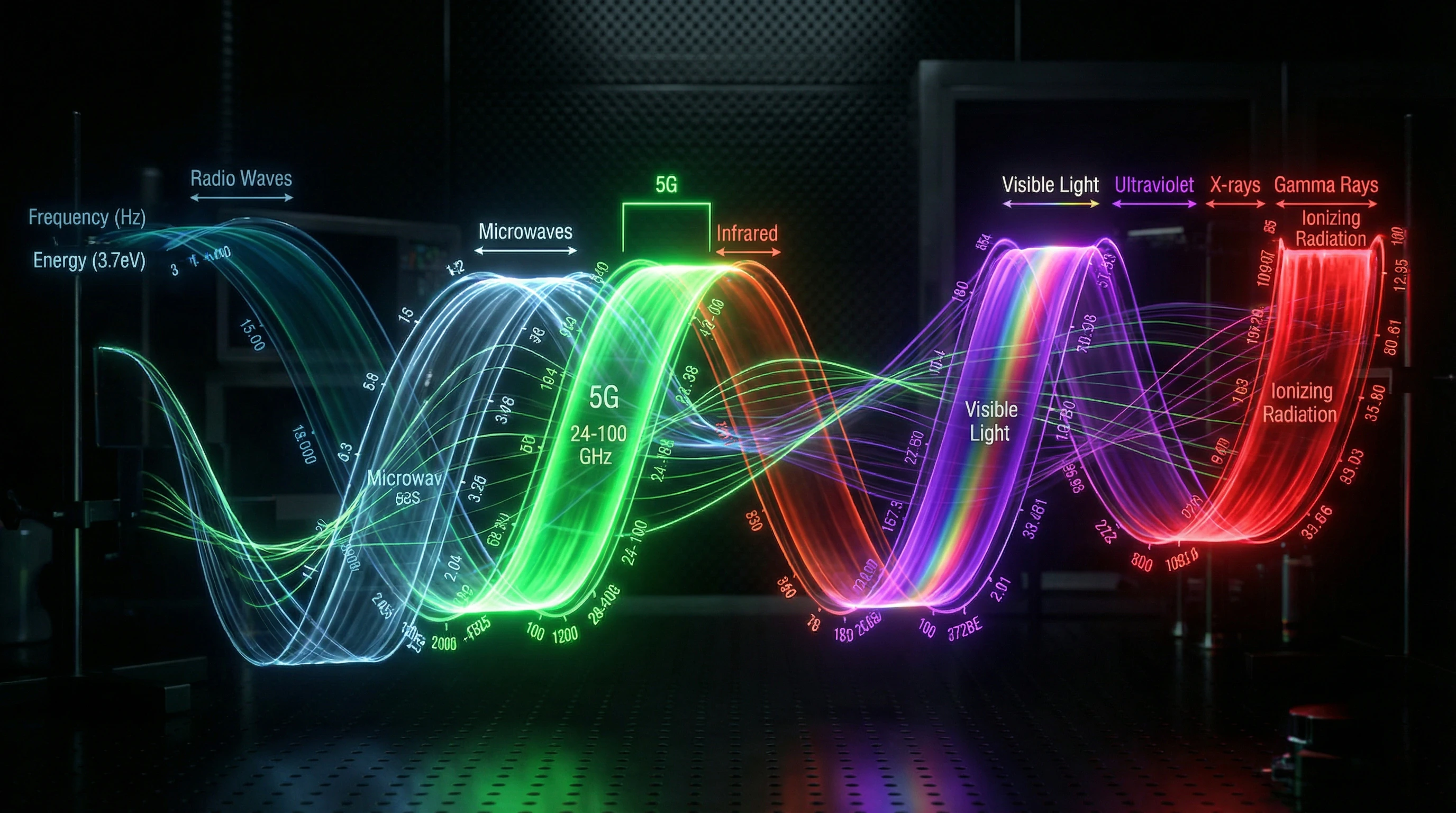
| High (millimeter) | 24–100 GHz | Less than 1 mm (upper skin layers) | Experimental |
Millimeter waves do not penetrate deeply into tissues — they are absorbed in the upper skin layers at depths less than 1 mm (S001). This fundamental physical limitation makes direct impact on the brain through the skull physically impossible at power levels used in commercial networks.
It's precisely the high band that raises the greatest concerns, although in most countries 5G deployment is currently proceeding primarily in the mid band. The relationship between wave frequency and penetration depth is not speculation, but a consequence of electromagnetic physics.
�� The Steel Man Version: Seven Strongest Arguments from 5G Mind Control Theory Proponents
To honestly evaluate a myth, it's necessary to formulate it in its most convincing form — this is called the "steel man" principle, the opposite of a "straw man." Below are the seven most substantial arguments made by proponents of the 5G mind control theory, presented in their strongest interpretation. For more details, see the section on Coaching Cults.
Argument 1: Millimeter Waves Are Used in Military Active Denial Systems
Theory proponents point to the existence of the military Active Denial System (ADS) technology, which uses millimeter waves at 95 GHz to create a burning sensation on the skin and disperse crowds. If the military can use these frequencies to affect people, why couldn't civilian 5G networks do the same thing, but more subtly?
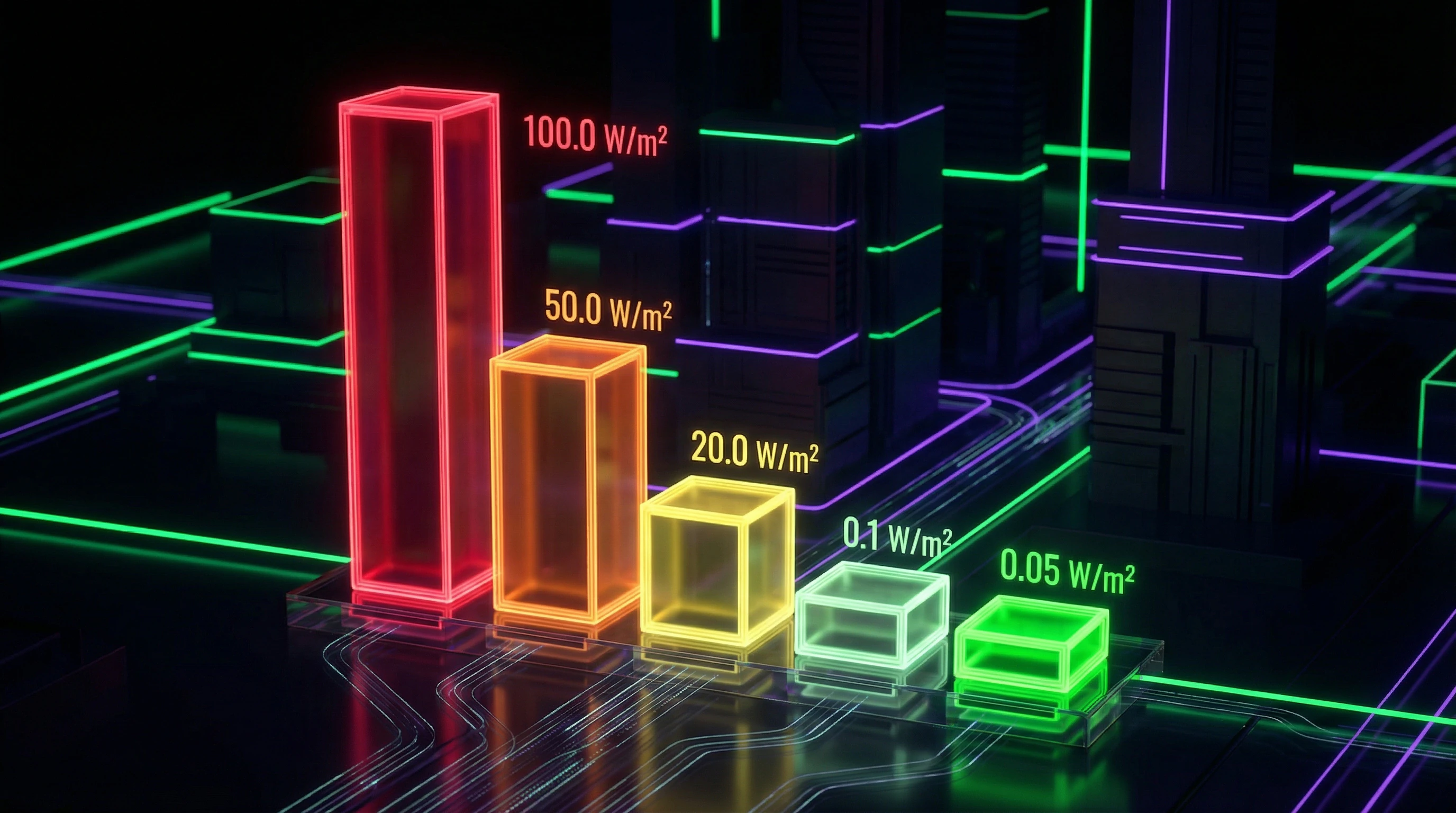
This argument exploits the real fact of ADS's existence but ignores the difference in power: the military system emits 100 kW/m² at a distance of several meters, while a 5G tower emits less than 10 W/m² at distances of tens of meters — 10,000 times weaker.
�� Argument 2: Lack of Long-Term 5G Safety Studies
Critics fairly note that 5G is a relatively new technology, and long-term epidemiological studies (10+ years) have not yet been completed. This creates space for uncertainty: if we cannot prove 100% safety, does that mean the technology is dangerous?
This argument appeals to the precautionary principle but ignores the fact that short-term and medium-term studies (1–5 years) have already been conducted and showed no significant effects (S001). Additionally, the physics of millimeter wave interaction with tissues has been well-studied since the 1970s.
- Short-term studies (1–5 years) are complete and found no significant effects
- The physics of millimeter wave interaction with tissues has been known since the 1970s
- Absence of long-term data does not equal proof of harm
�� Argument 3: Corporations and Regulators Are Hiding Inconvenient Data
The conspiracy theory claims that telecommunications companies and government regulators (such as the FCC in the US or Ofcom in the UK) deliberately ignore or suppress research showing 5G harm. As evidence, they cite cases of conflicts of interest where former regulatory employees move to industry jobs.
This argument exploits real problems with "revolving doors" between regulators and business but provides no concrete evidence of data suppression. Systematic reviews conducted by independent researchers also found no connection between 5G and neurological effects (S001).
�� Argument 4: Increased Health Complaints After 5G Tower Installation
Theory proponents cite anecdotal evidence from people reporting headaches, insomnia, anxiety, or other symptoms after 5G towers appeared in their area. These complaints are real and deserve attention, but they don't prove causation.
The phenomenon of "electromagnetic hypersensitivity" (EHS) is well-studied: double-blind studies show that people with EHS cannot distinguish real radiation from placebo, and their symptoms correlate with awareness of a radiation source's presence rather than the radiation itself (nocebo effect).
�� Argument 5: Animal Studies Show Biological Effects
Some studies on rats and mice exposed to radiofrequency radiation showed changes in gene expression, oxidative stress, or DNA damage. Theory proponents use this data as evidence of potential harm.
However, critical analysis of these studies shows they often use radiation doses tens or hundreds of times higher than what people experience in real conditions. Additionally, results are not reproducible in independent laboratories, which calls their reliability into question (S001).
�� Argument 6: Resonant Frequencies and Interaction with Biological Structures
A more sophisticated version of the theory claims that certain 5G frequencies could coincide with resonant frequencies of biological molecules, cell membranes, or even DNA, causing nonlinear effects. This argument sounds scientific but is not supported by experimental data.
- Resonant frequencies of biological molecules
- Lie in the terahertz range (1000+ GHz) or infrared radiation, significantly higher than 5G frequencies
- Thermal noise at body temperature
- Creates energy fluctuations that exceed the energy of 5G radiation photons by orders of magnitude
Argument 7: Synergistic Effects with Other Environmental Factors
The final argument suggests that 5G radiation itself may be safe, but in combination with other factors (air pollution, chemical toxins, stress) could amplify their negative impact. This is the most difficult version of the theory to refute, as synergistic effects are complex to study.
However, there is currently no empirical evidence of such interactions, and the hypothesis remains speculative. The connection between fears surrounding 5G and actual mechanisms of impact requires concrete data, not assumptions about possible synergies.
�� Evidence Base: What Systematic Reviews and Meta-Analyses Show About 5G Safety
A systematic review collects and analyzes all available data on a specific question using strict selection and quality assessment criteria. Meta-analysis combines quantitative data from multiple studies to obtain a more precise effect estimate — this is the gold standard of evidence-based medicine and safety science (S004, S006).
�� Analysis of Potential 5G Radiation Risks
A systematic review in the Journal of Otolaryngology and Rhinology analyzed existing data on 5G safety (S001). The American Cancer Society states: 5G radiofrequency radiation has relatively low energy compared to gamma rays and ultraviolet light, insufficient to break chemical bonds in DNA.
5G wavelengths are too large to concentrate inside the body — cells are many times smaller than the wavelength, which excludes direct cellular-level impact (S001). Towers are located at safe distances, and even with exposure, radiation is comparable to background levels.
| Parameter | 5G | Ionizing Radiation |
|---|---|---|
| Photon Energy | Non-ionizing | Sufficient to break DNA |
| Wavelength | Larger than cell size | Smaller than molecule size |
| Damage Mechanism | Absent | Direct DNA damage |
�� Meta-Analyses of Mobile Phones and Tumor Risk
The meta-analysis by Myung et al. (2009) examined the link between mobile phone use and brain tumor risk — found no statistically significant increase in risk (S001). The systematic review by Repacholi et al. (2012) analyzed data on wireless phones and head cancer with similar results.
These studies concerned 2G, 3G, 4G generations, which use higher power levels and longer exposure times than 5G. If no risk was detected under more aggressive conditions, it's unlikely under less intense exposure.
�� Skin Exposure: Keykhosravi Systematic Review
The study by Keykhosravi et al. (2018) conducted a systematic review of mobile phone and tablet radiation effects on skin (S001). The authors found no convincing evidence that radiofrequency radiation causes skin damage at exposure levels typical for consumer devices.
For 5G this is particularly significant: millimeter waves are absorbed precisely in the skin, not penetrating deeper. If surface absorption doesn't cause damage, then systemic effects cannot occur. More details in the Pharma Distrust section.
�� ICNIRP Guidelines: Independent Standard
The International Commission on Non-Ionizing Radiation Protection (ICNIRP) established guidelines for limiting exposure to electromagnetic fields up to 300 GHz (S001). These recommendations are based on reviewing thousands of studies and establish threshold values below which no biological effects are observed.
- Commercial 5G networks operate significantly below ICNIRP threshold values
- ICNIRP is an independent organization funded by government sources, not telecommunications companies
- Guidelines are reviewed every 5–10 years based on new data
The standard-setting mechanism excludes commercial influence: thresholds are set with a safety margin (typically 50 times below the level at which biological effects begin to appear).
�� Mechanism of Action: Why 5G Radiofrequency Radiation Cannot Control Consciousness
To understand why the theory of mind control through 5G is physically impossible, we need to examine the mechanisms of electromagnetic radiation interaction with biological tissues and neurons. There are two main types of effects: thermal (tissue heating) and non-thermal (direct interaction with molecules). For more details, see the Scientific Method section.
�� Thermal Effects: The Only Proven Mechanism of Radiofrequency Impact
Radiofrequency radiation, when absorbed by tissues, converts to heat — this is the primary and only reliably established mechanism of biological impact from non-ionizing radiation. To achieve measurable temperature increase in tissues (more than 1°C), a power density of about 10 W/kg (Specific Absorption Rate, SAR) is required.
Commercial 5G devices have SAR levels below 2 W/kg — 5 times lower than the thermal effect threshold. The human body efficiently dissipates heat through blood flow and perspiration, making local heating from 5G radiation negligible compared to natural temperature fluctuations.
The photon energy of 5G radiation (approximately 0.0001 eV) is millions of times smaller than the energy of chemical bonds (1–10 eV). Direct interaction with molecules is thermodynamically impossible.
�� Non-Thermal Effects: Hypotheses Without Experimental Confirmation
Proponents of the mind control theory often cite "non-thermal effects" — alleged biological changes at radiation levels below the thermal impact threshold. Hypotheses include altered cell membrane permeability, modulation of ion channel activity, induction of oxidative stress, or changes in gene expression.
Systematic reviews show that these effects either cannot be reproduced in independent studies, or are observed only at exposure levels significantly exceeding real-world conditions (S001).
- Effect cannot be reproduced in independent laboratories
- Requires radiation levels 10–100 times higher than real-world exposure
- Photon energy is insufficient to break molecular bonds
- No mechanism exists for selective impact on neurons
�� Blood-Brain Barrier: Why 5G Cannot "Open" Access to the Brain
One version of the theory claims that 5G radiation increases the permeability of the blood-brain barrier (BBB) — a protective layer of cells controlling the penetration of substances from blood into the brain. Studies allegedly showing this effect used radiation levels 10–100 times higher than what people are exposed to from 5G towers.
Subsequent studies with more rigorous controls failed to reproduce the results. 5G millimeter waves do not penetrate deeper than 1 mm into skin, making direct impact on the BBB, located in the brain behind the skull, physically impossible (S001).
| Parameter | Required Value for Effect | Actual 5G Exposure | Ratio |
|---|---|---|---|
| SAR (W/kg) | 10 | <2 | 5 times lower |
| Wave penetration depth | Requires >5 cm for brain | 1 mm into skin | Does not reach brain |
| Electric field in skull | ≥1 V/m | <0.001 V/m | 1000 times weaker |
Neural Activity: Why External Radio Waves Cannot "Reprogram" the Brain
Neurons communicate through electrical impulses (action potentials) and chemical signals (neurotransmitters). Neural oscillation frequencies range from 0.5 Hz (delta waves during sleep) to 100 Hz (gamma waves during concentration). 5G frequencies (24–100 GHz) are billions of times higher than neural activity frequencies.
This is like trying to tune an AM radio (kilohertz) using an X-ray machine (exahertz) — the frequencies are incompatible. To affect neurons, an external electromagnetic field must create an electric field inside the brain of at least 1 V/m. A 5G tower at 50 meters distance creates a field of less than 0.001 V/m inside the skull — 1000 times weaker than the impact threshold.
- Resonant Interaction
- Requires matching the external field frequency with the system's natural frequency. Neural frequencies (0.5–100 Hz) and 5G (24–100 GHz) are physically incompatible.
- Threshold Effect
- Even if frequencies matched, the field strength from 5G is too weak to initiate an action potential in a neuron.
- Skull Shielding
- Skull bone tissue absorbs and scatters electromagnetic radiation, further attenuating the signal by 10–100 times.
The mechanism of mind control through 5G requires simultaneous violation of all these physical principles — which is equivalent to violating the laws of thermodynamics and electromagnetism. This is not a question of insufficient research, but a question of fundamental physics.
�� Cognitive Anatomy of the Myth: What Psychological Mechanisms Make the 5G Theory So Convincing
The 5G mind control myth isn't just a misunderstanding of physics. It's a complex construct that exploits several cognitive biases and social factors. Learn more in the Statistics and Probability Theory section.
Understanding these mechanisms explains why the theory is so widespread despite the absence of evidence (S001).
Fear of the Invisible: Evolutionary Predisposition to Technophobia
The human brain evolved in an environment where threats were visible and tangible. Electromagnetic radiation is invisible, odorless, and not directly perceptible—an ideal object for projecting fears.
People overestimate risks from invisible threats (radiation, chemicals) and underestimate risks from familiar dangers (cars, alcohol). This is the "availability heuristic"—we judge the probability of an event by how easily we can imagine its consequences (S002).
Dramatic images of "mind control" are easily visualized, making the threat psychologically real even when it's physically impossible.
��️ Illusion of Control and Conspiracy Theories: Why Chaos Is Scarier Than Malicious Intent
Conspiracy theories offer simple explanations for complex phenomena: someone's malicious intent is behind everything. This is psychologically more comfortable than acknowledging the world's randomness.
Belief in conspiracy theories correlates with feelings of lost control over life. The 5G myth provides an illusion of understanding: "I know who's to blame and can protect myself." This restores a sense of control, even if the "knowledge" itself is false (S001).
�� Confirmation Bias and Social Media Echo Chambers
Confirmation bias makes us seek information that confirms our beliefs and ignore contradictory data. Social media algorithms amplify this effect by showing content that matches our preferences.
Someone who watches a video about "5G harm" starts receiving recommendations for similar content. A closed loop emerges: belief → seeking confirmation → reinforcing belief (S005).
- First encounter with an alternative version (video, post, article)
- Searching for additional information in the same direction
- Algorithm recommends similar content
- Belief strengthens through repetition
- Contradictory sources are ignored or rejected as "censorship"
�� Social Identity and Group Belonging
Belief in the 5G myth often becomes a marker of group identity. People join communities that share this belief, gaining a sense of belonging and social status within the group.
Abandoning the belief is perceived as betraying the group, not as changing one's mind based on new data. This explains why facts often fail to convince people—they threaten not just the belief, but social identity (S003).
People are willing to sacrifice information accuracy to maintain connection with a group that accepts them.
�� Authority and Trust: Why the "Doctor in the Video" Seems More Convincing Than a Systematic Review
People trust information that comes from someone similar to them, or from someone who speaks with confidence and emotional conviction. A video featuring a "doctor" or "scientist" talking about 5G harm seems more convincing than an abstract systematic review or official organizational statement.
This relates to the phenomenon of trusting local authorities and the fact that people remember stories and faces better than statistics. Moreover, if the "doctor" speaks against the interests of large corporations, this is perceived as a sign of honesty, even if their qualifications are questionable (S006).
�� The Hidden Truth and Censorship Narrative
The 5G myth is often accompanied by a narrative that "the truth is being hidden" and that people speaking about it are being censored. This creates a paradox: the more evidence against the myth, the more it's perceived as confirmation of the conspiracy.
The censorship narrative strengthens the sense of belonging to a group of "enlightened" people who "know the truth." This is a psychologically powerful mechanism because it turns criticism into confirmation (S007).
| Mechanism | How It Works | Why It's Effective |
|---|---|---|
| Availability heuristic | Easy to imagine consequences → seems probable | Works at the level of imagery, not logic |
| Illusion of control | "I know the cause" → sense of control restored | Psychologically more comfortable than acknowledging uncertainty |
| Confirmation bias | Seeking information that confirms belief | Algorithms amplify the effect automatically |
| Group identity | Belief becomes a marker of belonging | Abandoning belief = social loss |
| Censorship narrative | Criticism = confirmation of conspiracy | Paradox: logically impossible to refute |
��️ How Cognitive Immunology Works: Recognizing the Traps
Awareness of these mechanisms is the first step toward protecting yourself from them. This doesn't mean you're "immune" to errors, but it allows you to slow down the decision-making process and ask critical questions.
When you encounter a claim about 5G harm, ask yourself: what mechanism is at work here? Is this an appeal to fear of the invisible? Is this a hidden truth narrative? Is this an attempt to reinforce my group identity? Understanding these patterns helps separate emotional impact from factual content (S008).
Cognitive immunology isn't about rejecting emotions, but about recognizing when emotions are being used as a tool of manipulation.