5G Fears: Technophobia or Justified Concernλ
We examine the social phenomenon of fears surrounding fifth-generation mobile technology and separate scientific facts from conspiracy myths
Overview
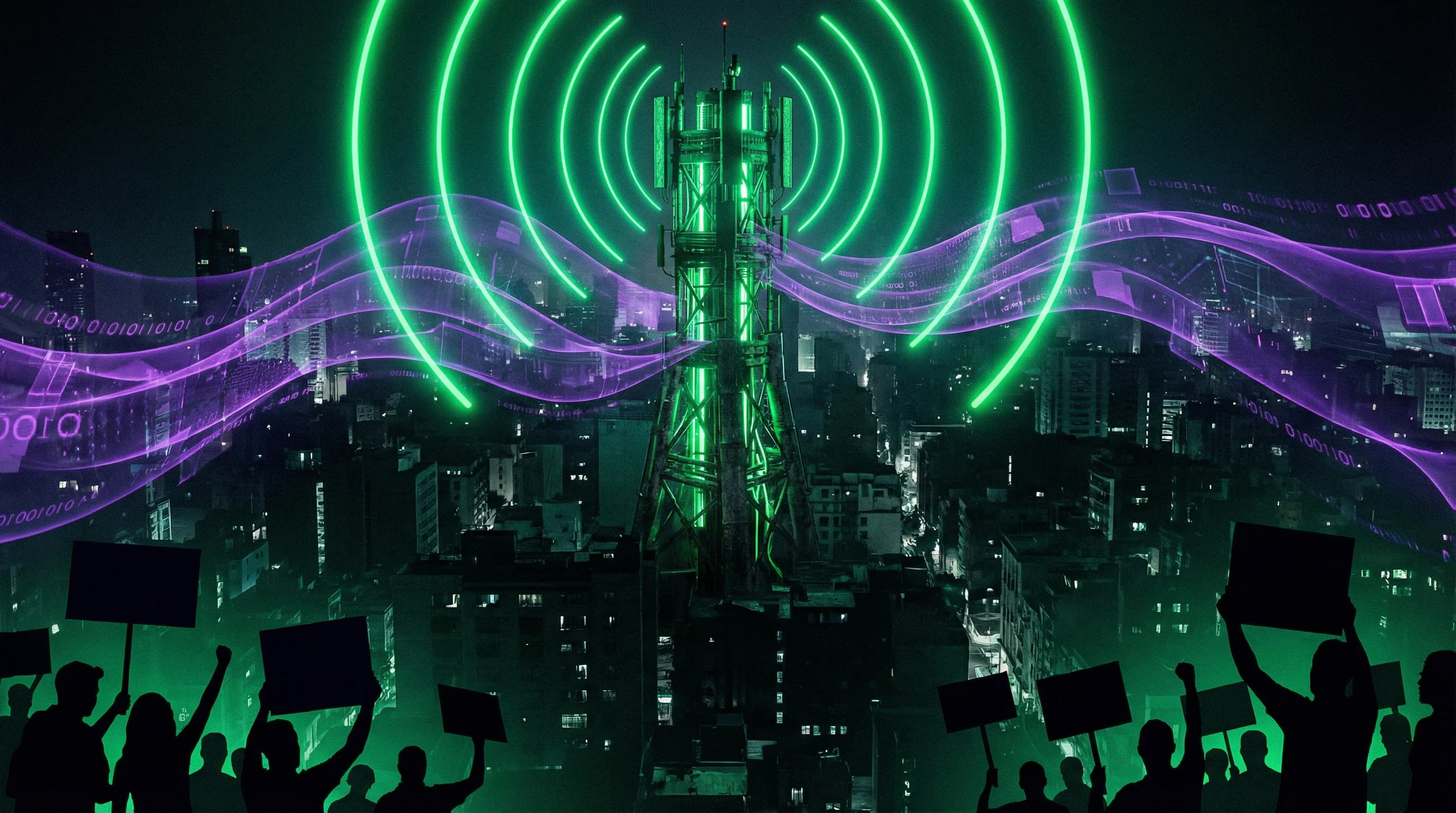
With the rollout of 5G networks worldwide, a wave of public concern has emerged regarding the safety of this new technology. Protests against tower installations, conspiracy theories about health risks, and mass misinformation on social media have turned technological progress into a subject of heated debate. This phenomenon is not unique—similar fears accompanied the introduction of GSM in the 1990s, microwave ovens, and other innovations.
🛡️ Laplace Protocol: We examine the scientific basis of 5G fears, analyze the psychological and social factors behind their spread, study historical parallels with previous technological panics, and provide an evidence base for understanding the real risks versus the myths.
Reference Protocol
Scientific Foundation
Evidence-based framework for critical analysis
Protocol: Evaluation
Test Yourself
Quizzes on this topic coming soon
⚡
Deep Dive
What is 5G and why it sparked fears — anatomy of modern tech panic
What 5G is technically
5G is the fifth generation of mobile networks. The key difference: it uses higher radio wave frequencies, delivering faster speeds, lower latency, and greater bandwidth.
The new frequency range became the trigger for fears. Unfamiliarity breeds suspicion. Although 5G operates on the same principles as 4G, the information vacuum around the new technology quickly filled with speculation.
The novelty of the frequency spectrum created the perfect environment for conspiracy theories — people fear not the technology itself, but the unknown.
Where and when protests began
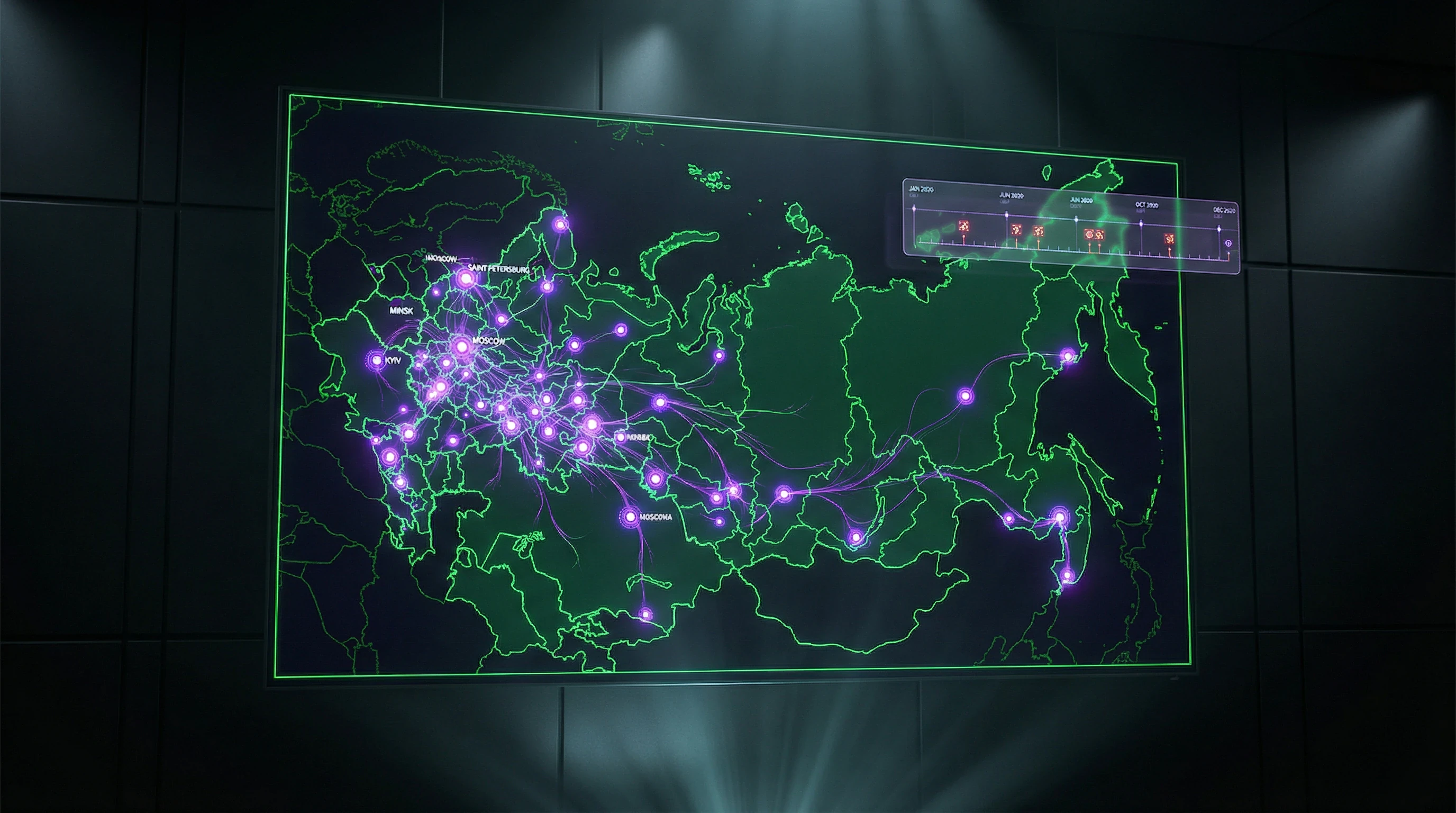
In summer 2020, protests against 5G tower installations occurred in Brooklyn, New York. This was a visible episode of a broader wave of technological anxiety.
Concerns about 5G intertwined with other fears: biometric surveillance, microchipping, vaccination. U.S. authorities initiated official investigations into mobile network health effects — on one hand, this showed willingness to engage in dialogue, on the other — it legitimized the fears themselves as worthy of serious study.
| Characteristic | Value |
|---|---|
| Type of phenomenon | Transnational technological panic |
| Geography | United States, Western countries, global networks |
| Peak period | 2020 |
| Related fears | Surveillance, microchipping, vaccination |
5G fears are not a local phenomenon. This is a pattern that repeats with every new technology, when uncertainty meets social vulnerability.
Historical context of technological panics — why we fear every new generation of connectivity
GSM fears in the 1990s as prototype of modern panic
5G fears are not a unique phenomenon, but a repetition of a historical pattern. In the 1990s, GSM base stations triggered identical health concerns, which subsequently received no scientific confirmation.
Experts point to direct parallels between GSM panic and modern 5G fears: identical arguments, same mechanisms of anxiety spread. GSM fears dissipated not through scientific education, but through population habituation and absence of actual negative consequences.
- Technology habituation
- When innovation becomes everyday, it's perceived as normal rather than threatening. Fear disappears not because people understood the mechanism, but because the danger didn't materialize.
- Information vacuum
- Technical complexity and lack of accessible explanations create space for conspiracy theories and simplified interpretations.
Pattern of recurring technophobia: from microwaves to GMOs
Technological anxiety manifests cyclically: microwave ovens, genetically modified organisms, cell towers. Each time — the same structure.
- Unfamiliarity with technology breeds suspicion
- Technical complexity hinders public understanding
- Information vacuum fills with simplifications and conspiracy theories
- Cognitive biases reinforce fear: people seek confirming information and ignore contradictory data
Social media turns this cycle into an epidemic: alarming information spreads instantly, creating echo chambers where fears mutually amplify and become indistinguishable from facts.
Core Myths and Their Scientific Refutation — What Data Says Against Emotions
The Myth of Direct Health Harm from 5G Towers
The central myth of 5G panic: fifth-generation towers have a direct negative impact on health, causing diseases and ailments. This pattern repeats the unfounded fears around GSM technology, which have not received scientific confirmation over decades of observation.
U.S. authorities have initiated official investigations into the impact of mobile networks on health — a serious response to public concerns while maintaining existing safety standards.
Nocebo effect: negative health consequences arise not from the actual impact of technology, but from people's expectations and beliefs about its harmfulness.
Conspiracy Theories About Surveillance and Chipping Through 5G
5G panic includes conspiracy theories about mass surveillance, chipping, and secret control through fifth-generation infrastructure. These fears cluster with other conspiratorial narratives: biometric surveillance, microchips in vaccines — a common structure of conspiratorial thinking.
The theories represent a conflation of separate technologies and misunderstanding of technical capabilities: 5G as a data transmission technology does not possess specific surveillance functions distinct from previous generations of communication.
- The Real Problem
- Concerns about privacy and data collection transform into fantastical scenarios of total control — reflecting a deeper problem of trust in authorities and technology corporations.
Mechanism of Formation and Spread of Technological Myths
Psychological factors determine the formation of 5G fears: the novelty of technology triggers anxiety, cognitive biases contribute to incorrect risk assessment, social media provides a mechanism for rapid spread and amplification of concerns.
- Misinformation spreads easier and faster than corrective information
- Technical complexity hinders public understanding
- Conspiracy theories fill knowledge gaps with simple explanations
Countering technological myths requires not only scientific data, but also understanding the psychological mechanisms of fear formation and working with the emotional component of public concerns.
Psychological Mechanisms of Fear Formation: How the Brain Transforms the Unknown into a Threat
Cognitive Biases and the Nocebo Effect in 5G Perception
Fears surrounding 5G rely on several fundamental cognitive biases that systematically distort risk assessment. Confirmation bias causes people to seek information confirming pre-existing beliefs about harm while ignoring contradictory data.
Availability heuristic leads to overestimation of risks frequently discussed in media and social networks—if a problem is widely covered, it must be genuinely dangerous. The nocebo effect amplifies this mechanism: negative expectations about 5G radiation exposure trigger real physical symptoms (headaches, fatigue, anxiety) even in the absence of actual exposure.
A self-reinforcing cycle: expectation of harm → real symptoms → belief confirmation → intensified expectation.
Neophobia and the Illusion of Lost Control
The psychological phenomenon of "neophobia" explains why each new generation of technology triggers a wave of concerns: the brain is evolutionarily wired to perceive the unfamiliar as potentially dangerous. With 5G, this mechanism intensifies—the technology is invisible, its effects cannot be directly sensed, and technical explanations are too complex for intuitive understanding.
The sense of lost control is a key factor in fear amplification. People cannot choose whether a tower is installed near their home, cannot "turn off" the radiation, cannot independently verify safety. Research shows: risks people don't control are perceived as significantly more dangerous, even when objectively minimal.
- Unknown → perceived as threat
- Invisible + uncontrollable → heightened anxiety
- Complex explanation → intuitive distrust
- Media noise → illusion of real danger
This pattern completely mirrors the history of fears around GSM stations in the 1990s, which subsequently received no scientific confirmation.
FIG_02: Technological Fear Amplification Cycle
1. Novelty
Unfamiliar technology → anxiety
Unfamiliar technology → anxiety
2. Misinformation
Filling gaps with myths
Filling gaps with myths
3. Nocebo
Expectations → real symptoms
Expectations → real symptoms
4. Confirmation
Symptoms reinforce beliefs
Symptoms reinforce beliefs
Source: analysis of technological fear patterns (S44, S46, S48)
The Role of Information Environment: How Social Media Turns Concerns into an Epidemic
Mechanisms of Viral Misinformation Spread
Social media algorithms prioritize emotionally charged content. Fear is one of the most "viral" emotions, which is why messages about "5G harm" receive significantly greater visibility than scientific rebuttals.
The "echo chamber" phenomenon exacerbates the problem: people with similar concerns gather in groups where their beliefs are constantly reinforced while alternative viewpoints are filtered out. An illusion of consensus emerges.
Misinformation spreads 6 times faster than factual information—it's simpler, more emotional, and doesn't require technical knowledge to understand.
Deficit of Trust in Experts and Institutional Crisis
Fears surrounding 5G develop against the backdrop of a crisis of trust in expert institutions. Technological complexity creates an "epistemological gap": citizens cannot independently verify safety and must rely on experts, but trust in them has been undermined.
- Conspiracy Theories
- Fill the trust vacuum with simple explanations: "authorities are hiding the truth," "corporations put profit above health," "experts are bought." They offer an illusion of understanding and control.
- Paradox of Official Investigations
- Government attempts to conduct 5G safety studies are perceived ambiguously: as a sign of transparency or as indirect confirmation of the seriousness of the concerns.
Official Position and Regulatory Research: What the Data Shows
Investigations by U.S. Authorities and Their Results
After protests in a Brooklyn neighborhood in July 2020, U.S. regulatory agencies initiated official studies on the health impacts of mobile networks. The goal was straightforward: provide an evidence base for risk assessment.
This wasn't the first instance. Similar fears surrounding GSM stations in the 1990s were thoroughly investigated and found no scientific confirmation. The pattern repeats: each new generation of technology meets a wave of unfounded concerns, followed by regulatory investigation.
The regulatory approach demonstrates an attempt to balance scientific rigor with the need to respond to public sentiment.
International Safety Standards and Scientific Consensus
International regulatory standards for radiofrequency radiation, including 5G frequencies, are based on decades of research. Safety thresholds are established with substantial margins.
The scientific consensus, reflected in WHO positions and national regulators, indicates an absence of proven harm mechanisms when established standards are followed.
- "Absence of evidence of harm" vs "evidence of absence of harm"
- Science cannot prove the absolute safety of anything. It can establish that at the current level of knowledge, risks are either undetected or negligibly small. This fundamental distinction often becomes a source of misunderstanding between experts and the public.
Effective countering of technological myths requires not only providing scientific data but also working with the psychological mechanisms underlying fear formation. Acknowledging the emotional component of concerns and building trust through transparency and dialogue is not a concession, but a necessary part of regulatory communication.
FIG_03: Comparison of Technological Fears: GSM (1990s) vs 5G (2020s)
GSM (1990s)
- Fears about base stations
- Concerns about radiation
- Protests against tower installation
- Result: not confirmed
5G (2020s)
- Fears about 5G towers
- Concerns about radiation
- Protests against tower installation
- Result: pattern repeats
Source: historical analysis of technological fears (S44, S45, S50)
Knowledge Access Protocol
FAQ
Frequently Asked Questions
5G is the fifth generation of mobile connectivity with higher data transmission speeds, lower latency, and the ability to connect more devices simultaneously. The technology uses higher frequency radio waves, providing better performance for the Internet of Things and autonomous systems. The main difference from 4G is speed (up to 10 Gbps) and minimal signal latency.
Scientific research does not confirm direct harm from 5G towers when established radiation standards are followed. Experts note that fears surrounding 5G repeat the pattern of unfounded concerns about GSM stations in the 1990s. Regulatory agencies conduct inspections and confirm that equipment complies with international safety standards.
Fears are linked to lack of understanding of the new technology, cognitive biases, and the spread of misinformation on social media. Psychologically, people tend to fear unfamiliar technologies, especially those involving invisible radiation. The situation is exacerbated by conspiracy theories and a deficit of trust in official information sources.
Yes, notable protests occurred in various communities in July 2020 against tower installations. The geography of protest movements spans different regions across the country. In response to public concerns, authorities initiated investigations into the impact of mobile networks on health.
No, this is a conspiracy myth with no technical basis. 5G is simply a wireless communication standard that contains no mechanisms for "microchipping" people. Concerns about surveillance relate to general digital privacy issues, not specific to 5G and regulated by personal data protection legislation.
The nocebo effect refers to negative symptoms arising from the expectation of harm rather than actual exposure. People convinced of 5G's harmfulness may experience headaches or discomfort even in the absence of real radiation. This psychological phenomenon explains many health complaints near cell towers.
You can order an independent assessment from accredited laboratories that measure electromagnetic background with specialized equipment. The EPA conducts routine inspections to verify compliance with sanitary standards. Mobile apps also exist for approximate estimates, but their accuracy is limited compared to professional equipment.
Primary standards are established by the International Commission on Non-Ionizing Radiation Protection (ICNIRP) and WHO. In the United States, the FCC regulates permissible levels of electromagnetic radiation from base stations. All carriers are required to comply with these regulations when installing 5G equipment.
Verify sources: scientific data is published in peer-reviewed journals and on official organization websites (WHO, EPA). Be wary of materials without research citations, with emotional headlines and conspiratorial claims. Critically evaluate information from social media and anonymous sources, cross-check facts with multiple independent expert opinions.
This is a recurring pattern of technophobia: each new generation of connectivity triggers similar health concerns. In the 1990s, people feared GSM stations, but subsequent decades did not confirm these fears with scientific data. Experts note that society tends to fear unfamiliar technologies until they become commonplace.
When properly installed and following regulations, 5G does not interfere with medical equipment. Medical devices undergo electromagnetic compatibility certification and are protected from external radio interference. Hospitals have additional requirements for base station placement and radiation level monitoring in sensitive areas.
Suggest conducting an independent assessment of radiation levels and reviewing official safety data. Organize a meeting with telecommunications carrier representatives and the FCC for clarification. It's important to base the discussion on scientific facts rather than emotions and internet rumors.
No, this is a completely debunked conspiracy theory without any scientific basis. COVID-19 is caused by the SARS-CoV-2 virus, which spreads between people, and radio waves cannot transmit viruses. The WHO and the scientific community categorically refute any connection between 5G and the pandemic.
It's technically possible to use shielding materials, but this is impractical when carriers comply with radiation standards. Shielding can disrupt mobile and Wi-Fi connectivity in your apartment, creating more inconvenience. If you have concerns, it's better to conduct measurements—radiation levels are typically well below permissible limits.
People tend to overestimate new and unfamiliar risks while underestimating familiar dangers—this is called "novelty anxiety." The availability heuristic makes risks seem higher when frequently discussed in media. Confirmation bias leads to seeking information that confirms existing fears while ignoring scientific refutations.
Some people report "electromagnetic hypersensitivity," but scientific research does not confirm a physiological basis for this condition. Double-blind experiments show that symptoms are linked to psychological factors rather than actual radiation. The WHO acknowledges these individuals' suffering as real but recommends psychological rather than technical intervention.