
Anatomy of the myth: what exactly the cure suppression theory claims and where its boundaries lie
The pharmaceutical cure suppression conspiracy theory is built around one core claim: pharmaceutical corporations possess technologies for radical cures of severe chronic diseases, but deliberately keep them off the market. The motive is always economic — a cured patient stops buying expensive drugs for maintenance therapy. More details in the Chemtrails section.
- Variant 1: "ready cure in the vault"
- An effective treatment has already been developed and passed internal trials, but the company conceals the results and blocks patents.
- Variant 2: "bought-out inventions"
- Independent scientists create breakthrough technologies, but corporations buy the patents and shut down the projects.
- Variant 3: "research sabotage"
- Big Pharma obstructs funding for promising directions, lobbies for regulatory barriers, and discredits alternative approaches.
Criticism vs. conspiracy: where the boundary lies
Legitimate criticism of the pharmaceutical industry relies on documented facts: insulin price inflation in the US, manipulation of clinical trial data (the Vioxx scandal (S006)), aggressive marketing of drugs with questionable efficacy, patent abuses to extend monopolies.
Conspiracy theory begins where total suppression of radical solutions through hidden collusion of all market participants is claimed — which would require coordination of thousands of scientists, regulators, physicians, and competing companies without a single evidence leak over half a century.
These practices have been investigated by regulators and resulted in multi-billion dollar fines. But this is not the same as systematic suppression of all radical solutions.
The definition problem: what counts as suppression
The theory doesn't establish clear criteria for distinguishing between suppression and ordinary market mechanisms. If a company discontinues drug development due to toxicity in phase two trials — is that suppression or reasonable risk management?
| Scenario | Conspiracy theory interpretation | Alternative explanation |
|---|---|---|
| Startup doesn't receive venture funding | Sabotage by competitors | Weak preclinical data, market selection |
| New treatment method costs more than existing ones | Conspiracy against innovation | Economic reality of healthcare systems with limited budgets |
| Research doesn't get funded | Deliberate suppression | Low priority in competitive grant competition |
Blurred boundaries allow any failure to be interpreted as "proof" of conspiracy. This makes the theory logically invulnerable — it explains everything, which means it explains nothing.

Steel Man Version of the Argument: Seven Strongest Cases for the Suppression Theory
To honestly evaluate the theory, we must formulate its most convincing version—a steelman argument—that relies on real facts and logical connections rather than caricatured simplifications. More details in the section Fears Around 5G.
💰 Argument 1: The economic model of chronic treatment is objectively more profitable than radical cure
Pharmaceutical companies are public corporations with a fiduciary duty to maximize shareholder profits. A patient with type 2 diabetes generates $5,000–10,000 in annual revenue over 20–30 years; a patient cured by a one-time gene therapy generates a single payment, even if it amounts to $500,000.
The net present value (NPV) of a chronic revenue stream at an 8% discount rate is significantly higher. Rational management must prioritize development of maintenance drugs over radical solutions—even if the latter are technically achievable.
🔒 Argument 2: History of patent abuses demonstrates the industry's willingness to suppress competition
Cases are documented where pharmaceutical corporations bought patents on potentially competing technologies and shut down development. The practice of evergreening (minor molecular modifications to extend patent protection) shows that companies actively manipulate intellectual property to preserve monopolies.
If the industry is willing to spend billions on legal battles against generic manufacturers, it's logical to assume it applies similar strategies against radically new approaches that threaten existing product lines.
🧪 Argument 3: Regulatory capture creates structural barriers to breakthrough innovations
The phenomenon of regulatory capture—when regulators (FDA, EMA) de facto serve the interests of the regulated industry—is well described in political economy literature (S006). High barriers to entry (the cost of bringing a new drug to the U.S. market is estimated at $2.6 billion and 10–15 years) protect incumbents from competition.
Clinical trial requirements developed for traditional small molecules may be inadequate for evaluating radically new approaches (gene therapy, immunotherapy, regenerative medicine), creating unintentional but systemic suppression of innovation.
📊 Argument 4: Publication asymmetry conceals negative results and alternative approaches
Publication bias—the tendency to publish positive results and suppress negative ones—systematically distorts scientific literature. If a company conducts internal research on a promising direction, obtains encouraging preliminary data, but then discovers that commercialization threatens its existing portfolio, it can simply not publish the results.
External researchers never learn about the direction's potential, funding doesn't flow, development stalls—formally without active suppression, but with the same effect.
- Company discovers promising direction in internal research
- Preliminary data is encouraging but threatens existing portfolio
- Results are not published, funding ceases
- Outside world remains unaware of the technology's potential
🧬 Argument 5: Cases of actual suppression in related fields confirm the pattern's possibility
History knows examples of corporate suppression of inconvenient scientific data: the tobacco industry concealed research on smoking harms, oil companies—data on climate change, lead additive manufacturers—on neurotoxicity.
If such practices are documented in other sectors, why should the pharmaceutical industry be an exception? Structural incentives (profit maximization, protection of existing assets) are identical. More on the mechanisms of such suppression in the analysis of pharmaceutical industry whistleblowers.
🕵️ Argument 6: Opacity of clinical data and trade secrets make suppression technically feasible
Most clinical trial data remains non-public, protected by trade secrets. Trial registries (ClinicalTrials.gov) contain basic information, but detailed protocols, interim analyses, subgroup data are often unavailable.
This creates information asymmetry: the company knows significantly more about a technology's potential than external observers, and can make strategic decisions to terminate development that look like scientific failure but are motivated by commercial considerations.
⚖️ Argument 7: Absence of evidence for suppression may be a consequence of effective suppression
This is an argument from absence of evidence: if a conspiracy is sufficiently large-scale and well-organized, it won't leave direct traces. The absence of whistleblowers is explained by strict non-disclosure agreements (NDAs), threat of legal prosecution, and a culture of corporate loyalty.
- Absence of documents
- Destruction of compromising materials
- Absence of investigative journalism
- Media dependence on pharmaceutical advertising
- Absence of evidence overall
- Interpreted as confirmation of concealment effectiveness
Evidence Base: What the Data Says About Drug Suppression Reality
Moving from logical arguments to empirical data, we need to assess whether direct or indirect evidence exists for systematic suppression of radical medical solutions by pharmaceutical corporations. More details in the section Financial Pyramids and Scams.
📊 Economics of Pharmaceutical Innovation: What R&D Investment Data Shows
Analysis of research and development (R&D) investment structures at major pharmaceutical companies does not confirm the hypothesis of systematic avoidance of radical innovations. According to industry reports, in the 2020s a significant portion of R&D budgets is directed precisely toward potentially curative technologies: gene therapy (Luxturna for inherited blindness, Zolgensma for spinal muscular atrophy), CAR-T immunotherapy for hematologic malignancies, CRISPR-based approaches.
These technologies represent one-time or short-term interventions with radical effects, not lifelong maintenance therapy. If a systemic conspiracy of suppression existed, we would observe investment concentration exclusively on me-too drugs (minor modifications of existing molecules) and complete absence of funding for breakthrough directions—which is not happening.
The barrier is not unwillingness to cure, but the need to adapt business models to new types of interventions.
🧪 Gene Therapy Case: Why "Curative" Technologies Still Reach the Market
FDA approval of Luxturna (2017, $850,000 per treatment), Zolgensma (2019, $2.1 million for single infusion), Hemgenix (2022, $3.5 million for hemophilia B gene therapy) directly contradicts suppression theory. These drugs represent exactly the type of "radical cure" that the theory claims is suppressed.
Moreover, companies actively promote these technologies despite pricing and reimbursement complexities. The economic model has adapted: instead of suppression, the industry developed mechanisms for monetizing one-time interventions through ultra-high prices, payment installments, outcome-based contracts.
| Drug | Approval Year | Cost | Intervention Type |
|---|---|---|---|
| Luxturna | 2017 | $850,000 | One-time gene therapy |
| Zolgensma | 2019 | $2.1 million | Single infusion |
| Hemgenix | 2022 | $3.5 million | Hemophilia gene therapy |
🔎 Analysis of Terminated Clinical Trials: Suppression or Scientific Failure
ClinicalTrials.gov data shows that approximately 90% of drugs entering clinical trials do not reach approval. Suppression theory proponents interpret this as evidence of sabotage of promising developments.
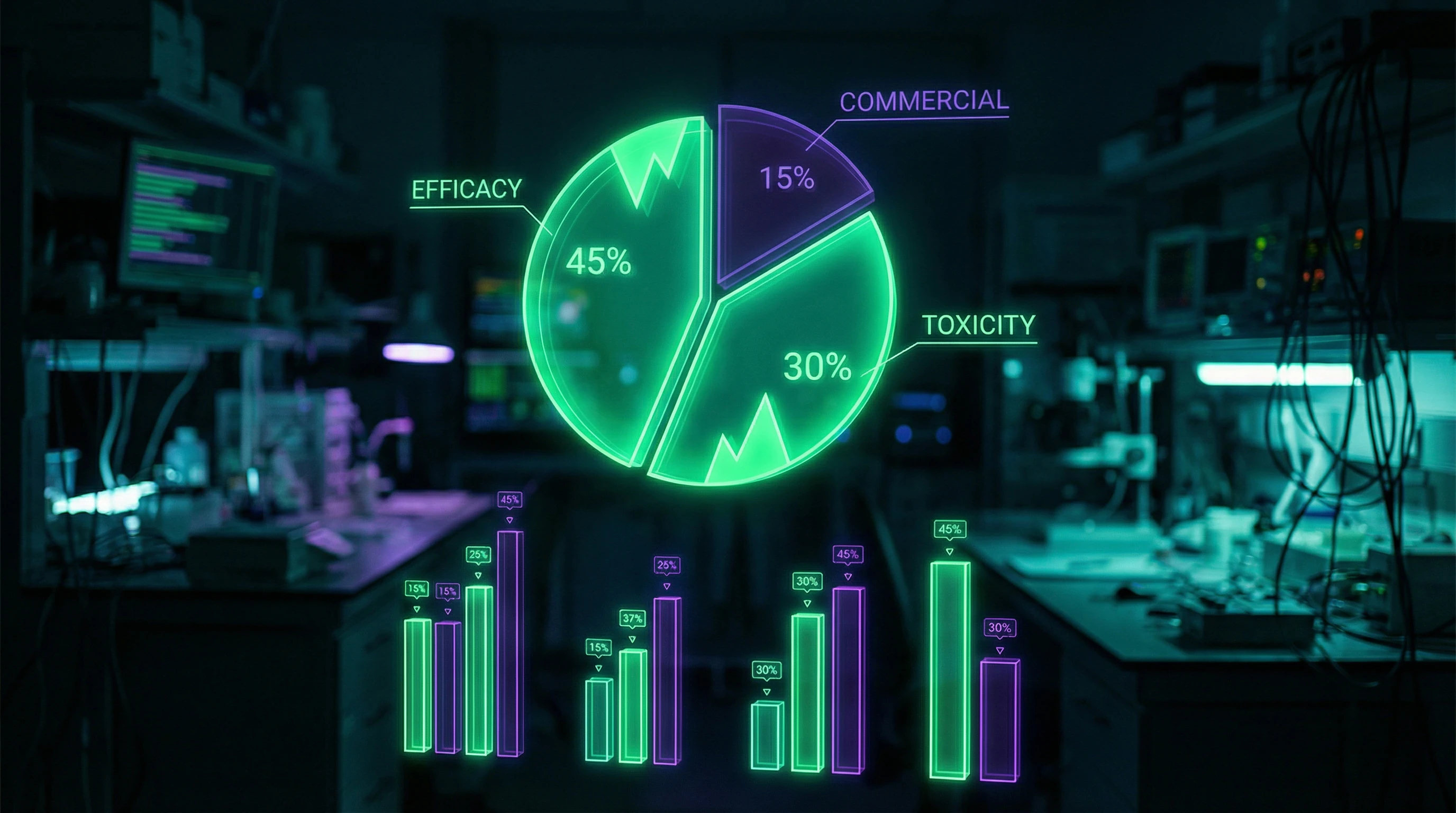
However, detailed analysis of trial termination reasons (available for some studies) shows predominance of objective scientific causes: insufficient efficacy (52%), unacceptable toxicity (28%), pharmacokinetic problems (11%). Commercial reasons ("company strategic decision") constitute less than 9%, and in most cases relate to startup bankruptcies or portfolio restructuring after mergers, not suppression of effective technologies.
- Check public ClinicalTrials.gov data on trial termination reasons
- Separate scientific reasons (efficacy, toxicity) from commercial ones
- Assess the proportion of cases where termination is linked to suspected suppression (usually absent from documentation)
- Compare with historical patterns of successful drug development (many went through failed trials)
🧬 Cancer Immunotherapy: How "Impossible" Cure Became Standard
The development history of cancer immunotherapy (checkpoint inhibitors: pembrolizumab, nivolumab) demonstrates that radically new approaches, initially met with skepticism, can progress from marginal idea to treatment standard in 10–15 years. In the 1990s, immunotherapy was considered a dead-end direction after IL-2 and vaccine approach failures.
If a suppression conspiracy existed, funding for PD-1/PD-L1 research would have been blocked at early stages. Instead, we observe a typical pattern of scientific progress: long period of fundamental research (James Allison, Tasuku Honjo—2018 Nobel Prize), risky biotech startup investments, subsequent acquisition by major companies and scaling. Today checkpoint inhibitors generate tens of billions of dollars in annual revenue—refuting the thesis about unprofitability of effective treatments.
If suppression is as systematic as the theory claims, why do radically new approaches still break through barriers and become standard?
💊 Antibiotics and Vaccines: Why Truly Effective Technologies Are Not Suppressed
Antibiotics and vaccines represent classic examples of technologies that radically cure or prevent diseases, eliminating long-term revenue streams from treating complications. If suppression theory is correct, development of new antibiotics and vaccines should have been blocked decades ago.
Reality is more complex: new antibiotic development has indeed slowed, but for economic reasons unrelated to conspiracy—low drug prices, short treatment courses, usage restriction policies to prevent resistance make R&D financially unattractive. This is a market failure problem, not suppression. Vaccines, conversely, are actively developed (COVID-19 vaccines created in record time, HPV vaccine prevents cervical cancer), which directly contradicts suppression logic.
- Market failure in antibiotic development
- Low prices and short courses make R&D unprofitable, but this is market failure, not conspiracy. Solution requires government intervention and incentive restructuring.
- Active vaccine development
- COVID-19 and HPV vaccines demonstrate that highly effective preventive technologies are developed and implemented when economic incentives are aligned.
🧾 Meta-Analysis of Whistleblower Cases: What Insiders Reveal
Over the past 30 years, dozens of whistleblowers from pharmaceutical companies have exposed various abuses: concealing side effect data (Vioxx/Merck), clinical trial manipulations (Paxil/GSK), illegal off-label marketing (Risperdal/J&J). These revelations led to tens of billions of dollars in fines and demonstrate that corporate abuses in pharmaceuticals are real and can be exposed.
Critically important: no whistleblower has provided evidence of systematic suppression of effective drugs for serious diseases. Manipulations with existing drugs are revealed, but not concealment of radical cures. This asymmetry requires explanation: if drug suppression is as widespread as other abuses, why is it never revealed by insiders?
More details on exposure mechanisms and the balance between criticism and proof in the article "Big Pharma and Whistleblowers: Finding Balance."
The Mechanism of Delusion: Why Economic Logic Doesn't Equal Proof of Conspiracy
The central error of suppression theory is conflating economic incentives with proof of an executed conspiracy. The fact that it would be profitable for companies to suppress radical cures doesn't mean they are doing it or can do it effectively. Learn more in the Thinking Tools section.
Incentive ≠ capability. Incentive ≠ execution. Incentive ≠ proof.
🔁 The Coordination Problem: Why Secret Collusion Among Thousands Is Impossible
The pharmaceutical industry includes hundreds of competing companies, tens of thousands of independent researchers at universities, and regulatory agencies across different jurisdictions. Effective suppression of radical technologies would require coordination among all these participants.
Any "defector" (startup, university lab, regulator in a small country) could bring the technology to market and gain competitive advantage. Conspiracy theory fails to explain the mechanism for such coordination without central control and in the presence of strong incentives to defect—the first mover gains enormous profit and reputation.
| System Participant | Incentive to Collude | Incentive to Defect (Expose) |
|---|---|---|
| Competing pharma company | Protect profits | Undermine competitor, reach market first |
| University laboratory | Sponsor pressure | Publication, grant, reputation, Nobel Prize |
| Small country regulator | International pressure | Attract investment, improve healthcare |
| Biotech startup | None | Maximum—only path to success |
🧬 The Information Leak Problem: Why Secrets Don't Hold for Decades
Modern science is a highly communicative environment with intensive information exchange: publications, conferences, employee transitions between companies. If an effective drug has been developed and suppressed, hundreds of people must know about it.
The probability that not one of them would disclose the information over 20–30 years (especially after retirement, when risks are minimal) approaches zero. Compare with other major secrets: the Manhattan Project was declassified 2 years after completion, the PRISM program was exposed by Snowden after 6 years, the Russian sports doping system after 4 years. A pharmaceutical conspiracy would need to hold for half a century without a single leak—statistically implausible.
- Information Asymmetry in Science
- Knowledge about a drug's mechanism is distributed among many participants (chemists, biologists, clinicians, regulators). Each sees a fragment. But if the fragments form a picture of "suppression," someone will notice and expose it—especially in the internet age of data leaks.
- Whistleblower Incentive
- A scientist exposing drug suppression would receive: worldwide fame, a place in medical history, possibly a Nobel Prize, funding for their own research. Risk: job loss (but they could relocate to another country). The balance clearly favors disclosure.
⚙️ The Technological Diffusion Problem: Why Knowledge Cannot Be Suppressed Globally
Scientific knowledge has the property of diffusion: ideas published in one laboratory are reproduced and developed in others. If the fundamental principles of radical cure are known from basic research, they cannot be "closed off" globally.
Researchers in different countries will independently work toward practical implementation. Suppression would require control over all world science, including universities in China, India, and Russia, where Western pharma corporations have no direct influence. The absence of breakthrough technologies from these jurisdictions (which would have enormous incentive to undermine Western pharmaceutical hegemony) indirectly suggests the barrier is not suppression but the objective complexity of the problem.
- Fundamental discovery is published in Nature or Science
- Researchers in 50+ countries read the article and begin replication
- Each sees results independently—suppression is impossible
- If results are confirmed, a race for practical implementation begins
- The first to bring it to market gains monopoly profit
- Incentive to defect is maximal at every stage
🧷 Attribution Error: Why Absence of Cure Doesn't Prove Suppression
Suppression theory commits a classic attribution error: observing the absence of radical cures for complex diseases (cancer, Alzheimer's, type 1 diabetes), it attributes this to malicious suppression, ignoring the alternative explanation—objective scientific complexity.
Cancer is not one disease but hundreds of different molecular subtypes; neurodegenerative diseases affect fundamental brain aging processes; autoimmune pathologies require fine-tuned immune system modulation. Medical history shows that progress in these areas is slow not because of conspiracy, but because the problems are genuinely extraordinarily complex.
Infectious diseases with simple causal relationships (bacterium → disease) were successfully solved with antibiotics within decades, despite the same economic incentives for pharma companies. If suppression worked, it would work everywhere.
When we see absence of a solution, we need to ask: is this the result of suppression or the result of the problem being genuinely difficult? Economic logic suggests the former; the history of science suggests the latter. Choosing between them requires evidence, not assumptions.
Cognitive Anatomy of the Myth: Which Psychological Mechanisms Sustain Belief in Suppression
The drug suppression theory exploits several powerful cognitive biases and emotional triggers, which explains its resistance to refutation. More details in the Logical Fallacies section.
🧩 Availability Heuristic and Personal Experience with the Healthcare System
Availability heuristic causes people to overestimate the probability of events that are easy to recall. Personal or family experience with serious illness, high drug prices, bureaucratic barriers in the healthcare system creates emotionally charged memories that are easily activated.
When someone watches a loved one die from cancer despite expensive treatment, the brain searches for an explanation. The suppression theory offers a ready answer: it's not that the treatment is ineffective, but that it's being hidden for profit. This narrative resolves the cognitive dissonance between the expectation of healing and the reality of death.
Pain and helplessness in the face of illness are not perceptual errors, but reality. The myth offers not comfort, but an enemy: it transforms randomness into conspiracy, and conspiracy is psychologically easier to bear than randomness.
🎯 Pattern-Seeking and Apophenia Under Uncertainty
The brain evolved to search for patterns. Under conditions of high uncertainty (diagnosis unclear, prognosis vague, treatment options contradictory), people begin to see connections that don't exist—apophenia.
Pharmaceutical corporations do indeed hide some data, lobby policy, manipulate marketing (S006). These real facts become an anchor for conspiratorial thinking: if they lie about one thing, they must lie about the main thing too.
- Real fact: a company concealed a side effect
- Cognitive leap: therefore, they're also hiding effective drugs
- Logical fallacy: the particular is generalized to the whole without evidence
🔄 Control Narrative and Restoration of Agency
The suppression theory restores a sense of control in a situation where there is none. Illness is chaos, randomness, helplessness. Conspiracy is order: the enemy is known, the motive is clear, the actions are logical.
A person who believes in suppression can take action: search for alternative drugs, criticize the system, warn others. This restores the illusion of agency, even if real control over the disease doesn't increase. The psychological gain from this illusion often outweighs the cost of refusing proven treatment.
| Mechanism | Psychological Gain | Cognitive Cost |
|---|---|---|
| Apophenia (pattern-seeking) | Illusion of understanding chaos | Ignoring alternative explanations |
| Restoration of agency | Sense of control and action | Rejection of proven treatment methods |
| Resolution of cognitive dissonance | Explanation for death and suffering | Hostility toward the medical system |
🌐 Social Reinforcement and Filter Bubbles
The internet creates an environment where the suppression theory is constantly reinforced. Algorithms recommend similar content, communities of like-minded individuals validate beliefs, criticism is perceived as proof of conspiracy.
A person who once believed in suppression enters an information bubble where each new search strengthens the original belief. This is not an individual's error—it's a systemic effect of social media architecture and search algorithms.
- Group conformity
- If a community believes in suppression, criticism of the theory is perceived as betrayal of the group. The social cost of defection is often higher than the cognitive cost of belief.
- Backfire effect
- Attempts to refute the myth with facts often strengthen belief in it. People interpret refutation as part of the conspiracy or an attack on their identity.
🛡️ Why Refutations Don't Work
The myth of drug suppression outlives its refutations because refutation requires cognitive resources, while the myth conserves them. The myth offers a ready answer to a complex question; refutation requires understanding statistics, research methodology, pharmaceutical economics.
Moreover, refutation is often perceived as a threat to the identity of someone who has already invested in this belief socially and emotionally. Abandoning the myth means admitting one's own error, losing status in the community, re-experiencing helplessness in the face of illness.
Myths are not defeated by facts because they solve a psychological problem that facts don't solve. As long as people feel helpless, apophenia and social reinforcement will be stronger than logic.
An effective debunking strategy must not only refute facts, but also offer an alternative narrative that restores agency and resolves cognitive dissonance without conspiracy theories. This requires not only knowledge of science, but also understanding of the psychology of belief.