 🏢 Pharmaceutical Company Data Concealment
Pharma Distrust: Between Evidence-Based Medicine and Conspiracy Theoriesλ
A study of pharmaceutical industry distrust in American society: from historical skepticism to post-pandemic reality
Overview
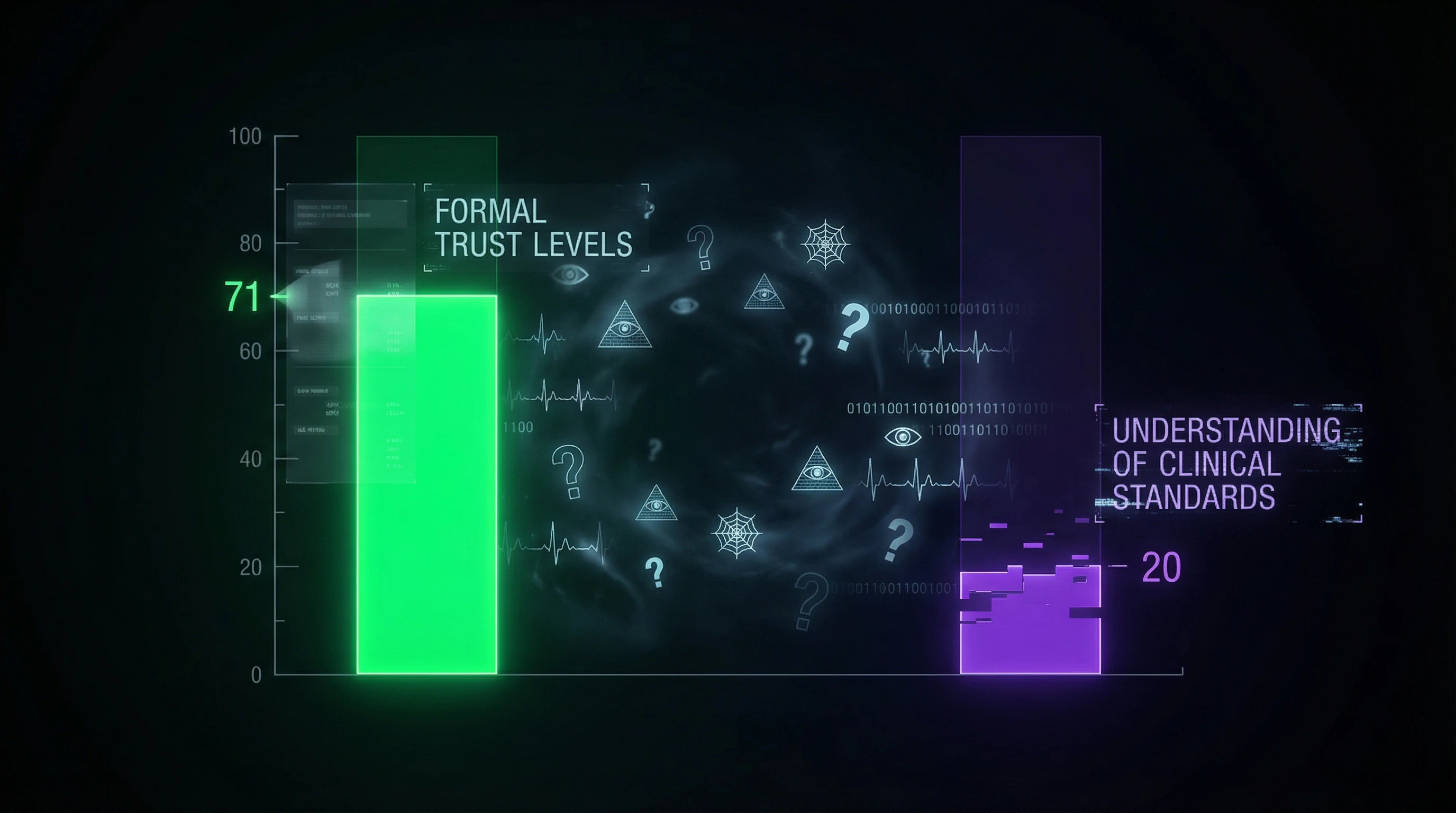
Trust in the pharmaceutical industry in the United States — 71 out of 100 points: recognition of medical achievements coexists with skepticism toward "Big Pharma." The COVID-19 pandemic intensified this contradiction 🧩: simultaneous trust and distrust in medical organizations created a unique social dynamic. Legacy beliefs in "secret cures" generate unrealistic expectations and preference for "hidden" treatment methods, while six core myths about evidence-based medicine form barriers to rational medication use.
🛡️
Laplace Protocol: Analysis of pharmaceutical distrust requires balance between acknowledging patients' legitimate concerns and debunking conspiratorial myths, grounded in clinical trial transparency and historical context of attitude formation.
Reference Protocol
Scientific Foundation
Evidence-based framework for critical analysis
Protocol: Evaluation
Test Yourself
Quizzes on this topic coming soon
Sector L1
Articles
Research materials, essays, and deep dives into critical thinking mechanisms.
🏢 Pharmaceutical Company Data Concealment 🏢 Pharmaceutical Company Data Concealment
 🏢 Pharmaceutical Company Data Concealment
⚡
Deep Dive
Trust Levels in Pharmaceuticals in the US: The Paradox of Numbers and Reality
Trust Statistics: 71 out of 100 and Its Meaning
The American pharmaceutical industry received a trust rating of 71/100 in 2023. This figure conceals a paradox: moderate trust in the system coexists with deep skepticism toward specific medications and recommendations.
Patients demonstrate contradictory attitudes—simultaneously trusting medical organizations while doubting their advice. This discrepancy between general trust and actual behavior creates a phenomenon of "statistical trust" that doesn't translate into decisions about taking medications.
| Level of Analysis | Attitude | Behavior |
|---|---|---|
| System as a whole | Trust (71/100) | Visiting clinics |
| Specific medication | Skepticism | Seeking alternatives, refusal |
| Doctor's recommendation | Doubt | Online verification, consulting others |
Post-Pandemic Effects: How COVID-19 Changed the Trust Landscape
The COVID-19 pandemic radically transformed attitudes toward the healthcare system and pharmaceuticals. Polarization occurred: simultaneous strengthening of both trust and distrust in medical institutions.
Accelerated vaccine development and emergency drug approvals created grounds for conspiracy theories about pharmaceutical companies "rushing," amplifying existing distrust in clinical trials.
Social perceptions of medical organizations became more polarized, while behavioral patterns often don't align with stated attitudes. Those who formally "trust" the system simultaneously seek information from unofficial sources and verify doctors' prescriptions.
Regional Differences: The Geography of Distrust
Trust levels in the pharmaceutical industry vary across the United States. Differences stem from unequal access to quality medical care, population education levels, and local cultural characteristics in perceiving medicine.
- Developed regions (major cities)
- Higher trust in evidence-based medicine, better access to information about clinical trials, higher health literacy.
- Remote areas
- Adherence to traditional practices, skepticism toward "official" pharmaceuticals, limited access to quality medical information.
- Intermediate regions
- Mixed attitudes: trust in local doctors while simultaneously distrusting federal recommendations and large pharmaceutical companies.

Six Myths About Evidence-Based Medicine: Anatomy of Distrust
"Evidence-Based Medicine Against Doctors and Patients"
The first two myths claim that EBM is directed against doctors and against patients. The myth about opposing doctors is based on the misconception that standardized protocols undermine clinical experience and professional autonomy.
The myth about opposing patients is built on the belief that unified approaches ignore individual needs and turn treatment into an assembly line. In reality, evidence-based medicine integrates three components: best scientific evidence, clinical expertise, and patient preferences.
- Scientific evidence — results of clinical trials and systematic reviews
- Clinical expertise — physician's experience, knowledge of the specific patient's characteristics
- Patient preferences — their values, fears, life circumstances
"Evidence-Based Medicine Serves Big Pharma"
The third myth — a conspiracy theory about pharmaceutical corporations controlling medical science. According to this narrative, clinical trials are sponsored by drug manufacturers to obtain favorable results, while independent research is suppressed.
The myth is fueled by real cases of conflicts of interest in the pharmaceutical industry, but extrapolates isolated violations to the entire evidence-based medicine system.
The term "pharmaceutical conspiracy theory" describes general patient distrust of the medical community and corporations, creating a barrier to accepting scientifically grounded recommendations.
Distrust of Clinical Trials and "Hidden Drugs"
The fourth and sixth myths concern distrust of clinical trial methodology and belief in the existence of "hidden effective drugs." Patients doubt the reliability of randomized controlled trials, not understanding the rigorous protocols for testing safety and efficacy.
Simultaneously, there exists a belief that doctors intentionally conceal effective treatments — a narrative rooted in the Soviet era with its myths about "secret medicines." The fifth myth about the superiority of "natural" over synthetic complements this picture, creating a preference for unproven traditional remedies over drugs with proven efficacy.
- Randomized controlled trials — the gold standard for testing efficacy, eliminating subjectivity
- Double-blind testing — neither doctor nor patient knows who receives the drug or placebo
- Pre-registration of results — protection against data manipulation
- Publication of negative results — mandatory disclosure of failed trials
Soviet Legacy and "Secret Medicines": Historical Roots of Distrust
Historical Roots: The Myth of Classified Developments
Belief in the existence of "secret Soviet medicines" formed a persistent pattern of distrust toward official medicine that persists in modern Russia.
During the Soviet period, the secrecy of medical developments and limited access to information about pharmaceutical research created fertile ground for mythologizing "special" drugs available only to the elite. This narrative generated unrealistic expectations about pharmaceutical capabilities and the conviction that effective medicines are intentionally hidden from the general public.
Historical attitudes continue to influence modern perceptions of the pharmaceutical industry, creating a preference for "hidden" or "special" treatment methods over standard protocols.
Impact on Modern Attitudes: From USSR to "Big Pharma"
The Soviet legacy has transformed into modern skepticism toward the global pharmaceutical industry, while preserving the basic structure of distrust.
| Period | Object of Distrust | Object of Belief |
|---|---|---|
| Soviet | Western medicine | Domestic developments |
| Modern | Entire system (including Russian pharmaceuticals) | "Hidden" treatment methods |
Paradox: a high trust score of 71/100 coexists with widespread distribution of drugs with unproven efficacy. Homeopathic Oscillococcinum is found in 2/3 of Montreal pharmacies, despite the absence of scientific evidence.
The contradiction between formal trust and actual consumption of unproven remedies demonstrates the depth of historically conditioned distrust toward evidence-based medicine.
Unproven Medications: The Economics of Illusion and Regulatory Vacuum
Oscillococcinum and Other Examples of Mass Delusion
The homeopathic remedy Oscillococcinum is found in two-thirds of Montreal pharmacies, despite a complete absence of scientific evidence for its effectiveness. This phenomenon is not limited to one city or country—unproven medications constitute a significant segment of the pharmaceutical market in many countries, including the United States.
Their presence on pharmacy shelves creates an illusion of medical legitimacy: consumers logically assume that regulators would not allow ineffective products to be sold. The paradox is that the very availability of such medications undermines trust in the pharmaceutical system as a whole.
If pharmacies sell placebos, how can we distinguish them from medications that actually work?
Regulatory Failures and Conflicts of Interest
The problem of regulating unproven medications is rooted in the contradiction between scientific standards and commercial interests. Research on recommendations for cephalgia (headache) revealed substantial discrepancies between rational medical prescriptions and pharmacist advice in drugstores.
- Self-medication culture: patients rely on pharmacist recommendations, which may be motivated by commercial profit rather than evidence base.
- Regulatory agencies balance between consumer protection and the economic interests of the pharmaceutical industry.
- Result: space for medications whose effectiveness is not confirmed by rigorous clinical trials.
Erosion of Trust Through the Presence of Ineffective Products
The presence of unproven medications on the market creates a cascading effect of distrust. When patients discover they have spent money on an ineffective product, their skepticism spreads to the entire pharmaceutical system, including medications that actually work.
This is particularly dangerous in the context of evidence-based medicine: each case of disappointment with an ineffective medication reinforces myths that "clinical trials are unreliable" and "EBM serves the interests of Big Pharma." This vicious cycle makes it difficult to implement scientifically sound approaches to treatment.

Pharmaceutical Conspiracy Theories: Anatomy of Distrust and Social Consequences
Typology of Conspiracy Theories in Pharmaceuticals
Pharmaceutical conspiracy theories form a systematic structure of distrust, encompassing all levels of the medical system. Three key narratives—"EBM against doctors," "EBM against patients," and "EBM serves Big Pharma"—are not isolated but form an interconnected belief system where each element reinforces the others.
The myth of hidden effective treatments is historically rooted in narratives about "secret medicines," creating unrealistic expectations and distrust of official medicine. Modern conspiracy theories expand the spectrum: manipulation of laboratory test results, concealment of data by pharmaceutical companies, global control schemes.
Conspiracy narratives offer simple explanations for complex phenomena—this is their main psychological strength and their main danger.
Psychological Mechanisms of Conspiratorial Thinking
The appeal of pharmaceutical conspiracy theories is rooted in cognitive mechanisms that simplify reality. The post-pandemic period revealed a paradox: simultaneous trust and distrust in medical organizations, a disconnect between social perceptions and actual behavior when seeking help.
This cognitive dissonance is resolved through conspiracy narratives. Regional differences in levels of trust in healthcare show that conspiratorial thinking is not universal but depends on local context and historical experience.
- Simplification of complexity through a single enemy (Big Pharma, government, elites)
- Reinterpretation of random coincidences as patterns
- Rejection of scientific rationality in favor of intuitive judgments ("natural is always better")
- Distrust of clinical trials as instruments of control
Social Consequences and Healthcare Barriers
The spread of conspiracy theories creates measurable barriers to effective healthcare. Patients refuse evidence-based treatments in favor of unproven alternatives—particularly dangerous with serious diseases where delay can be fatal.
Distrust of laboratory tests leads to ignoring important diagnostic data. Economic losses: patients spend money on ineffective drugs, the healthcare system bears costs from complications that could have been avoided with timely treatment.
| Barrier | Mechanism | Consequence |
|---|---|---|
| Treatment refusal | Belief in hidden methods or natural alternatives | Disease progression, complications |
| Ignoring diagnostics | Distrust of test results | Late diagnosis, lost time |
| Financial losses | Spending on ineffective drugs | Resource depletion, refusal of proven methods |
Clinical Research Standards and Transparency: The Gap Between Science and Public Perception
Clinical Trial Phases and International Protocols
Clinical trials follow a four-phase system developed by the international scientific community. Each phase addresses a specific objective: the first tests safety on healthy volunteers, the second examines efficacy and dosage on patients with the target condition, the third compares the drug with existing treatments on a large sample, and the fourth monitors side effects after approval.
These protocols are regularly updated based on accumulated experience. Standards include requirements for sample size, observation duration, patient inclusion/exclusion criteria, and statistical analysis methods.
International Guidelines and Standards Harmonization
The FDA (USA), EMA (Europe), and national regulators have developed unified requirements for clinical research. Harmonization ensures mutual recognition of results and accelerates patient access to innovative drugs.
However, the stringency of these standards means lengthy timelines and high development costs. This paradox fuels conspiracy theories about pharmaceutical companies hiding data: people see only delays and prices, but not the system of checks that ensures them.
The Gap Between Scientific Standards and Public Understanding
The public is unaware of the multi-layered verification system that every drug undergoes. Scientific communication uses specialized language, while media simplify or sensationalize information about clinical research.
A trust rating of 71/100 for American pharmaceuticals alongside widespread myths about evidence-based medicine demonstrates that formal trust does not correlate with understanding of scientific processes.
This gap is a key factor in distrust. People don't distinguish between the rigor of standards and their transparency to the public. The result: a drug has passed all checks, but a person remains uncertain because they don't understand what exactly was tested and why it matters.
- Scientific standards exist and are regularly updated
- Information about them is inaccessible to the general audience
- Media and conspiracy theories fill the information vacuum
- Distrust grows not from lack of checks, but from their invisibility
Knowledge Access Protocol
FAQ
Frequently Asked Questions
In 2023, the trust level in the U.S. pharmaceutical industry stood at 71 out of 100 points. This is a relatively high indicator, but not absolute trust. Following the COVID-19 pandemic, contradictory trends have emerged: simultaneous trust and distrust in medical organizations, with substantial regional variations.
Pharma-distrust is patients' skeptical attitude toward pharmaceutical corporations, their profit-seeking motives, and the medical community's recommendations. It includes doubts about the effectiveness of certain drugs, clinical trial processes, and drug approval systems. This is a multifaceted phenomenon affecting trust in medicine as a whole.
Six main myths about evidence-based medicine have been identified, including beliefs about pharmaceutical conspiracies and distrust of clinical research methodology. A widespread view holds that EBM serves the interests of "Big Pharma" and works against doctors and patients. These misconceptions create barriers to adopting scientifically validated treatment approaches.
Belief in "secret" miracle cures created unrealistic expectations about pharmaceutical capabilities and distrust of official medicine. These historical attitudes persist and influence contemporary pharma-distrust. Many prefer "hidden" or "special" treatment methods instead of standard medical recommendations.
These are medications lacking reliable clinical evidence of effectiveness yet continuing to be sold in pharmacies. For example, Oscillococcinum is present in 2/3 of Montreal pharmacies despite the absence of scientific confirmation. The availability of such drugs undermines trust in pharmaceutical regulation and amplifies skepticism.
No, this is a widespread conspiracy theory without evidence. Pharmaceutical companies undergo rigorous multi-phase clinical trials under international oversight. Developing a truly effective drug brings companies enormous profit and reputation, so concealing it would be economically disadvantageous.
Yes, modern clinical trials follow strict international standards and undergo multiple phases of safety and efficacy verification. The problem lies in the gap between high research standards and public understanding of these processes. Transparency and accessibility of information about methodology help increase trust.
Look for information about the drug's clinical trials in authoritative medical databases and registries. Check for regulatory approval from oversight agencies. Consult with physicians practicing evidence-based medicine, and avoid drugs promising "miraculous" effects without scientific confirmation.
The problem is linked to deficiencies in pharmaceutical regulation and commercial interests. Some drugs received registration before strict evidence-based requirements were introduced. Pharmacies are motivated by sales, and patients are often unaware of the differences between proven and unproven efficacy.
Clinical trials include several mandatory phases: preclinical studies on animals, then three phases on humans with gradual increases in participant numbers. Safety, efficacy, optimal dosages, and side effects are tested. After registration, post-marketing surveillance (phase IV) is conducted to identify rare adverse reactions.
Scientific criticism relies on specific research data, methodology, and reproducible results. Conspiracy theories use emotional arguments, accusations of plots without evidence, and appeal to fears. Verify information sources, check for peer-reviewed publications, and consult opinions from independent experts.
Yes, pharmaceutical distrust leads to rejection of effective treatment, self-medication with unproven remedies, and non-compliance with medical recommendations. This increases risks of disease complications and mortality. Distrust of vaccination and antibiotics is particularly dangerous, creating threats to public health.
This is a misconception—evidence-based medicine integrates the best scientific data with physician clinical experience and patient preferences. EBM doesn't replace medical expertise but complements it with objective data. An experienced physician uses evidence to make more informed decisions in each specific case.
Natural origin doesn't guarantee safety—many poisons and toxins are completely natural. Herbal preparations also have side effects and interactions with other medications. The safety of any remedy is determined by clinical studies, not by its origin.
Yes, there is a phenomenon of factitious hypoglycemia—intentional misuse of blood sugar-lowering medications. This is a dangerous practice related to distrust in proper medication use and can lead to serious consequences. Such behavior requires psychological help and medical supervision.
Trust levels in pharmaceuticals vary significantly between U.S. regions due to differences in access to quality healthcare and education levels. Regions with better medical infrastructure typically show higher trust in mainstream medicine. The post-pandemic period has intensified these regional disparities in perception of the pharmaceutical industry.