 💉 Microchipping and World Government
Global Control: Management Mechanisms in Healthcare and Geopoliticsλ
Research on international coordination strategies in public health, information management, and global resource allocation
Overview
Global control is not a conspiracy, but a set of coordination mechanisms: from WHO vaccination programs to digital platform governance. Systematic reviews document the gap between declarations and practice 🛡️ — inequality in vaccine access, internet fragmentation, failures in cross-country coordination. Psychological research adds: perceived control at the individual level declines over time, which calls into question the effectiveness of global strategies.
🛡️
Laplace Protocol: Global control is not a monolithic system — it is a collection of heterogeneous mechanisms with varying effectiveness, requiring critical analysis of sources and an interdisciplinary approach for objective assessment.
Reference Protocol
Scientific Foundation
Evidence-based framework for critical analysis
Protocol: Evaluation
Test Yourself
Quizzes on this topic coming soon
Sector L1
Articles
Research materials, essays, and deep dives into critical thinking mechanisms.
💉 Microchipping and World Government 💉 Microchipping and World Government
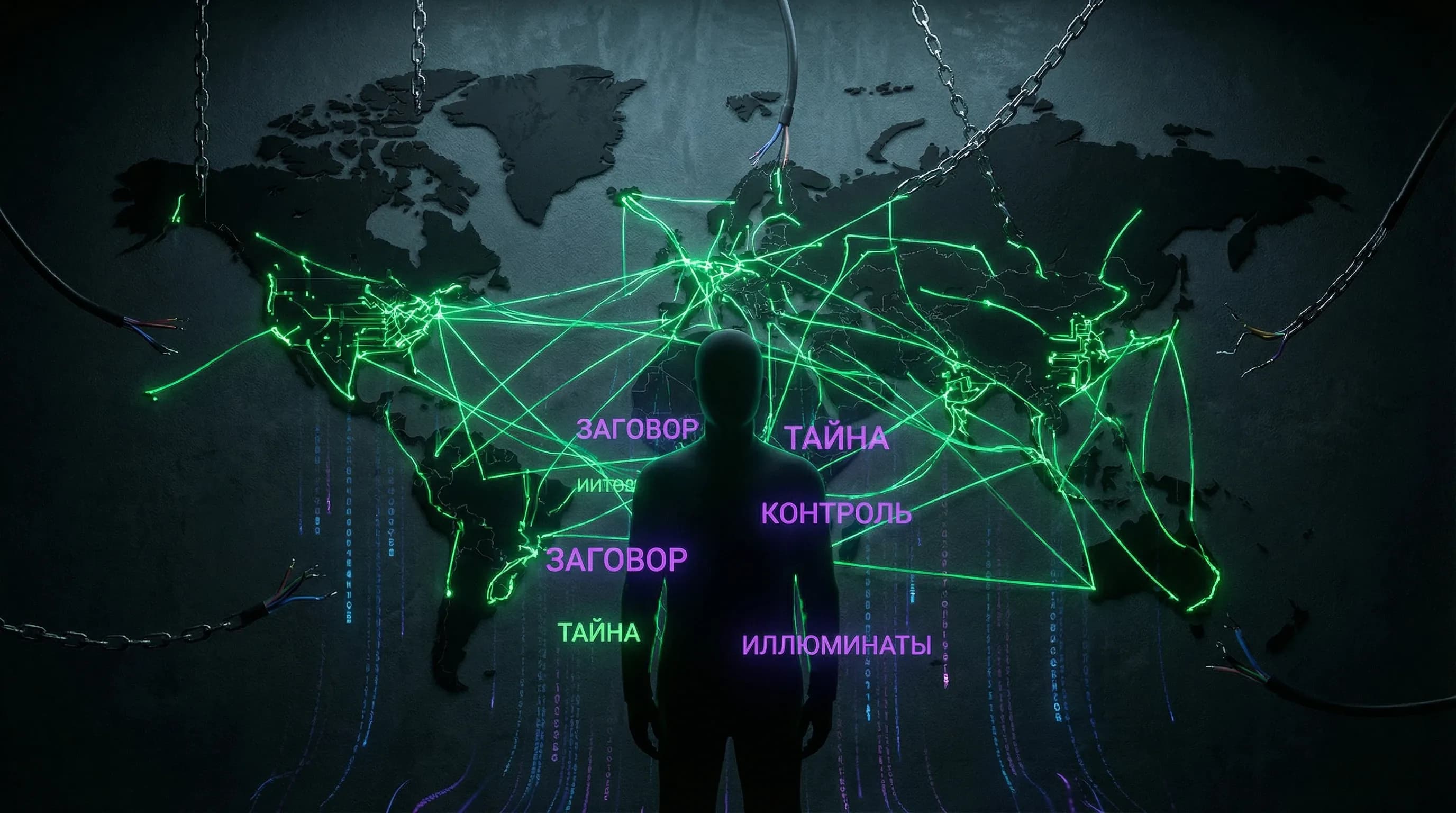 💉 Microchipping and World Government
⚡
Deep Dive
Global Infectious Disease Control Strategies: From Vaccination to Zoonoses
Global infectious disease control is a coordinated system of international measures for preventing, containing, and eliminating epidemic threats. Effectiveness depends on the degree of international coordination and equitable resource distribution.
Key elements: mass vaccination programs, epidemiological surveillance systems, rapid outbreak response protocols.
Coordination of International Vaccination Programs
International vaccination programs operate through a multi-tiered system: WHO, national health ministries, non-governmental organizations. Successful implementation requires not only vaccine supplies but also developed logistical infrastructure for cold chain maintenance in remote regions.
Delays in vaccine distribution of 2–3 months can reduce program effectiveness by 40–60%.
Funding relies on a combination of government budgets, international funds, and private investment. Preventing one disease case through vaccination costs 5–10 times less than treating and managing epidemic consequences.
| Indicator | High-Income Countries | Low-Income Countries |
|---|---|---|
| Vaccination Coverage | 85–95% | 35–65% |
| Gap from Global Targets | 0–15 p.p. | 30–50 p.p. |
Management of Zoonotic Diseases and Echinococcosis
Zoonotic diseases (transmitted from animals to humans) constitute 60% of all known infectious pathogens and 75% of new or emerging infections. Echinococcosis, caused by tapeworms of the genus Echinococcus, requires an integrated approach due to the parasite's complex life cycle.
- Dog Deworming
- Every 6–8 weeks; reduces prevalence by 80–90% over 5–7 years.
- Livestock Slaughter Control
- Sanitary processing of carcasses, preventing dog access to offal.
- Health Education
- Training in hygiene, food safety, animal handling practices.
- Epidemiological Monitoring
- Case tracking, outbreak identification, program effectiveness assessment.
The economic burden of echinococcosis is estimated at billions of dollars annually—direct medical costs and productivity losses. Critical success element: engaging local communities and accounting for cultural aspects of human-animal interaction.

Healthcare and Vaccine Access Inequality: Global-Scale Barriers
Uneven distribution of medical resources is a fundamental obstacle to global control of infectious diseases. High-income countries receive new vaccines on average 5–10 years earlier than low-income countries.
This inequality undermines the effectiveness of global strategies: pathogens recognize no national borders, and infection hotspots in one region become reservoirs for spread to others.
- Logistical barriers: inadequate cold chain, limited transportation, shortage of medical personnel in remote regions.
- Economic barriers: the price of new vaccines can exceed the annual per capita health budget in the poorest countries.
- Political barriers: weak systems, corruption, conflicts, insufficient political will.
- Information barriers: distrust and misinformation reduce coverage even when supplies are available.
Mechanics of Efficiency Loss
Up to 50% of vaccines in hot-climate countries lose effectiveness due to temperature control failures. In conflict zones, vaccination coverage drops 60–80% compared to stable regions.
The cold chain isn't just logistics. It's a failure point where global strategy meets local reality and often loses.
Economic Burden and the Investment Paradox
A moderate-severity pandemic leads to global GDP losses of 3–5% (trillions of dollars). For low-income countries, infectious disease outbreaks consume up to 10–15% of the national health budget.
Every dollar invested in vaccination programs returns $16–44 through prevented costs and preserved productivity. The paradox: short-term thinking by policymakers and insufficient funding between crises create cycles of underinvestment and recurring epidemics.
The result—rational behavior at the individual state level (save now) generates an irrational outcome at the global level (pay more later).
Information Control and Digital Platforms: The New Architecture of Global Influence
Digital platforms have transformed the mechanisms of global information control, creating an unprecedented concentration of power over information flows in the hands of a limited number of technology corporations. The five largest platforms control over 70% of the global digital advertising market and shape the information agenda for billions of users.
This concentration creates new forms of control that differ from traditional state censorship mechanisms through their algorithmic nature and cross-border reach.
Managing Information Flows Through Technology Platforms
Recommendation and content moderation algorithms function as invisible information gatekeepers, determining which content gains distribution and which remains unnoticed. Research demonstrates that algorithmic systems create information bubbles, reinforcing users' existing beliefs and limiting exposure to alternative viewpoints.
The opacity of algorithms complicates independent assessment of their impact: platforms rarely disclose details of their ranking systems' operations, citing trade secrets.
Content moderation mechanisms face a contradiction between freedom of expression and the need to restrict harmful information. Platforms employ a combination of automated systems and human moderators, but the scale of the task is enormous: Facebook processes millions of reports daily.
- Inconsistent application of moderation rules
- Cultural biases in content evaluation
- Insufficient accountability for blocking decisions
Internet Fragmentation and Regional Regulation
The global internet is undergoing a process of fragmentation driven by national regulatory regimes, technological standards, and geopolitical conflicts. The concept of "digital sovereignty" prompts states to create national internet segments with local rules for data storage, content moderation, and service access.
| Model | Mechanism | Effect |
|---|---|---|
| Chinese ("Great Firewall") | Large-scale traffic filtering | Complete control over information flows |
| European (GDPR) | Strict data processing requirements | Privacy protection, limitation of information collection |
Fragmentation creates contradictory effects: states protect national interests and cultural values, but undermine the universality of the internet and create barriers to cross-border information exchange. Technology companies are forced to adapt services to multiple jurisdictions, which increases operational costs and may limit innovation.
Deepening fragmentation may lead to the formation of isolated digital ecosystems, incompatible with each other.
Geopolitical Aspects of Resource Control
Competition for Natural Resources as a Driver of Global Control
Control over natural resources remains a central element of geopolitical competition in the 21st century, determining the balance of power between states and transnational corporations. Energy resources, rare earth metals, and water reserves become objects of strategic planning, where access to them provides not only economic advantage but also political influence.
Globalization has not eliminated but transformed the mechanisms of resource control, shifting competition from the military sphere to the realm of economic sanctions, technological restrictions, and information pressure.
| Control Instrument | Mechanism of Action | Vulnerability |
|---|---|---|
| Energy Resources | Import dependence creates political leverage | Supply diversification and alternative technologies |
| Critical Infrastructure | Control of pipelines, logistics, digital networks | Regional blocs strive for resource autonomy |
| Rare Earth Metals | Monopolization of production and processing | Development of alternative materials and recycling |
Energy crises of recent years demonstrate how dependence on strategic resource imports can be used as an instrument of political pressure. The formation of regional blocs reflects attempts to achieve resource autonomy through diversification and technological innovation.
Hybrid Strategies and Deep State Theories
The concept of hybrid control combines traditional mechanisms of state governance with new instruments of information influence, cyber operations, and economic coercion. Academic literature actively discusses theories of the "deep state"—informal networks of influence operating parallel to official institutions and determining strategic decisions outside public oversight.
These concepts reflect growing distrust in the transparency of decision-making processes at the global level, though they raise debates regarding empirical verification.
Hybrid strategies are characterized by the blurring of boundaries between war and peace, state and non-state actors, overt and covert operations. The use of proxy structures, disinformation campaigns, and manipulation of financial flows becomes an element of modern global control.
Such strategies are effective under conditions of information uncertainty, when it is difficult to attribute actions to specific actors and apply traditional accountability mechanisms. This creates asymmetry: the agent acts covertly, the victim cannot identify the source and respond adequately.

Psychological Dimensions of Perceived Control
Longitudinal Studies of Control Across the Lifespan
Perceived control—the belief in one's ability to influence one's own life—is not stable. Longitudinal data show a decline in global perceived control with age, especially after 60, linked to the accumulation of uncontrollable life events and physiological changes.
People experience high control in personal domains while simultaneously feeling helpless before global processes. Perception of control varies depending on cultural norms of individualism and collectivism, as well as the degree of political freedoms in society.
| Control Domain | Characteristic | Consequences of Decline |
|---|---|---|
| Personal | Managing everyday decisions | Local influence remains intact |
| Global | Influence on macro-systems | Anxiety, depression, reduced well-being |
| Cultural | Depends on individualism/collectivism | Different adaptation patterns |
Impact of Surveillance Systems on Individual Perception
Digital surveillance systems create a paradox: technologies promise expanded control over life, yet intensify the sense of constant monitoring and restricted autonomy. Psychologists document the phenomenon of "digital helplessness"—awareness of the scale of data collection leads to passivity and abandonment of privacy protection.
The opacity of algorithms and complexity of technical systems make control inaccessible to ordinary user understanding. This amplifies the sense of powerlessness before invisible mechanisms.
Prolonged exposure to surveillance systems alters behavior even in the absence of actual sanctions—the "panoptic control" effect. People self-censor, avoid certain topics in communication, and adjust public behavior according to presumed expectations of observing systems.
In authoritarian contexts the effects are more pronounced, but even in democratic societies a "chilling effect" on freedom of expression is documented. Self-censorship becomes automatic, requiring no explicit coercion.
Methodological Approaches to Studying Global Control
Systematic Reviews and Meta-Analyses
Systematic literature reviews on global control in public health demonstrate the methodological rigor necessary for evaluating the effectiveness of international interventions.
Meta-analyses of infection control strategies reveal significant heterogeneity in outcomes depending on implementation context, resource availability, and healthcare system quality. Universal protocols require adaptation to local conditions to achieve stated effectiveness.
Most systematic reviews focus on quantitative effectiveness indicators, insufficiently accounting for qualitative aspects of implementation and sociocultural barriers. Publication bias—when negative intervention results remain unpublished—distorts the overall picture of effectiveness.
Researchers call for the development of mixed methodologies that integrate quantitative outcome data with qualitative analysis of implementation processes and target group perceptions of control measures.
Interdisciplinary Research Integration
The phenomenon of global control requires combining methods from political science, sociology, psychology, epidemiology, and information sciences. Integration is hindered by differences in epistemological foundations, terminology, and standards of evidence across disciplines.
Attempts to create unified conceptual frameworks encounter reductionism, where the complexity of the phenomenon is simplified to meet the methodological requirements of individual disciplines.
- Network analysis for mapping relationships among global control actors
- Big data methods for identifying patterns of informational influence
- Agent-based modeling for simulating effects of control strategies
- Transparency of methodological choices and open data access for result reproducibility
- Independent verification of findings and ethical review of scientific data use
Ethical aspects of global control research require special attention, given the potential for scientific data to be used to strengthen, rather than limit, control mechanisms.

Knowledge Access Protocol
FAQ
Frequently Asked Questions
These are coordinated international strategies to prevent and contain the spread of infections across borders. Includes vaccination programs, outbreak monitoring, and management of zoonotic diseases like echinococcosis. Systematic reviews demonstrate the necessity of coordinated actions between countries for effective control.
Economic inequality and logistical barriers create a gap in vaccine access between developed and developing countries. Wealthy nations purchase supplies in advance, leaving poor regions without protection. This significantly reduces the effectiveness of global disease control programs.
Tech giants manage content distribution through algorithms, moderation, and regional restrictions. They determine what information reaches users in different countries. Internet fragmentation strengthens this control at the national level.
No, this is a misconception. Control is fragmented among multiple actors with competing interests: states, corporations, international organizations. Different mechanisms operate in various spheres (healthcare, information, resources) without a single center of control.
Longitudinal studies demonstrate that the sense of control over one's own life decreases with age. This is a psychological construct reflecting a person's belief in their ability to influence events. Surveillance systems additionally affect individual perceptions of autonomy.
Requires an interdisciplinary approach: veterinary surveillance, vector population control, public health education. For echinococcosis, deworming of dogs and livestock slaughter control are critical. Coordination between medical and veterinary services is mandatory for success.
Control is distributed between major economies and resource-extracting states depending on resource type. Oil is controlled by OPEC countries and the USA, rare earth metals by China, food by grain exporters. Geopolitical competition for resource access remains a central issue in international relations.
Start by defining clear criteria for source inclusion and search databases. Verify peer review, publication relevance, and author qualifications. Use an interdisciplinary approach, including medical, political science, and psychological sources for a complete picture.
This is an exaggeration. While digital platforms have significant influence, internet fragmentation, regional regulation, and technical limitations prevent total control. Deplatforming and national firewalls create isolated information spaces.
These are combinations of military, economic, informational, and diplomatic methods of influence without open conflict. Include cyberattacks, disinformation, economic sanctions, and proxy conflicts. Deep state theories are often linked to such strategies of covert influence.
Awareness of surveillance changes behavior through self-censorship and conformity effects. People adjust their actions knowing they're being monitored, which reduces the sense of personal control. Psychological research documents increased anxiety and altered communication patterns under surveillance.
Primary challenges include insufficient funding, shortage of trained personnel, and non-compliance with protocols. Antibiotic resistance complicates treatment of hospital-acquired infections. Systematic reviews reveal significant gaps in implementing evidence-based control practices.
Division of the internet into regional segments with different regulations weakens unified governance mechanisms. Countries create national segments with their own rules, complicating international coordination. This impacts information control, cybersecurity, and digital commerce.
Theoretically possible for specific diseases with mass vaccination, as demonstrated by smallpox eradication. However, healthcare access inequality, anti-vaccine movements, and emergence of new pathogens make complete eradication of most infections an extremely challenging task.
Researchers combine epidemiological data, political science analysis, psychological surveys, and economic modeling. Meta-analyses integrate findings from different disciplines for holistic understanding. Such integration is necessary due to the multifaceted nature of global control phenomena.
No, this is a common conspiracy theory misconception. Decisions are made by multiple independent actors: WHO in healthcare, national governments in regulation, corporations in technology. Their interests often conflict, which precludes the existence of a single controlling center.