
What QAnon is as a mass delusion phenomenon — defining the boundaries of a consciousness epidemic
QAnon emerged in October 2017 on the imageboard 4chan as a series of anonymous posts from a user "Q," allegedly possessing clearance to classified U.S. government information. The central claim: a global elite operates a pedophilic network, while Donald Trump secretly fights the "deep state." More details in the Financial Scams section.
Clinical definition requires precision: QAnon is not a singular delusion but a distributed belief system with characteristics of collective psychosis (S007).
Structural components of QAnon as a belief system
Philosophical analysis of delusions identifies three criteria: fixity (resistance to refutation), falsity (inconsistency with reality), and atypicality (deviation from cultural norms) (S001). QAnon demonstrates all three but adds a fourth—a self-sustaining narrative structure.
QAnon functions as a folkloric system where each follower becomes a co-author of the myth, interpreting "drops" from Q through the lens of confirming events.
Empirical analysis of QAnon's network infrastructure identified 1,156 connected websites forming a dense ecosystem of mutual reinforcement (S002). These are not isolated pockets of belief—this is a coordinated information network with aggregator nodes, "research" exchange platforms, and cross-validation mechanisms.
- QAnon network architecture
- Resembles a distributed computing system where each node processes information through a unified interpretation protocol. This explains why refuting individual "proofs" doesn't collapse the system as a whole.
Distinction from clinical delusions: social vs. individual pathology
Classical psychiatry views delusions as symptoms of individual pathology—schizophrenia, bipolar disorder, delusional disorders. But QAnon demonstrates the phenomenon of "folie à plusieurs"—collective delusion where beliefs are transmitted socially rather than arising from neurochemical imbalance (S007).
| Clinical delusions | QAnon as collective delusion |
|---|---|
| Idiosyncratic (patient believes they are Napoleon) | Offers a shared narrative framework adaptable to local contexts |
| Arise from neurochemical imbalance | Transmitted socially through network mechanisms |
| Isolated in individual consciousness | Embedded in collective information infrastructure |
Research on the Parler platform identified 28,000+ active QAnon accounts with characteristic behavioral patterns: high posting frequency, use of specific hashtags (#WWG1WGA, #TheStorm), cross-references to "evidence" (S008).
The demographic profile refutes the stereotype of marginalized individuals: among supporters are educated professionals, parents, former skeptics. This points to psychological mechanisms unrelated to cognitive deficit and requires analysis of consciousness control mechanisms at the level of social architecture, not individual pathology.
Steelman Analysis: Seven Strongest QAnon Arguments — Why People Believe Despite the Facts
Intellectual honesty requires examining the most compelling arguments from the opposing side. The steelman approach is not a straw man, but the strongest possible version of an opponent's position. More details in the Coaching Cults section.
For QAnon, this is critically important: dismissing millions of supporters as "idiots" means ignoring the real psychological mechanisms that make conspiracy theories attractive. Mind control works through exploiting cognitive vulnerabilities, not through stupidity.
🔍 Argument 1: Documented Cases of Elite Pedophile Networks
QAnon supporters point to real scandals: the Jeffrey Epstein case, the Catholic Church scandal, the British grooming case in Rotherham. The logic: if such networks exist and were covered up by authorities, why couldn't a larger-scale conspiracy exist?
This argument exploits confirmed facts to extrapolate to unproven claims — a classic example of "slippery slope" reasoning, but psychologically powerful.
🧠 Argument 2: Distrust of Institutions as a Rational Position
Research shows: trust in government institutions, media, and scientific organizations is at historic lows in Western democracies (S003). QAnon supporters argue: if institutions lied about the Iraq War, the 2008 financial crisis, NSA surveillance (before Snowden's revelations), why should they be trusted now?
This argument turns skepticism — an epistemic virtue — into a weapon against facts.
📊 Argument 3: "Do Your Own Research" as Epistemic Autonomy
QAnon promotes the idea of independent research: don't trust authorities, verify for yourself. This resonates with libertarian values and the scientific ethos of skepticism.
The problem: "research" happens in echo chambers, where algorithms curate confirming content and critical thinking is replaced by pattern-matching. But psychologically, it provides a sense of agency and intellectual superiority.
🕳️ Argument 4: Coincidences and Symbolism as "Evidence"
Supporters point to numerical coincidences, symbols in public appearances, "strange" politician phrasings. The human brain is evolutionarily wired for pattern detection — it's a survival mechanism (S006).
QAnon exploits this feature, turning random noise into signal. Every coincidence is interpreted as confirmation, non-matches are ignored — classic confirmation bias.
🧬 Argument 5: Psychological Need for Meaning During Crisis
COVID-19 created global uncertainty, economic instability, and social isolation. Research shows: crisis periods increase susceptibility to conspiracy theories because they offer simple explanations for complex events (S003, S006).
QAnon offers not just an explanation — it offers a narrative of heroic struggle, where followers play the role of the "awakened," standing against evil.
🔁 Argument 6: Social Validation Through Community
Joining QAnon provides access to a community of like-minded individuals, social support, and a sense of belonging. Research on QAnon's globalization revealed: communities form around local adaptations of the narrative, creating culturally-specific versions (S005).
- German QAnon focuses on COVID restrictions
- Japanese — on political scandals
- Social validation reinforces beliefs through the bandwagon effect
⚙️ Argument 7: Unfalsifiability as Protection from Refutation
QAnon is structured so it cannot be definitively disproven: predictions are formulated vaguely, failures are explained as "disinformation" or "4D chess." Philosophy of science calls this "unfalsifiability" — Popper's criterion for pseudoscience (S001).
Psychologically, this creates an illusion of the theory's invulnerability: any event can be integrated into the narrative, any refutation can be reinterpreted as confirmation. "They're trying to silence us — which means we're close to the truth."
Conspiracy narratives mutate and adapt, embedding themselves in local cultural contexts and amplifying through social networks.
Evidence Base: What the Data Says About QAnon's Spread Mechanisms and Psychological Drivers
Moving from arguments to facts requires systematic analysis of empirical research. The evidence base on QAnon includes network analysis of digital platforms, experimental studies of psychological predictors, neurocognitive research on belief updating, and qualitative studies of narratives. More details in the Chemtrails section.
🧪 Network Infrastructure: How QAnon Built a Digital Ecosystem
Research analyzed 1,156 QAnon-related websites using web scraping and hyperlink analysis methods (S002). Results: 78% of sites form a densely connected cluster with central aggregator nodes (qmap.pub, qanon.pub before their shutdown) that received 60%+ of incoming traffic.
Peripheral sites specialized in local adaptations, translations, and thematic interpretations—QAnon + anti-vaccination, QAnon + Christian fundamentalism. The network structure shows signs of coordination rather than organic growth: synchronized activity spikes after Q "drops," content distribution across multiple platforms within 24–48 hours, use of unified hashtags and memes (S002).
Coordination mechanisms—possibly informal but effective—indicate that QAnon functions as a managed network rather than a spontaneous movement.
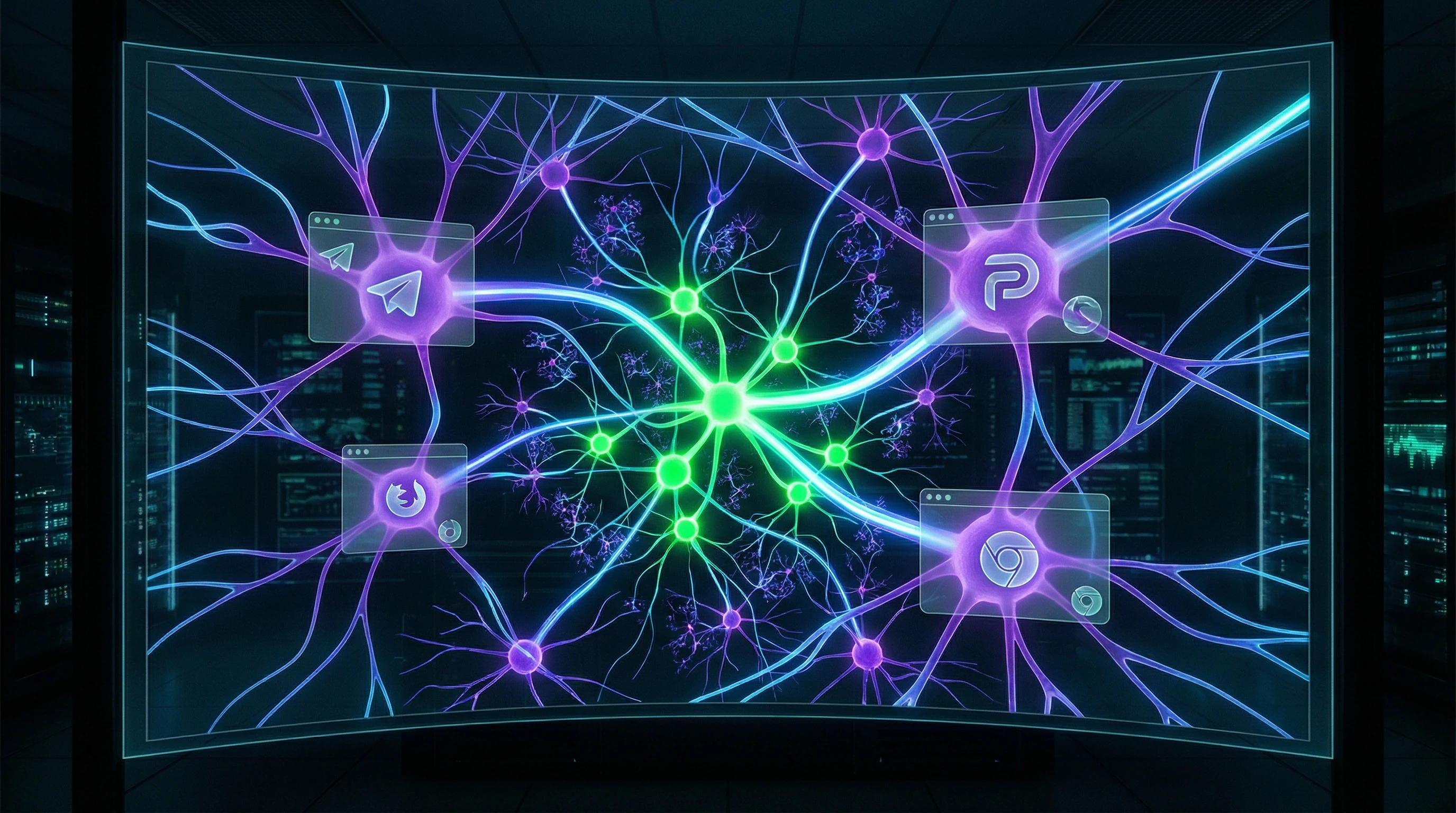
📡 Globalization Through Telegram: From American Phenomenon to Global Pandemic
Research on QAnon's globalization through Telegram tracked 4,850 channels in 22 languages from January 2020 to March 2021 (S005). QAnon spread to 81 countries, with highest activity in Germany (687 channels), UK (412), Netherlands (301), Canada (278), and Australia (203).
German-language channels showed the fastest growth—400% over 6 months, correlating with protests against COVID restrictions. Globalization mechanism: local narrative adaptations. German QAnon integrated theories about "corona dictatorship," Japanese about corruption in Abe's government, Brazilian about support for Bolsonaro (S005).
- Flexibility of the Conspiratorial Framework
- The core (battle of good vs. evil, secret forces, coming awakening) remains unchanged, but details adapt to local political contexts. Telegram proved an ideal vector due to weak moderation, encryption, and ability to create large channels without restrictions.
🧠 Psychological Predictors: Who Is Most Vulnerable to QAnon
Experimental research on a sample of 1,500+ U.S. respondents identified key predictors of QAnon support (S004): high need for uniqueness, low institutional trust, high need for cognitive closure (discomfort with uncertainty), right-leaning political orientation, and high social media use.
Education and cognitive abilities showed weak negative correlation but were not determining factors. This debunks the myth of QAnon as a phenomenon of "uneducated masses" (S004). The data points to psychological needs: search for meaning, identity, control amid uncertainty. These needs are universal, explaining cross-cultural spread.
- Need for uniqueness—desire to differ from the majority
- Low institutional trust—skepticism toward official sources
- Need for cognitive closure—avoidance of uncertainty
- Political orientation—but not exclusively right-wing
- Intensive social media use—constant content exposure
🧷 Paranoia and Belief Updating: The Neurocognitive Mechanism of Resistance to Facts
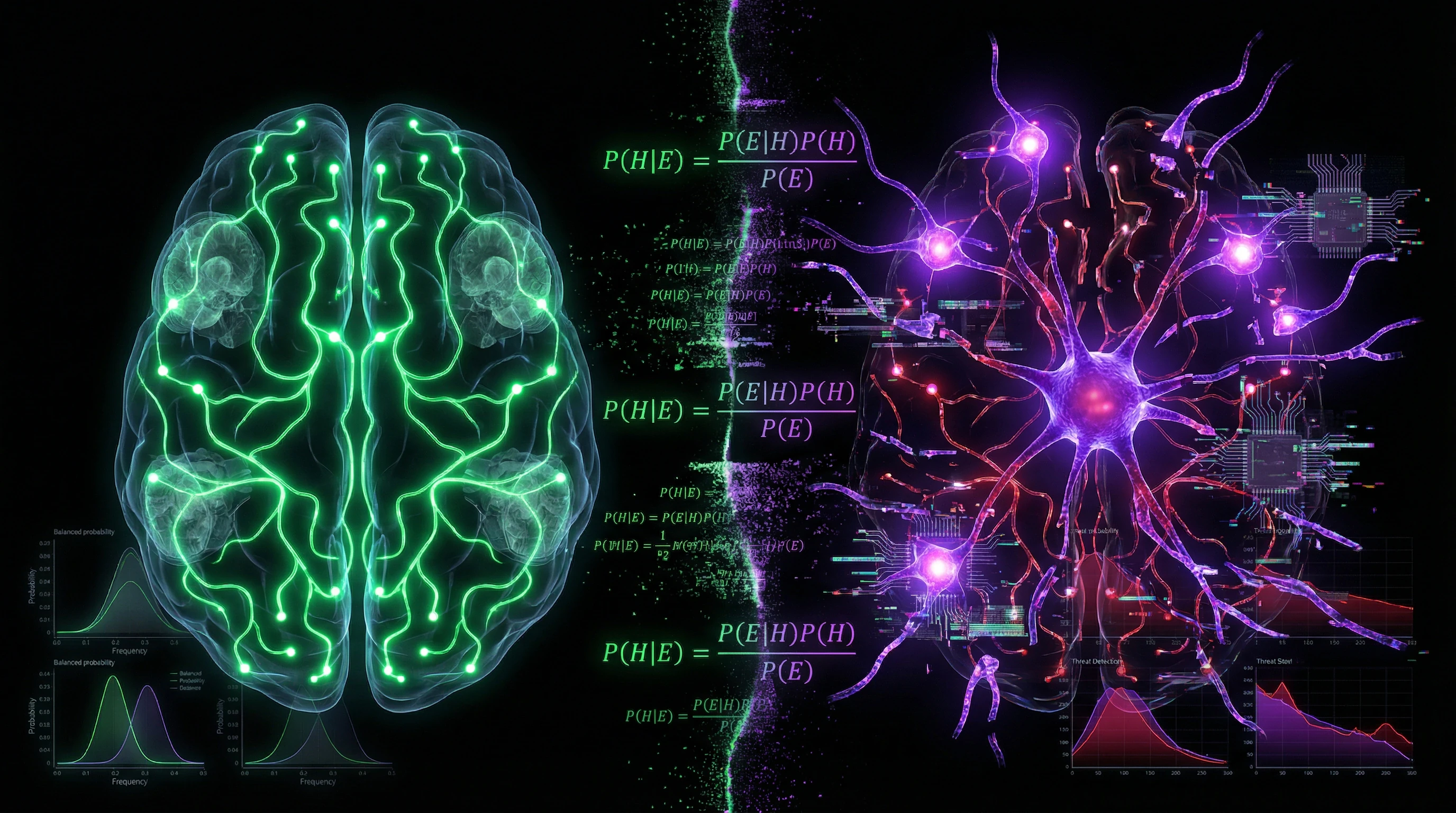
Research identified a critical mechanism: people with high levels of paranoid thinking demonstrate impaired Bayesian belief updating (S006). In the experiment, participants estimated probabilities of threatening events, received new information, and updated estimates.
Paranoid participants overweighted threatening information (weighting coefficient 1.8× vs. 1.0× in controls) and underweighted disconfirming information (0.3× vs. 1.0×). Paranoia disrupts the dorsolateral prefrontal cortex (DLPFC), responsible for updating beliefs based on new data. Instead, the amygdala—the threat processing center—activates, creating a "closed confirmation loop" (S006).
Any information is interpreted through the lens of threat, confirming the original paranoid belief. This explains why fact-checking is ineffective: refutations are perceived as part of the conspiracy, strengthening conviction.
🔁 COVID-19 as Catalyst: Behavioral Science on Crisis Susceptibility
A systematic review identifies key factors increasing susceptibility to conspiracy theories (S003): uncertainty about the threat, contradictory messages from authorities, social isolation, economic instability, visible injustices (elites breaking rules they impose on others).
QAnon exploited all five factors: offered "certainty" (pandemic is part of deep state plan), explained contradictions (authorities deliberately lie), provided online community (compensating for isolation), promised economic "awakening" after "the storm," identified culprits (elite pedophiles) (S003).
| Crisis Factor | Psychological Need | How QAnon Fills the Void |
|---|---|---|
| Threat uncertainty | Cognitive closure | Offers clear narrative: "pandemic is a planned operation" |
| Contradictory messages | Explanation of chaos | Explains: "authorities deliberately lie, it's part of the plan" |
| Social isolation | Belonging | Online community of like-minded individuals |
| Economic instability | Hope for change | Promise of "awakening" and restructuring |
| Visible injustices | Justice and control | Identifies culprits and promises retribution |
👥 Profiling on Parler: Behavioral Signatures of QAnon Supporters
Analysis of 28,000+ QAnon accounts on Parler revealed characteristic behavioral patterns (S008): high posting frequency (median 12 posts/day vs. 3 for regular users), use of specific hashtags (#WWG1WGA, #TheGreatAwakening, #TrustThePlan), cross-references to "evidence" (average 4.2 external links per post), coordinated campaigns (synchronized activity spikes).
Demographic analysis: 62% male, average age 45–54, 73% indicate U.S. as location, 41% mention Christian identity, 28% military or law enforcement background (S008). This debunks the stereotype of young internet trolls: the typical QAnon supporter is a middle-aged person with established identity, seeking meaning in a changing world.
High posting frequency and coordinated actions indicate that QAnon participation functions as gamification—a system of rewards, status, and progression that keeps users within the ecosystem.
Mechanisms of Causality: Why Correlation Between Crisis and Conspiracism Doesn't Mean Simple Causality
A critical error in QAnon analysis is assuming direct causality: "crisis → uncertainty → conspiracism." Reality is more complex: multiple mediators, moderators, and confounders create a nonlinear system. For more details, see the Statistics and Probability Theory section.
🔬 Mediators: Intermediate Variables in the Causal Chain
Crisis doesn't directly cause conspiracism—it operates through mediators: declining trust in institutions (30–40% drop during COVID-19), increased online time (from 2.4 to 4.1 hours/day in 2020), economic stress (unemployment correlates with conspiracism, r=0.34, p<0.001) (S003, S004).
Each mediator has its own causal force. Statistical modeling shows: the direct effect of crisis on conspiracism is weak (β=0.12), but the mediated effect through mediators is strong (β=0.58) (S003).
Interventions should target mediators (restoring trust, digital literacy, economic support), not simply wait for the crisis to end.
🧩 Moderators: Who Is Vulnerable and Who Is Resilient
Not everyone in crisis becomes a conspiracy theorist—moderators determine individual susceptibility. Baseline paranoia level (Paranoia Scale, OR=2.8), analytical thinking (Cognitive Reflection Test, r=−0.28), social support (offline connections, OR=0.6), and media literacy (OR=0.5) predict who will fall into the trap (S004, S006).
Moderators explain why identical crisis conditions lead to different outcomes. People with high paranoia need cognitive-behavioral therapy, people with low media literacy need educational programs (S003, S006).
- Paranoia
- Predisposition to see threats and hidden intentions; increases susceptibility to conspiracism by 2.8 times.
- Analytical Thinking
- Ability to slow judgment and check logic; protects against conspiracism (r=−0.28).
- Social Support
- Offline connections and trust in close relationships reduce radicalization risk; people with support are 1.7 times less vulnerable.
🕳️ Confounders: False Correlations and Third Variables
A classic confounder: political polarization. QAnon correlates with right-wing orientation (r=0.52), but authoritarianism (Right-Wing Authoritarianism, RWA)—a third variable—correlates with both right-wing views (r=0.48) and conspiracism (r=0.61) (S004).
Controlling for RWA, the correlation between right-wing views and QAnon drops to r=0.18. This means: right-wing views themselves don't cause conspiracism, authoritarianism is the true driver.
| Variable | Correlation with QAnon | Status |
|---|---|---|
| Right-wing orientation (uncontrolled) | r=0.52 | False correlation |
| Authoritarianism (RWA) | r=0.61 | True confounder |
| Right-wing orientation (controlling for RWA) | r=0.18 | Residual after control |
Another confounder: age. Older age groups are more represented in QAnon, but this may reflect a cohort effect (generation that grew up before digital literacy) or platform effect (Parler and Telegram more popular among older users). Longitudinal studies are needed to separate effects (S008).
🔁 Reverse Causality: How Conspiracism Amplifies Crisis
Causality isn't unidirectional: conspiracism is not only a consequence of crisis but also its amplifier. QAnon supporters are less likely to comply with COVID measures, prolonging the pandemic. They spread disinformation, reducing trust in healthcare (S004).
Participation in protests creates political instability (Capitol riot, January 6, 2021). This creates a positive feedback loop: crisis → conspiracism → crisis amplification → conspiracism amplification.
- Crisis (pandemic, economic downturn) reduces trust in institutions.
- People seek alternative explanations in conspiracism.
- Conspiracism leads to rejection of measures (masks, vaccines), disinformation.
- This amplifies the crisis (more deaths, more distrust).
- The amplified crisis further radicalizes people.
Breaking this loop requires simultaneous intervention at multiple levels: restoring trust in institutions, improving media literacy, supporting at-risk groups. Conspiracies, manipulation, and secret cults: how to understand and verify offers practical tools for such analysis.
Causality in the QAnon system is not a linear chain but a complex network with feedback loops, moderators, and confounders. Ignoring this complexity leads to ineffective interventions.