
What exactly the moon landing hoax theory claims and why it won't go away
The moon landing hoax theory doesn't exist in a single version — it's a spectrum of claims with varying degrees of radicality. The most widespread version: all six Apollo landings (1969–1972) were filmed in studios on Earth, most likely by director Stanley Kubrick, and NASA and the U.S. government have maintained this lie for decades. More details in the Tech Fears section.
Softer versions allow that astronauts actually flew into space but didn't land on the Moon, merely simulating it in orbit. Radical variants include claims that the entire U.S. space program is fiction and that satellite technologies operate on different principles.
- The Cold War as fertile ground
- The theory didn't emerge from nowhere. At the height of the space race between the U.S. and USSR, every achievement carried enormous propaganda value. After a series of Soviet successes (first satellite, first human in space, first spacewalk), it was critically important for Americans to demonstrate technological superiority. It was in this context that suspicion arose: wasn't everything just a bit too successful?
Sociological surveys show that peak distrust in the Moon landing came in the 1970s — the period of the Watergate scandal and COINTELPRO revelations, when American trust in government fell to historic lows.
Conspiratorial beliefs in one area (such as anti-vaccination) statistically correlate with beliefs in other areas, including Moon landing denial (S002). This points to the existence of a common cognitive pattern rather than rational evaluation of specific evidence in each case.
Catalog of popular conspiracy arguments
| "Evidence" | What theory supporters see | Physical explanation |
|---|---|---|
| Flag waving in vacuum | Impossible without atmosphere | Mounted on L-shaped rod, oscillates from inertia of astronaut's movement |
| No stars in photos | Strange for space | Short exposure necessary for photographing brightly lit surface |
| Multiple light sources | Sign of studio filming | Reflection of sunlight from lunar surface and the module itself |
| No crater under module | Engine should have scorched the ground | Engine operated at low thrust in final seconds, soil is densely compacted |
| Van Allen radiation belts | Lethal to humans | Trajectory minimized transit time, dose was ~1% of lethal level |
Each of these arguments has been refuted repeatedly but continues to circulate in conspiracy communities (S001). This isn't coincidental — visual "discrepancies" work more powerfully than physical explanations because they appeal to direct perception rather than abstract calculations.
Scale of the phenomenon: sociology of distrust
Between 6% and 20% of Americans and 25% to 57% of Russians (depending on survey methodology) express doubts about the reality of the Moon landing. The level of skepticism correlates not directly with education but with general levels of trust in government institutions and media (S008).
This means that belief in conspiracy theory is not the result of lack of information but a consequence of the gap between individuals and official sources. When institutions lose legitimacy, any claim they make becomes suspect, regardless of the quality of evidence.
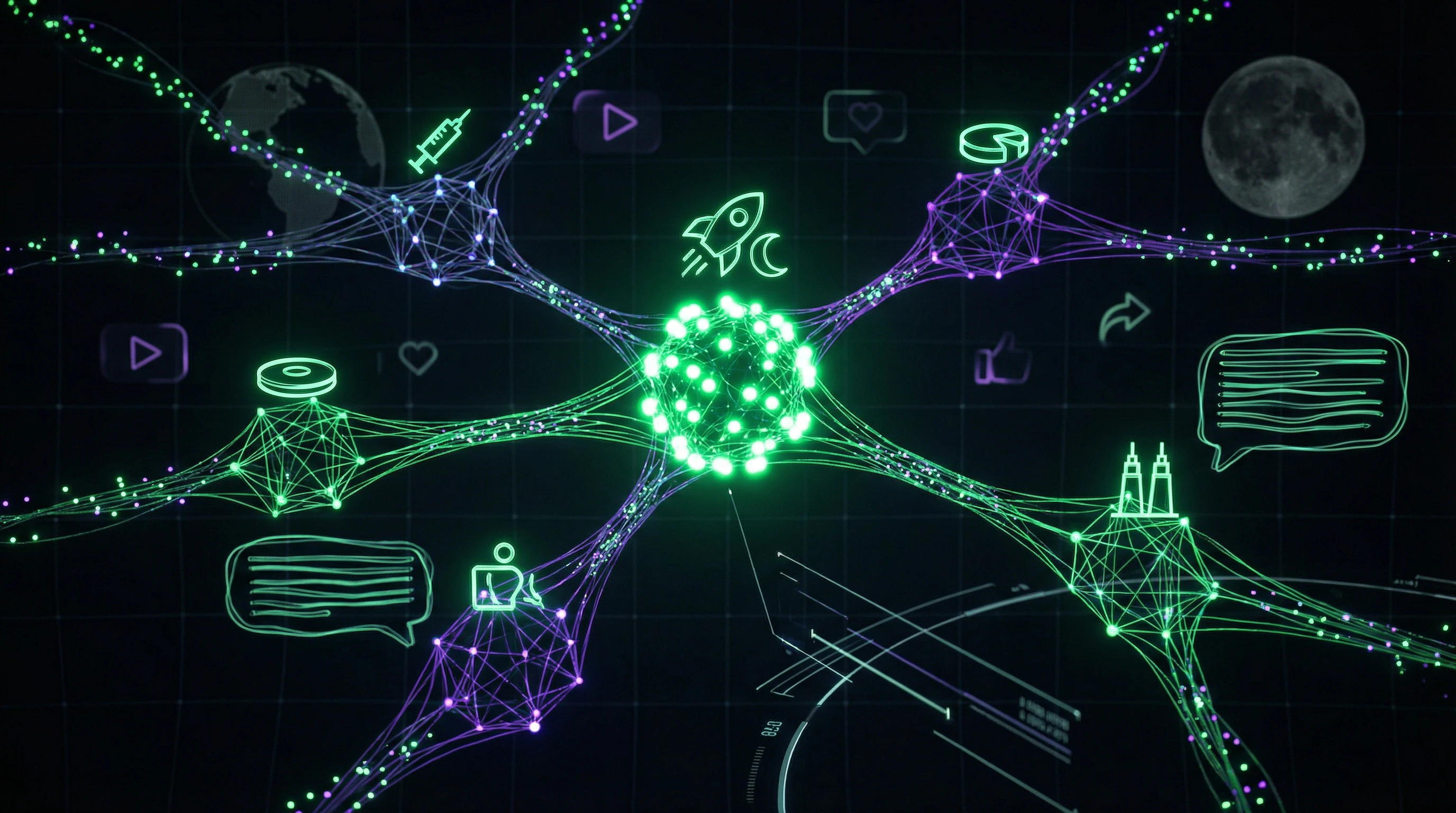
Steel Version of Arguments: The Strongest Cases Made by Conspiracy Theory Proponents
Intellectual honesty requires examining opponents' most convincing arguments in their strongest formulation — the "steelman" principle, opposite of the "straw man." Below are seven of the most substantial conspiracy theorist arguments in their most well-founded form. More details in the section Chipization and World Government.
⚠️ First Argument: Technological Impossibility in the Context of the 1960s
Apollo's onboard computer operated at 2 MHz with 4 KB of RAM — less than a modern calculator. Precise navigation, landing, and takeoff with such resources appear physically implausible.
Modern space agencies with incomparably more powerful computers experience difficulties: Russia's Luna-25 crashed in 2023, India's Chandrayaan-2 crashed in 2019. If it's so difficult today, how could it have succeeded half a century ago on the first attempt and then five more times in a row without a single catastrophe?
- Computing power: 2 MHz versus modern GHz
- Memory: 4 KB versus gigabytes in modern systems
- Absence of backup systems and rollback capability
- Success of all six missions consecutively on first experience
⚠️ Second Argument: Radiation Threat as an Insurmountable Barrier
The Van Allen radiation belts contain high-energy particles trapped by Earth's magnetic field. The outer belt extends from 13,000 to 60,000 km above Earth's surface.
The aluminum shell of the command module, several millimeters thick, could not provide adequate protection. The lunar surface lacks the magnetosphere and dense atmosphere that protect against solar and cosmic radiation. Astronauts spent a total of several days on the Moon — why didn't they develop acute radiation sickness?
If radiation in the Van Allen belts is lethal to an unprotected human, then passing through them twice (there and back) should have resulted in death or severe injuries.
⚠️ Third Argument: Absence of Independent Confirmation from the USSR
The Soviet Union possessed a powerful system for tracking space objects and had every motive to expose an American falsification. However, the USSR officially acknowledged the success of the Apollo missions.
Conspiracy theorists explain this through a secret agreement between the superpowers: the US doesn't expose Soviet failures (such as Vladimir Komarov's death), the USSR doesn't expose American falsification. Both sides benefit from maintaining the illusion of space achievements, which justifies colossal budgets and distracts populations from domestic problems.
⚠️ Fourth Argument: Anomalies in Photo and Video Materials
Professional photographers point to technical inconsistencies in NASA images (S001). Crosshairs (calibration marks on the lens) sometimes appear behind objects in photographs, which is physically impossible and indicates compositing.
Illumination of objects in shadow is too high for a single light source (the Sun). Some photographs show objects that should be outside the frame, reflected in helmet visors. Photo quality is too high for shooting conditions: bulky gloves, no viewfinder, extreme temperatures from −150°C to +120°C.
| Anomaly | Conspiracy Theorist Explanation | Physical Implication |
|---|---|---|
| Crosshairs behind objects | Layer compositing | Impossible with direct photography |
| High shadow illumination | Additional light sources | Studio lighting, not lunar |
| Out-of-frame objects visible in reflections | Error in scene staging | Indicates controlled environment |
⚠️ Fifth Argument: Disappearance of Original Recordings and Technologies
NASA admitted that the original video recordings of the Apollo 11 landing were lost — erased and recorded over in the 1980s due to magnetic tape shortages. Blueprints and technical documentation for the F-1 engine, the most powerful rocket engine in history, were also partially lost.
How can you lose documentation of humanity's greatest technological achievement? Isn't this evidence that the technology never existed in working form?
⚠️ Sixth Argument: Economic and Political Motivation for Falsification
The Apollo program cost $25.4 billion (approximately $280 billion in 2023 dollars). In the context of the Vietnam War, racial unrest, and economic problems, it was critically important for the US government to justify these expenditures and demonstrate superiority over the USSR.
The cost of a Hollywood production would have been orders of magnitude less, and the risk of failure minimal. Director Stanley Kubrick had just filmed "2001: A Space Odyssey" (1968) with revolutionary special effects, proving the technical feasibility of convincing simulation.
⚠️ Seventh Argument: Behavioral Anomalies of Astronauts
Conspiracy theorists analyze astronaut behavior at press conferences after their return. Neil Armstrong, Buzz Aldrin, and Michael Collins appear subdued, avoid direct answers, and display signs of psychological discomfort.
Armstrong subsequently led a reclusive life, rarely gave interviews, and refused to sign autographs related to the Moon. This is interpreted as guilt over participating in a deception. Buzz Aldrin, conversely, displayed aggression toward skeptics, which may also indicate a defensive reaction.
Evidence Base: What Independent Sources and Physical Artifacts Tell Us
The scientific method requires verifiable, reproducible evidence. The Moon landings left several categories of artifacts: physical soil samples, independent observations by third countries, technical objects on the surface, and technological byproducts of the program. More details in the Financial Scams section.
📊 Lunar Soil: 842 Pounds of Irrefutable Evidence
Apollo delivered 842 pounds of lunar soil and rock samples, distributed among laboratories worldwide, including the USSR. Lunar rocks have unique characteristics: absence of water and organic compounds, specific oxygen isotope composition, traces of micrometeorite bombardment, crystalline structure that forms only in vacuum.
Soviet automatic stations Luna-16, Luna-20, and Luna-24 delivered 11.5 ounces of soil, identical to American samples in all parameters. Faking such quantities of material with these characteristics is technologically impossible even today (S007).
📊 Laser Reflectors: An Experiment Anyone Can Repeat
Laser reflectors were installed on the Moon by Apollo 11, Apollo 14, and Apollo 15 missions. Any observatory with a powerful laser can aim a beam at the known coordinates and detect the reflected signal. The round-trip light travel time (about 2.5 seconds) allows measuring the distance to the Moon with centimeter precision.
The experiment has been conducted thousands of times by scientists from different countries, including USSR/Russia, France, Germany, and Japan. Soviet stations Luna-17 and Luna-21 also delivered reflectors, but the American ones have larger surface area and produce stronger signals, consistent with their size and placement.
If the landing had been faked, the USSR—the main competitor in the space race—would have had every motive and capability to expose the deception. Instead, Soviet scientists confirmed the authenticity of the samples and data.
🔬 Orbital Images of Landing Sites: Space Age Archaeology
NASA's Lunar Reconnaissance Orbiter (LRO), launched in 2009, photographed all six landing sites with resolution up to 50 cm per pixel. The images show landing module descent stages, astronaut footprints, equipment, lunar rovers, and shadows from flags.
India's Chandrayaan-2 and Japan's Kaguya also obtained images of landing sites, confirming NASA data. China's lunar exploration program publishes its own images showing traces of American missions (S003).
📊 Independent Radio Tracking: The USSR Monitored Every Step
The Soviet Union tracked all radio transmissions from the Apollo missions using a network of tracking stations. Britain's Jodrell Bank Observatory independently received signals from lunar orbit and the surface. Australia's Parkes station received the television signal of the live landing broadcast.
Radio direction finding unambiguously showed that the signal source was at the Moon's distance (about 238,855 miles), not in Earth orbit or on Earth. Signal delay was 1.3 seconds one-way, consistent with the speed of light and distance to the Moon. Faking this is technically impossible.
| Observation Source | Verification Method | Result |
|---|---|---|
| Soviet tracking stations | Radio direction finding | Confirmation of Moon distance |
| Jodrell Bank (Britain) | Independent radio signal reception | Match with NASA data |
| Parkes (Australia) | TV broadcast reception | Synchronization with official broadcast |
| LRO (2009+) | Orbital photography | Visible artifacts on surface |
🧾 Technological Byproducts: The Apollo Program Legacy
The Apollo program spawned over 2,000 technological innovations: water purification systems, cordless tools, thermal insulation materials, component miniaturization, medical sensors. The F-1 engine remains the most powerful single-chamber liquid-fuel rocket engine in history—its thrust was 1.52 million pounds.
SpaceX studied its design to create the Merlin engine. The complexity lies in the fact that many 1960s solutions resulted from empirical trial-and-error rather than computer modeling, making them difficult to reproduce precisely even with modern technology (S003).
🔬 Radiation Dose: Calculations vs. Myths
The Apollo flight trajectory was calculated to minimize time passing through the Van Allen radiation belts—about 1 hour at high speed through the least dense sections. Total radiation dose for the entire mission was 1–5 mSv (millisieverts), equivalent to several X-rays or a year's worth of natural background radiation.
Lethal dose begins at 4,000–5,000 mSv over a short period. Aluminum shielding 1.5–6 mm thick plus equipment inside the capsule provided adequate protection. Astronauts wore dosimeters whose readings matched calculated models.
- Why the radiation argument doesn't work
- The Van Allen belts are dangerous with prolonged exposure, but the Apollo trajectory minimized transit time. The calculated dose (1–5 mSv) corresponds to medical procedures, not lethal radiation.
- Why this matters for conspiracy analysis
- The radiation argument sounds convincing because radiation is indeed dangerous. But conspiracy theorists ignore time and trajectory calculations, presenting danger in principle as danger in this specific case.
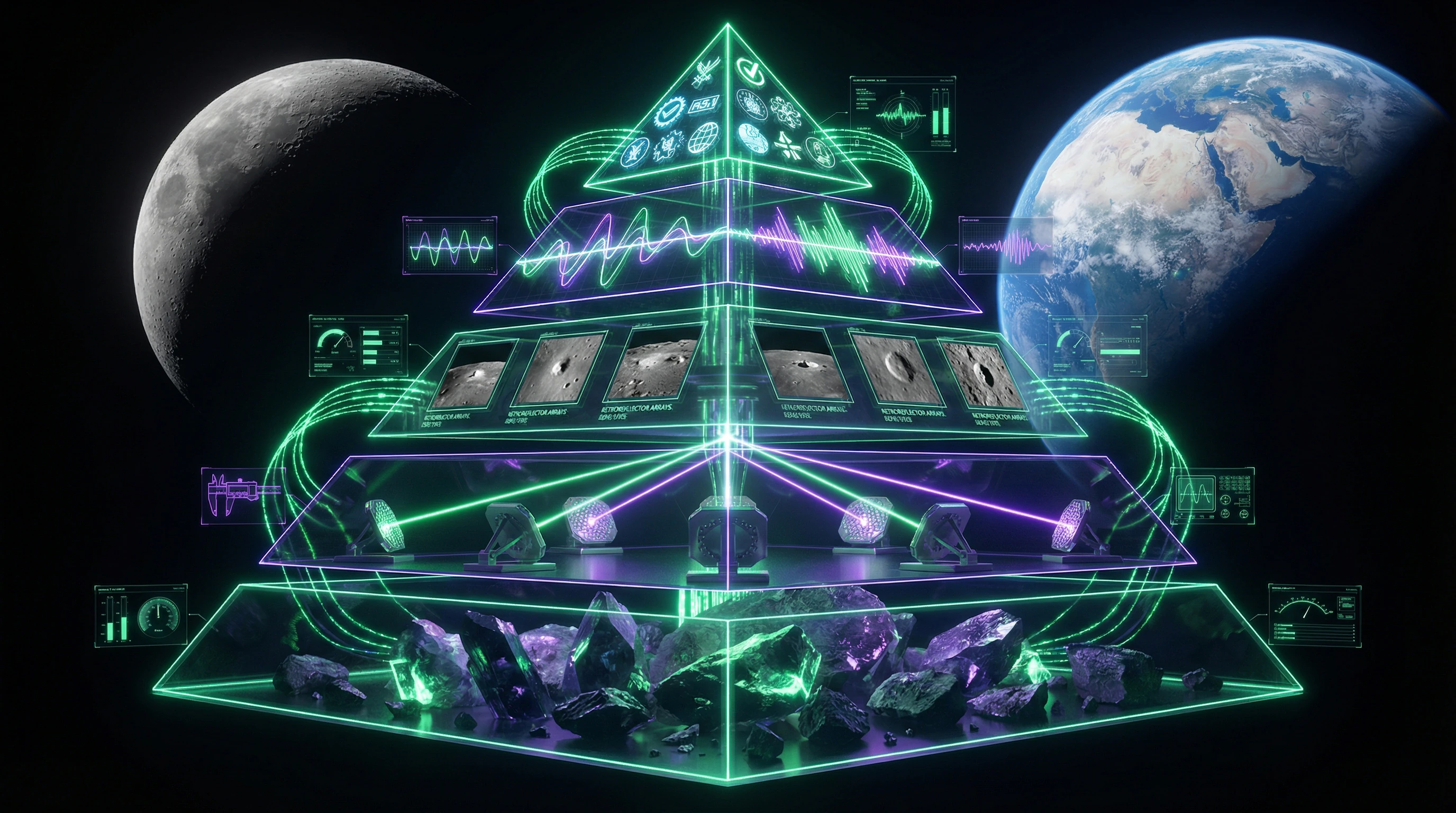
Mechanisms of Cognitive Biases: Why Smart People Believe Absurd Things
Conspiratorial thinking is not a sign of low intelligence, but rather the result of universal cognitive mechanisms that are useful for survival in other contexts. Research shows that conspiratorial beliefs correlate with certain psychological needs: the need for understanding and certainty, the need for control and security, the need to maintain a positive image of oneself and one's group (S008).
Confirmation Bias: We See What We Want to See
Confirmation bias is the tendency to seek, interpret, and remember information in ways that confirm existing beliefs. A person already inclined to distrust the government actively seeks "evidence" of conspiracy and ignores refutations. Learn more in the Epistemology section.
Neurobiologically, processing information that contradicts beliefs activates brain regions associated with threat and negative emotions, while confirming information activates the reward system. The brain literally derives pleasure from confirming its own correctness (S001).
Pattern Illusion: Seeing Connections Where None Exist
Patternicity is the tendency to find patterns in random data. Evolutionarily, this was useful: better to mistakenly interpret rustling in the bushes as a predator than to miss a real threat. In the information environment, this leads to false correlations.
Conspiracy theorists find "anomalies" in NASA photographs without understanding the technical aspects of photography in lunar conditions. Each "anomaly" is interpreted as part of an overall pattern of deception, when in reality these are independent phenomena with simple explanations (S002).
- Dunning-Kruger Effect
- People with low levels of competence in a field tend to overestimate their knowledge and ability to draw conclusions. A person without education in physics, photography, or space technology may sincerely believe they have "exposed" NASA by finding an "inconsistency" that specialists can explain in minutes.
- Why This Reinforces Belief
- Experts' attempts to explain the error are perceived as "defending the official version" and strengthen conviction in the conspiracy. Criticism is interpreted as confirmation of the threat.
Social Proof Principle: If Many Believe It, It Must Be True
The human brain is evolutionarily tuned to conserve energy and use heuristics—simplified decision-making rules. One of them: "if many people around me believe in X, X is probably true." This works in most everyday situations but becomes a trap in information bubbles.
If a person is in a community of conspiracy theorists where everyone shares belief in the moon landing hoax, social pressure and the echo chamber effect reinforce this belief regardless of facts.
Motivated Reasoning: Protecting Identity Matters More Than Truth
For many people, conspiratorial beliefs become part of personal identity and group belonging. Admitting error means not simply changing one's mind on a single issue, but betraying one's group, losing social connections and status within the community (S003).
A similar mechanism operates with moon landing conspiracy theory: the belief forms a group identity of "those who know the truth." This explains why conspiratorial narratives mutate and capture mass consciousness—they offer not just an explanation of events, but a social role and belonging.
- Belief becomes embedded in identity
- The group becomes a source of social status
- Criticism of the belief is perceived as an attack on the group
- Defending the belief becomes defending oneself and one's own
- Rational arguments don't work because it's not about logic, but about belonging
Understanding these mechanisms is critical for protection against manipulation and mind control. When we see how cognitive biases work, we can develop strategies to neutralize them—not through criticizing beliefs, but through changing context and social environment.
Anatomy of a Conspiracy Theory: Universal Markers and Structure
All successful conspiracy theories share a common structure and employ similar rhetorical techniques. Understanding this anatomy allows you to recognize conspiratorial thinking regardless of the specific topic—from the moon landing hoax to QAnon and satanic panic. More details in the Psychology of Belief section.
⚠️ Marker One: Unfalsifiability and Immunization Against Refutation
A scientific theory must be falsifiable—there must exist potential observations that could disprove it. Conspiracy theories are constructed so that any refutation gets integrated into the theory itself.
Show lunar samples? "They were faked or brought back by unmanned probes." Show photographs of landing sites? "NASA controls all space agencies." Show independent observations? "All governments are in on it." This is called ad hoc hypotheses—adding new assumptions to protect the core theory from refutation (S002).
⚠️ Marker Two: Demanding Absolute Proof While Ignoring Probabilities
Conspiracy theorists demand 100% proof, yet simultaneously accept theories based on circumstantial evidence and coincidences. This is an asymmetric standard: the official version must be flawless, while the alternative can be built on assumptions.
The logic works like this: if even one inaccuracy is found in the official account, the entire version is declared false. But if holes are discovered in the conspiracy theory—those are just "hidden details" (S008).
⚠️ Marker Three: Pattern Pareidolia and Finding Meaning in Noise
| Mechanism | Example in Moon Landing Hoax | Cognitive Trap |
|---|---|---|
| Apophenia | Shadow in photo = proof of studio | Brain sees patterns in random data |
| Selective attention | Notice one anomaly, ignore thousands of consistent facts | Confirmation bias amplifies focus |
| Illusion of control | "I figured it out myself, so I must be right" | Independent research creates false sense of competence |
The human brain evolved to find patterns—this aided survival. But in the information environment, this ability becomes a vulnerability (S001).
⚠️ Marker Four: Hierarchy of Insiders and Cult of Competence
Conspiracy communities build hierarchies: there are those who "know the truth" and those who are "asleep." A newcomer must undergo initiation—study hundreds of videos, articles, forums. The more time invested, the higher the status and the harder it becomes to admit it was a waste of time.
This creates a mind control mechanism similar to cult structures: investment of time and emotion makes exit psychologically painful (S004).
⚠️ Marker Five: The Enemy as Unifying Narrative
Conspiracy theories always have an enemy: NASA, the government, "global elite," scientists. The enemy must be simultaneously omnipotent (capable of hiding the truth) and foolish (leaves clues for the attentive observer). This logical contradiction goes unnoticed because the enemy serves a social function—it unites the community.
When conspiracy narratives mutate, the enemy may change, but the structure remains (S005).