What exactly the Dead Internet Theory claims — and why it sounds so convincing to millions
The Dead Internet Theory (DIT) is a conspiratorial hypothesis claiming that the overwhelming majority of online content is created not by humans, but by automated systems: bots, recommendation algorithms, and generative AI models. According to this theory, the tipping point occurred around 2016–2017, when the share of "dead" (non-human) traffic exceeded that of living users (S001).
⚠️ Key claims of the theory: from bots to complete simulation
DIT proponents identify several levels of internet "deadness." The first level is technical: bots constitute a significant portion of traffic, confirmed by cybersecurity company reports. The second level is content-based: AI-generated texts, images, and videos flood social networks, news sites, and forums. More details in the section Financial Pyramids and Scams.
The third, most radical level is existential: the internet has become a simulation where algorithms create the illusion of human activity to manipulate the remaining living users.
Imperva reported in 2016: 52% of all internet traffic is generated by bots (S001). This claim became one of the theory's cornerstones and serves as an anchor for more radical interpretations.
🧩 Why the theory resonates: from intuitive observations to cognitive biases
The Dead Internet Theory resonates with users for several reasons. It explains the subjective feeling of "emptiness" and content uniformity on social networks, offers simple explanations for complex phenomena: declining discussion quality, rising toxicity, echo chambers, and filter bubbles.
Simultaneously, it appeals to real facts — the growing number of bots, development of generative models like GPT-3, scandals involving fake accounts.
- Patternicity (pattern seeking)
- The brain automatically sees patterns even where none exist. Users notice repetitive phrases, similar avatars, synchronized posts — and interpret this as proof of bots.
- Occam's Razor in perverted form
- "The simplest explanation is correct." Instead of analyzing multifactorial causes of content degradation (algorithms, monetization, scale), people choose a monolithic answer: "It's bots."
- Confirmation bias
- People notice examples of bots and AI content while ignoring millions of instances of genuine human activity. Every bot found confirms the theory.
🔎 Theory boundaries: where observation ends and conspiracy begins
Scientific analysis requires distinguishing three levels of claims. First — empirically verifiable: "Bots constitute a significant share of internet traffic." Second — requiring clarification: "AI-generated content is growing exponentially."
Third — conspiratorial: "The internet is dead, and this is being hidden from users by corporations and governments." This is where the theory transitions from the realm of tech fears into conspiratorial narratives that mutate and capture mass consciousness.
Steel Man Theory: Seven Strongest Arguments for the "Dead Internet"
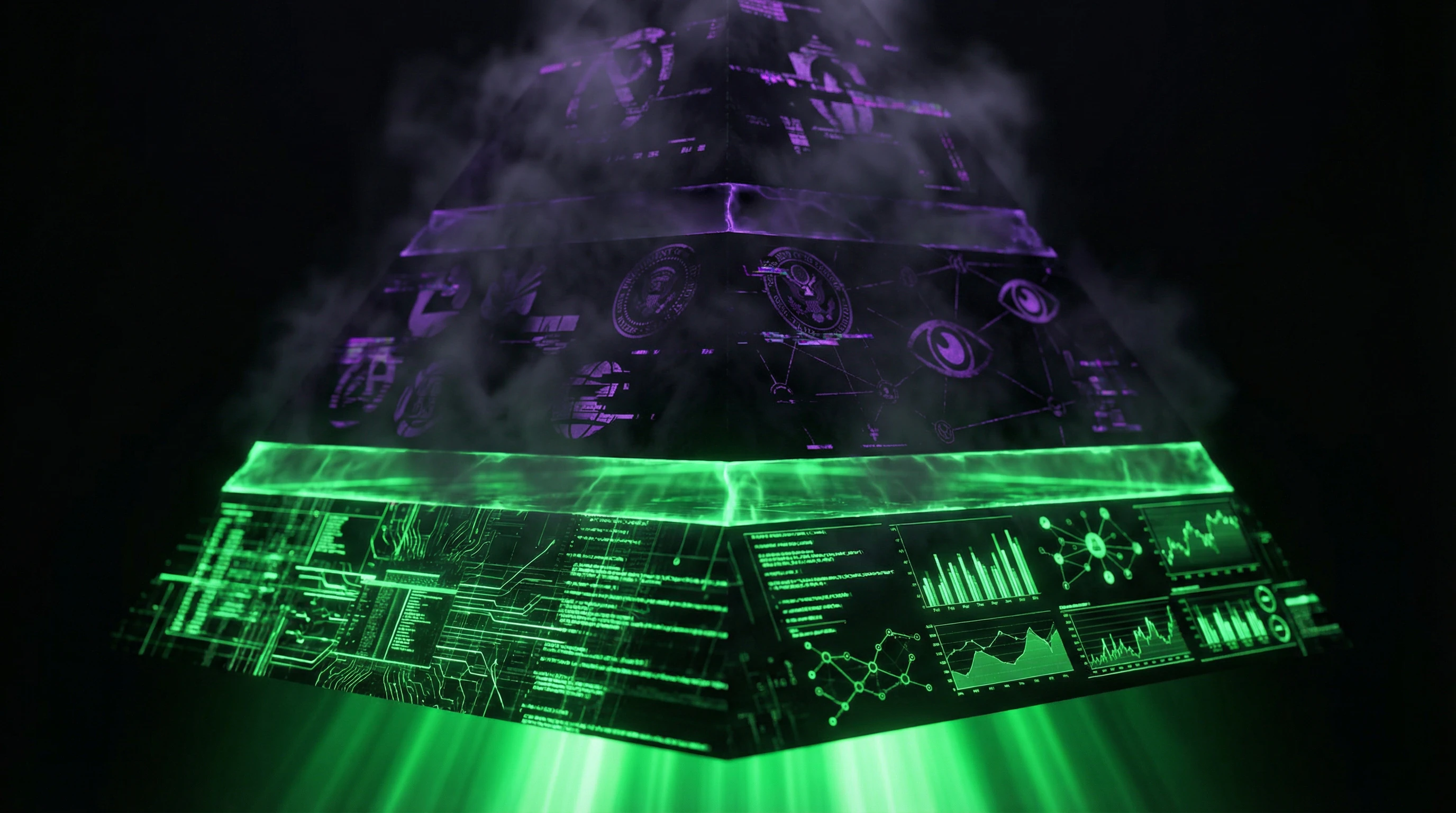
Before criticizing a theory, it's necessary to present it in its most convincing form — the "steel man" method, opposite of a strawman. Below are seven of the most substantial arguments from DIT proponents, based on available data and research. More details in the Pseudo-Debunkers section.
📊 Argument One: Bot Traffic Statistics from Imperva and Other Sources
Imperva, a cybersecurity company, published data showing that in 2016, 52% of all internet traffic was generated by bots (S001). This means more than half of all requests to web servers came not from humans, but from automated programs.
Not all bots are malicious — there are search crawlers, monitoring systems, legitimate API requests. But the very fact of non-human traffic numerically exceeding human traffic appears alarming. Theory proponents point out this trend has only intensified: the growth of IoT devices, automated trading systems, data scrapers, and social bots has led to further increases in automated traffic share.
| Period | Bot Traffic Share | Activity Source |
|---|---|---|
| 2016 | 52% | Imperva (documented) |
| 2023–2024 | 60–70% (forecast) | Trend extrapolation |
🤖 Argument Two: Documented Cases of Mass Bot Use on Social Networks
The controversy surrounding Elon Musk's 2022 Twitter purchase was partly connected to disagreements about the actual number of bots on the platform (S001). Musk claimed the share of fake accounts significantly exceeded the official 5% stated by the company.
Independent research confirms massive bot presence on social networks. Bots are used to inflate likes and followers, spread disinformation, create artificial consensus (astroturfing), and attack opponents. During political campaigns, the bot share in discussions can reach 20–30% of participants.
🎬 Argument Three: Fake Views on YouTube and Other Video Platforms
The view-inflation industry for views, likes, and comments has existed for over ten years and has reached industrial scale (S001). Services offer thousands of views for a few dollars, using device farms, compromised accounts, and botnets.
YouTube, Facebook, Instagram, and TikTok constantly fight fake activity, but the problem persists. These platforms' recommendation algorithms are based on engagement metrics, creating economic incentive for inflation. If a significant portion of views, likes, and comments are bot-generated, then algorithms promote content based on fake signals, creating a vicious cycle.
🧠 Argument Four: Explosive Growth of Generative AI Models Like GPT-3
Applications like GPT-3 are transforming the internet, and researchers predict the network will change beyond recognition due to this transformation (S001). GPT-3, released by OpenAI in 2020, demonstrated the ability to generate texts indistinguishable from human writing.
Generative models are now available through APIs for pennies. This means anyone can automatically create thousands of articles, social media posts, comments, and reviews. Research shows AI-generated images increasingly appear on social networks, raising concerns about trust and authenticity (S006). Where content creation once required human time and effort, it can now be fully automated.
Generative models are available for pennies. Anyone can create thousands of posts, articles, comments automatically. This once required human time — now it doesn't.
📉 Argument Five: Subjective Sense of Degrading Quality in Online Discussions
Many users note that discussion quality online has sharply declined over the past 5–10 years. Comments have become more toxic, monotonous, superficial. Discussions quickly devolve into insults and repetition of the same arguments. Original thoughts are increasingly rare, and content seems copied and recycled.
DIT proponents explain this by suggesting a significant portion of commenters are bots or AI agents programmed to generate conflict to increase engagement. Social network algorithms promote content that triggers strong emotions (often negative), creating the impression that the internet is filled with aggressive, narrow-minded people. But what if they're not people?
🔁 Argument Six: Echo Chambers and Filter Bubbles as Signs of Algorithmic Manipulation
The echo chamber phenomenon — when users only see content confirming their beliefs — is often explained by recommendation algorithms. But DIT proponents go further: algorithms don't just filter existing content, but actively generate it to create the illusion of consensus or conflict.
If an algorithm can determine your political views, it can generate fake accounts and posts that will reinforce those views or provoke you into conflict with the "opposite side." The goal is maximizing time spent on the platform and engagement. In this model, most "people" you interact with may be simulations tuned to your psychological profile.
⚙️ Argument Seven: Economic Logic of Replacing People with Bots
From platform owners' perspective, replacing human activity with bots makes economic sense. Bots don't require salaries, don't take vacations, don't complain about working conditions. They can generate content 24/7, creating the illusion of an active platform even as real user numbers decline.
This is especially important for startups and platforms that need to demonstrate metric growth to attract investors. Bots are predictable and controllable — real users may create content undesirable to advertisers or contradicting platform policy. Bots can be programmed to create "safe," commercially attractive content. In this logic, the "dead internet" isn't a bug but a feature, beneficial to corporations.
- Platform Incentive
- Bots are cheaper, more predictable, and more controllable than real users. They generate growth metrics for investors.
- Advertiser Incentive
- Bots create "safe" content that doesn't cause scandals or repel brands.
- Algorithm Incentive
- Automated activity allows recommendation optimization without the unpredictability of human behavior.
Evidence Base: What Research Says About the Real Proportion of Bots and AI Content Online
From arguments to facts. More details in the section Coaching Cults.
📊 Imperva Data: 52% Bot Traffic in 2016 — What This Actually Means
The 2016 Imperva report showed that 52% of internet traffic is generated by bots (S001). But critically important: this measured HTTP requests to web servers, not human activity on social networks or content creation.
Most of this traffic consists of legitimate automated systems: search crawlers (Google, Bing), monitoring services, RSS aggregators, API requests.
| Bot Category | Share of Total Traffic | Function |
|---|---|---|
| Good bots | ~23% | Search, monitoring, indexing |
| Bad bots | ~29% | Scraping, spam, DDoS, hacking |
| Human traffic | ~48% | Direct user activity |
The claim "52% of the internet is bots" is technically accurate, but misleading if interpreted as "52% of online activity is fake."
🎭 Social Bot Research: 5% to 15% of Accounts Depending on Platform
Independent studies estimate the proportion of bots on social networks significantly lower. For Twitter — 9% to 15% bots among active accounts. Facebook reports about 5% fake or duplicate accounts. Instagram and TikTok don't publish official figures, but independent estimates range from 10% to 20%.
Key nuance: these figures refer to accounts, not activity. Bots can generate dozens of posts per day, while an average user posts a few times per week. The share of bots in total content volume may be higher than their share among accounts. But even with this adjustment, the claim that most content is created by bots is not supported by data.
🖼️ AI-Generated Content: Growth Exists, But Scale Is Exaggerated
AI-generated images appear increasingly on social networks (S006). Generative models like DALL-E, Midjourney, Stable Diffusion have created a wave of AI images. However, quantitative estimates of their share in total visual content are absent.
AI images are noticeable in certain niches (art communities, memes, illustrations), but don't dominate personal photos, news images, or user-generated content.
- Text Content
- AI text detectors (GPTZero, Originality.ai) show high false positive rates and are bypassed by simple techniques like using homoglyphs (S008). Accurately estimating the share of AI-generated text on the internet is currently impossible.
- Assessment Problem
- Absence of evidence of dominance doesn't mean evidence of absence — the problem may be more serious than available data shows.
📈 Multimedia Content: Video Dominance and Its Origins
Modern internet traffic consists primarily of multimedia content, and this trend will intensify in the future (S002). Analysis of over 160,000 content items attracting more than 185 million download sessions demonstrates the scale of video and audio consumption.
But this research focused on BitTorrent traffic — pirated distribution of movies, series, music, and games. It didn't analyze content origins. Video content on YouTube, TikTok, Instagram is overwhelmingly created by humans, though AI tools (automatic editing, subtitle generation, quality enhancement) are increasingly used. Fully AI-generated videos remain rare and are easily recognized by artifacts.
🔐 Verification Problem: Why It's So Difficult to Distinguish Human from AI
Research raises a fundamental question: how to certify AI-generated or human content (S003, S005)? As generative models improve, the distinction between human and machine content blurs.
GPT-4 text can be more literate than an average user's text. An AI image — more aesthetic than an amateur photograph. Existing detection methods are based on statistical patterns and are easily bypassed.
- Homoglyphs (visually identical characters from different alphabets) deceive AI text detectors (S008)
- Watermarks in images are removed
- Metadata is forged
- Result: fundamental uncertainty — we cannot be sure our conversation partner is human
This doesn't mean the internet is dead. It means the problem of verifying content authenticity is becoming critical for trust in information.
Mechanisms and Causal Relationships: Why the Internet Feels Dead, Even If It Isn't
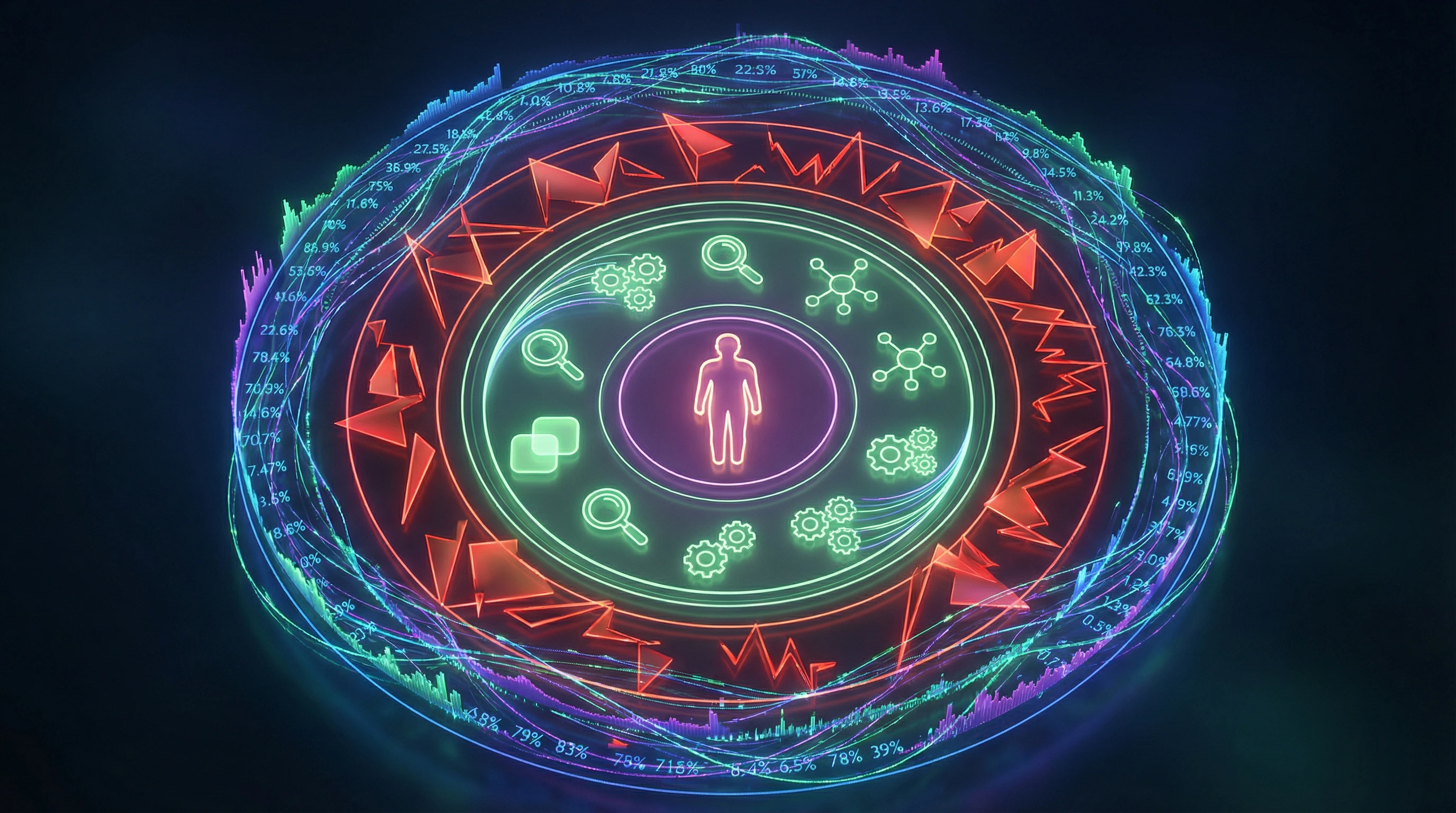
Even if the internet isn't literally dead, many users experience a sense of its "deadness." This subjective perception has objective causes related to the architecture of modern platforms and the psychology of perception. Learn more in the Cognitive Biases section.
🔁 Algorithmic Curation: How Recommendation Systems Create the Illusion of Uniformity
Modern social networks don't display content in chronological order. Instead, machine learning algorithms select posts that maximize user engagement.
This leads to two effects. Users see only a small fraction of available content—the portion the algorithm deemed relevant. Algorithms optimize for engagement metrics (likes, comments, shares), which promotes emotionally charged, often conflict-driven content.
Diverse, original, but less "viral" content remains invisible. This creates the illusion of a dead, monotonous internet—even though the content is created by people, the algorithm simply selects similar posts because they effectively capture attention.
🧬 The Uncanny Valley Effect in Online Communication
The concept of the "uncanny valley" describes the discomfort when interacting with nearly-human but not-quite-human objects. This effect manifests in online communication as well.
When we suspect our conversation partner might be a bot, our perception of the entire interaction changes. Even if the person is real, suspicion of their "inhumanity" makes the interaction unpleasant.
- You believe in the dead internet theory
- You begin interpreting typical behavior as evidence
- A person using popular memes or standard arguments seems like a bot
- A self-reinforcing cycle emerges: the more you believe, the more "evidence" you find
In reality, it's simply your interpretation of normal human behavior that's changing. This is a cognitive mechanism described in research (S001), (S002).
⚙️ The Attention Economy and the Race to the Bottom of Quality
Modern platforms monetize through advertising, which requires maximizing the time users spend on the site. This creates an incentive to promote content that captures attention, regardless of its quality or accuracy.
| Platform Incentive | Result for User | Perception |
|---|---|---|
| Maximize time on site | Emotionally charged content | Internet feels aggressive, monotonous |
| Optimize for clicks | Sensational headlines and provocations | Sense of manipulation and inauthenticity |
| Reduce moderation costs | Spam, duplicates, low-quality content | Impression that people aren't creating original content |
Quality content requires time and resources. Low-quality content, spam, and duplicates spread faster and cheaper. Platforms aren't incentivized to filter—it requires investment in moderation.
The result: the internet fills with low-quality content not because bots create it, but because platform economics incentivize exactly this. Users see more spam and duplicates than before, and interpret this as evidence of automation.
🎯 Selective Attention and Confirmation Bias
The dead internet theory is a hypothesis. Once you accept it, your brain begins searching for confirmation. This is called confirmation bias.
- Confirmation Bias
- The tendency to seek, interpret, and remember information that confirms your existing hypothesis, while ignoring information that contradicts it.
- Why This Is Dangerous
- You start seeing bots everywhere. Repetitive posts—bots. Popular memes—bots. People who agree with you—people; people who disagree—bots. Reality becomes invisible.
Research (S005) shows that the dead internet theory functions as a narrative that reformats user perception. This doesn't mean the theory is false—it means it works as a filter through which you interpret everything you see.
🔄 Real Problems, Wrong Diagnosis
The internet has genuinely changed. There's more content, but its quality is often lower. Bots do exist, but their proportion is overestimated. Algorithms do create filter bubbles.
The dead internet theory takes real problems and offers the wrong diagnosis: not "bots have taken over the internet," but "platform architecture and the attention economy create conditions where low-quality content spreads faster than quality content." This is less dramatic, but more accurate.
Understanding these mechanisms is the first step toward protecting against manipulation and restoring critical thinking in conditions of information overload (S007).