
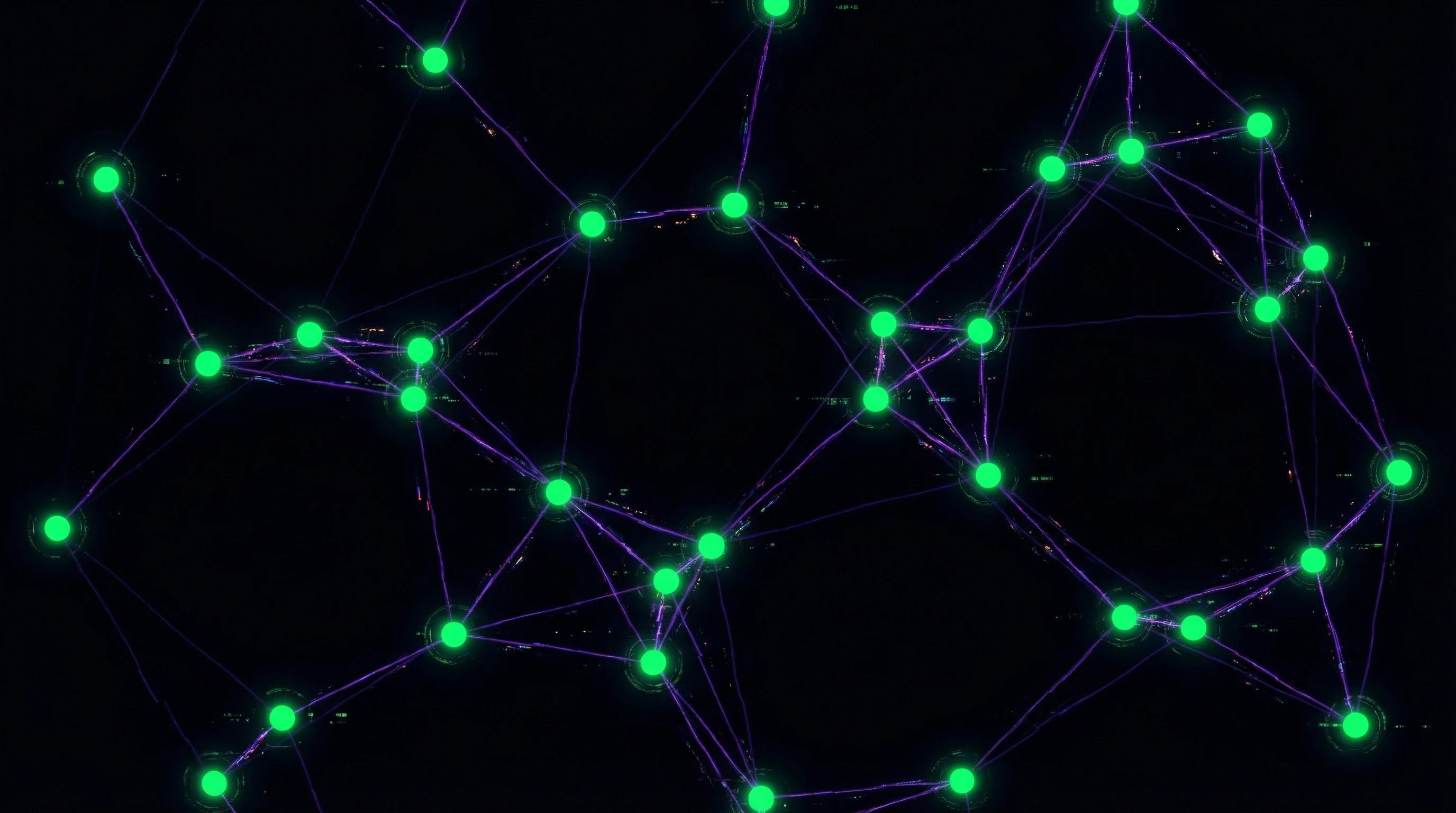
Antifa (anti-fascist action) — not an organization, but a decentralized movement of anti-fascist action, existing as local groups without a unified command center. The term has become a political weapon: right-wing media portray antifa as a terrorist network, left-wing media — as popular resistance to fascism. The evidence base shows: no centralized structure exists, but direct action tactics create an illusion of coordination. This article examines the mechanism of mythologization, actual data on violence, and protocols for verifying information about antifa.
🖤 In 2020, U.S. President Donald Trump announced his intention to designate antifa as a terrorist organization — despite the FBI publicly confirming that no such organization exists. This paradox reveals a key feature of modern political mythology: a brand can function more effectively than an actual structure, and the absence of a command center becomes not a weakness, but a tactical advantage. Antifa represents an ideal case study for analyzing how a decentralized movement transforms into a political phantom onto which fears, accusations, and conspiracy theories from both sides of the political spectrum are projected.
What antifa actually is: unpacking a term that deliberately resists definition
The term "antifa" traces back to German left-wing movements of the 1930s that opposed Nazism. In the modern context, it is not an organization with membership, bylaws, or centralized leadership — but a decentralized network of local groups and individual activists united by an ideology of opposing fascism and far-right movements (S004).
The Anti-Defamation League defines antifa as a "loose collection of local/regional groups and individuals" — a free collection without national structure (S003). The absence of legal entity status, official membership, and public registry creates a fundamental attribution problem: any violent action at a protest can be attributed to antifa without verification.
- Symbolism
- Black-and-red flags, circular logos with two flags — recognizable markers, but not mandatory.
- Tactics
- Direct action, physical confrontation with the far-right in the streets — applied selectively.
- Self-identification
- Public declaration of belonging to anti-fascist activism — voluntary and impermanent (S004).
None of these markers is necessary or sufficient for unambiguous identification. This amplifies the blurred boundaries of the movement and complicates analysis of its actual structure.
The modern antifa movement in the U.S. traces its roots to Anti-Racist Action (ARA) of the 1980s, which opposed neo-Nazi skinheads. Key distinction: contemporary activists don't wait for fascism to come to power, but seek to prevent it at the stage of far-right street mobilization (S004).
This preventive stance justifies the use of force against groups that formally operate within the law. This is where the central point of criticism emerges: the boundary between defense and aggression becomes a matter of interpretation, not objective fact.
The absence of formal structure is not accidental, but the result of ideological choice. Decentralization makes infiltration, arrest of leaders, and legal prosecution of the movement as a whole more difficult. Simultaneously, this creates an information vacuum that gets filled with speculation, myths, and political narratives. More details in the section Chemtrails.
Steelman Argumentation: Five Strongest Arguments for Antifa as a Real Threat
Objective analysis requires presenting the opposing position in its strongest form. The steelman method is not agreement with an argument, but honest recognition of its logical power before criticism. More details in the section Coaching Cults.
🔥 Argument 1: Coordination of actions at protests indicates a hidden organizational structure
During the 2020 protests, synchronicity of actions was observed across different cities: simultaneous appearance of black blocs, identical tactics for countering police, coordinated use of lasers and fireworks. Logistical support—tents with medical aid, distribution of protective gear, organized evacuation of the injured—appears to be the result of centralized planning.
Synchronicity without a visible center is either organization or a cultural code absorbed independently. Critics choose the first explanation.
📱 Argument 2: Digital infrastructure and encrypted communication channels indicate network organization
Antifa activists use Signal, Telegram, and specialized forums. Regional channels with thousands of subscribers disseminate information about upcoming actions, tactical recommendations, and identification of opponents.
The existence of such infrastructure contradicts the thesis of a completely spontaneous movement—this is an argument that cannot be ignored.
| Organizational indicator | Critics' interpretation | Alternative explanation |
|---|---|---|
| Encrypted channels | Hidden command structure | Protection from police surveillance |
| Regional Telegram groups | Network structure | Self-organization by geographic principle |
| Dissemination of tactics | Centralized training | Horizontal exchange of experience |
⚔️ Argument 3: Systematic use of violence requires training and tactical preparation
Video recordings of clashes show tactics requiring prior preparation: formation of defensive shield lines, coordinated retreat, use of smoke screens. Public guides on black bloc tactics exist and are accessible.
The critics' question is logical: where do such skills come from if the movement is completely spontaneous?
💰 Argument 4: Material support for protests indicates external funding
Gas masks, ballistic shields, industrial-strength laser pointers, medical equipment—the total cost of equipment for one activist can reach several thousand dollars. Critics pose a direct question: where does a "spontaneous movement" get such resources?
- Funding as proof of organization
- Critics see in the material support evidence of external funding—from leftist foundations or foreign actors. This generates conspiracy theories, but the question itself about resource sources remains open.
🎯 Argument 5: Ideological consistency and unified rhetoric indicate centralized propaganda
Despite decentralization, antifa activists demonstrate ideological coherence: common slogans ("No pasarán", "Bash the fash"), unified interpretation of political events, coordinated position on tactical issues (S001).
Influential antifa publications (for example, "It's Going Down") are interpreted as proof of an ideological center. Critics claim: such homogeneity is impossible without centralized production of propaganda materials.
Ideological coherence can be the result of either centralized control or a common cultural matrix absorbed independently. The distinction between these mechanisms is key to understanding the nature of the movement.
Evidence Base: What the Data Says About the Real Scale and Nature of Antifa Activity
Moving from argumentation to empirical data requires turning to systematic studies of violence, terrorism, and political extremism in the United States. Key sources: Center for Strategic and International Studies (CSIS), Armed Conflict Location & Event Data Project (ACLED), and official FBI testimony before Congress. More details in the Cults and Control section.
📊 Political Violence Statistics: Antifa in the Context of Overall U.S. Terrorism
A CSIS study (1994–2020) documented 893 terrorist attacks and plots on U.S. territory (S001). Distribution: 57% — right-wing extremists, 25% — religious extremists (predominantly jihadists), 12% — left-wing extremists.
The "left-wing extremists" category includes antifa, eco-activists, anarchists, and other groups. Specifically antifa-attributed incidents constitute less than 1% of total terrorist acts during the study period (S001).
| Category | Share of Terrorist Acts | Note |
|---|---|---|
| Right-wing extremists | 57% | Largest share |
| Religious extremists | 25% | Predominantly jihadists |
| Left-wing extremists (all) | 12% | Includes antifa, eco-activists, anarchists |
| Antifa (specifically) | <1% | Isolated from left-wing category |
🧪 ACLED Data on 2020 Protests: Separating Peaceful and Violent Actions
ACLED analyzed over 7,750 protest events related to the Black Lives Matter movement (May–August 2020) (S005). Result: 93% of protests were entirely peaceful, with no incidents of violence or property destruction.
In the 7% of cases where violence was documented, ACLED could not definitively attribute actions to specific groups due to the chaotic nature of events and the presence of multiple actors: protesters, counter-protesters, opportunistic looters, provocateurs (S005). Attempts by media and politicians to attribute all violence to antifa were rejected by researchers as methodologically unsound.
When tens of thousands of people with different goals and interests are in one place simultaneously, precise attribution of violence to a specific ideological group becomes not just difficult — it becomes impossible without arbitrary assumptions.
🧾 FBI Testimony: Official Law Enforcement Position
In September 2020, FBI Director Christopher Wray testified before the House Committee on Homeland Security: "Antifa is an ideology or movement, not an organization" (S002). Wray emphasized that the FBI investigates individual crimes committed by people who may identify with antifa ideology, but does not view antifa as a unified structure.
This testimony contradicts political rhetoric about a "terrorist organization antifa" and confirms the decentralized nature of the movement (S002).
🔎 The Attribution Problem: Why Precisely Counting "Antifa Violence" Is Impossible
The methodological problem in all antifa research lies in the absence of clear attribution criteria. Unlike organizations that publicly claim responsibility for actions, antifa activists rarely identify themselves publicly during violent acts.
- Researchers rely on indirect indicators: symbolism, eyewitness accounts, social media statements.
- Most violent incidents at protests occur in settings where multiple groups are present.
- Precise attribution is practically impossible without arbitrary assumptions.
- The absence of centralized structure means no official statements of responsibility.
This methodological uncertainty is not a flaw in the research, but a reflection of the actual nature of a decentralized movement. It also explains why political rhetoric can easily fill the void of precise data with its own narratives.

The Mythologization Mechanism: How a Decentralized Movement Becomes an Organizational Phantom
The transformation of antifa from an ideology into an "organization" in public discourse is a classic case of political mythologization, where the absence of structure paradoxically amplifies the perception of threat. More details in the Debunking and Prebunking section.
🧬 The Cognitive Need for an Identifiable Enemy
The human brain experiences discomfort when confronted with diffuse, unstructured threats. The concept of an "organization" provides a cognitive framework that makes the threat comprehensible: if there's an organization, there are leaders to arrest, funding to cut off, a structure to dismantle.
A decentralized movement provides no such pressure points, which causes frustration and stimulates the construction of a myth about a hidden organization (S003). This mechanism operates independently of reality—the less evidence of centralization, the more elaborate the supposed conspiracy becomes.
| What Is Observed | Interpretation (Myth) | Alternative Explanation |
|---|---|---|
| Synchronized actions in different cities | Centralized command | Shared ideology + open communication channels |
| Similar tactics and equipment | Single organization | Knowledge dissemination through social media and forums |
| Absence of public leaders | Hidden leadership | Principled rejection of hierarchy |
🔁 Confirmation Effect: Coordination Without Coordinators
The observed coordination of actions is explained not by centralized management, but by the phenomenon of "swarm intelligence"—decentralized agents demonstrate coordinated behavior by following simple shared rules (S004).
In the case of antifa, these rules are: opposing the far-right, protecting protesters, using black bloc tactics for anonymity. Observers unfamiliar with distributed coordination interpret the result as proof of hidden management—a classic attribution error.
- Swarm Intelligence
- Coordinated behavior without central management. The trap: it looks like an organized conspiracy, though it's simply following shared principles.
- Open Communication Channels
- Social media, forums, messengers. The trap: information spreads so quickly that it seems someone is deliberately coordinating it.
⚙️ Political Instrumentalization: Why the Myth Is Needed
Constructing antifa as an organization serves specific political purposes. For right-wing politicians, it allows delegitimizing left-wing protests by attributing them to "outside agitators" instead of genuine citizen discontent (S001).
The organizational myth justifies enhanced policing measures and anti-terrorism legislation, creates symmetry with right-wing extremism ("both sides are equally bad"), despite the statistical dominance of right-wing violence.
For left-wing activists, the myth is also beneficial—it creates an impression of greater strength and organization than actually exists. Both sides are interested in making antifa appear more powerful than it is. This is a classic case where a conspiratorial narrative serves the interests of different actors simultaneously.
- Check: who benefits from the myth of antifa as an organization?
- Ask: what specific evidence of centralization is provided?
- Distinguish: coordination through ideology vs. coordination through management.
- Remember: absence of evidence of organization is often interpreted as evidence of a hidden organization.
Conflicts in Sources and Zones of Uncertainty: Where the Data Contradicts Itself
Analysis of sources reveals several areas where expert assessments diverge. This requires caution in formulating conclusions and understanding where exactly the data conflicts. More details in the Media Literacy section.
🧩 Contradiction 1: Is the Use of Violence Central to Antifa Ideology?
The ADL asserts that most antifa activists do not employ violence and focus on nonviolent forms of opposition: doxxing, public exposure, organizing counter-protests (S003). Mark Bray in "Antifa: The Anti-Fascist Handbook" acknowledges that physical confrontation is a legitimate tactic in the antifa tradition, though not the only one (S004).
This divergence reflects real heterogeneity: some groups adhere to strictly nonviolent tactics, others view violence as a necessary tool for preventing fascism. The question is not who is right, but that the movement is not monolithic.
| Position | Basis | Limitation |
|---|---|---|
| Violence is not a central element | Most activists use nonviolent methods | Does not explain why some groups employ it |
| Violence is a legitimate tactic | Historical tradition of anti-fascist resistance | Does not mean it is the dominant practice |
🔎 Contradiction 2: Scale of Antifa Presence at 2020 Protests
Right-wing media and politicians claimed that antifa played a central role in organizing and escalating violence during the 2020 BLM protests. Arrest data contradicts this narrative: analysis of over 300 arrests on federal charges showed that the overwhelming majority of those arrested were local residents with no ties to organized left-wing groups (S005).
The FBI found no evidence of centralized antifa coordination of protests (S002). The gap between the media narrative and law enforcement data indicates that the image of "organized antifa" serves as an explanatory framework rather than a description of reality.
When media narrative and empirical data diverge, it does not mean the data is wrong—it means the narrative serves a different function: it explains, comforts, mobilizes. Fact-checking here is not criticism, but hygiene of thought.
🧾 Contradiction 3: Comparability of Threat from Left-Wing and Right-Wing Extremism
Political discourse often presents antifa and right-wing extremists as symmetrical threats. CSIS statistics demonstrate radical asymmetry: right-wing extremists are responsible for 57% of terrorist attacks versus 12% by left-wing groups (including but not limited to antifa) (S001).
Right-wing extremism dominates the category of deadly attacks: from 2015 to 2020, right-wing extremists killed 91 people in the U.S., left-wing extremists killed 19 (S001). The narrative of "equal threat from both sides" contradicts quantitative data, yet continues to circulate in political discourse.
- Verify the source of statistics (CSIS, FBI, academic databases—not media)
- Clarify definitions: what counts as a "terrorist attack" or "extremist violence"
- Check the analysis period (different periods yield different proportions)
- Distinguish: lethal violence vs. nonviolent crimes vs. threats
- Check whether statistics include attempted and prevented attacks
Zones of uncertainty remain: how to classify spontaneous violence at protests, how to distinguish antifa activists from other participants, how to measure the influence of a decentralized movement. These questions require not definitive answers, but ongoing verification.
Cognitive Anatomy of the Myth: Which Psychological Mechanisms Are Exploited in Constructing the Antifa Image
The effectiveness of the myth of antifa as an organized threat is explained by the exploitation of several cognitive biases and heuristics that make this narrative intuitively convincing. More details in the section Books, Films, and Influencers.
⚠️ Availability Heuristic: Media Coverage Creates an Illusion of Prevalence
The availability heuristic causes people to assess the probability of an event based on the ease with which examples come to mind. Intensive media coverage of clashes involving antifa—especially visually dramatic footage of burning buildings and street fights—creates the impression that such events occur more frequently than they actually do.
Statistics show that (S005) 93% of protests in 2020 were peaceful, but it is the 7% of violent events that dominate the media agenda and shape public perception.
When a rare event is frequently visible—it stops seeming rare. This is not a perceptual error, it's an error in calibrating probability by availability of examples.
🕳️ Attribution Error: Ascribing Coordination Where There Is Only Shared Ideology
The fundamental attribution error manifests in the tendency to explain others' behavior by their internal characteristics—in this case, membership in an organization—while ignoring situational factors. When activists in different cities employ similar tactics, observers are inclined to attribute this to centralized coordination.
Alternative explanation: the spread of tactical knowledge through public channels, training materials, and cultural transmission within the leftist activist community. This doesn't require a single command center—only shared ideology and open access to information.
| Observation | Erroneous Conclusion | Alternative Explanation |
|---|---|---|
| Activists in different cities use identical tactics | Centralized coordination exists | Tactics spread through open sources and cultural transmission |
| People with black masks and flags appear at different protests | They are members of a single organization | This is a common visual code attracting people with similar ideology |
| Activists' actions appear coordinated | They receive orders from above | They follow common norms and tactics known within the community |
🧠 Hostile Media Effect: Each Side Sees Bias Against Itself
The hostile media phenomenon explains why both right and left accuse the media of bias in covering antifa. The right claims that liberal media downplay the threat and justify violence. The left claims that mainstream media demonize antifa and ignore the context of opposing fascism.
Research shows (S001) that people with strong political beliefs perceive neutral coverage as biased against their position. This amplifies polarization in the perception of antifa and creates the impression that there is a coordinated campaign to manipulate public opinion.
🔁 Conspiratorial Thinking: Filling Information Gaps with Patterns
The absence of public information about antifa's structure creates an information vacuum that conspiratorial thinking fills with presumed hidden connections. Conspiracy theories about antifa include funding by George Soros, coordination by foreign intelligence services, and ties to the Democratic Party.
These theories thrive precisely because the decentralized nature of the movement makes them impossible to definitively refute. The absence of evidence is interpreted as evidence of a successful conspiracy. This is a closed logical system where any fact—both its presence and absence—confirms the original hypothesis.
- Information Vacuum
- The absence of data about antifa's structure, which creates space for speculation. The trap: the more attempts to refute the conspiracy theory, the more it strengthens.
- Pattern-Seeking
- The brain searches for connections between events, even if they are random. With high motivation (political identity), pattern-seeking becomes more aggressive and less critical.
- Unfalsifiability
- Conspiratorial narratives about antifa are constructed so that any fact can be reinterpreted as confirmation. This makes them resistant to factual criticism.
The mechanism works because it exploits real cognitive limitations rather than creating them. People don't become less intelligent—they use heuristics that usually work well, but under conditions of information asymmetry and political polarization, these heuristics systematically err. Understanding these mechanisms is the first step toward defending against conspiratorial thinking.
Verification Protocol: Seven Questions to Check Any Claim About Antifa
The high degree of mythologization requires a systematic protocol. Before accepting a claim as truth, run through seven checks.
-
Is a specific source of attribution provided?
Demand video recordings with recognizable symbols, participant statements, documented connections of arrestees to known groups. General claims like "antifa caused the riots" without specific attribution are a red flag. Check: are there official law enforcement charges mentioning antifa, or is this media interpretation?
-
Does the source distinguish between antifa and other participants?
At large protests, there are peaceful protesters, anarchists, looters, provocateurs, counter-protesters. Red flag: the source attributes all violent actions to antifa without separating actors. Check the attribution methodology or whether "antifa" is used as a blanket label for any left-wing violence?
-
Is antifa violence compared to other forms of political violence?
Context is critical. If the source discusses only left-wing violence while ignoring right-wing violence, this indicates selectivity. Check: is data provided on scale, frequency, casualties compared to other groups?
-
Is the term "antifa" used as an organizational unit?
If the source talks about "antifa decisions," "antifa strategy," "antifa leaders" — this is a categorical error. Antifa is a tactic and ideology, not an organization. Check: does the source acknowledge decentralization or construct a phantom hierarchy?
-
Does the source reference primary data?
Court documents, FBI statistics, academic research — these are primary sources. Secondary interpretations without data references are opinion, not fact. Check: does the source cite (S001) or rely on rumors and other media translations?
-
Does the source acknowledge zones of uncertainty?
Honest analysis says: "the data is contradictory," "this is unclear," "further research is needed." If the source is categorical about everything — this is a sign of ideological position, not analysis. Check: are there caveats, limitations, alternative interpretations?
-
What psychological mechanism is being exploited?
Fear of an invisible threat, the need for simple enemies, confirmation of existing beliefs — these are powerful cognitive traps. Check: does the source appeal to emotions or to data? Does it offer explanation through conspiracy instead of mechanism?
If a claim about antifa doesn't withstand these seven checks, it's part of the myth, not an analysis of reality.
This protocol is applicable not only to antifa. Use it to verify any claim about political movements, especially decentralized and ideological ones.
Counter-Position Analysis
⚖️ Critical Counterpoint
The article focuses on antifa's organizational structure but leaves unanswered questions about real harm, the logic of decentralization, and long-term consequences. Here's what requires clarification.
Underestimating Real Violence
The focus on the absence of fatalities may create the impression that harm is insignificant or justified by context. Victims of street clashes—journalists, random bystanders, police officers—experience real damage: injuries, psychological terror, destruction of small business property. This cannot be dismissed as statistical error.
Logical Fallacy: Decentralization ≠ Safety
The argument "no structure = no threat" is untenable. Decentralized networks (ISIS, lone wolf terrorism) are often more dangerous than hierarchical organizations precisely because of their unpredictability. Lack of control means anyone can commit violence under the antifa flag without restraining mechanisms.
Suppression of Freedom of Assembly
The article does not address cases where antifa tactics disrupted legal (though odious) right-wing events. Even if the target is fascists, the method of "silencing opponents by force" sets a dangerous precedent for democracy. Liberal critics of antifa (including those on the left) point out: violence discredits the anti-fascist agenda and gives right-wing propagandists ammunition.
Lack of Data on Long-term Effects
The article relies on short-term statistics (2015–2020) but does not analyze how antifa activism affects right-wing radicalization. There is a hypothesis that aggressive tactics strengthen victimization of the right, recruiting new supporters to the alt-right. The absence of longitudinal studies makes conclusions about "effectiveness" speculative.
Risk of Obsolescence with Movement Evolution
If antifa groups evolve into more structured formations (under increased repression) or commit high-profile violence, conclusions about "decentralization as essence" will become irrelevant. Movements mutate, and today's amorphousness does not guarantee tomorrow's.
FAQ
Frequently Asked Questions

Author of the Cognitive Immunology Hub project. Researches mechanisms of disinformation, pseudoscience, and cognitive biases. All materials are based on peer-reviewed sources.