Techno-Esotericism: Where Machine Rhythm Meets Mystical Consciousnessλ
An exploration of the intersection between electronic music, technological practices, and esoteric traditions — from Detroit's techno roots to contemporary digital rituals of consciousness transformation
Overview
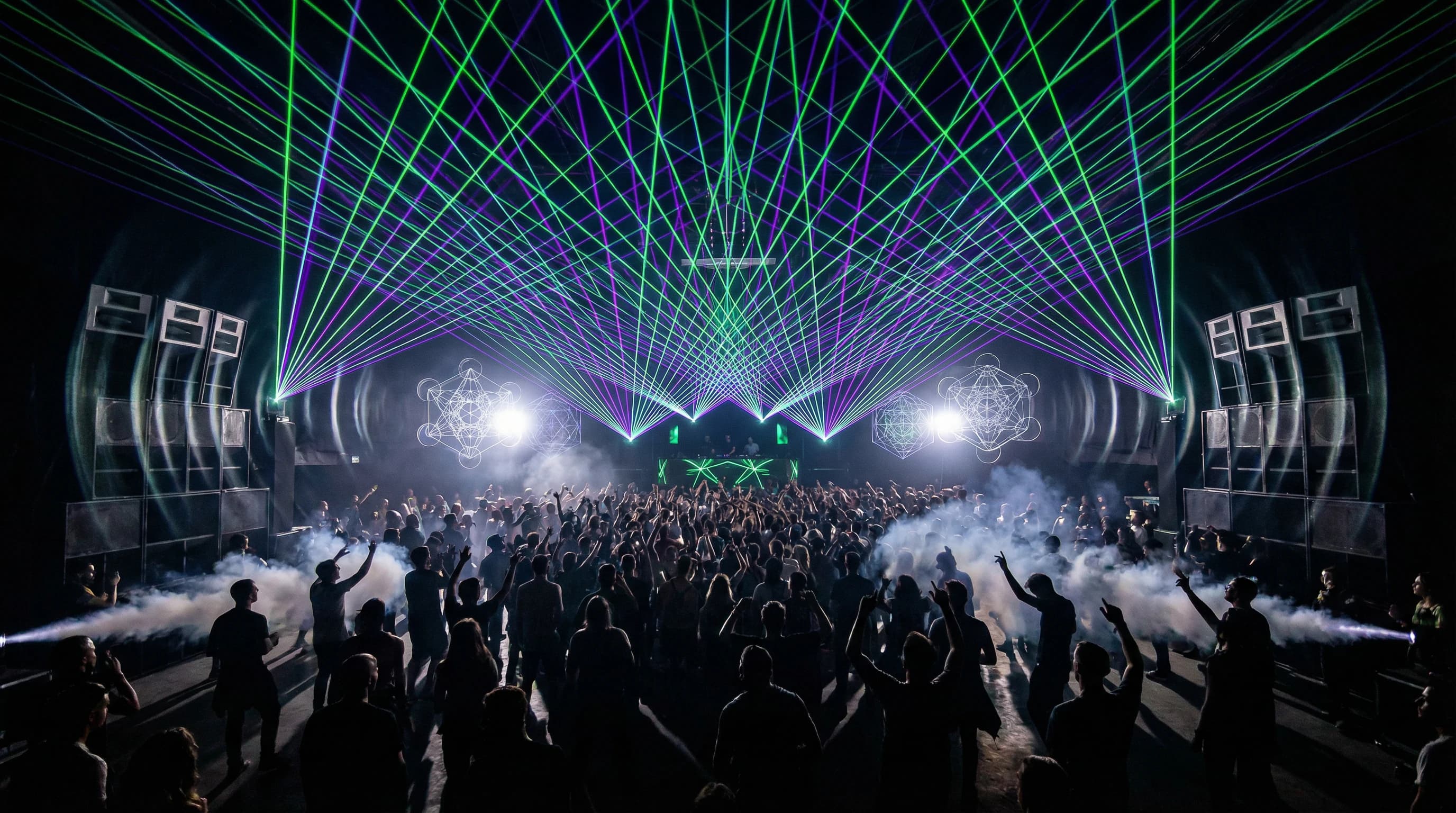
Detroit techno was born as a sonic manifesto: 🧬 machine rhythms against social oppression, collective trance instead of individual isolation. Today, techno-esotericism is not mysticism under a beat, but a research field where 120–150 BPM functions as a metronome for altered states, synthesizers as tools of neuroplasticity, and raves as laboratories of collective consciousness.
🛡️
Laplace Protocol: This section examines the phenomenon of techno-esotericism through the lens of cultural studies, musicology, and the anthropology of altered states of consciousness, avoiding unsubstantiated mystical claims and focusing on documented practices and their sociocultural context.
Reference Protocol
Scientific Foundation
Evidence-based framework for critical analysis
Protocol: Evaluation
Test Yourself
Quizzes on this topic coming soon
⚡
Deep Dive
Detroit Roots: Techno as Spiritual Revolution in the Post-Industrial Era
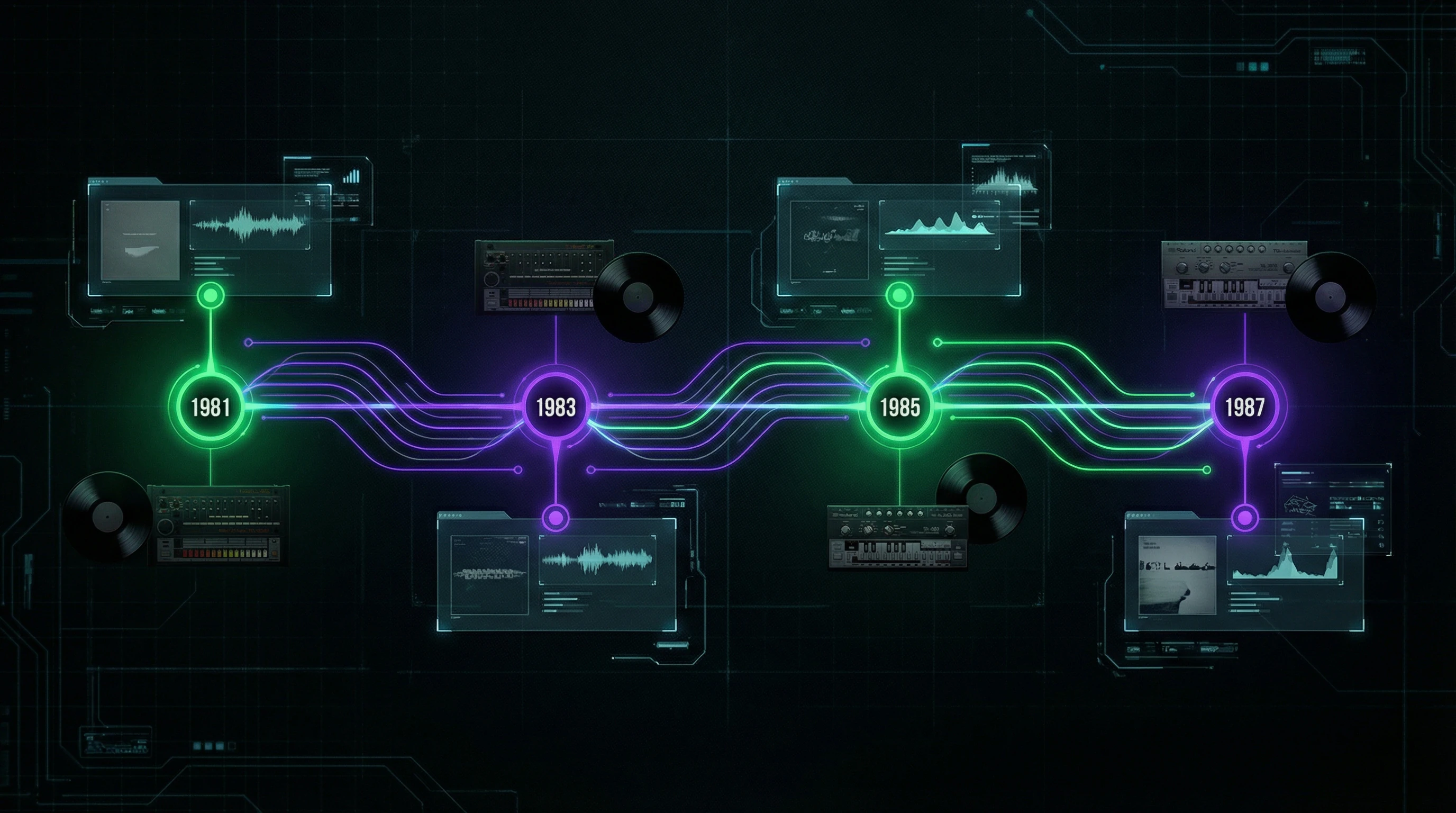
In the early 1980s in Detroit—a city of economic collapse in the automotive industry—three African American teenagers created a musical genre that became a global language of transcendent experience. Juan Atkins, Derrick May, and Kevin Saunderson (the Belleville Three) synthesized the European electronic avant-garde of Kraftwerk with the African American tradition of funk and soul, adding Alvin Toffler's philosophy of the "third wave" of civilization.
Their music was a manifesto of a post-human future, where machines become conduits of spiritual experience. Techno emerged from the ruins of the industrial era as sonic meditation on the transformation of human consciousness through technology.
Atkins described his Cybotron project as "music that sounds like it was made by machines for the souls of the future"—a concept radically different from the human-centric aesthetics of rock or disco.
The tempo of 120–150 BPM, chosen intuitively, created physiological resonance between the dancer's body and machine rhythm, close to the heart rate frequency during active meditation.
The Belleville Three and the Philosophy of Machine Soul
The philosophical foundation of Detroit techno was built on a paradoxical idea: machines can possess soul, and electronic sounds can convey deep emotional and spiritual states. Juan Atkins read Toffler's futurological works and science fiction, integrating concepts of post-industrial society into musical form.
Derrick May called his compositions "sonic paintings of emotions," using Roland TR-909 and TB-303 synthesizers not as imitations of acoustic instruments, but as independent voices of non-human consciousness. The absence of vocals or their minimization created space for listeners to project their own experiences.
- Horizontal Time
- A perception where linear sequence dissolves into cyclical present. Repeating patterns and gradual texture transformations created this quality, bringing techno closer to ancient meditative practices that use monotonous rhythms to alter states of consciousness.
Futurism and Afrofuturism in Early Techno Culture
Detroit techno became the musical embodiment of Afrofuturism—a cultural movement reimagining the African diaspora through the lens of science fiction and technological optimism. In the context of racial segregation and economic depression of the 1980s, the Belleville Three created sonic utopias where technology liberates from social constraints.
The covers of their early releases depicted spaceships, cyborgs, and futuristic megacities—a visual language rejecting both nostalgia for a pre-industrial past and realistic depiction of an oppressed present.
| Source of Influence | Techno Interpretation |
|---|---|
| Sun Ra and Parliament-Funkadelic | Metaphorical "space travel" |
| Detroit Techno | Literal fusion of human consciousness with electronic systems |
Tracks like Cybotron's "Clear" or Derrick May's "Strings of Life" created a sense of presence in non-human space—a digital dimension where different laws of time and causality operate. This was the construction of alternative ontology through sound, not escape from reality.
Rhythm and Trance: The Neurobiology of Techno-Meditation in Collective Space
Repetitive rhythmic patterns in techno affect the brain through entrainment—the synchronization of neural activity with external periodic stimuli. Monotonous rhythms at 2–4 Hz (corresponding to bass kicks at 120–150 BPM) amplify theta waves in the hippocampus and prefrontal cortex—a pattern characteristic of meditative states and hypnagogic transitions.
Electronically generated techno sounds possess precise periodicity unattainable by acoustic instruments, creating a stronger neural synchronization effect.
- Prolonged exposure to techno rhythms (DJ sets lasting 1–3 hours) reduces activity in the default mode network—the system responsible for self-reference and internal dialogue.
- Functional MRI of dancers demonstrates a deep meditation pattern: decreased activity in the medial prefrontal cortex alongside enhanced connectivity between sensorimotor and auditory regions.
- Subjectively, this is experienced as dissolution of ego boundaries and merging with the rhythm—an experience described as "becoming the music."
Impact of Repetitive Rhythms on Brainwaves
Techno employs a specific rhythmic structure: a constant kick drum on every quarter note (four-on-the-floor) creates a base frequency of 2 Hz at 120 BPM, precisely matching the lower boundary of the delta range. Overlaid hi-hat patterns at 8–16 Hz resonate with the alpha range, associated with relaxed wakefulness.
This multilayered rhythmic architecture simultaneously stimulates different frequency ranges of neural activity, creating a state of "hypnagogic wakefulness"—consciousness remains active, but the quality of perception is radically transformed.
Gradual changes in rhythmic texture—adding or removing elements every 16–32 bars—utilize the principle of "predictable unpredictability," optimal for maintaining attention without cognitive strain. This structure activates dopaminergic reward pathways with each anticipated change, creating a cycle of anticipation and satisfaction.
Techno tracks lasting 10–15 minutes don't induce a sense of monotony because the brain exists in a state of constant micro-anticipation of the next pattern transformation.
Collective Trance on the Dance Floor as Contemporary Ritual
Techno events recreate the structure of archaic collective trance rituals in a secular technological context. Anthropological research reveals common elements: isolation from everyday space (dark clubs, remote locations), duration (raves lasting 8–12 hours), synchronization of participants' movements, use of rhythmic patterns to induce altered states of consciousness.
The distinction of techno culture—absence of religious doctrine or authoritarian hierarchy; it creates "temporary autonomous zones" where transcendent experience is accessible without institutional mediation.
| Archaic Ritual | Techno Event |
|---|---|
| Religious doctrine, priestly authority | Secular context, horizontal structure |
| Acoustic instruments, variable rhythm | Electronic sounds, precise periodicity |
| Limited group of initiates | Open space for all participants |
The phenomenon of "collective flow" on the dance floor emerges through interpersonal synchronization: when a group of people moves in unified rhythm, their neural activity begins to correlate, creating an effect of "expanded consciousness."
EEG studies of dancers show phase synchronization of alpha and theta waves between participants in close physical proximity—a pattern not observed during individual listening to the same music. This is the neurobiological foundation for the subjective experience of "unity" or "dissolution in the crowd," described as a central aspect of techno culture experience.
Digital Shamanism: Technologies of Altered States in the AI Era
Synthesizers and drum machines function in techno culture as technological analogs of shamanic instruments—devices for navigating the immaterial dimensions of consciousness. The Roland TB-303, originally created as a bass guitar emulator and a commercial failure, was rediscovered by techno producers as a generator of "acid" sounds—resonant frequencies that trigger intense somatic reactions.
The unpredictability of analog circuits, creating microvariations in each sound cycle, was perceived not as a technical flaw but as a manifestation of the machine's "personality"—a non-human subjectivity with which one could enter into dialogue.
The process of creating a track becomes a ritual of interaction with machine intelligence: the producer sets initial conditions, but the final result emerges through unpredictable interactions of electronic components. This practice is conceptually close to divination or the automatic writing of the Surrealists—methods of accessing information beyond conscious control.
Synthesizers and Drum Machines as Instruments of Transformation
Analog synthesizers generate sound through physical electrical processes—voltage oscillations, filter resonance, nonlinear distortions—creating acoustic phenomena impossible in nature or with acoustic instruments. These "impossible sounds" affect the auditory system in ways for which the brain has no evolutionarily formed processing patterns, inducing states of cognitive dissonance and perceptual novelty.
Techno producers systematically explore these boundary zones of perception, creating sonic textures that simultaneously attract and disorient, inducing altered states of consciousness through purely acoustic means.
- Drum machines like the Roland TR-909 create rhythms with microsecond precision unattainable by a human drummer, forming a "superhuman groove."
- The absolute precision of machine timing creates a sense of "aliveness": the brain interprets perfect periodicity as a sign of non-human intelligence presence.
- Microvariations in velocity or timing—"humanizing" machine rhythm—create a hybrid aesthetic where boundaries between organic and synthetic become indistinguishable.
Artificial Intelligence in Creating Psychoactive Sonic Landscapes
Contemporary generative AI systems, trained on massive datasets of techno music, create compositions that human listeners cannot reliably distinguish from human-created ones. The critical difference: AI-generated tracks often contain structural patterns that a human composer would not consciously choose, but which prove psychoacoustically effective.
Neural networks discover correlations between sonic parameters and neurophysiological reactions, optimizing compositions for maximum impact on states of consciousness—a process that can be described as "algorithmic shamanism."
Experimental projects use AI for real-time generation of techno music that adapts to audience biometric data: systems analyze heart rate, movement, and even EEG signals of dancers, modifying tempo, timbre, and rhythmic structure to maintain optimal flow states.
This creates a feedback loop between collective consciousness and machine intelligence—a cybernetic system where the distinction between creator and consumer of music dissolves. Technology does not merely imitate transcendent experience but becomes an active agent in its co-creation, a partner in exploring non-human dimensions of consciousness.
Rave Culture and Esoteric Practices: From Underground to Tech Retreats
From Underground Parties to Tech Retreats
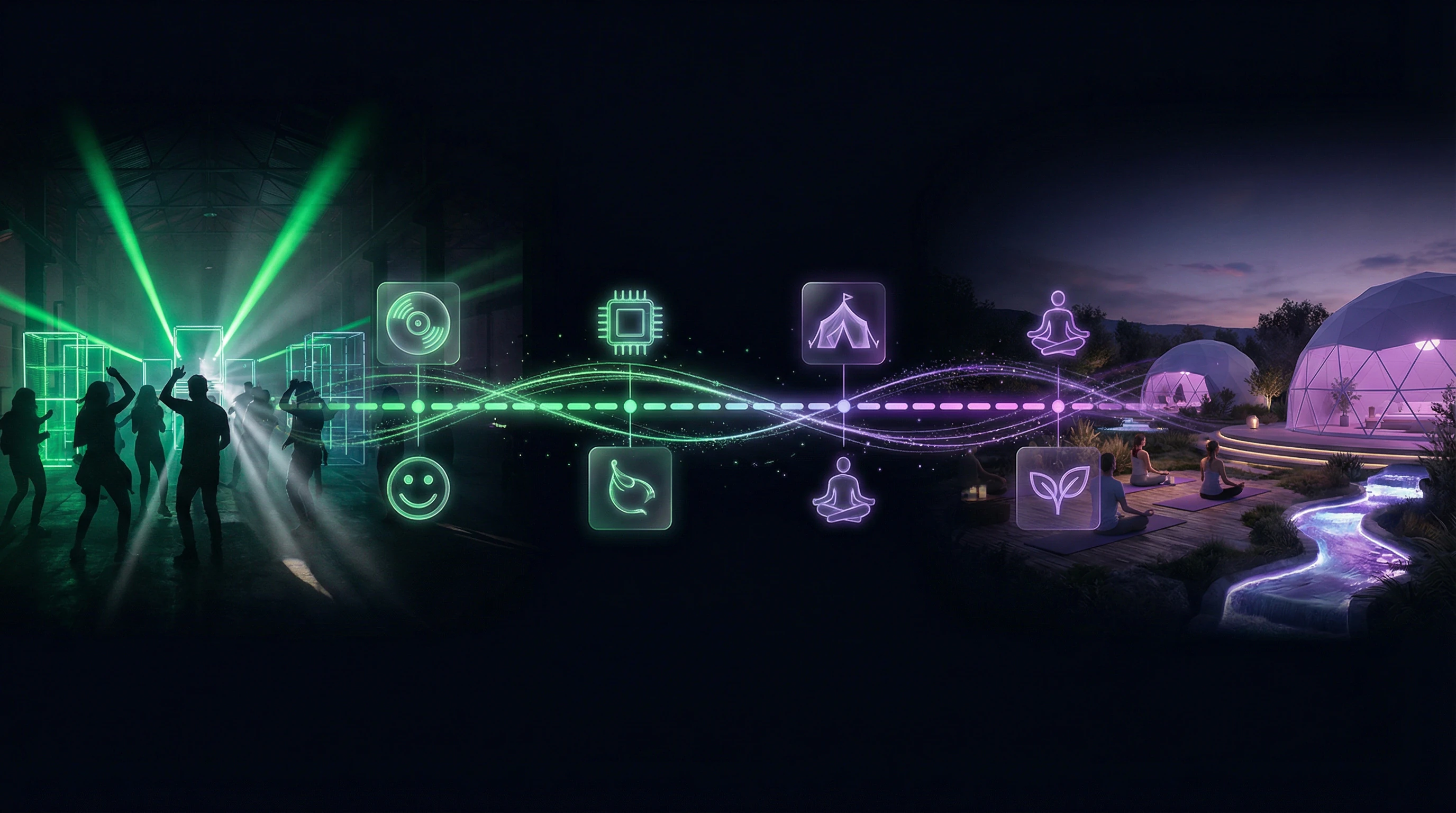
Rave culture of the 1990s emerged as a countercultural movement, where techno served as the soundtrack to collective trance, amplified by psychedelics and marathon dance sessions. Underground parties in abandoned warehouses created temporary autonomous zones—spaces outside social control, where participants sought liberation through rhythmic ego dissolution.
By the 2020s, this tradition transformed into a wellness retreat industry, where techno sets integrate with yoga and breathwork practices. Festivals like Burning Man commercialized the esoteric rave experience, packaging it as "transformational tourism" for the middle class.
Contemporary techno retreats use scientific language to legitimize spiritual practices: organizers reference neuroplasticity, Csikszentmihalyi's flow theory, and MDMA-assisted psychotherapy. This creates a hybrid discourse where shamanic drums are replaced by Roland TR-909s, and "soul journeys" are described through quantum physics metaphors.
The technologization of esotericism makes it more acceptable to skeptical audiences: if transcendent experience can be measured by EEG and explained through neurochemistry, it ceases to be "mysticism" and becomes "consciousness optimization."
Integration of Meditative and Breathwork Techniques in Techno Spaces
Minimalist techno sets at 120–130 BPM synchronize with breathing cycles and heart rate, creating a physiological foundation for meditative states. DJs structure tracks as guided meditation: gradual intensity build-up, plateau at peak, and slow descent mimic the structure of holotropic breathwork or vipassana.
Berlin clubs like Tresor and Berghain have become pilgrimage sites for "techno monks"—people practicing marathon dance sessions as a form of moving meditation without substances.
- Minimal tempo (120–130 BPM) aligns with natural biorhythms
- Track structure mimics breathwork practice protocols
- Marathon sessions create conditions for dissociation and meditative states
- Absence of substances allows positioning the experience as "pure" and scientifically grounded
Specialized "techno meditation" apps (Endel, Brain.fm) demonstrate the institutionalization of this practice. Algorithms generate personalized ambient-techno tracks based on circadian rhythms, weather conditions, and stress levels measured by wearable devices.
This transforms ancient consciousness-altering techniques into a data-driven service, where spiritual experience becomes a metric for optimization. Quantification of transcendent experience inevitably misses its qualitative, ineffable dimension, turning mysticism into another KPI for self-tracking.
Tech Brands and the Commercialization of Esotericism: From Symbolism to Marketing
TECNO Mobile and the Symbolism of Technological Enlightenment
The TECNO Mobile brand positions affordable AI-integrated smartphones through the visual language of techno-futurism: neon colors, glitch effects, augmented reality imagery. The slogan "Technology for All" contains an egalitarian utopia—democratizing access to digital enlightenment, where the smartphone becomes the modern equivalent of sacred scripture.
AI features (facial recognition, predictive text, personalized recommendations) are sold through a narrative of "consciousness expansion." Marketing materials use terms like "intuitive interface" and "smart foresight," anthropomorphizing algorithms.
Rational computational processes are packaged in mystical discourse: machine learning becomes "digital intuition," recommendation systems become "electronic oracles." The consumer purchases not a processor and screen, but the promise of transcendent experience.
Marketing Spirituality Through Electronic Devices
The wearable device industry (Oura Ring, Whoop, Apple Watch) has transformed the quantification of biometric data into a form of digital spirituality. Meditation apps (Headspace, Calm) integrate with gadgets, creating a closed ecosystem.
- "Spiritual progress" is measured in practice minutes and heart rate variability
- Salvation is achieved through metric optimization
- Sin becomes ignoring notifications about the need for a "mindfulness break"
- Transcendent experience transforms into a subscription service with monthly payments
The promise of "inner transformation" through technology consumption distracts from structural causes of stress: labor precarity, social inequality, ecological crisis. Instead of collective political action, an individual solution is offered—buy a gadget, download an app, optimize biorhythms.
Techno-esotericism becomes the ideal ideology for the neoliberal subject: it promises control and meaning in a chaotic world without requiring change to that world itself.
The Future of Techno-Esotericism: Virtual Reality and the Metaverse as New Temples
Immersive Techno-Meditations in VR Spaces
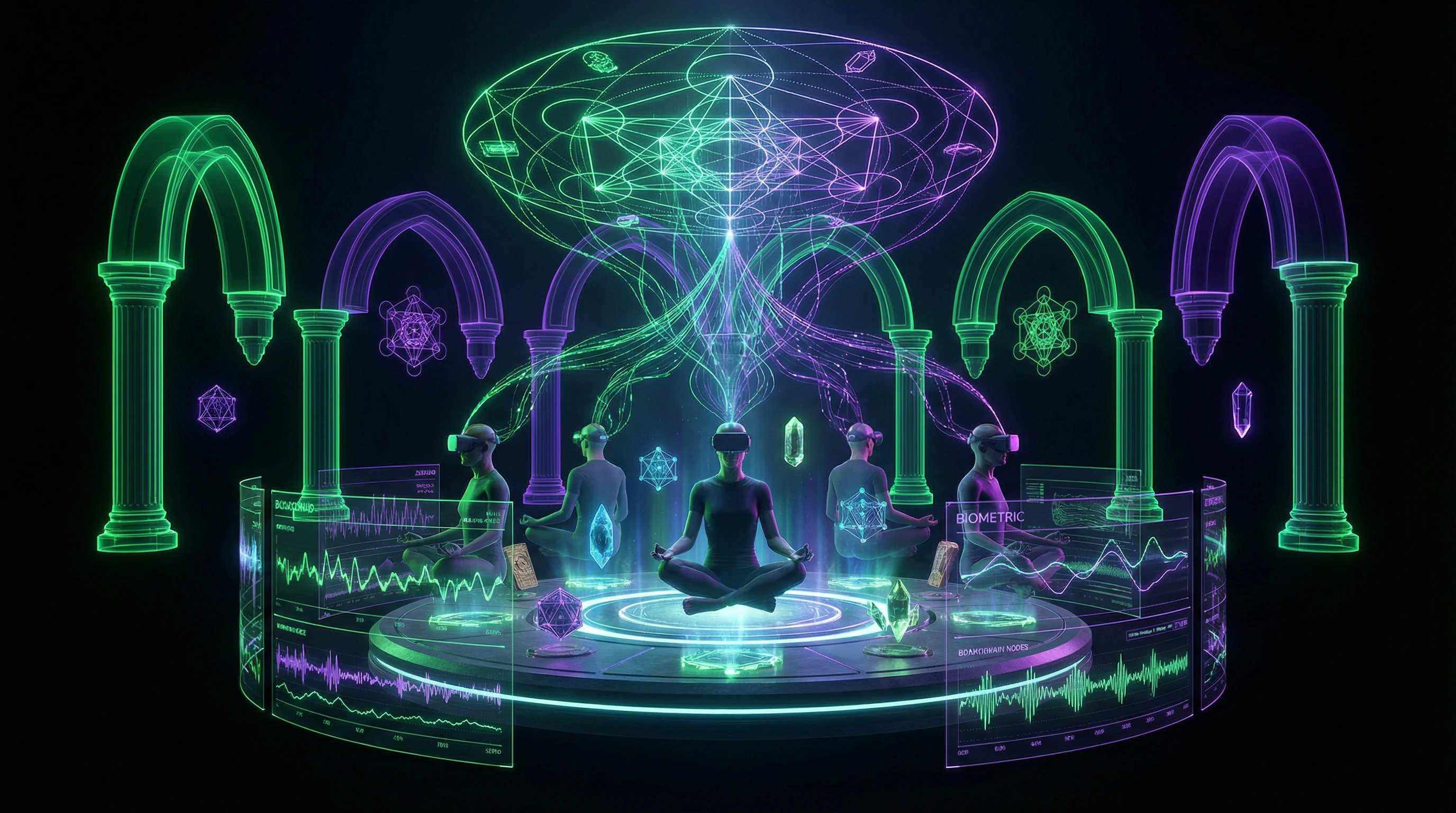
VR technologies create fully controlled sensory landscapes for meditation and transcendent experience. Applications like TRIPP and Guided Meditation VR combine techno-ambient soundtracks with abstract visualizations synchronized with the user's breathing through headset sensors.
This creates a feedback loop between physiology and virtual environment: slowing breath transforms the visual sequence, intensifying the meditative state. VR techno-meditation promises democratization of mystical experience—anyone with a headset can "visit" digital temples and undergo states previously accessible only through years of practice or psychedelics.
Can simulated experience be genuinely transcendent? If VR meditation is indistinguishable from "real" meditation at the level of subjective experience, does its artificial nature matter?
Techno-esotericism answers affirmatively: in the post-metaphysical era, the distinction between "authentic" and "simulated" spiritual experience loses meaning. What matters is not the ontological authenticity of the experience, but its functional effectiveness—its capacity to transform the user's consciousness and behavior.
Blockchain, NFTs, and New Forms of Digital Spirituality
Cryptocurrency communities develop quasi-religious narratives around decentralization, immutability, and "trustless" systems. Bitcoin maximalists employ the language of apocalyptic and salvation, where cryptocurrency serves as a means of liberation from the "fiat tyranny" of central banks.
NFT art creates new rituals of ownership and identity: purchasing a token becomes an act of initiation into a digital tribe, while NFT rarity becomes a form of spiritual status. Techno musicians release albums as NFT collections, transforming music consumption into an esoteric practice of collecting unique digital artifacts.
- DAOs form a new type of spiritual community, where governance operates through smart contracts and token voting
- This creates a technocratic utopia of direct democracy without hierarchies or intermediaries—a digital realization of anarchist and libertarian ideals
- The reality of DAOs demonstrates the reproduction of old power structures: whales (large token holders) dominate voting
- Technical complexity excludes most participants from actual governance
The techno-esotericism of blockchain promises transcendence through code, but confronts ineradicable social and economic inequalities that technology cannot solve on its own.
Knowledge Access Protocol
FAQ
Frequently Asked Questions
Techno-esotericism is a synthesis of electronic music, technology, and spiritual practices aimed at achieving altered states of consciousness. The movement combines techno music rhythms with meditative techniques, using repetitive beats (120-150 BPM) to enter trance states. Emerging from 1990s rave culture, it now includes VR meditations and AI-generated soundscapes.
Repetitive techno rhythms synchronize brainwaves, inducing meditation-like states. Tempos of 120-150 beats per minute correspond to beta and gamma brain rhythms, promoting concentration and euphoria. Prolonged exposure can induce trance, activating the same neural networks as traditional spiritual practices.
The Belleville Three are Detroit techno pioneers: Juan Atkins, Derrick May, and Kevin Saunderson. They created techno in the early 1980s, inspired by Afrofuturism and the concept of 'machine soul.' Their philosophy merged technology with spiritual liberation through electronic sound, laying the foundation for techno-esotericism.
Partially true: raves reproduce the structure of ancient rituals through collective trance, rhythmic music, and altered states. However, this isn't a direct analogy—raves lack traditional symbolism and spiritual guidance. Modern techno retreats consciously integrate meditation and breathwork, moving closer to ritual format.
Yes, techno suits dynamic meditation thanks to monotonous rhythms and minimalist structure. Choose tracks at 120-130 BPM without vocals, focus on breathing in sync with the music. The practice is popular in techno yoga and conscious dance, where movement becomes a meditative process.
Digital shamanism is the use of technology (synthesizers, AI, VR) to create transformational sonic and visual experiences. Contemporary producers apply algorithms to generate psychoactive frequencies, replacing traditional shamanic instruments with digital ones. The movement explores technology as a pathway to altered states of consciousness and spiritual growth.
Begin with 10-15 minutes of listening to minimalist techno through headphones, sitting or moving slowly. Synchronize breathing with the rhythm (inhale for 4 beats, exhale for 4), allowing the sound to guide you. Gradually increase duration, experiment with dance movements and closed eyes to deepen the trance.
No, TECNO Mobile is a regular smartphone manufacturer unrelated to esotericism or music culture. The name coincidence creates confusion, but the brand focuses on affordable AI-powered electronics. Marketing sometimes uses futuristic symbolism, but this is a commercial tactic, not spiritual philosophy.
Holotropic breathwork and pranayama adapted to techno rhythms are popular. Participants synchronize deep inhales-exhales with beats (e.g., 4:4:4:4), achieving hyperventilation and altered states. Practices are conducted under facilitator guidance, combining sound, movement, and breath for catharsis.
AI generates sound patterns mimicking psychoactive frequencies, but the question of 'spirituality' is debatable. Algorithms analyze traditional meditative compositions and techno, creating hybrids. However, AI's lack of intention and consciousness questions the authenticity of spiritual experience—the effect depends on listener perception.
Myth: techno doesn't replace therapy, but can temporarily improve mood through dopamine and endorphin release. Rhythmic music and dance reduce stress, but the effect is short-term. Depression requires professional help — techno can be a supplement, but not a treatment.
Prolonged exposure to loud music and intense rhythms can cause fatigue, anxiety, or dissociation in predisposed individuals. Safe practice includes breaks, moderate volume, and mindfulness. People with epilepsy or mental disorders should avoid intense techno sessions without medical consultation.
Techno yoga is the practice of asanas to electronic music with emphasis on dynamics and rhythm. It combines traditional poses with dance elements, synchronizing movements with techno beats. The practice is popular in Europe, offering an alternative to classical yoga for fans of modern music and active practices.
VR creates immersive environments for techno meditations, combining sound, visuals, and interactivity. Users 'travel' through digital mandalas to techno, amplifying the trance effect. The technology allows personalized experiences, but critics point to addiction risks and disconnection from embodiment.
Yes, techno temples are emerging in Berlin, Amsterdam, and other cities — alcohol-free clubs with meditative atmospheres. Spaces like Griessmuehle or Morning Gloryville host 'conscious raves' with yoga and breathwork practices. These are hybrids of clubs and retreat centers where techno serves as a transformation tool.
Yes, the field is commercializing through retreats, online courses, meditative techno production, and VR applications. Facilitators conduct paid sessions, producers sell tracks on platforms like Bandcamp. However, the market is niche and requires authenticity and expertise in both music and spiritual practices for success.