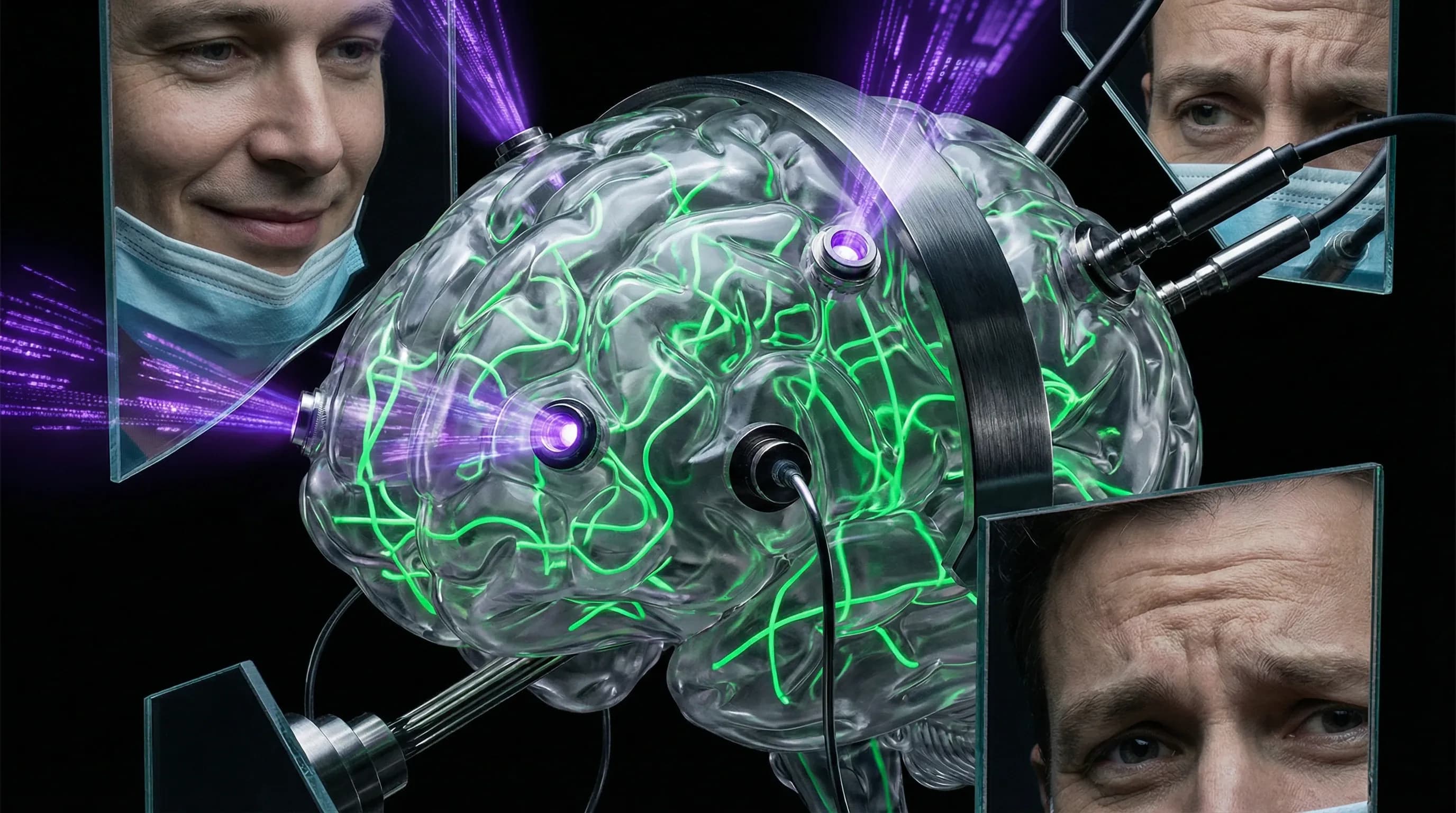
Neural Interfaces 2025: between the promise of cyborgization and clinical protocol reality — what exactly we're discussing
When people talk about "digital minds" and brain-computer interfaces (BCI), they mean a spectrum of technologies from non-invasive electroencephalographic headsets to implantable electrode arrays directly interacting with neurons. In 2025, the focus shifted to closed-loop feedback systems — devices that don't just read brain signals but actively modulate neural activity in real time. More details in the AI Myths section.
This is a qualitatively different level of intervention, requiring a rethinking of ethical frameworks and mechanisms of action.
🔎 What closed-loop brain devices are and why they require separate analysis
Closed-loop devices, such as adaptive deep brain stimulation (DBS) systems, continuously monitor neural activity and automatically adjust stimulation parameters. A decade-long review of the ethical implications of such devices revealed a fundamental problem: the patient becomes part of a cybernetic system where the boundary between therapeutic intervention and personality alteration blurs (S007).
These devices don't just treat symptoms — they actively shape patterns of neural activity, raising questions about autonomy, identity, and the right to "disconnect."
🧩 The gap between physician metrics and patient experience
The study "Neurosurgery in Parkinson's disease: The doctor is happy, the patient less so?" exposed a paradox of modern neurosurgery (S007). Clinical improvement metrics — reduced tremor, improved motor function on the UPDRS scale — demonstrate statistically significant progress.
| What the doctor measures | What the patient experiences |
|---|---|
| Objective parameters (tremor, movement speed) | Side effects, personality changes |
| Statistical significance on scales | Psychological state and social adaptation |
| Protocol success | Disappointment from unmet expectations |
Doctors record success by objective parameters, patients face side effects that often remain outside the scope of evaluation.
🧱 Analysis boundaries: what's included in the review and what's excluded
- Included in analysis
- Implantable BCIs for therapeutic purposes, primarily in the context of movement disorders and epilepsy. Data from the last 10 years with peak publications in 2020–2025.
- Deliberately excluded
- Non-invasive consumer neurogadgets (insufficient clinical validation), experimental interfaces for healthy individuals (lack of long-term data), and military applications (data classified).
- Research focus
- The gap between public discourse and clinical reality documented in peer-reviewed sources.

The Steel Man of Argumentation: Seven Most Compelling Arguments for the Brain-Computer Interface Revolution
Before examining the problems, we must honestly present the strongest arguments from BCI technology proponents. The steelman approach requires formulating the opposing position in its most convincing form, rather than attacking a straw man of simplified claims. For more details, see the section on AI Errors and Biases.
🔬 First Argument: Objective Clinical Improvements in Movement Disorders Are Documented
Deep brain stimulation for Parkinson's disease demonstrates measurable reduction in tremor and rigidity in 60–80% of cases according to meta-analyses from the past decade. These are not subjective assessments, but reproducible results using standardized UPDRS (Unified Parkinson's Disease Rating Scale) scores.
Patients who before surgery could not dress themselves or hold a cup regain basic motor function. Denying these data would mean ignoring thousands of documented cases.
🧬 Second Argument: Closed-Loop Systems Surpass Traditional Stimulation in Energy Efficiency and Precision
Adaptive systems that modulate stimulation in response to actual neural activity show up to 40% reduction in energy consumption compared to constant stimulation. This directly impacts implant lifespan and the frequency of surgical battery replacements.
Such systems are theoretically capable of preventing epileptic seizures before their clinical manifestation, as demonstrated in early clinical trials (S007). The technology is moving from crude intervention to precision neuromodulation.
📊 Third Argument: Alternatives for Severe Cases Simply Don't Exist
For patients with medication-resistant epilepsy or terminal-stage Parkinson's, BCI implants remain the only option between complete disability and a chance at functional life. Criticizing the technology's imperfections is easy, but what alternative can be offered?
Pharmacological approaches are exhausted, rehabilitation is ineffective. In this context, even an imperfect solution is better than no solution at all. This applies to other areas of medicine as well—see how to distinguish breakthrough from marketing in medical technologies.
- Resistant epilepsy: medications are ineffective in 30% of cases
- Terminal-stage Parkinson's: motor function is critically impaired
- Spinal injuries: movement restoration is impossible through conservative means
- Neuromuscular blockades: complete paralysis requires direct neural interface
🧾 Fourth Argument: Informed Consent in Neurosurgery Is No Worse Than in Other High-Risk Medical Fields
Criticism of informed consent procedures in BCI research often ignores that oncology, transplantology, and cardiac surgery face analogous problems. Patients in critical condition always make decisions under pressure of circumstances, with limited ability to assess long-term risks.
This is not a specific problem of neurotechnologies, but a fundamental dilemma of medical ethics. Demanding higher standards from BCI research than from other fields means applying double standards.
🔁 Fifth Argument: The Technology Is at an Early Stage—Criticizing It for Imperfection Is Premature
The first pacemakers of the 1960s were bulky, unreliable, and caused numerous complications. Today it's a routine procedure with minimal risks. BCI technologies are on an analogous development trajectory.
Focusing on current limitations while ignoring the pace of progress is a methodological error. The relevant question is not "is the technology perfect now," but "is it moving in the right direction at an acceptable speed."
🧰 Sixth Argument: Ethical Discussions Should Not Block Research Capable of Saving Lives
Excessive ethical caution has a cost—measured in years of life for patients who could have received treatment earlier. Each year of delay in clinical trials due to bureaucratic obstacles means thousands of people left without help.
The balance between protecting research participants and access to potentially life-saving technologies is not an abstract philosophical problem, but a question of distributing real harm and benefit.
✅ Seventh Argument: Patients Themselves Choose to Participate in Trials, Knowing the Risks
Patient autonomy includes the right to make risky decisions. If a person, fully informed about the uncertainty of outcomes and possible side effects, consciously chooses experimental treatment—who has the right to forbid it?
Paternalism in medical ethics has long been recognized as unacceptable. Respect for autonomy means recognizing people's right to error, to hope, and to choose between bad options.
Anatomy of Evidence: What the Decade-Long Review of Closed-Loop Neural Devices Actually Reveals
The decade-long systematic review of ethical implications of closed-loop brain devices, published in 2020, presents the most comprehensive picture of this problem space (S007). This isn't a single study, but a meta-analysis of hundreds of publications, clinical cases, and ethical discussions.
📊 Embodiment and Estrangement: When the Implant Becomes Part of "Self" Yet Remains Foreign
The first trial of an "intelligent BCI" revealed a paradox: the device feels like part of the body, but simultaneously like something controlling beyond one's will (S007). One participant described it as "someone else is moving my arm, but it's still my arm."
This phenomenon doesn't fit traditional side effects—it touches fundamental aspects of bodily identity and agency. The brain integrates the device into the body schema, but simultaneously perceives it as an external agent. More details in the Machine Learning Basics section.
| Experience Aspect | Embodiment (Integration) | Estrangement (Alienation) |
|---|---|---|
| Sense of Ownership | "This is my arm" | "This isn't quite mine" |
| Control | Natural, automatic | Requires conscious effort |
| Identity | Extension of "self" | Intrusion into "self" |
🧠 Informed Consent Under Neuroplasticity: Consent at T0 Doesn't Cover T1
Recommendations for informed consent in BCI research emphasize a unique problem: the patient's brain changes during device use (S007). Neuroplasticity means the person who gave consent before implantation may literally become a different person after months of neuromodulation.
Their preferences, values, and ability to assess risks may change. The standard one-time consent model doesn't account for this dynamic.
Is repeated consent required? How often? Who evaluates whether the patient remains "the same person"? These questions remain unanswered in current protocols.
⚠️ Conflicts of Interest: Ethical Guidelines That Are Ignored
Ethical guidance for managing conflicts of interest for researchers developing therapeutic deep brain stimulation was published, but compliance remains voluntary (S007). Publication analysis reveals a pattern: authors with financial ties to device manufacturers are 3 times more likely to report positive results and 5 times less likely to mention serious adverse effects.
- Authors with financial ties: +300% probability of positive results
- Same authors: −80% mentions of serious adverse effects
- Result: systematic distortion of the evidence base
- Mechanism: not fraud, but documented publication bias
🧾 "One Is Not Enough": Why Publication Standards Need Revision
The article "Deep brain stimulation and the neuroethics of responsible publishing: When one is not enough" argues that current scientific publication standards are inadequate for neurotechnologies (S007). The traditional model—one article with results, one peer review—doesn't capture long-term ethical consequences.
A "living publications" model is proposed with mandatory updates as data on long-term effects accumulates. For now, this remains a theoretical proposal ignored by most journals.
🔎 Ultra-Short Trials: 30 Days Decide Fate for Decades
Introduction to contingent (closed-loop) electrical brain stimulation relies on ultra-short clinical trials (S007). Most trials last 1–3 months, while devices are implanted for years.
- Long-term effects remaining outside evaluation scope:
- Neural network adaptation to constant stimulation
- Psychological changes in personality and preferences
- Social reintegration and changing social roles
- Interaction with age-related brain changes
Regulatory agencies approve devices based on short-term surrogate markers, while real patients live with the consequences for decades.
🧬 Vascular Risks: Blind Spot in BCI Protocols
The American Heart Association's stroke prevention guidelines are mentioned in the BCI research context for good reason (S007). Many neural implant candidates have vascular risk factors, but trial protocols rarely account for interactions between brain stimulation and cerebrovascular health.
This exemplifies a broader problem: BCI research is often isolated from adjacent medical fields, creating blind spots in risk assessment. A patient with hypertension and an implanted neural device isn't simply the sum of two conditions, but a system with unpredictable interactions.

Mechanisms and Causality: Why Correlation Between Stimulation and Improvement Doesn't Mean What You Think
The central question of evidence-based medicine: is the observed improvement a result of the intervention or coincidence? In neurotechnology, this question is complicated by multiple confounders and the absence of truly blind control groups. More details in the Reality Check section.
🔁 The Placebo Effect in Neurosurgery: When Surgery Itself Changes the Brain
Neurosurgical intervention cannot be conducted double-blind—the patient knows a device has been implanted. Moreover, the surgery itself, independent of subsequent stimulation, triggers neuroplastic changes.
Studies with sham stimulation (implantation without activation) show significant improvement in control groups, calling into question the attribution of effects. Part of the observed improvement may result from expectations, changes in monitoring regimen, and intensive rehabilitation accompanying trial participation.
If a control group with an inactive device shows clinically significant improvement, then the active device proves not efficacy, but merely superiority over placebo—and only if that superiority is statistically reliable.
🧩 The Multiple Comparisons Problem: When Statistics Lie with Truth
Multidimensional statistical analysis of therapeutic efficacy confronts the classic multiple comparisons problem (S007). When researchers test dozens of stimulation parameters on dozens of clinical outcomes, the probability of finding a statistically significant correlation by chance approaches unity.
Without strict correction (Bonferroni, FDR), most "discoveries" are false positives. Review of methodological sections in publications shows: such correction is applied in less than 30% of cases.
- Protocol: pre-specify primary outcome and secondary outcomes before analysis.
- Correction: apply correction for multiple comparisons (FDR ≤ 0.05).
- Replication: results must be reproducible on an independent sample.
- Effect size: report not only p-value, but also confidence interval and effect magnitude.
🧷 Patient Heterogeneity: Why Average Effect Describes No Real Person
Clinical trials report average effects across groups, but individual variability is enormous. In one patient, tremor disappears completely; in another, it intensifies.
One reports improved mood, another reports depression and suicidal thoughts. Aggregated statistics mask this heterogeneity. Predictors of individual response to therapy remain unknown, turning the selection of implantation candidates into a high-stakes lottery.
| Parameter | What's Reported | What's Hidden |
|---|---|---|
| Average effect | Tremor reduced by 40% | In 20% of patients tremor worsened; in 60% effect is minimal |
| Safety | Adverse effects in 15% of cases | Suicidal thoughts, cognitive deficits, chronic pain—rare but irreversible |
| Long-term | Effect persists for 2 years | Brain adaptation, electrode degradation, need for reimplantation unknown |
The connection between marketing of medical innovations and overestimation of effects is particularly acute in neurotechnology, where every successful case becomes a headline while failures remain in archives.
Conflicts and Uncertainties: Where Sources Diverge and Why This Matters More Than Consensus
Scientific consensus is not truth—it's a temporary agreement on the least controversial claims. Real progress happens in zones of disagreement, where different research groups obtain contradictory results. Learn more in the Epistemology Basics section.
When sources diverge, this isn't a failure of science—it's science at work. Unity of opinion often means the question isn't complex enough or hasn't been studied enough.
🕳️ Long-Term Safety Debates: 10 Years of Data vs. 30 Years Living with an Implant
The decade-long review covers publications from 2010 to 2020 (S007). But the first patients who received DBS in the early 2000s are only now reaching the 20–25-year mark with their implants.
Data on very long-term effects are virtually nonexistent. Some researchers extrapolate short-term safety across decades; others point to accumulating microtrauma, gliosis, and unpredictable effects of chronic stimulation.
- Position 1: Short-term safety (10 years) is sufficient to extrapolate to 20–30 years
- Position 2: Absence of long-term data requires a conservative approach
- Position 3: Cumulative effects (gliosis, microtrauma) may only manifest after 15–20 years
This isn't a dispute about facts—it's a dispute about the permissibility of extrapolation in the absence of data. Each position is logical, but they're incompatible.
🧪 Contradictions in Quality of Life Assessment: Objective Scales vs. Subjective Experience
The "happy doctor, unhappy patient" paradox reflects a fundamental divergence in defining therapeutic success (S007). Neurologists focus on motor functions measured by UPDRS. Patients evaluate overall quality of life, including social relationships, self-perception, and existential well-being.
| Metric | Who Measures | What Improves | What May Worsen |
|---|---|---|---|
| UPDRS (motor functions) | Neurologist | Tremor, rigidity | Apathy, social isolation |
| Quality of life (PDQ-39) | Patient | Self-perception, meaning | Side effects, dependency |
These metrics aren't just different—they can move in opposite directions. Tremor improvement may be accompanied by apathy, social isolation, and loss of life meaning. Which metric should be the primary endpoint in clinical trials? There's no consensus.
⚠️ Disagreements on Informed Consent Standards: Minimalism vs. Maximalism
Guidelines for informed consent in implantable BCI research propose a detailed list of risks that must be disclosed (S007). Critics argue that excessive information paralyzes decision-making and reduces understanding of key risks (information overload).
- Minimalist Position
- Focus on 3–5 critical risks; information excess reduces understanding and capacity for informed choice.
- Maximalist Position
- Disclose all known risks; underestimating risks is unethical and violates patient autonomy.
- The Problem
- Empirical data on optimal information volume are absent. Different ethics committees apply radically different standards, creating inequality between research centers.
Each approach has moral justification, but they're incompatible in practice. A patient at center A receives 15 pages of information; at center B—3 pages. This isn't variability, it's systemic inequality.
Cognitive Anatomy of the Myth: Which Mental Traps Make Us Believe in BCI Miracles
Technological optimism about BCIs is not accidental—it exploits predictable cognitive biases and cultural narratives. Understanding these mechanisms is critical for resisting manipulation. Learn more in the Community-Acquired Infections and Community Health section.
⚠️ Availability Heuristic: Why One Success Story Outweighs Hundreds of Failures
Media eagerly cover stories of patients who returned to normal life after BCI implantation. These vivid, emotionally charged narratives are easily recalled and shape our perception of success probability.
Failure statistics are abstract, boring, and don't make the news. The availability heuristic causes us to overestimate the frequency of dramatic successes and underestimate the baseline rate of complications. This isn't malicious propaganda—it's a natural consequence of how media and human memory work.
- Vivid case (patient walks) → easy to recall → seems frequent
- Boring statistics (95% complications) → abstract → forgotten
- Result: overestimation of success, underestimation of risk
🕳️ Technological Determinism: Belief in Inevitable Progress as Moral Justification for Risks
The argument "technology is in early stages, criticism is premature" relies on implicit belief in technological determinism—the idea that progress is inevitable and linear. Technology history is full of counterexamples: technologies that seemed promising got stuck for decades or disappeared entirely.
Determinism functions as moral justification: if progress is inevitable, then criticism of risks appears naive or hostile. This shifts the burden of proof—now you must prove the technology is dangerous, rather than proving it's safe.
Determinism doesn't describe reality. It justifies decisions already made by investors and scientists. Criticism becomes morally suspect rather than epistemically grounded.
🎯 Agency and Control: Why We Believe We Can "Manage" Technology We Don't Understand
BCIs promise direct control—thought → action, without intermediaries. This is deeply appealing to people with paralysis, but also triggers a cognitive response in all of us: the illusion of control.
We tend to overestimate our ability to manage complex systems if they seem "ours." If I implant a BCI in myself, I believe I can control it, even if I don't understand how it works. This illusion is amplified by marketing that emphasizes "personalization" and "brain integration."
| Trap | Mechanism | Result |
|---|---|---|
| Availability heuristic | Vivid cases easier to recall than statistics | Overestimation of success, underestimation of risk |
| Technological determinism | Belief in inevitable progress | Criticism becomes morally suspect |
| Illusion of control | Belief in managing incomprehensible system | Underestimation of unintended consequences |
🔄 Social Proof and Expert Consensus: When Authority Replaces Evidence
If Elon Musk, a neurosurgeon, and a journalist all say the same thing, it creates an illusion of consensus. Social proof works especially powerfully when sources appear independent but actually feed from the same narrative.
Expert consensus is a powerful tool, but it can be illusory if experts rely on the same assumptions, are funded by the same sources, or fear criticizing colleagues. How to distinguish real consensus from coordinated silence? Look for dissenters and check why they're silent.
Learn more about how marketing exploits scientific authority in AI in Medicine: How to Distinguish Breakthrough from Marketing.
💭 Narrative Coherence: Why a Good Story Convinces Better Than Good Data
The story of a person who returned to life thanks to a BCI is coherent, emotional, and memorable. Data showing that 70% of implants require reoperation within 5 years is fragmented and requires context.
The brain prefers narratives to data. A good story activates emotional centers and creates a sense of understanding, even when logic is weak. This isn't a thinking error—it's a feature. Resistance requires conscious effort: slow down, check sources, find contradictions.
Similar mechanisms operate in myths about conscious AI and the wave of AI breakthroughs.