
What blockchain is beyond token economics: defining the technology without the financial wrapper
Blockchain is a distributed database in which records (blocks) are linked by cryptographic hashes and replicated across multiple nodes without a central administrator. The key property is immutability: altering past records is impossible without changing all subsequent blocks and achieving consensus from the majority of nodes (S001).
This makes the technology useful for any scenario where transparency, auditability, and protection against unauthorized changes are critical—from medical records to supply chains. More details in the section Artificial Intelligence Ethics.
- Immutability
- The impossibility of altering historical records without rewriting the entire chain and obtaining majority node consensus. The trap: often exaggerated as absolute protection, but in practice depends on the consensus mechanism and the number of honest nodes.
- Distribution
- Absence of a single point of control. Why it matters: reduces the risk of a single point of failure and data manipulation by one party.
- Transparency
- All participants see the same version of the ledger. Where the trap lies: transparency ≠ anonymity; in private blockchains access is restricted, in public ones—all transactions are visible.
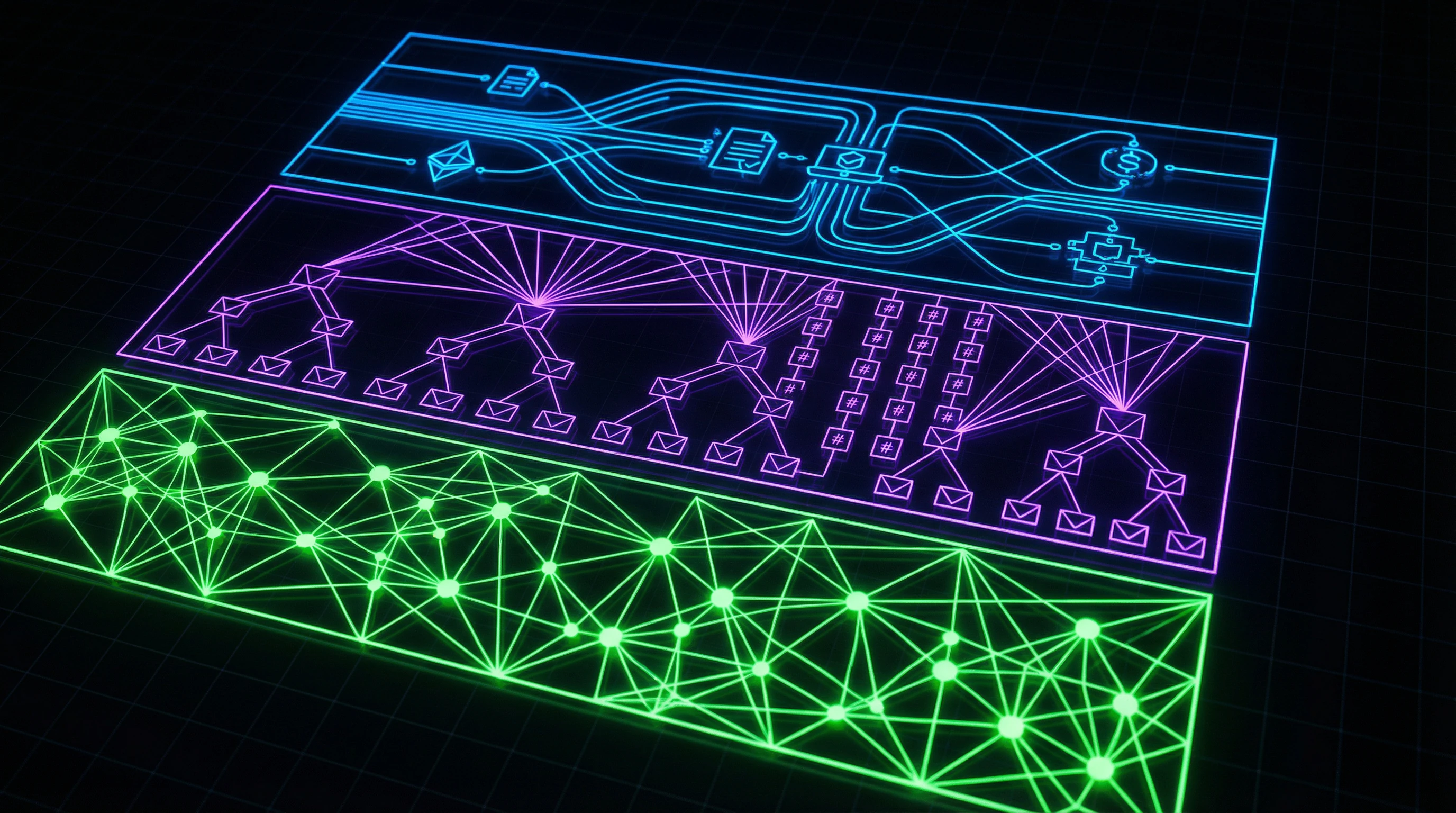
🧱 Three architectural layers of blockchain that operate independently of tokens
The first layer is the consensus protocol (Proof of Work, Proof of Stake, Byzantine Fault Tolerance). It determines how nodes agree on the validity of new blocks.
Five Strongest Arguments Supporting the "Blockchain = Cryptocurrency" Myth — and Why They Work
⚠️ Argument 1: All Major Blockchain Projects by Market Cap Are Tokens
According to CoinMarketCap, 95% of the top 100 blockchain projects by market capitalization consist of cryptocurrencies and tokens. This creates the illusion that blockchain exists only as speculative assets. More details in the AI Myths section.
However, market cap is a financial market metric, not a measure of technological adoption. Private blockchains in healthcare or energy don't trade on exchanges, yet they process millions of transactions daily (S001).
| Blockchain Type | Market Visibility | Real-World Implementation |
|---|---|---|
| Public (Bitcoin, Ethereum) | High (exchanges, media) | Speculation + payments |
| Private (enterprise) | Low (B2B sector) | Logistics, healthcare, government |
⚠️ Argument 2: Media Only Covers Cryptocurrency Scandals and ICOs
The FTX collapse (2022), arrests of Terra/Luna founders, DeFi protocol hacks — these events generate clickbait headlines and dominate news feeds.
Blockchain implementation in Estonia's e-residency system or Maersk's logistics doesn't create dramatic narratives and remains confined to specialized publications (S001). Media asymmetry amplifies availability bias: people overestimate the frequency of events they hear about most often.
News of a $100 million DeFi protocol hack gets 10 million views. Successful blockchain integration in pharmaceutical supply chain management — 10,000 views in a trade publication.
⚠️ Argument 3: Most Blockchain Startups Sell Tokens, Not Infrastructure
During the ICO boom (2017–2018), over 80% of blockchain startups issued tokens to raise capital, even when their product didn't require cryptocurrency (S001). This created the association "blockchain project = token project."
However, enterprise implementations (IBM Blockchain, Microsoft Azure Blockchain) don't use public tokens and focus on private ledgers for B2B scenarios. Startups chose tokens because of ease of fundraising, not technological necessity.
⚠️ Argument 4: Technical Explanations of Blockchain Often Start with Bitcoin
Satoshi Nakamoto's whitepaper (2008) is the canonical text where blockchain study begins in most courses and textbooks. Bitcoin was the first successful implementation, and its architecture became the standard for explaining concepts.
This is pedagogically justified but creates an anchoring effect: the first example becomes the category prototype in learners' minds (S001). Alternative architectures (DAG, Hashgraph) and non-monetary applications remain on the periphery of educational programs.
- Student reads about Bitcoin → proof-of-work, mining, BTC rewards
- Student extrapolates: all blockchains = mining + tokens
- Student never learns about private ledgers without mining
⚠️ Argument 5: Economic Incentives in Public Blockchains Require Tokens
In public networks without a central operator, tokens solve the Byzantine Generals Problem: how to motivate anonymous participants to honestly validate transactions? Block rewards and fees in cryptocurrency are an elegant solution for decentralized systems (S001).
Confusion arises from extrapolating public network logic to all blockchains. In private blockchains, participants are known, bound by contracts, and motivated by business objectives (cost reduction, compliance, transparency), making tokens unnecessary.
Evidence Base: Where Blockchain Works Without Cryptocurrencies — Healthcare, Energy, Government
🧪 Case 1: Medical Data Protection and Access Management in Healthcare
Medical records require both confidentiality (GDPR, HIPAA) and auditability — who accessed what, when, and why. Blockchain allows patients to control access rights through smart contracts: a physician requests access, the patient confirms, and the transaction is recorded in an immutable log (S001).
Estonia's e-Health system uses KSI blockchain (Keyless Signature Infrastructure) to protect 1.3 million medical records since 2016 — without a single token. Every access to a record is hashed and recorded in a distributed ledger, making unauthorized access detectable. Learn more in the Deepfake Detection section.
The mechanism works not because blockchain is "magical," but because cryptographic hashing creates an unbreakable link between data and time: altering a record means breaking the entire chain, which is visible to any auditor.
🧪 Case 2: Renewable Energy Management and Peer-to-Peer Electricity Trading
Decentralized energy systems with solar panels and wind turbines create an accounting problem: how do you track who produced and consumed electricity in a network of thousands of nodes? Energy Web Chain — a consortium blockchain for energy — registers production and consumption in real time (S003).
In the Brooklyn Microgrid, 60 homes have been trading energy through blockchain since 2016, with settlements in fiat dollars through bank accounts. Blockchain is used only for transaction accounting, allowing households to sell surplus energy to neighbors without intermediaries.
- Why this works without tokens
- Participant motivation is economic (reducing electricity costs), not speculative. Blockchain here is an accounting tool, like a meter, but with cryptographic verification.
- Where the myth's trap lies
- People see the word "blockchain" and assume the system requires a token to function. In reality, a token would be redundant — participants are already motivated by real savings.
🧪 Case 3: Land Registries and Property Rights Registration
Georgia has been registering real estate transactions on the Bitfury Exonum blockchain since 2016: each transaction is hashed and anchored to the Bitcoin blockchain for timestamping, but the data itself is stored in a private ledger (S006). This protects against document forgery and corruption in land committees.
Sweden has been testing a similar system with Lantmäteriet (land registry) since 2017. Tokens are not used — blockchain serves as a notarial layer for government databases.
📊 Case 4: Supply Chains and Product Traceability
IBM Food Trust tracks food products from farm to store for Walmart, Carrefour, and Nestlé. Each stage (harvest, packaging, transportation, customs) is registered in Hyperledger Fabric — a private blockchain without tokens (S001).
In 2018, Walmart reduced mango tracing time from 7 days to 2.2 seconds thanks to blockchain. This is critical for recalling contaminated batches: an E.coli outbreak in romaine lettuce required recalling all products due to the inability to quickly localize the source.
| Problem | Solution without blockchain | Solution with blockchain |
|---|---|---|
| Contaminated batch recall | 7 days to find source | 2.2 seconds to localize |
| Certificate forgery | Manual document verification | Cryptographic verification of each stage |
| Participant motivation | Fines and reputational losses | Fines + transparency = reduced risks |
🧾 Scale of Blockchain Implementations Without Tokens
According to a Deloitte study (2020), 55% of Fortune 500 companies are implementing or testing blockchain solutions, with 73% using private blockchains without cryptocurrencies (S001). The enterprise blockchain market is valued at $3 billion (2020) with projected growth to $39 billion by 2025 (CAGR 67.3%).
For comparison: the capitalization of all cryptocurrencies at their peak (November 2021) reached $3 trillion, but 90% of that value is speculative premium unrelated to actual technology use. The number of transactions in private blockchains (IBM, Azure) exceeds 10 million per day, but they're invisible to public explorers.
Paradox: a technology that supposedly "revolutionizes finance" is used 73% of the time in contexts where financial instruments aren't needed at all. This isn't a mistake — it's a sign that blockchain solves the problem of verification and auditing, not the problem of money.
Check out the verification protocol to learn how to distinguish real applications from marketing. For more on distinguishing breakthroughs from marketing in medicine, read the separate article.

Causal Mechanisms: Why Blockchain Solves Trust Problems Without Tokens
🧬 The Byzantine Generals Problem and Consensus Without Economic Incentives
The classic distributed systems problem: how to achieve agreement between nodes when some may be malicious or faulty? In public blockchains, this is solved through proof-of-work or proof-of-stake. But in private blockchains, participants are known and bound by legal contracts—Byzantine Fault Tolerance algorithms (PBFT, Raft) are sufficient and require no tokens (S001).
The motivation here isn't financial reward, but business benefit: transparency and reduced audit costs. Nodes are incentivized to be honest because their reputation and network access depend on following the rules. More details in the Scientific Method section.
🔁 Immutability as a Replacement for Trust in Central Operators
Traditional databases require trust in the administrator: they can alter records, delete logs, hide unauthorized access. Blockchain replaces trust in people with trust in mathematics—changing past blocks is impossible without recalculating all subsequent hashes and achieving majority node consensus (S001).
This is critical for auditing: regulators can verify the entire transaction history without risk of falsification. In healthcare, it protects against diagnosis tampering; in land registries, against hostile takeovers through forged documents (S006).
| Scenario | Traditional Database | Blockchain |
|---|---|---|
| Modifying historical records | Administrator can do so at any time | Requires recalculating all subsequent blocks + majority consensus |
| Deleting access logs | Possible without trace | Leaves cryptographic trace in the chain |
| Verifying data integrity | Depends on administrator honesty | Mathematically verifiable by any node |
🧷 Smart Contracts as Business Logic Automation Without Intermediaries
A smart contract is code that executes automatically when conditions recorded in the blockchain are met. Example: flight delay insurance. The condition is written into the contract—if a flight is delayed more than 2 hours (data from FlightStats oracle), pay compensation.
The contract checks the condition and transfers money without insurance company involvement (S001). Tokens aren't needed here—settlements occur in fiat currency through banking APIs, with blockchain providing only transparency and automation. This reduces claims processing costs from $100–200 to $5–10 per policy.
Smart contracts work not because they use cryptocurrency, but because they eliminate the human factor from the decision-making chain. This applies to any process where conditions are verifiable and outcomes are deterministic.
In healthcare, smart contracts automate insurance payouts when diagnostic criteria are met. In energy, they balance supply and demand in microgrids, transferring money between producers and consumers without intermediaries. In all cases, blockchain is a transparency tool, not a financial mechanism.
- Consensus without tokens
- Algorithms like PBFT are sufficient for private networks where participants are known and bound by contracts. Motivation is business benefit, not financial reward.
- Immutability
- Cryptographic protection against history modification. Critical for auditing and regulation, where data falsification is the primary risk.
- Automation without intermediaries
- Smart contracts remove humans from the decision chain. Applicable wherever conditions are verifiable and outcomes are deterministic.
All three mechanisms solve one problem: how to organize cooperation between participants who don't trust each other or a central operator. Blockchain replaces trust in people with trust in algorithms and mathematics. Cryptocurrency here is a special case, not the essence of the technology.
Conflicting Sources and Uncertainty Zones: Where Data Contradicts Itself
🕳️ Contradiction 1: Are Blockchains Even Necessary When Centralized Databases Exist?
Critics argue that 90% of blockchain use cases can be solved with conventional databases using digital signatures and audit logs—cheaper and faster (S001). Proponents counter: blockchain is critical in multi-stakeholder scenarios where no single party should control the data—supply chains involving competitors, international registries.
Empirical research comparing TCO (total cost of ownership) of blockchain versus traditional systems under identical conditions doesn't exist. This is an uncertainty zone. More details in the Cognitive Biases section.
🕳️ Contradiction 2: Scalability of Private vs. Public Blockchains
Private blockchains (Hyperledger Fabric) process 3,000–20,000 transactions per second thanks to a limited number of validators (S001). Public blockchains (Ethereum)—15–30 TPS due to decentralization.
Critics of public networks point out: high throughput is achieved at the cost of centralization, which contradicts the blockchain concept. Private network advocates respond: for enterprise use cases, decentralization is excessive—auditability matters, not anonymity (S005).
| Parameter | Private Blockchains | Public Blockchains | Trade-off |
|---|---|---|---|
| Throughput | 3,000–20,000 TPS | 15–30 TPS | No unified standard for "sufficient decentralization" |
| Validator Control | Limited circle | Open access | Choice between speed and openness |
| Auditability | Complete | Complete | Both models ensure transparency |
🕳️ Contradiction 3: GDPR Right to Erasure vs. Blockchain Immutability
GDPR (Article 17) guarantees the right to delete personal data. Blockchain is by definition immutable—deleting data from all nodes is impossible (S006).
Legal solutions diverge: store only data hashes on-chain, with actual data off-chain and deletable; or use permissioned blockchains where a consortium can decide to delete a block (contradicting immutability). European regulators haven't provided clear guidance—an active zone of legal disputes.
Each of these three contradictions reveals not a flaw in blockchain, but a flaw in definition: the technology works, but its boundary of applicability is blurred. The choice between centralization and scalability, between immutability and the right to be forgotten—these are not technical decisions, but political ones.
To verify the viability of blockchain projects, three levels must be distinguished: technical (does the system work), economic (is it cheaper than alternatives), and legal (does it comply with regulations). Contradictions arise when projects conflate these levels or promise to solve all simultaneously.
Cognitive Anatomy of the Myth: What Mental Traps Does the "Blockchain = Cryptocurrency" Equation Exploit
🧩 Availability Heuristic: Media Noise Around Cryptocurrencies Obscures Infrastructure Applications
Availability heuristic — a cognitive bias where we overestimate the probability of events we hear about more frequently. The FTX collapse ($32 billion in losses) generates thousands of articles, while blockchain implementation in Estonian e-Health — dozens of publications in specialized journals (S001).
The brain uses ease of recall as a proxy for frequency, so "blockchain" becomes associated with cryptocurrency scandals rather than medical registries. This is amplified by recommendation algorithms: sensational content gets more clicks and spreads virally. More details — in the Folk Magic section.
The first thing that comes to mind seems typical — even if it's the exception, not the rule.
🧩 Anchoring Effect: Bitcoin as the First Example Sets the Frame of Perception
Anchoring bias — the first information about a category becomes an "anchor" against which all subsequent examples are evaluated. Bitcoin (2009) was the first mainstream blockchain, and its architecture (proof-of-work, tokens, mining) became the prototype in people's minds (S001).
When alternative implementations appear (private blockchains without tokens), they're perceived as "incomplete" or "not real" blockchains, even though they technically meet the definition of a distributed ledger. This is cognitive inertia, reinforced by educational programs that start with Bitcoin.
- Anchor in Action
- The first example becomes the standard. All other variants are compared to it, even if they solve completely different problems.
🧩 Confirmation Bias: People Seek Confirmation of Their Beliefs About Blockchain
Confirmation bias — the tendency to seek, interpret, and remember information that confirms existing beliefs. If someone considers blockchain a "pyramid scheme" due to cryptocurrency scams, they'll focus on negative news (exchange hacks, Ponzi schemes) and ignore positive cases (Estonian e-Health, IBM Food Trust) (S001).
This creates information bubbles: skeptics read only criticism, enthusiasts — only successes. Objective assessment requires active search for disconfirming data, which is cognitively costly.
| Belief | Seeks Confirmation | Ignores |
|---|---|---|
| "Blockchain is fraud" | News about exchange collapses, scams | Medical registries, government projects |
| "Blockchain is revolution" | Successful implementations, innovations | Failures, limitations, scalability |
🧩 Halo Effect: Negative Reputation of Cryptocurrencies Transfers to the Entire Technology
Halo effect — the general impression of a category influences the evaluation of its parts. Cryptocurrencies are associated with fraud (OneCoin, Bitconnect), money laundering (Silk Road), environmental damage (Bitcoin energy consumption).
This negative reputation automatically transfers to all blockchain projects, even if they don't use tokens and solve socially significant problems (S001). This complicates adoption: government agencies and corporations fear reputational risks, even if the technology suits their needs.
- Cryptocurrency scandal hits the news
- The word "blockchain" becomes associated with fraud
- Medical project on blockchain receives skepticism
- Implementation freezes due to reputational risk
- Technology isn't applied, though it solves a real problem
Rebranding ("distributed ledger technology" instead of "blockchain") — an attempt to avoid negative associations. This works, but points to the strength of cognitive bias: one word can block rational evaluation.
When a category's reputation is damaged, even objectively useful members of that category suffer from associative penalty.
Verification Protocol: Seven Questions That Distinguish Technological Innovation from Token Marketing
✅ Question 1: Does the project solve a trust problem between multiple parties?
Blockchain is justified when multiple independent participants must work with shared data, but no single party should control it—supply chains, consortiums, interstate registries. If data is controlled by one organization, a regular database with audit logs is sufficient (S001).
Red flag: the project uses blockchain for "transparency," but all nodes are controlled by a single operator. This is marketing, not technical necessity.
✅ Question 2: Is immutability critical for this scenario?
If changing past records must be impossible—medical records, land registries, financial transaction audits—blockchain provides cryptographic guarantees (S006). If data is regularly updated or deleted, immutability is an obstacle, not an advantage.
Red flag: the project promises "data immutability" but doesn't explain why it's needed in the specific context.
✅ Question 3: Is the token used for functionality or only to attract investment?
A functional token is a necessary architectural element: gas in Ethereum for paying for computations, staking for consensus. An investment token is a way to attract capital through ICO/IEO without technical necessity (S001).
Test: can the token be replaced with fiat currency or internal points without losing functionality? If yes—the token is for marketing.
✅ Question 4: Are there alternative solutions that are simpler and cheaper?
Blockchain is not the first tool. Before it, check: distributed database (PostgreSQL with replication), digital signatures (PKI), timestamps (timestamping authority), smart contracts (regular code with audit).
- Healthcare
- Blockchain for drug history (S004) makes sense if participants don't trust each other and there's no central regulator. If there is—a secure database with logging is sufficient.
- Energy
- Distributed microgrids require synchronization without a center. Here blockchain competes with consensus algorithms, but doesn't always win on speed.
- Government
- Cadastres and registries often require a single source of truth. Blockchain adds complexity without gaining reliability.
✅ Question 5: Who controls consensus and can one party block the network?
Public blockchain (Bitcoin, Ethereum)—consensus is distributed, but slower. Private blockchain (Hyperledger)—faster, but consensus is controlled by several nodes, often belonging to one organization.
Red flag: the project calls itself "decentralized," but 70% of nodes belong to the sponsor. This is a centralized system with a blockchain mask.
✅ Question 6: What is the transaction cost and confirmation time?
Blockchain pays for security with speed and price. Bitcoin: 10 minutes, $1–50 per transaction. Ethereum: 12 seconds, $0.50–100. Private networks: seconds, pennies, but lose decentralization.
| Scenario | Is slow acceptable? | Is the price acceptable? | Does blockchain fit? |
|---|---|---|---|
| Medical record (entry once per day) | Yes | Yes | Yes, if immutability is needed |
| Store payment (billions per day) | No | No | No, centralized system needed |
| Supply chain audit (check once per week) | Yes | Yes | Yes, if participants don't trust each other |
✅ Question 7: Is there independent code verification and security audit?
Blockchain projects often promise "open source code," but this doesn't guarantee security. Red flag: code is not audited, there's no public verification report, developers refuse independent analysis.
Check: is there a report from a known firm (Trail of Bits, OpenZeppelin, Certora)? Is it published? Have the vulnerabilities found been fixed?
- Read the whitepaper and highlight technical claims (immutability, decentralization, speed).
- Check whether they solve a real problem in your context.
- Find alternatives (database, PKI, smart contracts in regular code).
- Compare cost, speed, deployment complexity.
- If blockchain wins—check the consensus mechanism and node distribution.
- Ensure the token is functional, not for marketing.
- Require independent security audit before implementation.
Blockchain is not a bad technology. It's a tool that solves a narrow class of problems: data synchronization between untrusting parties without a central arbiter. If your problem doesn't fall into this class, blockchain will add complexity, cost, and risk. Marketing often hides this simple truth behind words like "revolution," "future," and "decentralization." The protocol above is a way to separate technological necessity from investment narrative. Use it before every decision to implement blockchain. If the answers to the seven questions aren't convincing—refuse. A regular database will be cheaper, faster, and more reliable.