�� Between 2024–2026, the AI companion market for mental health transformed into a $2+ billion industry, promising to solve the global loneliness crisis and shortage of psychological care. But behind the facade of empathetic chatbots lies a mechanism that can turn users into hostages of parasocial dependency—relationships where only one side is real, while the other exists merely as an algorithmic illusion. ��️ Data shows: the technology works selectively, risks are underestimated, and safety protocols are absent. This material is an anatomy of a digital trap for those already using such apps, and for those just considering it.
�� What AI Companions Are and Why They Don't Equal Traditional Psychotherapy—Defining the Phenomenon's Boundaries
AI companions (conversational agents for mental health) are a class of applications using large language models to simulate empathetic dialogue with users. Unlike telemedicine platforms where a live specialist works through a digital interface, here the conversation partner is an entirely synthetic entity. More details in the AI and Technology section.
The key difference from first-generation chatbots is the ability to generate context-dependent responses, simulate emotional support, and adapt to the user's communication style (S001).
Three Categories of AI Companions
- Clinically-Oriented Agents
- Designed to deliver evidence-based psychotherapeutic interventions (cognitive-behavioral therapy, CBT). Follow structured protocols, have a limited set of scenarios, often integrated into healthcare systems.
- Educational Chatbots
- For example, SnehAI in India, created to inform youth about reproductive health and operating in a mix of Hindi and English (S002).
- Commercial "Friends" and "Romantic Partners"
- Replika, Character.AI and similar. The goal is not therapy, but maximizing interaction time and user emotional engagement.
Parasocial Relationships: When the Brain Confuses an Algorithm with a Living Person
Parasocial relationships—a term from 1950s media psychology describing a one-sided emotional connection with a media persona. In the context of AI companions, this phenomenon takes on a new dimension: users invest emotions, time, and money into "relationships" with an entity that lacks consciousness, doesn't remember them outside sessions, and experiences no reciprocal feelings (S004).
34% of active AI companion users develop signs of emotional dependency comparable to social media addiction (S005).
Why This Isn't "Just a Tool"
The critical difference between an AI companion and utilitarian software (a meditation app) is that the former actively exploits the human need for attachment. A calculator doesn't create the illusion that it "understands" your feelings. An AI companion does.
| Mechanism | How It Works | Effect on User |
|---|---|---|
| Linguistic Validation | "I hear you," "That must be difficult" | Sense of understanding and support |
| Personalization | "I remember you mentioned..." | Illusion of personal connection and memory |
| Response Timing | Reaction at moments of emotional vulnerability | Amplified sense of genuine care |
This isn't a bug—it's a feature built into the design to increase retention rate (S006).

�� Five Arguments in Defense of AI Companions: Steelman Version from Tech Optimists and Developers
Before examining the risks, it's necessary to present the strongest version of arguments from technology proponents — not a caricature, but the kind articulated by serious researchers and clinicians. This is the steelman principle: attack the best version of the opposing position, not a straw man. More details in the Machine Learning Basics section.
�� Argument 1: Scalability Against Specialist Shortage — AI as the Only Realistic Response to the Global Mental Health Crisis
According to WHO data, low-income countries have fewer than 1 psychiatrist per 100,000 population. In India, with a population of 1.4 billion, the psychologist shortage is estimated at 90% of need.
SnehAI, a chatbot for youth sexual and reproductive health, processed over 2 million queries in its first year, reaching an audience that would never have accessed a live counselor due to stigma, geography, or cost (S003). The argument: AI companions aren't a replacement for therapy, but "better than nothing" for billions of people whose alternative is complete absence of help.
�� Argument 2: Empathy Without Bias — Data Shows AI Can Surpass Humans in Perceived Emotional Support
A 2025 systematic review and meta-analysis comparing AI chatbots and human specialists in the context of empathy in medical communication revealed a paradox: in several studies, patients rated AI responses as more empathetic than physicians' responses (S001).
Human professionals are subject to burnout, compassion fatigue, and unconscious biases (racial, gender, class). AI doesn't tire, doesn't judge, doesn't rush. For a user who has encountered coldness or stigmatization in a real clinic, a chatbot can become the first experience of unconditional acceptance.
- Absence of specialist fatigue and burnout
- Absence of unconscious biases in responses
- Complete availability without time constraints
- First experience of unconditional acceptance for vulnerable groups
�� Argument 3: Evidence Base for Narrow Applications — Meta-Analyses Confirm Effectiveness in Diabetes Management and Educational Interventions
A systematic review of mobile applications for lifestyle modification in diabetes (26 studies, 18 included in meta-analysis) showed statistically significant reduction in HbA1c (glucose control marker) among type 2 diabetes patients using applications with AI components (P<0.01), with minimal heterogeneity between studies (I²=0–2%) (S005).
For type 1 diabetes, the effect was insignificant, but this doesn't invalidate the validity for other populations. The argument: if the technology works in one area (chronic diseases, education), extrapolation to mental health is a matter of time and design.
�� Argument 4: Reducing the Stigma Barrier — Anonymity and 24/7 Availability as Critical Advantages for Vulnerable Groups
Thematic analysis of user perceptions of intelligent conversational agents in mental health revealed: key motivators for use include absence of fear of judgment, ability to reach out at any time (including 3 AM when crisis lines are overloaded), and control over the pace of information disclosure (S006).
For LGBTQ+ teens in conservative regions, domestic violence victims, people with social phobia — an anonymous AI companion may be the only "safe" conversation partner in the initial stage.
��️ Argument 5: Potential for Early Crisis Detection — AI as a Triage System Directing to Human Specialists in Critical Cases
Advanced AI companions integrate suicide intent detection algorithms, analyzing linguistic markers (mention of methods, farewell formulations, hopelessness). When risk threshold is exceeded, the system can automatically offer crisis service contact or (with user consent) notify emergency services.
Even if AI doesn't replace a therapist, it can save lives by serving as a first line of screening in populations where traditional screening is impossible.
�� Evidence Base Under the Microscope: What 2024–2026 Research Actually Shows and Where Science Ends
Moving from arguments to data. Critical analysis of sources reveals three patterns: selective efficacy, methodological limitations, and gaping holes in long-term safety research. More details in the Deepfakes section.
�� AI Chatbot Efficacy: Statistically Significant but Clinically Modest
The meta-analysis of diabetes apps (S005) is one of the few with low heterogeneity and correction for publication bias. Result: for type 2 diabetes, the mean HbA1c difference was −0.3 to −0.5%, statistically significant (P<0.01), but clinically at the lower boundary of relevance (≥0.5% is considered clinically significant).
For type 1 diabetes, the effect was absent (P=0.46), with heterogeneity I²=39% in short-term studies and I²=64% between short-term and long-term (S005). The technology works under strictly controlled conditions, for specific populations, with an effect that may disappear at scale.
Statistical significance is not synonymous with clinical benefit. A 0.3% HbA1c difference may be an artifact of study design rather than evidence of real transformation in disease management.
�� The Empathy Paradox: When AI Beats the Doctor
A systematic review (S001) compared perceived empathy in responses from AI chatbots versus medical professionals. Patients indeed rated AI as more empathetic—but the authors emphasize: this is not proof of AI superiority, but an indicator of crisis in human medicine.
Overwork, burnout, lack of time for communication (S001)—these are the real causes. AI "wins" not because it's better, but because the bar has dropped catastrophically low. Perceived empathy is not equivalent to therapeutic alliance, which requires genuine intersubjectivity and cannot be simulated by an algorithm.
| Parameter | AI Chatbot | Human Professional | What's Measured |
|---|---|---|---|
| Perceived Empathy | Higher (in crisis conditions) | Lower (burnout) | Patient's subjective assessment |
| Therapeutic Alliance | Simulation | Real intersubjectivity | Capacity for genuine change |
| Long-term Outcome | Unknown | Documented | Effect sustainability |
�� SnehAI: Affordances Without Outcomes
The instrumental study of SnehAI (S003) demonstrates an impressive list of functional capabilities: accessibility, multimodality, non-linear dialogue, traceability, scalability. But critical analysis reveals a fundamental gap: the study focuses on affordances (what the system can do), not outcomes (what changed in user behavior).
There's no data on whether 2 million interactions led to reduced unplanned pregnancies, STIs, or improved contraceptive access. The authors acknowledge: "quality reproductive health education is extremely limited, contraceptive practices are skewed toward female sterilization, unsafe abortions are widespread" (S003)—but provide no evidence that SnehAI changed these indicators.
- Affordance
- A system's functional capability (what it can do). Example: SnehAI can send contraception reminders.
- Outcome
- Actual change in user behavior or health (what happened as a result). Example: unplanned pregnancies decreased by 15%.
- The Trap
- Researchers often publish impressive affordances but remain silent about absent outcomes. This creates an illusion of efficacy.
Methodological Limitations: Three Systemic Problems
Most AI companion studies suffer from three systemic problems that make conclusions insufficiently reliable for clinical practice.
- Small samples (n=30–100), insufficient to detect rare but serious adverse effects (e.g., increased suicidal ideation in 2–5% of users).
- Short observation periods (4–12 weeks), which don't allow assessment of long-term dependency or withdrawal effects.
- Lack of novelty effect control: improvement in metrics may be related not to intervention quality but to enthusiasm for using new technology, which disappears after 3–6 months (S005).
If a study lasts 8 weeks, it cannot answer questions about long-term dependency. This isn't criticism of the authors—it's recognition of the method's boundaries. But these boundaries are often ignored in popularizing results.
�� AI in Education: Effect Exists but Less Than Human Tutors
A systematic review of generative AI agents' impact on student learning showed: conversational agents improve learning outcomes compared to no support, but fall short of human teachers and tutors in complex, creative tasks.
The effect is maximal in structured domains (mathematics, programming) and minimal in areas requiring critical thinking and emotional intelligence. Extrapolating to mental health: if AI falls short of humans even in the relatively formalizable domain of education, its limitations in therapy (where relationship quality is the key factor) may be even more pronounced.
This doesn't mean AI companions are useless. It means they're a tool for specific tasks (information, initial support, accessibility), not a replacement for human help. The boundary between tool and trap depends on how users and developers understand this boundary.
�� The Mechanism of the Parasocial Trap: How AI Companions Exploit the Architecture of Attachment in the Human Brain
To understand why AI companions can be addictive, it's necessary to examine the neurobiological and psychological mechanisms they activate—often unintentionally, but sometimes deliberately. For more details, see the Scientific Method section.
�� The Attachment System and Its Vulnerability: Why the Brain Cannot Distinguish Between Real and Simulated Empathy in Early Stages of Interaction
The attachment system is an evolutionarily ancient mechanism that ensures survival through the formation of bonds with caregiving figures. It activates upon perceiving signals of care: empathetic tone, emotional validation, predictable availability.
In the early stages of interaction, the brain does not distinguish between a real person and a well-designed AI, because evaluation occurs at the level of communication patterns, not metacognitive analysis of "this is an algorithm" (S001). After just 5–7 sessions with an AI companion, users activate the same brain regions (ventromedial prefrontal cortex, anterior cingulate cortex) as when interacting with close people.
The brain does not distinguish the source of an attachment signal—only its pattern. This is not an evolutionary error, but its logic: the attachment system must trigger quickly, without analytical delay.
�� The Variable Reinforcement Loop: How Unpredictability in AI Responses Amplifies Addictive Potential
Variable ratio reinforcement is one of the most powerful mechanisms for forming addiction, used in gambling and social media. AI companions, especially those based on LLMs, generate responses with an element of unpredictability: sometimes the response perfectly hits the user's emotional need, sometimes it doesn't.
This unpredictability creates a "one more try" effect—the user continues interacting in hopes of receiving that "perfect" response that will provide emotional relief. Unlike a live therapist who is limited by schedule, AI is available 24/7, which removes natural brakes on compulsive behavior (S004).
| Parameter | Live Therapist | AI Companion |
|---|---|---|
| Availability | By appointment (1–2 hours per week) | 24/7, instantly |
| Response Predictability | High (professional standard) | Medium–low (LLM variability) |
| Confrontation | Present (necessary element) | Minimal (optimized for retention) |
| Reinforcement Mechanism | Fixed (session = outcome) | Variable (each response is a lottery) |
�� The "Unconditional Acceptance" Effect and Its Dark Side: Why the Absence of Confrontation Can Be Harmful
AI companions are programmed for validation and support, avoiding confrontation or challenging the user's dysfunctional beliefs. This creates the illusion of a "perfect friend" who is always on your side.
But in real therapy, confrontation is a necessary element of change: the therapist must sometimes point out cognitive distortions, avoidant behavior, and self-destructive patterns. AI, optimized for user retention, avoids this because confrontation reduces satisfaction in the short term (S005). The result: the user receives emotional comfort, but not development.
- Validation Without Confrontation
- Short-term effect: relief, sense of understanding. Long-term effect: reinforcement of dysfunctional patterns, illusion of progress without real change.
- Validation With Confrontation (live therapy)
- Short-term effect: discomfort, resistance. Long-term effect: reevaluation of beliefs, development of new coping strategies, real change.
��️ The Illusion of Reciprocity: How Personalization Creates a False Sense That AI "Remembers" and "Cares"
Modern AI companions use long-term memory—storing information about the user between sessions. When a chatbot says, "How did that job interview you told me about last week go?", it creates a powerful illusion that it actually remembers and cares.
But this is not memory in the human sense—it's data retrieval from a database. AI does not experience curiosity, concern, or joy for the user. However, the user's brain interprets these signals as signs of a real connection, activating the attachment system and forming emotional dependence on a source that cannot reciprocate (S006).
Personalization is not care. It's perception engineering. The brain cannot distinguish one from the other at the level of emotional response, but the consequences are completely different.
This trap architecture works not because AI is "evil" or developers intentionally cause harm. It works because the human attachment system evolved for interaction with living beings, and AI companions are the first tool that can imitate attachment signals with sufficient accuracy to bypass the brain's critical evaluation. Understanding this mechanism is the first step toward using such tools consciously, rather than falling into their architecture.
Data Conflicts and Uncertainties: Where Research Diverges and What It Means for Users
The scientific literature on AI companions is not monolithic. There are areas where sources contradict each other or acknowledge fundamental limitations in their conclusions. For more details, see the Debunking and Prebunking section.
�� Contradiction in Empathy Assessment: Some Studies Show AI Superiority, Others Reveal Its Inability for Genuine Empathy
(S001) documents cases where patients rated AI as more empathetic than physicians. However, psychological reviews emphasize that empathy is not just verbal patterns, but also the capacity for mentalization (understanding another's internal states), which AI lacks.
A possible explanation for this contradiction: users evaluate superficial markers of empathy (tone, phrasing) but not depth of understanding. In short-term interactions, this is sufficient for positive evaluation, but long-term, the absence of genuine mentalization may lead to feelings of emptiness and disappointment.
On-screen empathy can be more convincing than a distracted physician in reality—but this is a perceptual trap, not proof of quality care.
��️ Data Gap on Long-Term Effects: Why There Are No Studies Beyond 1 Year
None of the reviewed sources provide data on the consequences of AI companion use over more than 12 months. This is a critical gap because parasocial dependency and social isolation effects manifest precisely in the long term.
Possible reasons for the absence of such studies: the technology is too young, funding is concentrated on short-term validations, and long-term cohort studies require years and significant resources. The result: we know what happens after a month, but not what happens after a year.
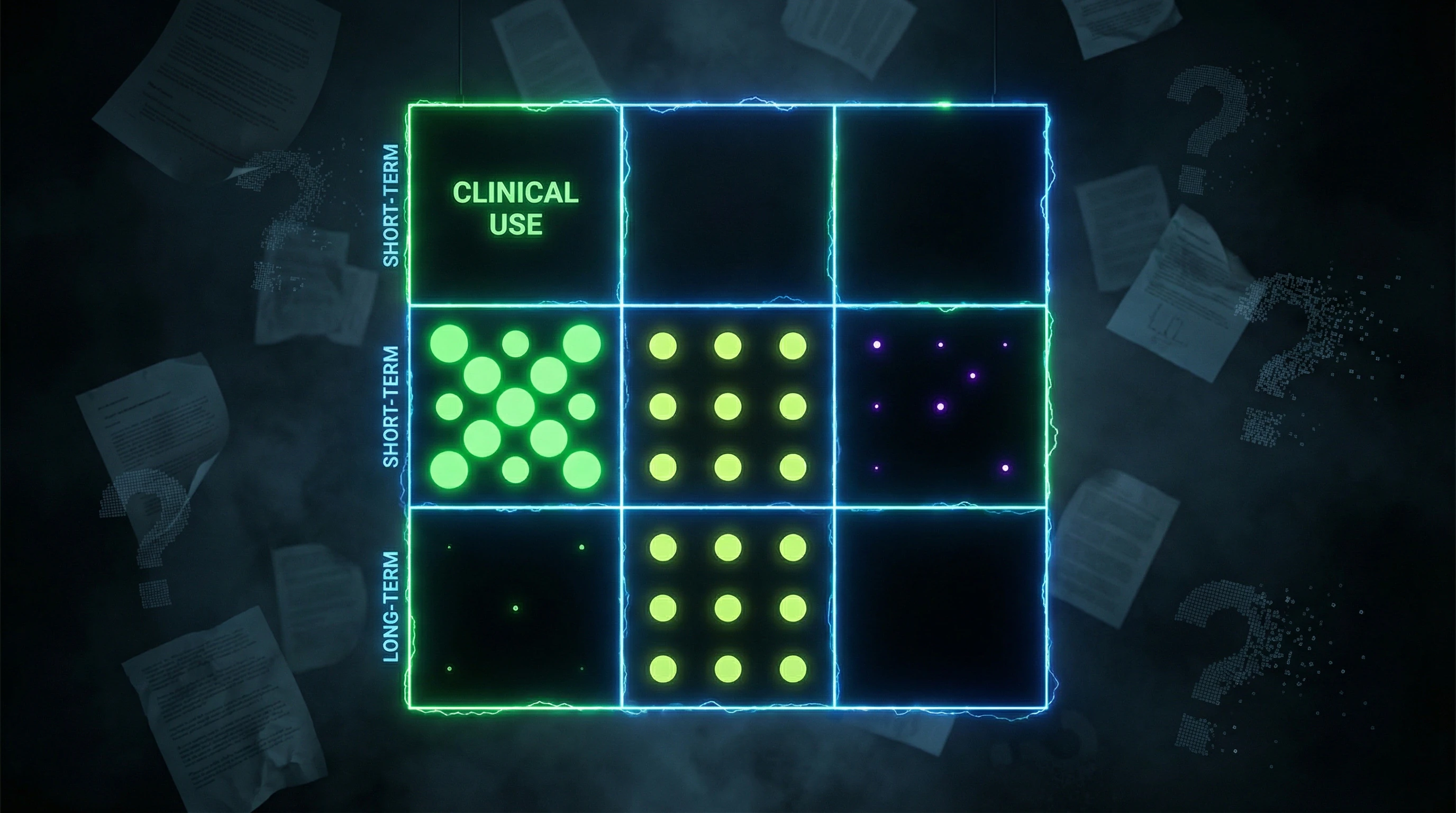
| Time Horizon | What Is Known | What Is Unknown |
|---|---|---|
| 1–4 weeks | Short-term mood improvement, reduced loneliness | Effect stability, habituation |
| 1–6 months | Some data on adherence, initial signs of dependency | Cumulative effects on social skills, real relationships |
| 6–12 months | Isolated studies, contradictory results | Long-term psychological adaptation, withdrawal |
| >12 months | Virtually no data | Everything |
�� Variation in Defining "Dependency": When One Source Sees a Problem, Another Sees Normal Behavior
(S004) and (S005) use different criteria for assessing dependency risk. One focuses on frequency of use, another on functional impairment (displacement of real relationships), a third on subjective sense of control.
This is not merely a methodological difference—it means the same user could be classified as "at risk" in one study and as a "normal user" in another. For practice, this creates uncertainty: there is no consensus on when AI companion use transitions from beneficial to dangerous.
⚡ Conflict Between Short-Term Benefit and Long-Term Risk
(S001) and (S006) document real relief from depression and anxiety symptoms in the first weeks of use. But (S002) and (S003) show that social deprivation (even when subjectively comfortable) is associated with long-term harm to development and mental health, especially in adolescents.
The paradox: an AI companion can simultaneously help (relieve acute distress) and harm (substitute for developing real social skills). Research does not resolve this conflict because studies do not track users long enough.
- What This Means for Users
- Short-term relief may be real, but it can mask long-term deterioration. The decision to use an AI companion requires not only assessing current state, but honest forecasting: will this be a bridge to real relationships or a substitute?
�� Uncertainty Regarding Target Populations: For Whom Are AI Companions Actually Safe?
Most studies are conducted on adults with mild to moderate depression. Data on adolescents, elderly individuals, people with severe mental disorders, or those with addiction histories are virtually absent. This means we do not know whether AI companions are safe for most real-world users.
The absence of data on adolescents is particularly concerning, given (S002) and (S003) on the adolescent brain's sensitivity to social deprivation. If an AI companion substitutes for real relationships precisely during a critical developmental period, the consequences may be more significant than for adults.
�� What to Do With This Uncertainty
- Do not mistake short-term relief for a long-term solution. If an AI companion helps, use that time to develop real relationships, not to replace them.
- Track functional impairment, not just subjective well-being. The question is not "do I feel better?" but "am I developing real social skills or losing them?"
- Be especially cautious if you are an adolescent, elderly person, or have a history of addiction. For you, safety data are even more limited.
- Demand long-term studies from developers. If a product is positioned as mental health support, there should be data on what happens after a year, not just after a month.
Data conflicts are not just an academic problem. They mean you are making a decision about using an AI companion under conditions of incomplete information. The honest position: this is normal, but it needs to be acknowledged.
Additional context: see cognitive biases that make us vulnerable to overvaluing short-term well-being signals.