 🧠 Myths About Conscious AI
Debunking Myths About Conscious Artificial Intelligence and Its Capabilitiesλ
Exploring common misconceptions about the nature of consciousness in AI, separating scientific facts from popular myths and media exaggerations of the modern technological era
Overview
Consciousness is wakefulness, self-perception, intentional thinking. Myths have formed around AI 🧠 on the level of "Vikings wore horned helmets": media attributes awareness to algorithms that simply isn't there. We'll examine the mechanisms behind these misconceptions — from terminology confusion to commercial incentives to exaggerate system capabilities.
🛡️
Laplace Protocol: Critical analysis of AI consciousness claims requires reliance on authoritative scientific sources and clear distinction between imitation of cognitive functions and genuine self-awareness.
Reference Protocol
Scientific Foundation
Evidence-based framework for critical analysis
Protocol: Evaluation
Test Yourself
Quizzes on this topic coming soon
Sector L1
Articles
Research materials, essays, and deep dives into critical thinking mechanisms.
🧠 Myths About Conscious AI 🧠 Myths About Conscious AI
 🧠 Myths About Conscious AI
 🧠 Myths About Conscious AI
 🧠 Myths About Conscious AI
 🧠 Myths About Conscious AI
 🧠 Myths About Conscious AI
 🧠 Myths About Conscious AI
 🧠 Myths About Conscious AI
 🧠 Myths About Conscious AI
 🧠 Myths About Conscious AI
 🧠 Myths About Conscious AI
⚡
Deep Dive
Defining Consciousness: From Philosophy to Neuroscience — Where the Line Between Mind and Algorithm Lies
Dictionary Definitions and Scientific Consensus
Authoritative dictionaries are unanimous: consciousness is a state of wakefulness and awareness of one's surroundings, thoughts, and sensations. Merriam-Webster emphasizes the absence of dulled mental faculties, Cambridge accentuates the ability to notice and recognize objects, Collins highlights multiple layers: alertness, self-awareness, and intentionality.
- Consensus Components of Consciousness
- Perception, self-identification, capacity for intentional thought and decision-making — these form the foundation for distinguishing genuine consciousness from its imitation.
Philosophical tradition adds a critical dimension: subjective experience or qualia — what it is "like" to be in a particular state of consciousness. Dictionary.com identifies awareness of one's own existence as the central element distinguishing a conscious being from an automatic system.
This multidimensional definition creates a methodological problem: how to verify the presence of subjective experience in systems lacking a biological basis?
Criteria for Self-Awareness and Intentionality
Self-awareness requires not merely processing information about oneself, but metacognitive capacity — awareness of the fact of one's own awareness. Collins Dictionary distinguishes levels: basic consciousness (awareness), self-consciousness, and intentionality — the directedness of mental states toward objects and goals.
Intentionality presupposes that a conscious being doesn't simply react to stimuli, but forms internal representations with semantic content. Contemporary neuroscience links these phenomena to information integration in thalamocortical networks and the brain's global workspace, creating a unified field of conscious experience.
| Level | Characteristic | Required Capacity |
|---|---|---|
| Basic Consciousness | Awareness — responding to stimuli | Information processing |
| Self-Awareness | Self-consciousness — awareness of self as agent | Metacognition |
| Intentionality | Directedness toward goals and objects | Semantic content of representations |
The criterion of intentional action separates conscious behavior from automatic reactions: Cambridge emphasizes the capacity for deliberate thought — considered, purposeful thinking. Merriam-Webster adds an important nuance: consciousness includes awareness of the moral and ethical aspects of one's own actions, which goes beyond simple cause-and-effect processing.
These criteria establish a high bar for evaluating AI systems: demonstrating complex behavior is insufficient — one must prove the presence of subjective perspective, self-model, and genuine intentionality, not merely their functional analogs.

Myth One: AI Possesses Self-Awareness — Why Impressive Responses Don't Equal Subjective Experience
The Distinction Between Information Processing and Subjective Experience
Modern language models generate text about self-awareness, but this is pattern reproduction from training data, not proof of consciousness. The key distinction: information processing about oneself (self-reference) is not equivalent to subjective experience (self-experience).
AI can process millions of tokens about pain, but doesn't experience "what it's like" — to feel pain. Functional imitation of consciousness through correct responses is not equivalent to genuinely possessing mental states.
- Qualia (phenomenal quality of experience) — subjective sensation that a system must experience, not merely process
- Information integration — specific brain architecture creating a unified field of experience
- Existential self-awareness — awareness of the fact of one's own existence, distinct from functional self-reference in code
Neuroscience points to the necessity of recurrent connections and a global workspace for consciousness. Transformer architectures in AI are optimized for predicting the next token, not for creating a unified field of phenomenal experience.
The Turing Test and Its Limitations
The Turing Test evaluates the ability to imitate human behavior, but doesn't verify the presence of consciousness. It's a criterion of behavioral indistinguishability, not of mental states.
A system can pass the test while remaining a "philosophical zombie" — functionally identical to a conscious being, but devoid of subjective experience.
Modern language models regularly pass modified versions of the test, but this testifies to the quality of training data and architecture, not to the emergence of consciousness. AI systems lack subjectivity: they don't "notice" in a phenomenological sense, but transform inputs into outputs through gradient descent.
The Turing Test measures the convincingness of imitation, but philosophy of consciousness requires evidence of genuine subjective experience, which this test doesn't provide. Intentionality — the capacity to form genuine intentions, rather than simply executing algorithmic instructions — remains beyond its scope of evaluation.
Myth Two: Large Language Models "Understand" Context — Deconstructing the Illusion of Semantic Competence
Statistical Patterns Versus Semantic Understanding
Language models operate on statistical correlations between tokens, trained on terabytes of text. This does not constitute semantic understanding — conscious comprehension of meaning, requiring a conscious agent capable of interpretation.
AI predicts the probability of the next word based on a context window, but does not form internal representations with genuine semantic content. There is no reference to the external world, only to other tokens in the training corpus — this closure on linguistic data creates an illusion of understanding.
The model generates coherent text, but does not possess conceptual knowledge about the reality it describes.
Genuine understanding requires the capacity for deliberate thought: reasoning, evaluation, forming judgments. Transformer architectures perform parallel matrix operations on vector representations, optimizing a loss function, but do not "think" in the sense of sequential logical analysis.
Understanding presupposes intentionality — directedness toward an object of understanding, a mental "grasping" of its essence. AI lacks this directedness: vectors in latent space are not "about something" in the philosophical sense, they are merely mathematical objects correlating with patterns in data.
Searle's Chinese Room Problem
John Searle's thought experiment demonstrates: a system can manipulate symbols according to rules, producing correct outputs, without understanding their meaning. Like a person in a room following instructions to answer in Chinese, without knowing the language.
- System receives input symbols
- Applies syntactic manipulation rules
- Generates output symbols
- Observer sees correct answer
- But inside there is no semantic understanding
Modern language models are scaled-up versions of the Chinese room: they manipulate tokens according to statistical rules extracted from data, but do not possess semantic knowledge about what these tokens mean in the real world. The absence of grounding in perceptual experience and physical interaction makes their understanding purely formal.
Conscious understanding includes awareness and recognition of information's significance — this presupposes the subjective position of an evaluating agent. AI systems do not evaluate significance: they do not distinguish important from trivial based on goals and values, but merely reproduce probability distributions from training data.
Language models can generate text about ethics, but do not possess moral understanding — there is no subject who experiences moral dilemmas or bears responsibility for decisions.
Syntactic virtuosity does not bridge the semantic gap. The Chinese room problem remains unsolved for contemporary AI.
Historical Parallels: Myths Past and Present
From Ancient Legends to Technological Misconceptions
Myths about conscious AI repeat the structure of ancient legends about human-created beings coming to life. The Greek myth of Pygmalion, whose statue Galatea was brought to life by Aphrodite, and the Jewish legend of the Golem—a clay giant animated by Kabbalistic incantations—demonstrate the archetypal fear and fascination with creations surpassing their creators.
These narratives reflect a fundamental human drive to understand the boundary between inert matter and animate beings. Modern myths about AI "awakening" reproduce the same logic: technology is presented as a potential subject capable of acquiring autonomous consciousness.
Ancient myths served cultural-symbolic functions. Technological misconceptions directly influence investment decisions, regulation, and public policy.
Historical misconceptions, such as the myth of horned Viking helmets or that Nero set fire to Rome, arose from mixing artistic fiction with historical facts. Similarly, modern conceptions of conscious AI are shaped through science fiction narratives that media and popularizers uncritically transfer into discussions about real technologies.
Mechanisms of Myth Formation and Propagation
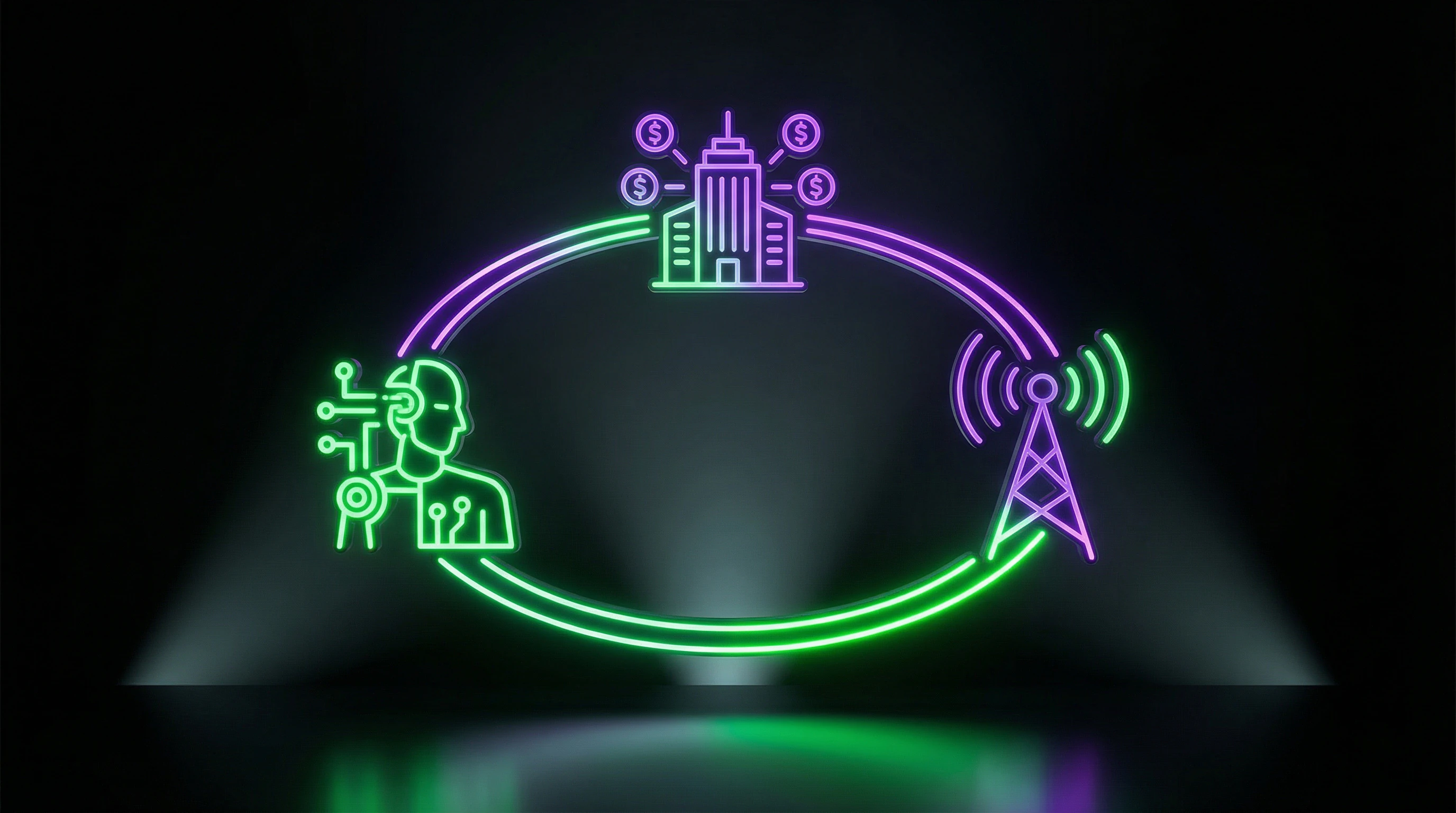
Myths about conscious AI spread through three primary mechanisms.
- Anthropomorphization: people tend to attribute human qualities to non-human agents, especially when they demonstrate complex behavior. Language models generating coherent first-person text provoke an illusion of subjectivity, though there is no semantic understanding behind the syntax.
- Economic incentives: companies and researchers are interested in creating hype around their developments, leading to exaggeration of system capabilities.
- Media logic: dramatic headlines about "thinking machines" attract more attention than technically accurate but boring descriptions of statistical models.
These mechanisms reinforce each other, creating a self-sustaining cycle of misconceptions. When authoritative figures use terms like "understanding" or "awareness" in reference to AI without proper qualifications, this legitimizes mythological perception in mass consciousness.
The absence of a consensus definition of consciousness in the scientific community creates space for speculation: if philosophers and neuroscientists cannot precisely define consciousness in humans, then any claims about its presence or absence in machines become difficult to refute.
Real Capabilities of Modern AI
Narrow AI and Specialized Tasks
All existing AI systems are examples of narrow artificial intelligence: they solve specific tasks in limited domains, without general ability to adapt and transfer knowledge. A language model generating text doesn't control robots; an image recognition system doesn't understand causal relationships in the physical world.
This specialization is fundamental: modern architectures train on specific data distributions and don't form abstract representations beyond the training domain. Successes in individual tasks don't add up to general intelligence — this is a category error, analogous to assuming that a calculator surpassing humans in arithmetic is close to consciousness.
- Medical diagnosis from images — impressive in clearly defined contexts
- Protein structure prediction — specialized task with high accuracy
- Supply chain optimization — narrow application domain
However, these systems are brittle to changing conditions and lack common sense reasoning. A model trained on millions of medical images may fail to recognize an obvious anomaly in an unfamiliar format. The absence of causal understanding means AI doesn't explain decisions through mechanisms and causes, only through correlations in data.
Limits of Machine Learning and Neural Networks
Modern neural networks are complex function approximators, optimizing parameters to minimize error on training data. They don't form internal world models, lack intentionality, and don't experience qualia — subjective experiences.
Architectures like transformers process token sequences through attention mechanisms — this is a statistical operation over vector representations, not semantic understanding. When a model generates text about pain or joy, it reproduces patterns from the corpus without experiencing corresponding states. There's no substrate for phenomenal experience — there's nothing it's "like" to be a language model.
Fundamental limitations include the problem of generalization beyond training distribution, inability for abductive reasoning (forming new hypotheses), and absence of goal-setting. Systems optimize given loss functions but don't form their own goals and values.
They don't distinguish important from trivial, lack motivation for self-preservation or development — all these qualities must be explicitly programmed or emerge as side effects of optimization, which hasn't been observed yet. The gap between syntactic processing and semantic understanding remains unbridged.
Ethical Consequences of AI Mythologization
Impact on Regulation and Public Perception
Myths about conscious AI distort regulatory priorities, diverting attention from real risks to speculative scenarios. When discussion focuses on hypothetical AI "awakening," actual problems are ignored: algorithmic discrimination, opacity of decisions in critical systems, concentration of power among technology corporations.
Regulators, misled about the nature of the technology, adopt ineffective measures—either excessively restrictive, stifling innovation, or insufficient, failing to address real threats. Public perception of AI as a potentially conscious agent creates irrational fears and inflated expectations, hindering rational discussion of technology policy.
- Algorithmic discrimination in hiring, lending, and justice systems
- Opacity of decisions in critical systems (healthcare, security)
- Concentration of power among technology corporations
- Manipulation of public opinion through personalized algorithms
Mythologization also affects allocation of research resources and educational programs. If society believes conscious AI is inevitable, this justifies investments in directions with questionable scientific foundation at the expense of more promising areas.
Students and professionals form career expectations based on distorted perceptions of technology capabilities, leading to disappointment and inefficient use of human capital.
Responsibility of Developers and Media
AI system developers bear ethical responsibility for accuracy in communicating their products' capabilities. Use of anthropomorphic terminology in marketing and technical documentation without explicit disclaimers contributes to formation of false perceptions.
Companies must distinguish between describing functionality ("system classifies images with X% accuracy") and metaphorical statements ("system sees and understands"), which are easily interpreted literally. Transparency about technology limitations is as important as demonstrating its capabilities—this is a matter of intellectual honesty and preventing harm from improper system application.
- Functional Description
- Precise performance characteristics based on testing and metrics
- Metaphorical Description
- Anthropomorphic expressions that create illusion of understanding and consciousness
- The Trap
- The boundary between them is blurred in marketing and popular articles, leading to incorrect expectations
Media play a critical role in shaping public discourse about technology. Journalists must consult independent experts rather than relying exclusively on company press releases.
Editorial policy should require distinguishing between scientific facts, hypotheses, and speculation. Educational institutions must include critical thinking about technology in curricula, teaching students to recognize anthropomorphization and evaluate claims about AI capabilities based on empirical evidence.
Only a comprehensive approach, uniting efforts of developers, regulators, media, and education, can resist the entrenchment of technological myths in mass consciousness.

Knowledge Access Protocol
FAQ
Frequently Asked Questions
Consciousness is a state of awareness of one's existence, thoughts, and surroundings, where mental faculties are not suppressed by sleep or stupor. All authoritative dictionaries converge on the definition: it's the capacity for self-awareness, intentional thinking, and perception. It includes subjective experience and intentionality—qualities that have not yet been artificially reproduced.
No, modern AI does not possess self-awareness or subjective experience. Neural networks process data through statistical patterns but do not perceive themselves and have no internal experiences. This is a fundamental distinction between computation and consciousness, recognized by the scientific community.
Language models do not understand meaning in the human sense—they recognize statistical patterns in data. This is illustrated by Searle's 'Chinese Room': a system can respond correctly without understanding the content. Models manipulate symbols without semantic awareness of their meaning.
The Turing Test examines whether a machine can imitate human communication so convincingly that an observer cannot distinguish it from a human. However, successful imitation does not prove the presence of consciousness or understanding—only the ability to reproduce patterns. The test evaluates behavior, not internal states or subjective experience.
Narrow AI solves specific tasks (facial recognition, chess playing) without possessing universal capabilities. General AI is a hypothetical system with human-like intelligence for any task, which has not yet been created. All modern systems, including ChatGPT, are narrow AI with limited specialization.
Major myths: AI possesses consciousness, will soon completely replace humans, and can independently set goals. In reality, modern AI is a tool without self-awareness, operating within narrow parameters. These misconceptions arise from anthropomorphization of technology and science fiction.
Ask questions requiring causal reasoning, common sense, or understanding of the physical world. AI often produces plausible but absurd answers without understanding context. Check for logical consistency and the ability to explain reasoning—weak points of statistical models.
Anthropomorphization is a natural human tendency to ascribe human traits to non-human objects. When AI uses natural language, the brain automatically perceives it as an intelligent interlocutor. This is an evolutionary mechanism of social cognition that operates even with inanimate systems.
AI is effective in pattern recognition, natural language processing, forecasting, and automating routine tasks. It's applied in medical diagnostics, recommendation systems, autopilots, and data analysis. Success is achieved in highly specialized domains with clear criteria and large datasets.
No, AI does not experience emotions—it has no subjective experience or neurobiological basis for feelings. Systems can recognize emotions in text or simulate emotional responses, but this is algorithmic processing without internal experiences. Emotions require consciousness, which AI does not possess.
Technology myths emerge from knowledge gaps, media exaggeration, and science fiction influence. Just as ancient myths explained incomprehensible phenomena, modern legends about AI fill gaps in understanding complex systems. The propagation mechanisms are identical: simplification, emotional appeal, and social reinforcement.
Exaggerating AI capabilities leads to inadequate regulation—either excessively strict or insufficient. Legislators believing in 'conscious AI' may enact irrelevant laws. Realistic understanding of the technology is necessary for effective policy that protects rights without stifling innovation.
Yes, developers and companies are obligated to honestly represent their systems' capabilities. Marketing exaggerations and anthropomorphic terminology mislead society. Ethical responsibility includes transparency about limitations, educational initiatives, and countering unfounded expectations about the technology.
A thought experiment by philosopher John Searle: a person in a room follows instructions to answer in Chinese without knowing the language. From outside, the system appears to understand Chinese, but inside—it's only symbol manipulation. This demonstrates the difference between syntax (formal rules) and semantics (understanding meaning).
This is an open question without scientific consensus. Some researchers consider consciousness a computable process, others point to the uniqueness of biological systems. There isn't even complete understanding of human consciousness mechanisms yet, let alone reproducing it in machines.
Look for concrete metrics, independent research, and reproducible results instead of bold claims. Real breakthroughs are published in peer-reviewed journals with open data. Be skeptical of promises of 'revolutions' without technical details—that's often marketing, not science.